


To build a zero-carbon future, sustainable technology must thrive beyond the lab. Our project combined solar panels with advanced vanadium redox flow battery technology to achieve stable, long-term energy storage for campus facilities. The scaling process forced us out of our academic comfort zones to confront real-world industrial defects, like fluid leakage and variable solar grid communication.
Through relentless trial-and-error and hardware optimization, we turned an unstable energy source into a practical solution, earning First Prize at the Zero Carbon Future Innovation Competition. This "learning-by-doing" journey permanently shifted our research philosophy: we no longer just ask if a concept works in theory, but whether it can survive in the real world.

Ms. BAI Yuran
Mr. FU Enkang
Mr. LONG Xin
Mr. GONG Xusong
Ms. HUO Xiaoyu
Faculty of Engineering
Department of Mechanical Engineering
Scaling electrochemical systems from a small laboratory environment to an industrial scale is not a linear process. Enkang points out that while their previous research focused on watt-level cells (50 W), moving to a high-power kilowatt-level stack (10 kW) drastically altered the system's physics. Specifically, the mass transfer (how reactants move through the cell), heat transfer (thermal management of the exothermic/endothermic electrochemical processes), and electrochemical reaction characteristics inside the battery stack change significantly as the reaction surface area increases. Understanding these scale-dependent transport phenomena is essential for maintaining high voltage and coulombic efficiency.
Flow batteries circulate liquid chemical electrolytes, making physical fluid sealing a critical mechanical engineering challenge. Xiaoyu, Xusong, and Xin identify electrolyte leakage as a severe failure point that impairs the activity and lifetime of the battery stack. The students learned how physical fastening forces dictate sealing; specifically, how the tightening torque of the screws on a graphite collector plate directly impacts the internal pressure distribution. To prevent slow leaks, they applied system-level numerical simulations to calculate the precise, uniform mechanical torque required on each individual bolt to achieve an optimal seal without cracking the brittle graphite plates.
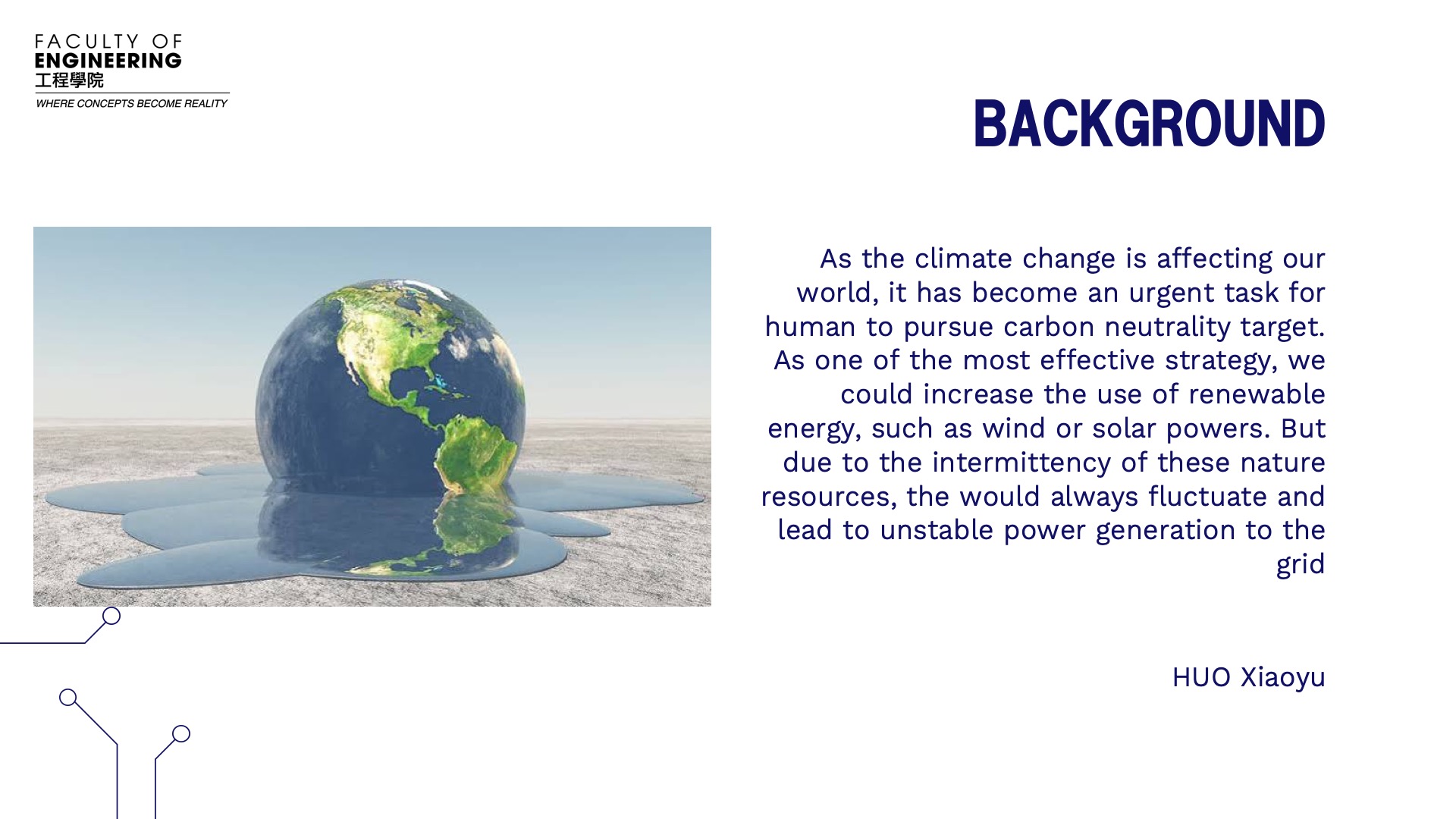
Renewable sources like solar photovoltaics are highly variable and intermittent, causing voltage fluctuations that can destabilize an electrical grid. To turn "unstable" solar power into "reliable" electricity, the students designed a smart hybrid energy system. They coupled a 10 kW solar array with a 10 kW/40 kWh VRFB storage unit. Enkang and Yuran highlight that achieving this required solving communication and control issues between the generation source and the chemical storage unit. They successfully optimized system-level integration by refining control programs to manage power flow smoothly and interface directly with campus facilities (like public lighting).
To maximize power density and minimize pumping losses in a flow battery, the liquid electrolyte must pass through the electrodes evenly. Xiaoyu explains that during the transition to a practical-scale system, "electrolyte flow became harder to distribute evenly" across the larger active reaction areas. Solving this required engineering knowledge of fluid dynamics. The team performed iterative testing and design optimization of the flow fields (channels through which the chemical fluids flow) and stack structures to minimize fluid resistance, prevent stagnation zones, and ensure uniform reactant delivery to all active sites in the cell.
Before executing physical, expensive hardware builds, engineering projects rely heavily on computational validation. Xiaoyu shares that the team developed a custom MATLAB platform to simulate the complete operation, chemical reactions, and energy management process of the hybrid system. Additionally, they performed numerical and physical simulations to optimize electrode designs and simulate sealing boundaries. This virtual prototyping framework allowed them to accurately model stack behaviors and predict system bottlenecks under various operational conditions prior to final system fabrication.
The students successfully scaled their project from a tiny 50 W lab prototype to a 2 kW / 5 kW stack, and eventually to a fully operational 10 kW smart mini-grid platform integrated with solar panels.
Enkang and Xiaoyu point out that scaling up from the "watt level" to the "kilowatt level" completely changed the behavior of the system, introducing complex mass transfer, heat transfer, and electrochemical characteristics. Yuran notes this forced them to adapt their mindset from simply asking "Does it work in the lab?" to "Can it survive in a real-world industrial environment?" to ensure their system was practical and scalable.
When scaling the battery stack, the team encountered unexpected electrolyte leakages caused by uneven internal pressure. Xin explains that they used system-level numerical simulations to determine the exact tightening torque needed for each screw on the graphite plates to prevent these slow leaks.
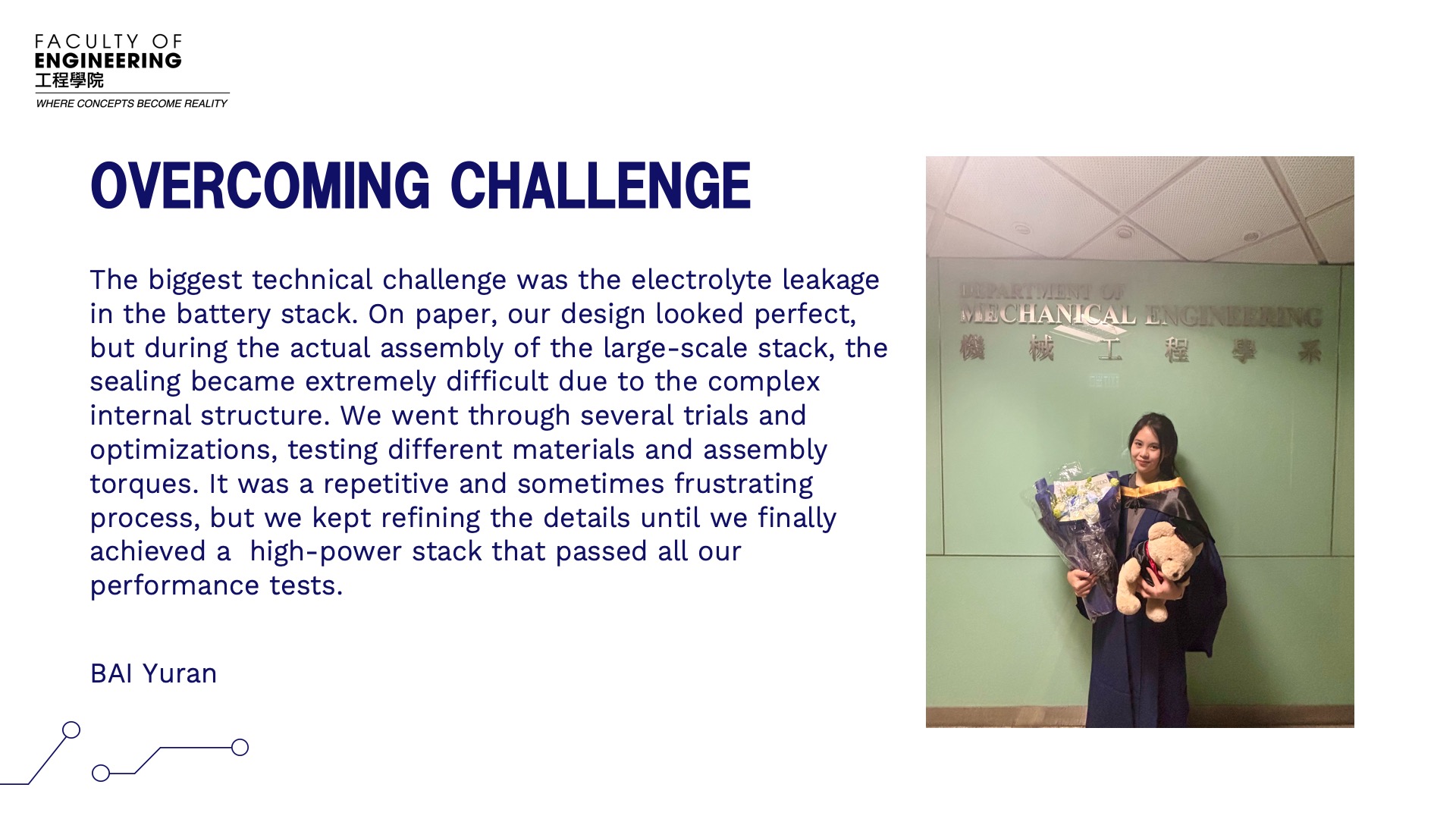
Yuran describes the assembly process as a "repetitive and sometimes frustrating process" of trial and error, where they constantly had to test different materials and assembly torques until the high-power stack finally passed all performance and sealing tests.
Enkang notes that because commercial battery assembly services were unavailable, the team had to assemble the complex vanadium redox flow battery stack themselves in the workshop. They succeeded by carefully organizing their workflow and dividing specific physical responsibilities among team members.
Reflecting on the intense, time-limited environment of the competition, Yuran emphasizes that they focused on improving team synergy by ensuring everyone's distinct expertise was fully utilized. He reflects: "while technical skills build the system, team cohesion is what actually makes it work."
Participating in the competition and interacting with peer researchers who were commercializing flow batteries led to a major shift in self-awareness. Xin reflects that this experience made the team realize that their academic research "should be closely aligned with real demands" rather than existing only in theory.
Yuran and Xusong reflect deeply on their personal academic growth, noting that the project forced them to move past purely academic formulas to face physical engineering hurdles, fundamentally changing how they will design systems and conduct research in their future studies.
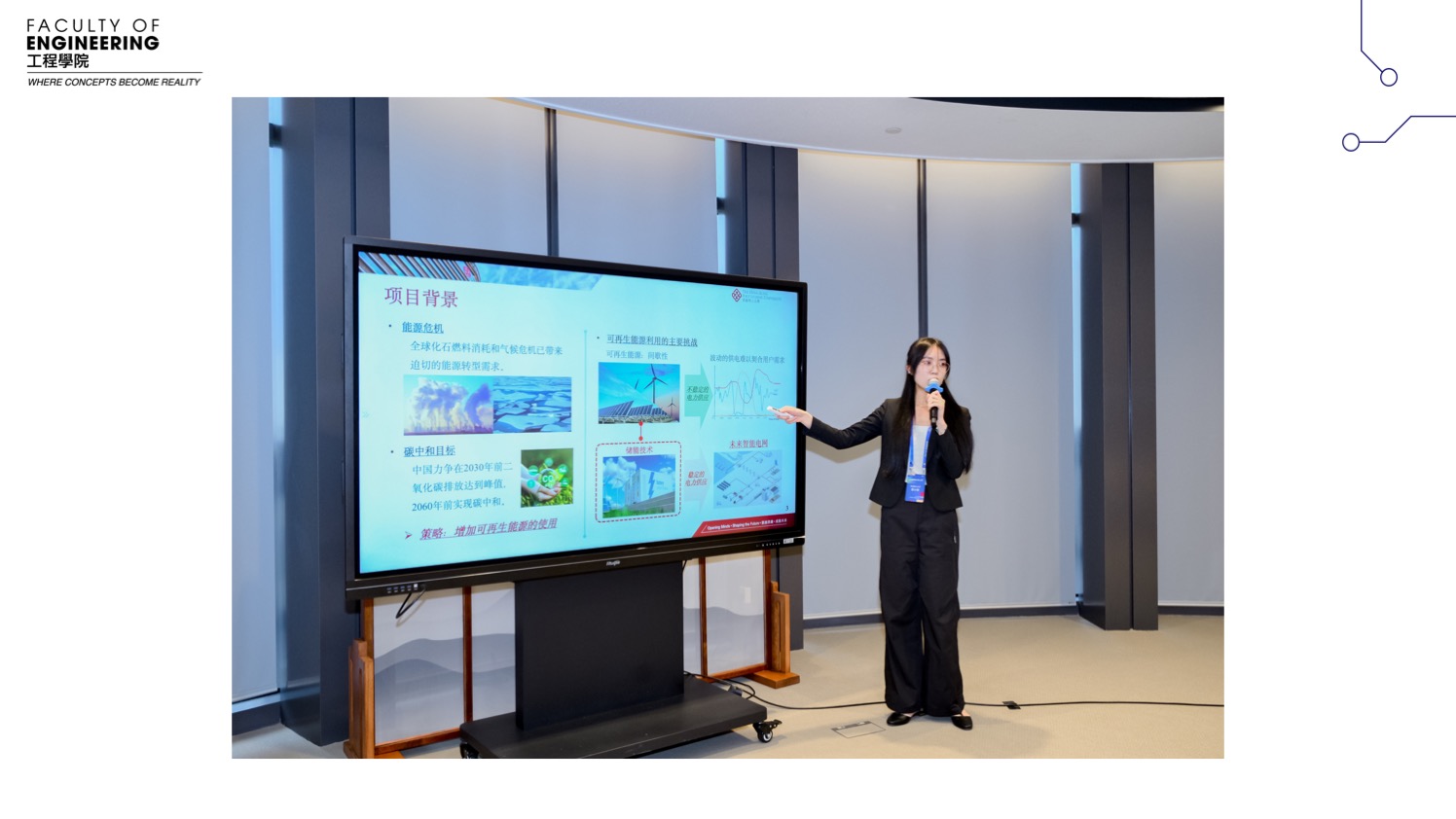
During the 5th Zero Carbon Future Innovation Competition, the team had to go through intense evaluation rounds, which culminated in presenting their research journey to a panel of expert judges.
Yuran notes that doing a live demonstration of their 10 kW solar and battery system during the contest was a major highlight. This required them to effectively translate and communicate complex, high-level energy storage theories into an interactive, understandable, and practical proof-of-concept for the audience.
The pursuit of knowledge is a lifelong journey! To further expand your knowledge and continue your personal and professional growth. Click and explore the following learning resources:
Resourcefulness and Adaptability to New Contexts
Continuous Improvement and Learning from Mistakes