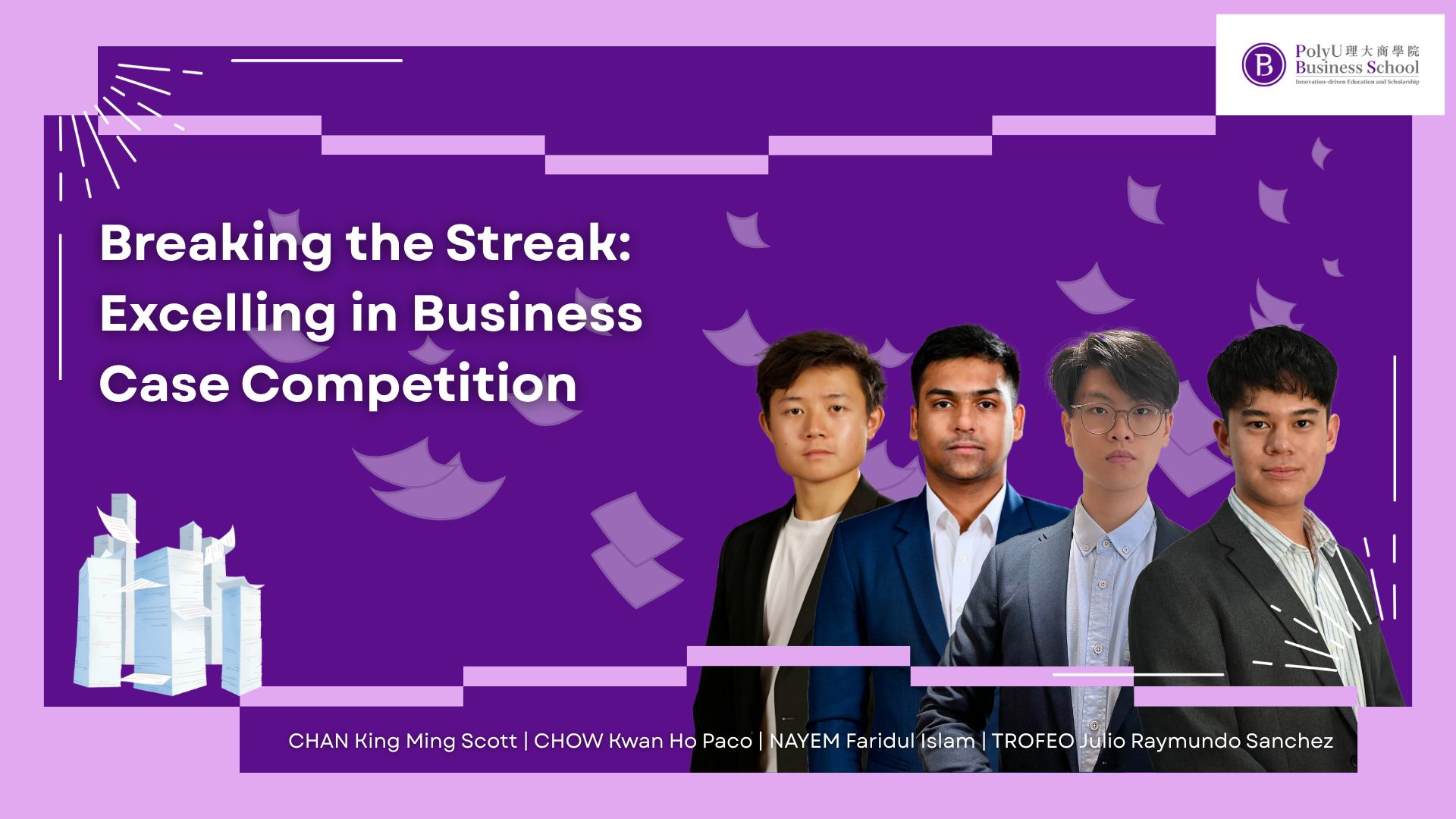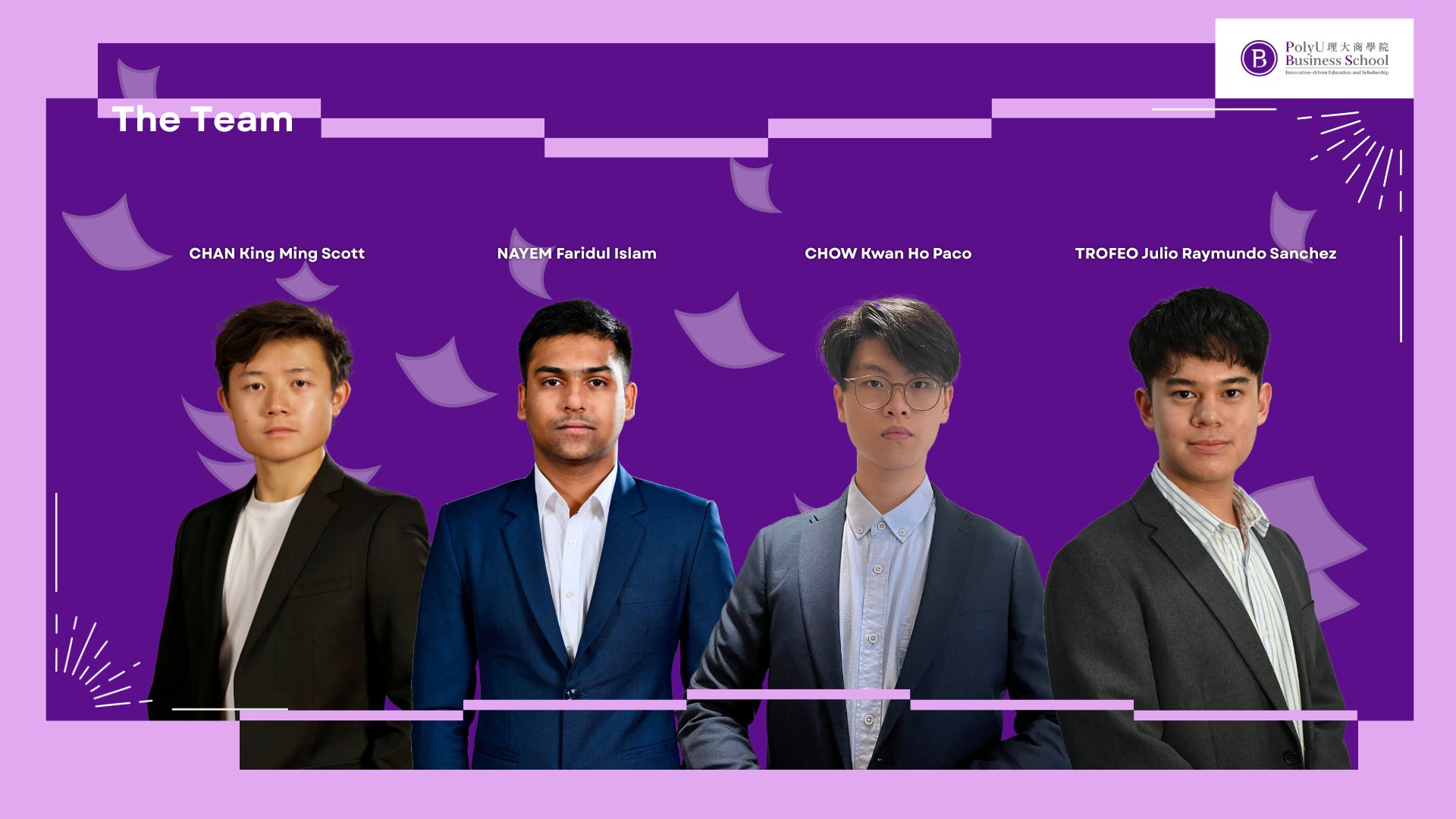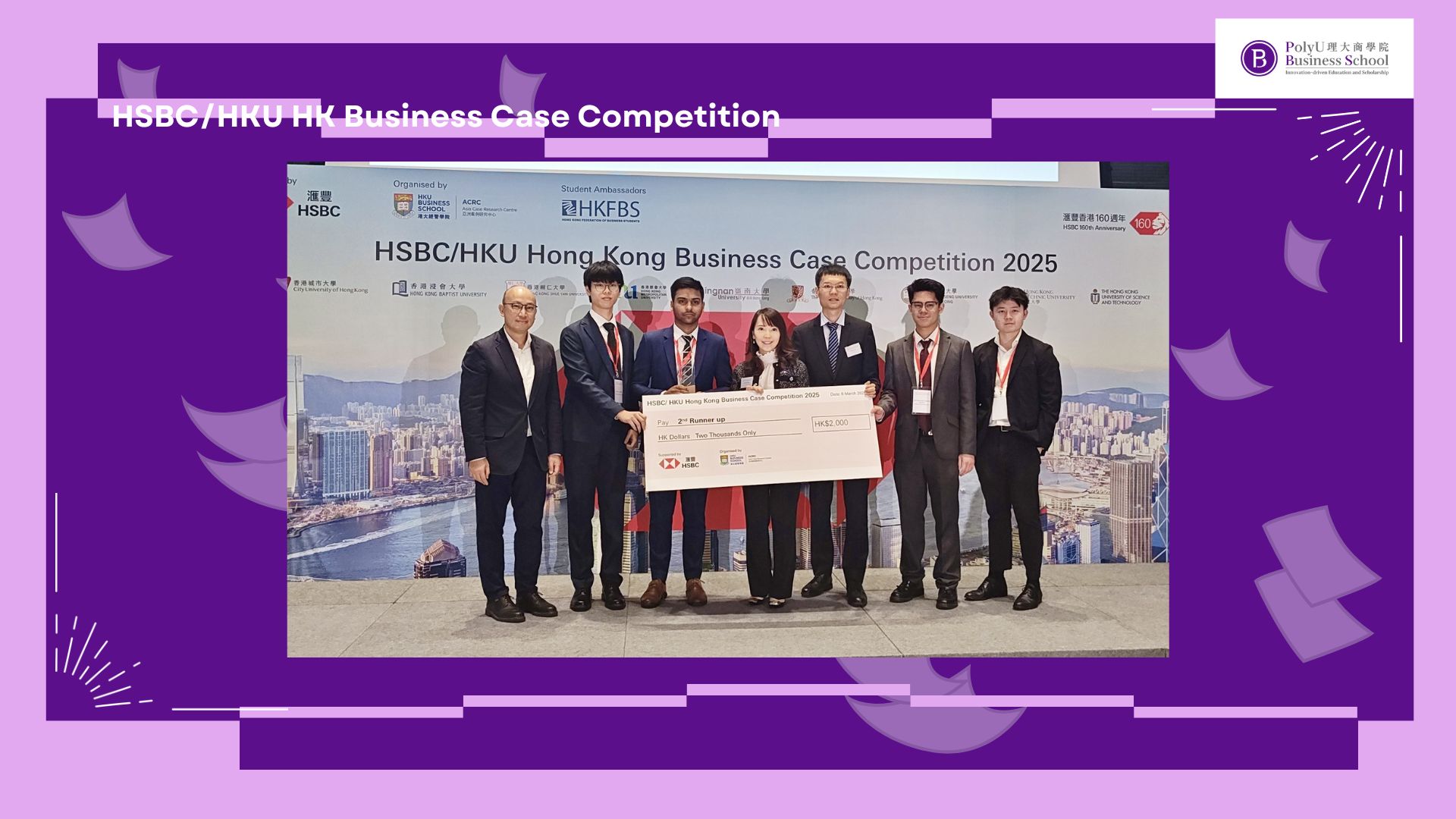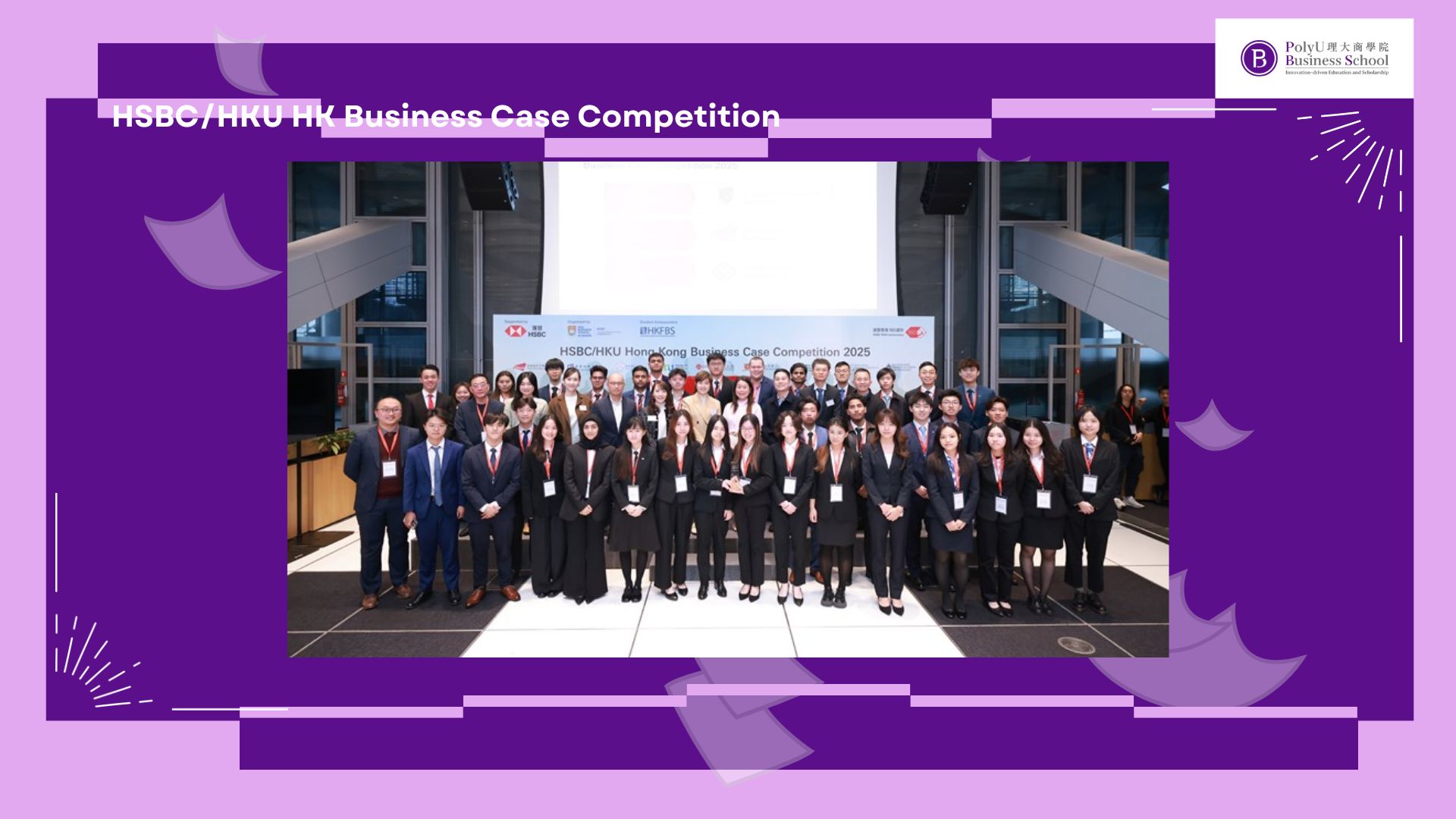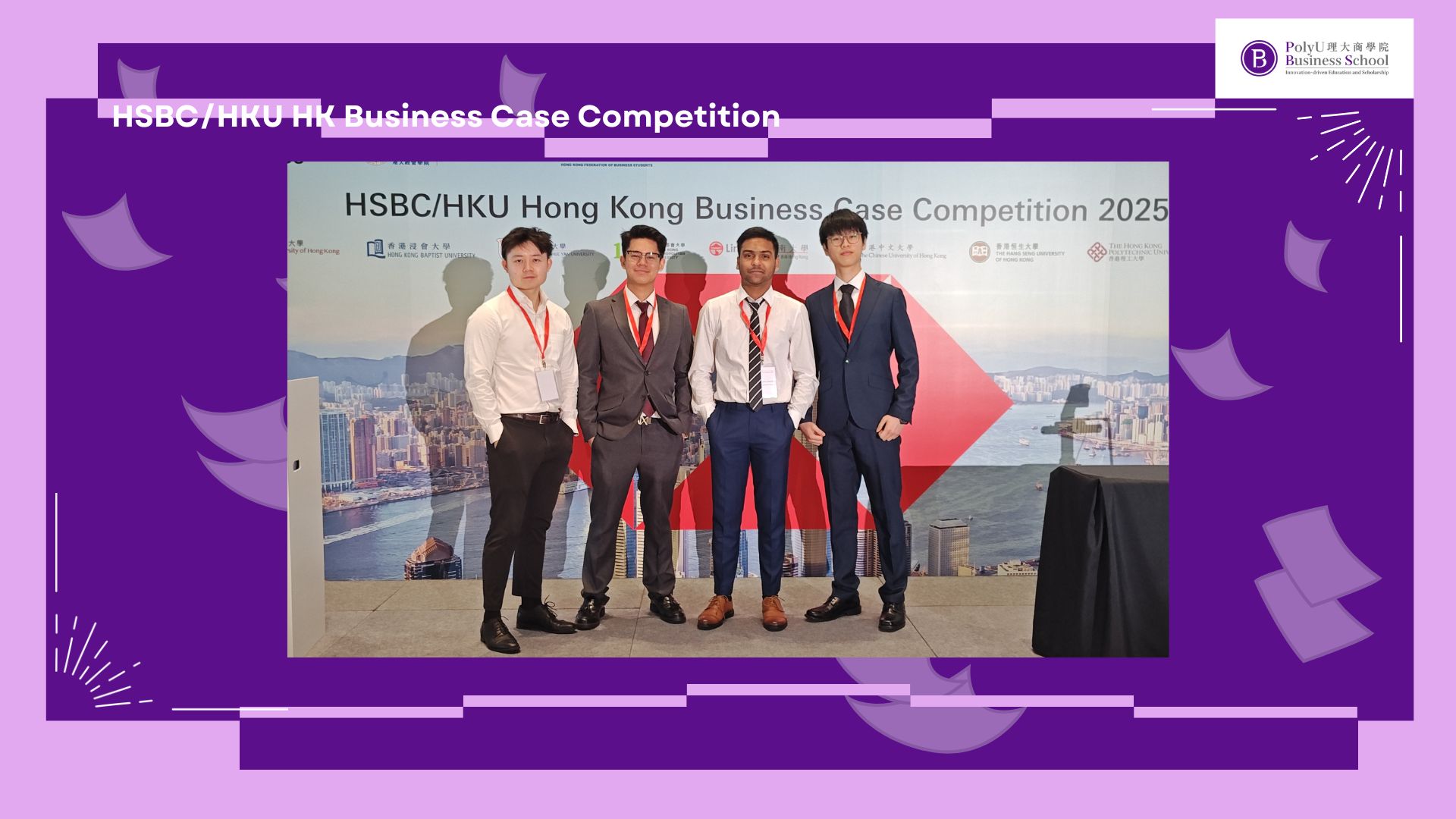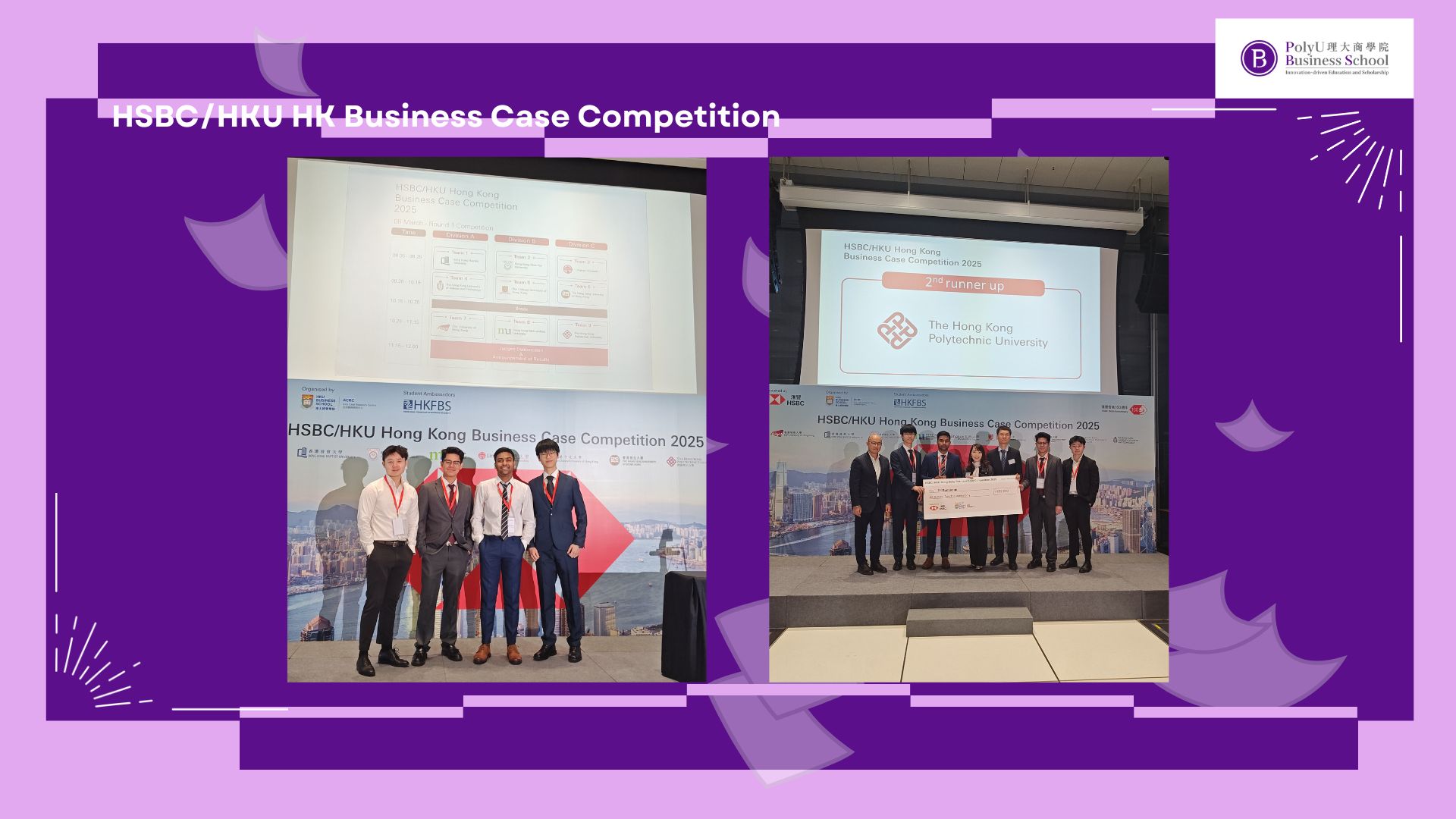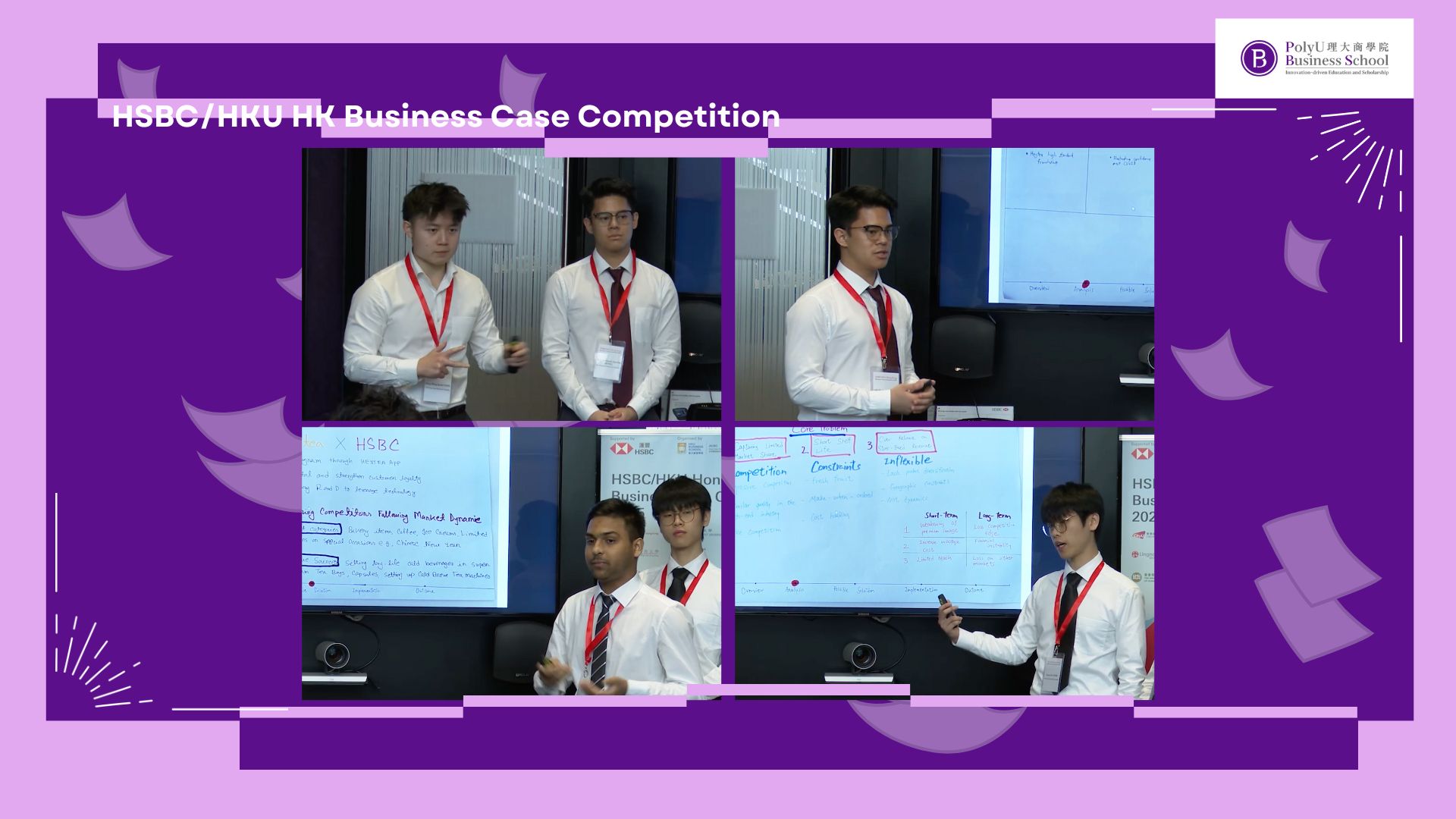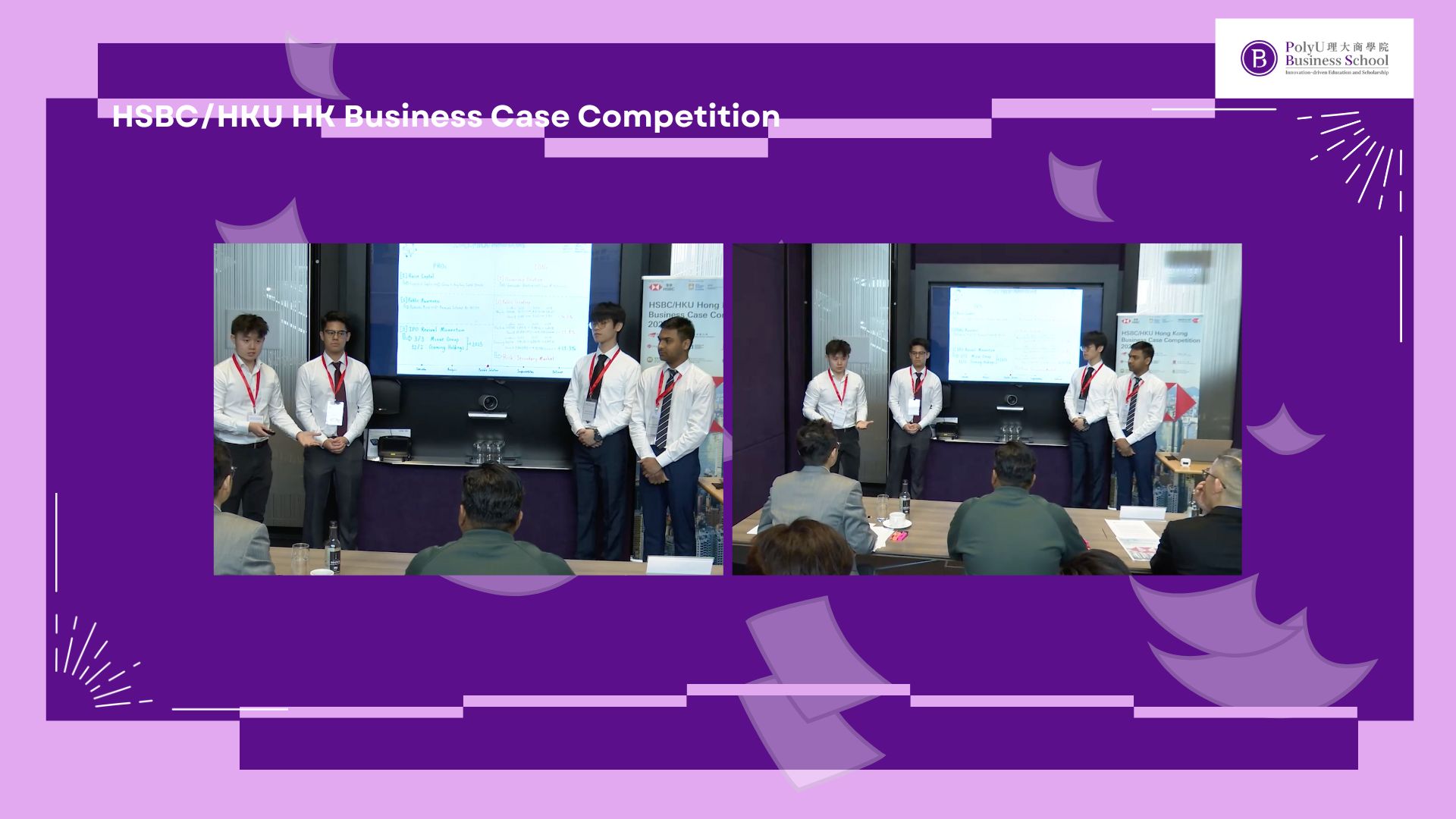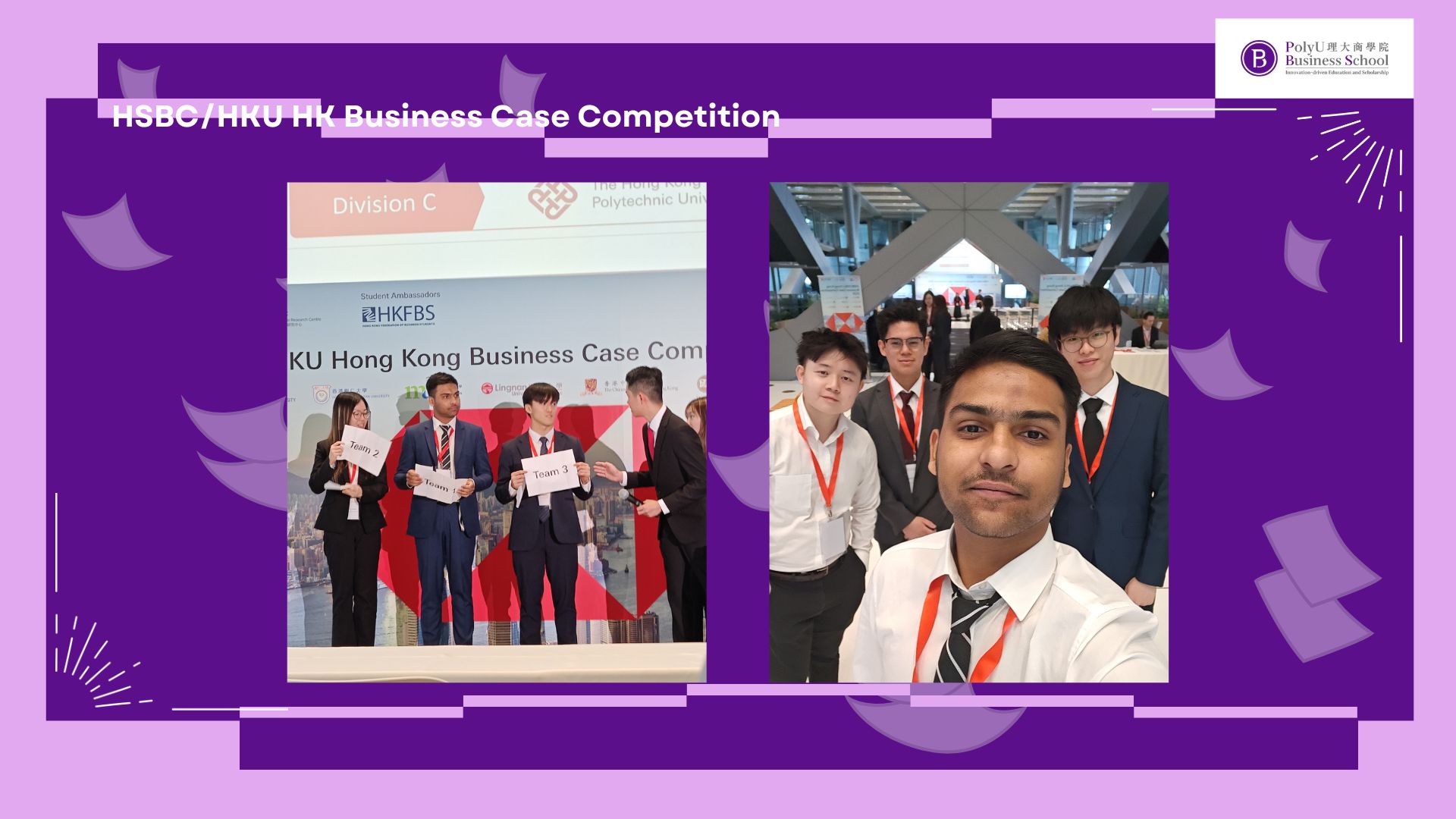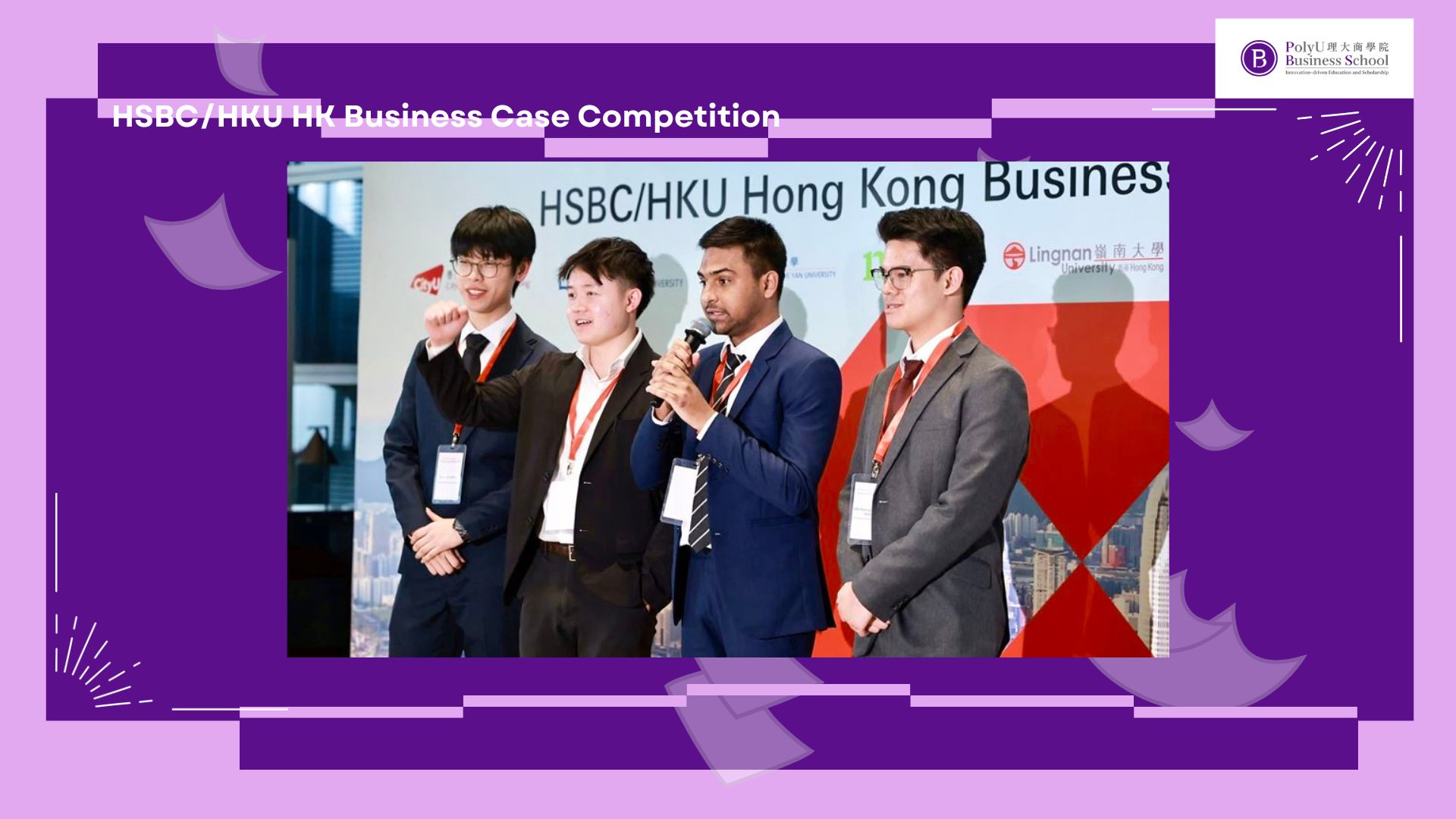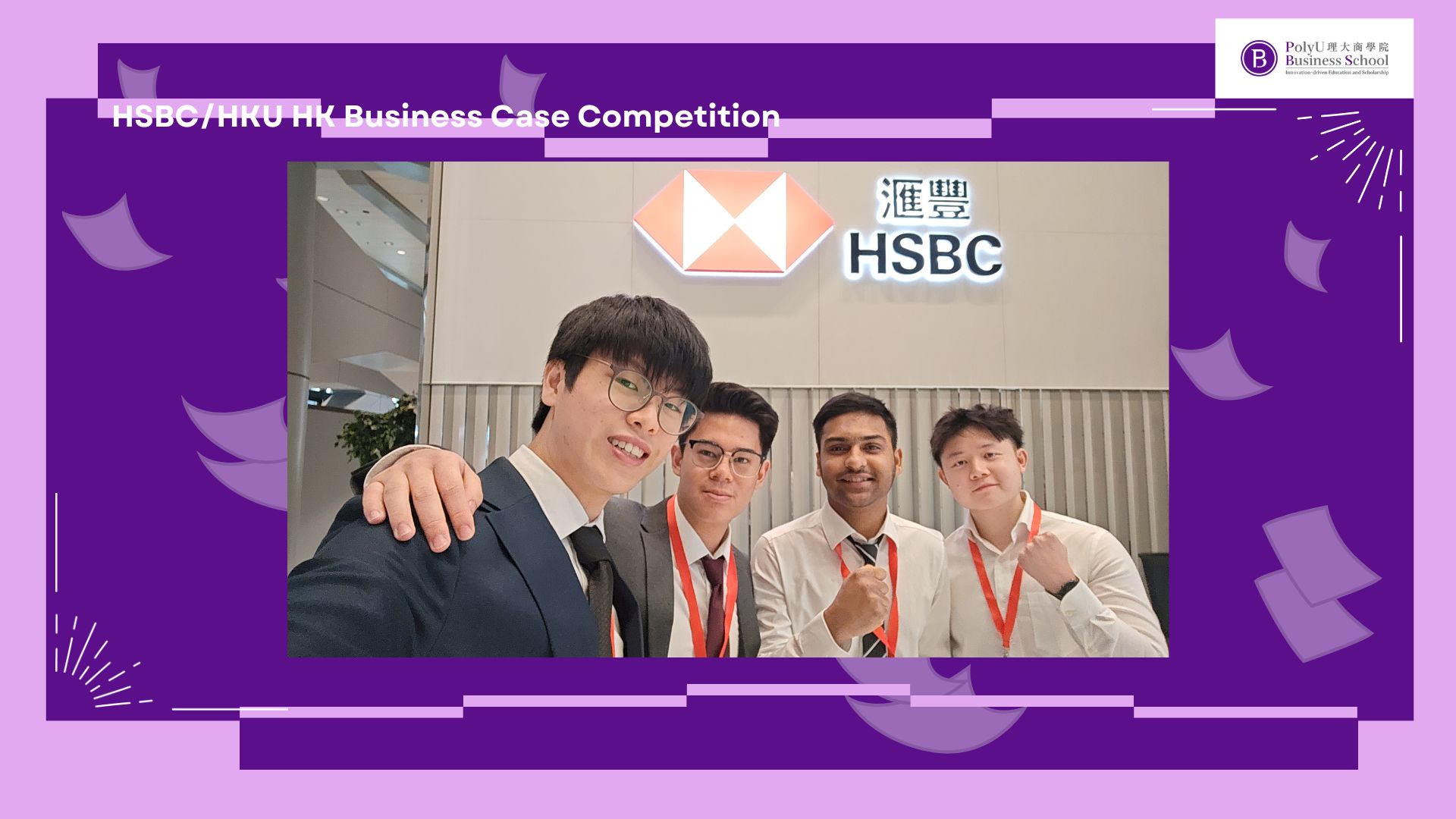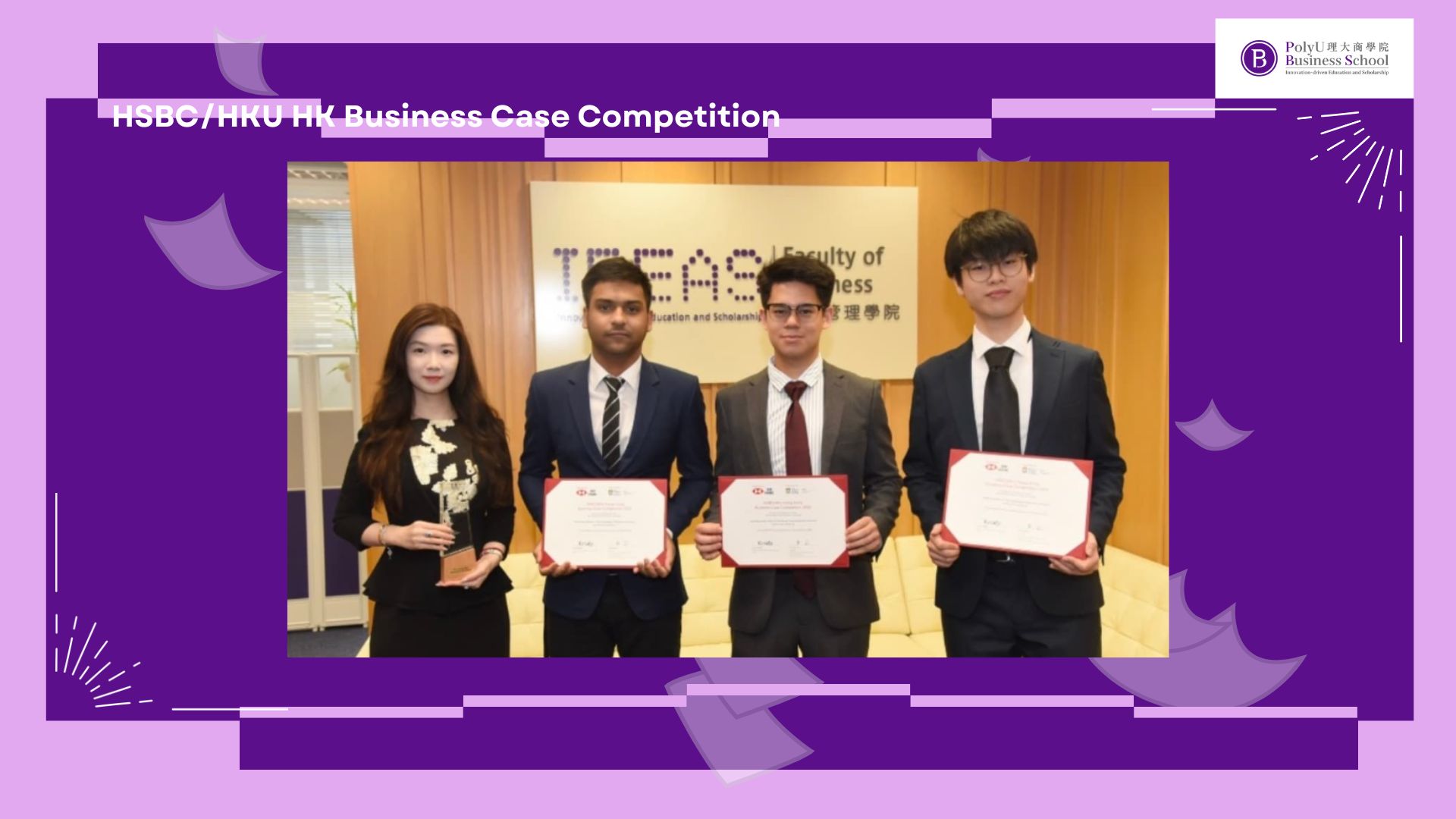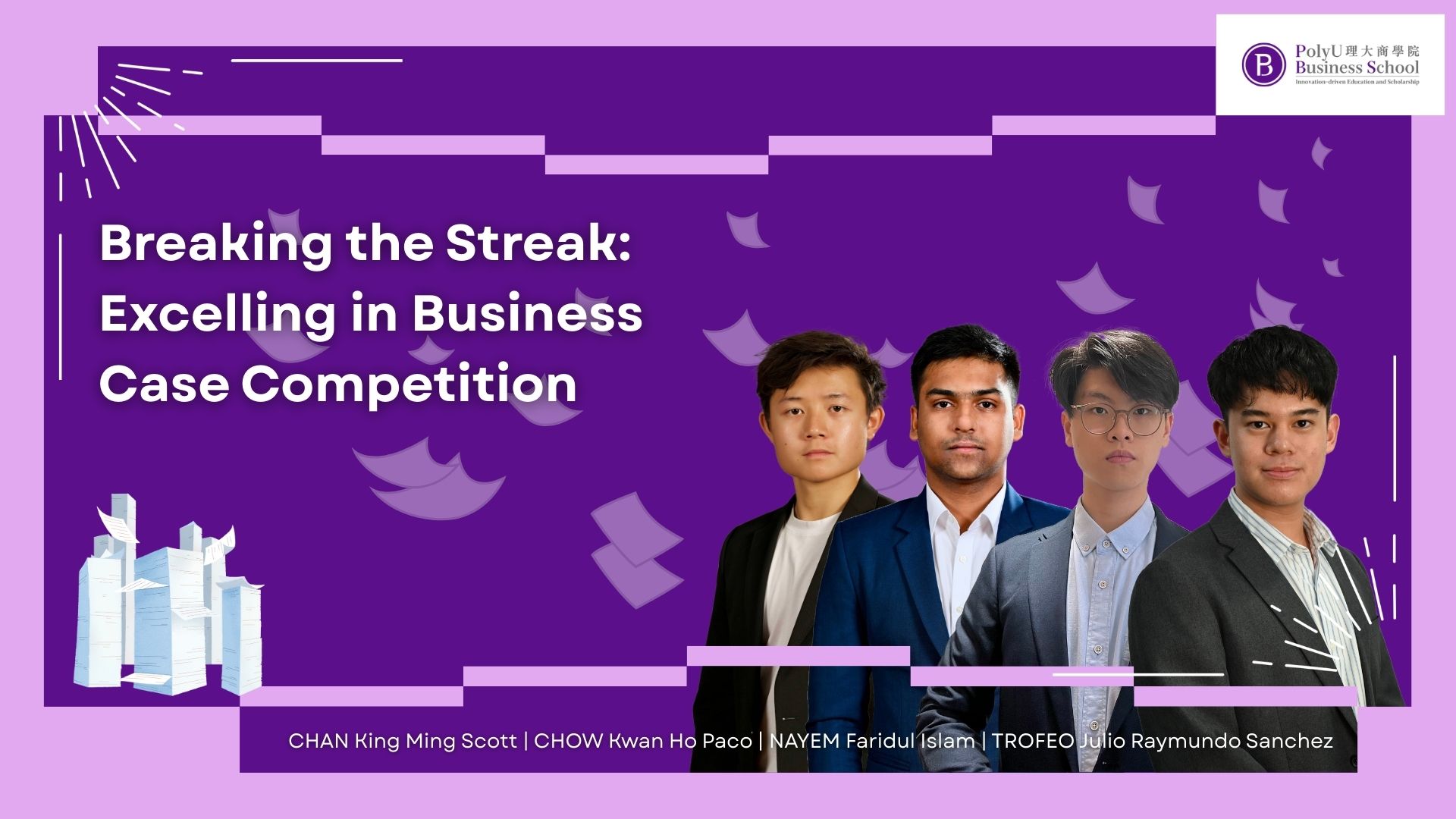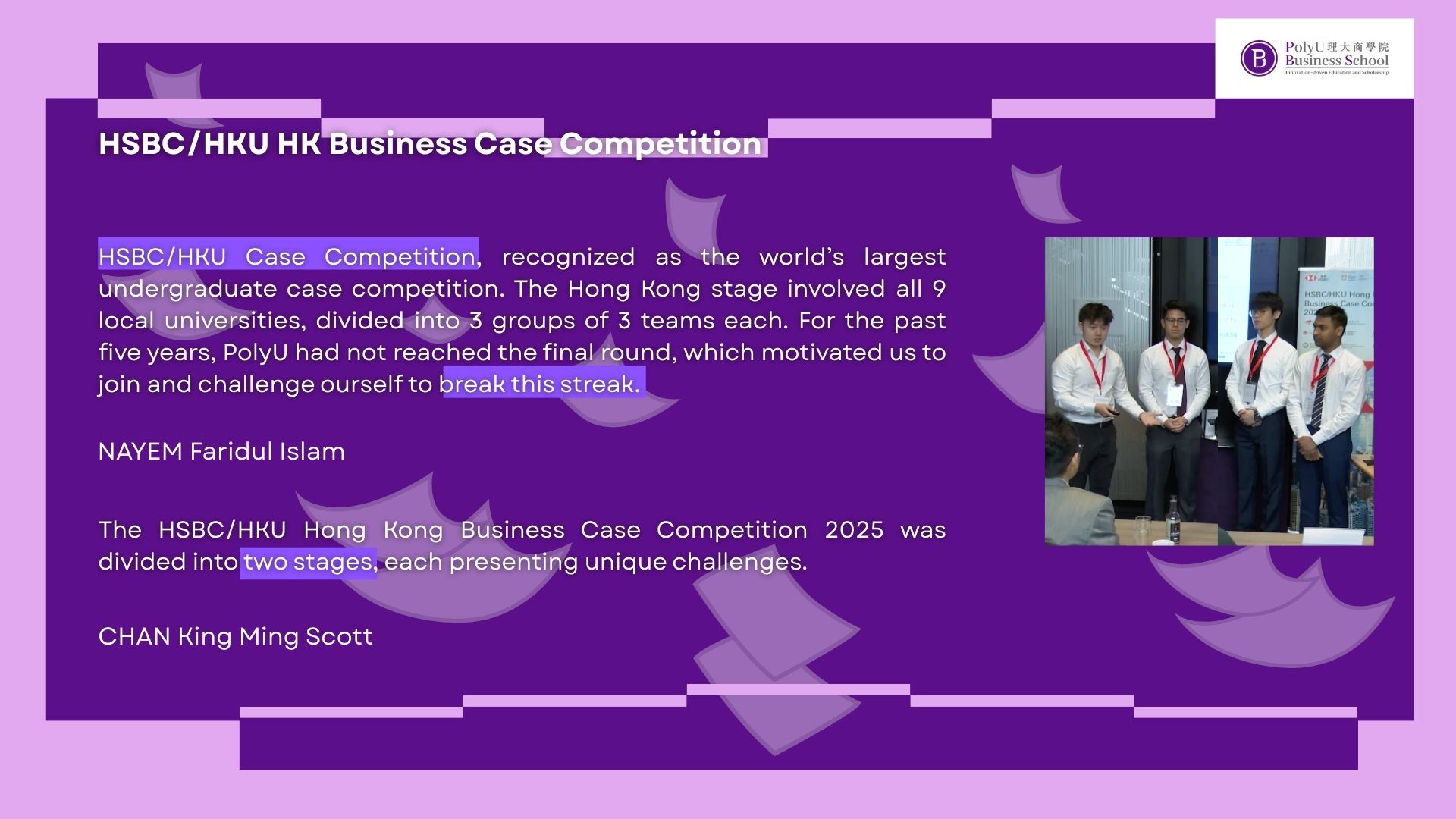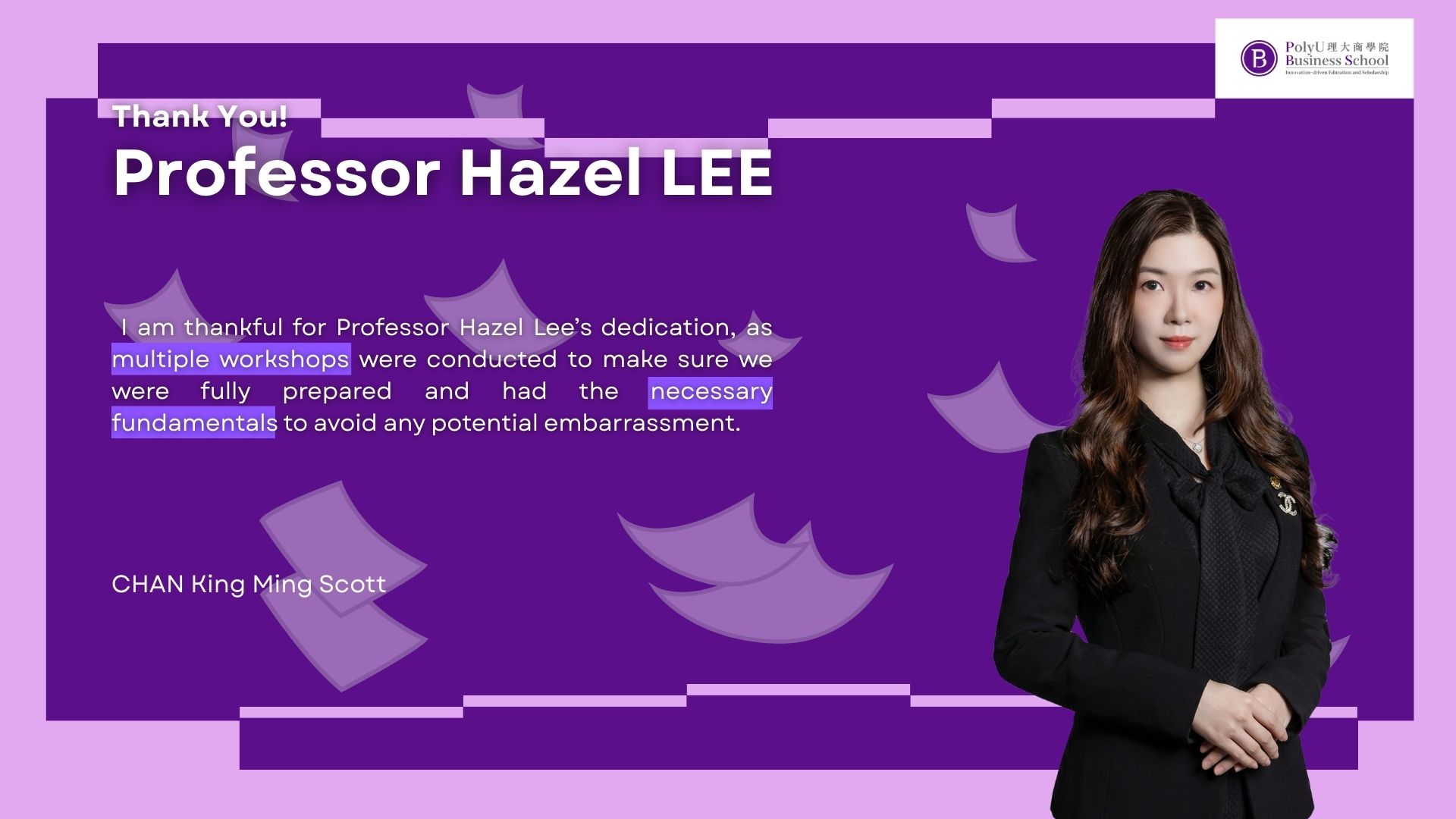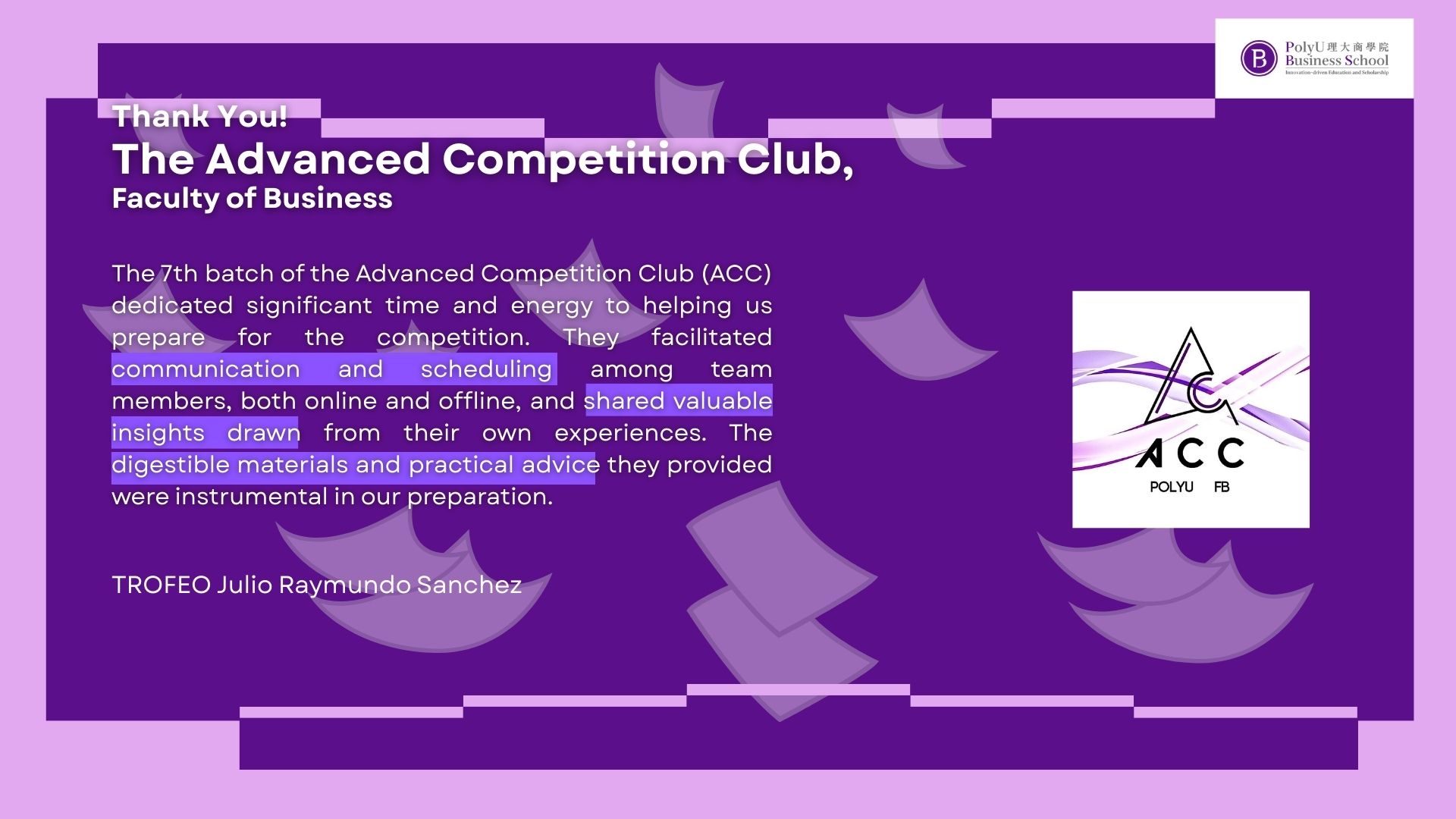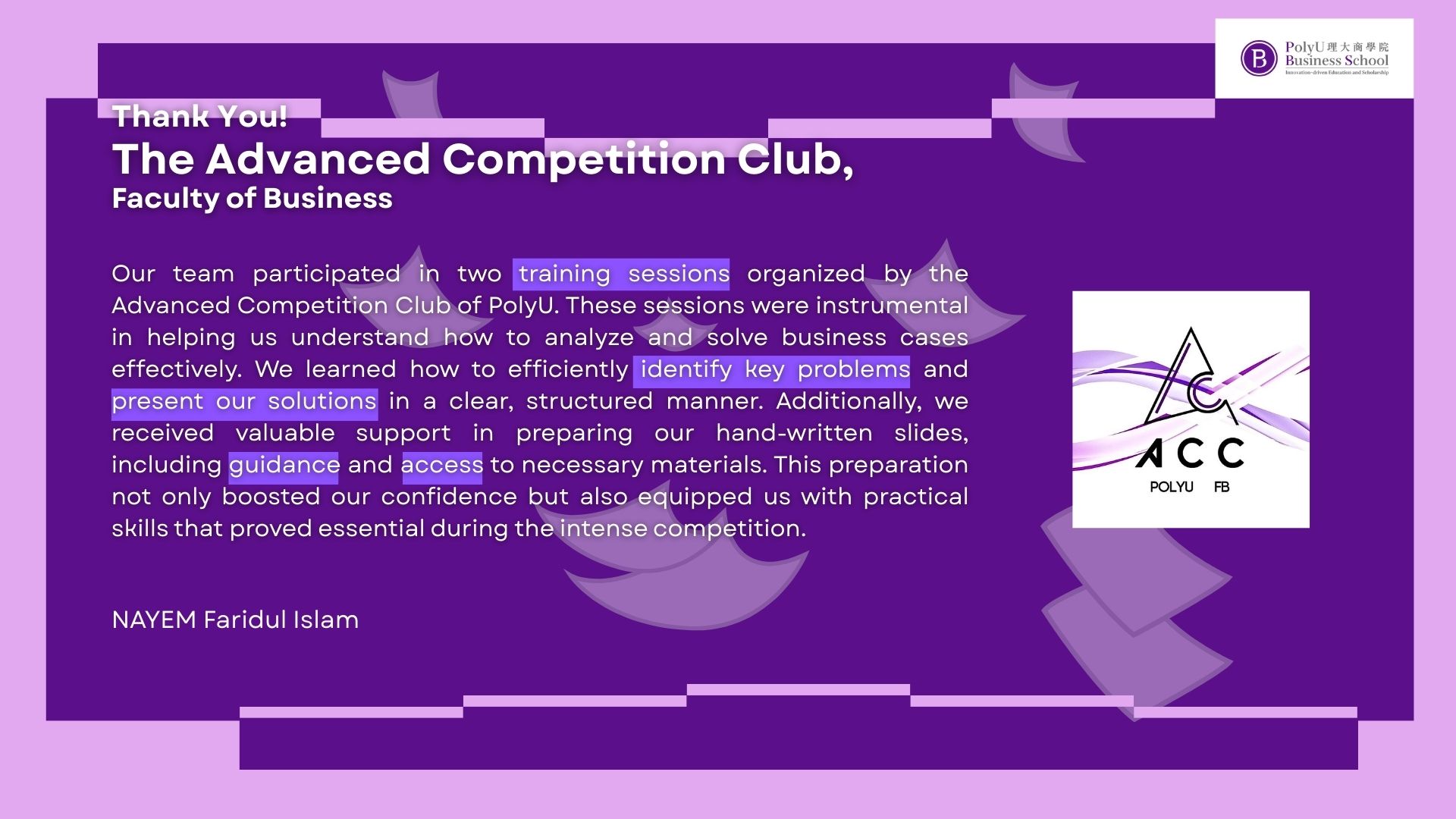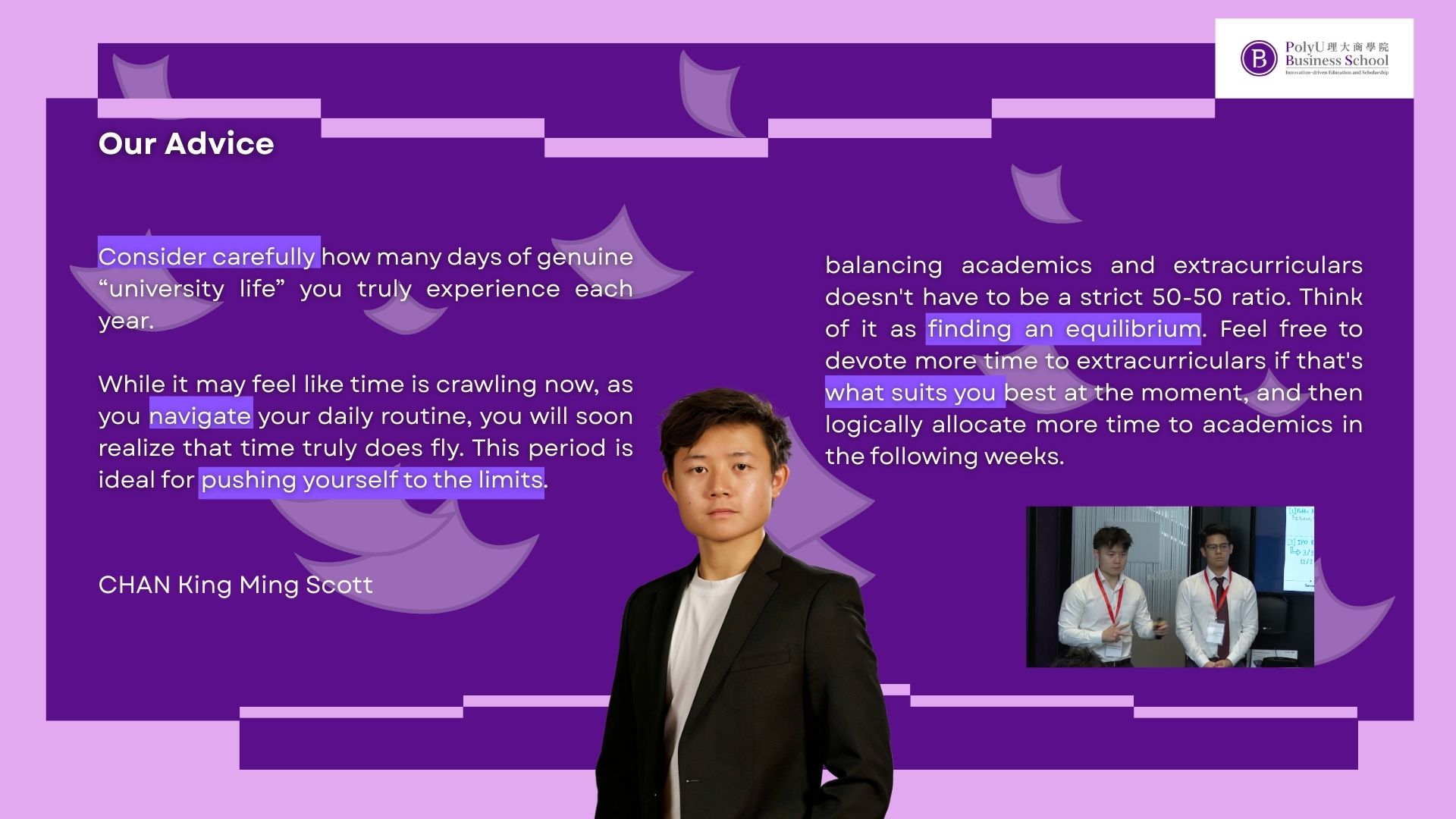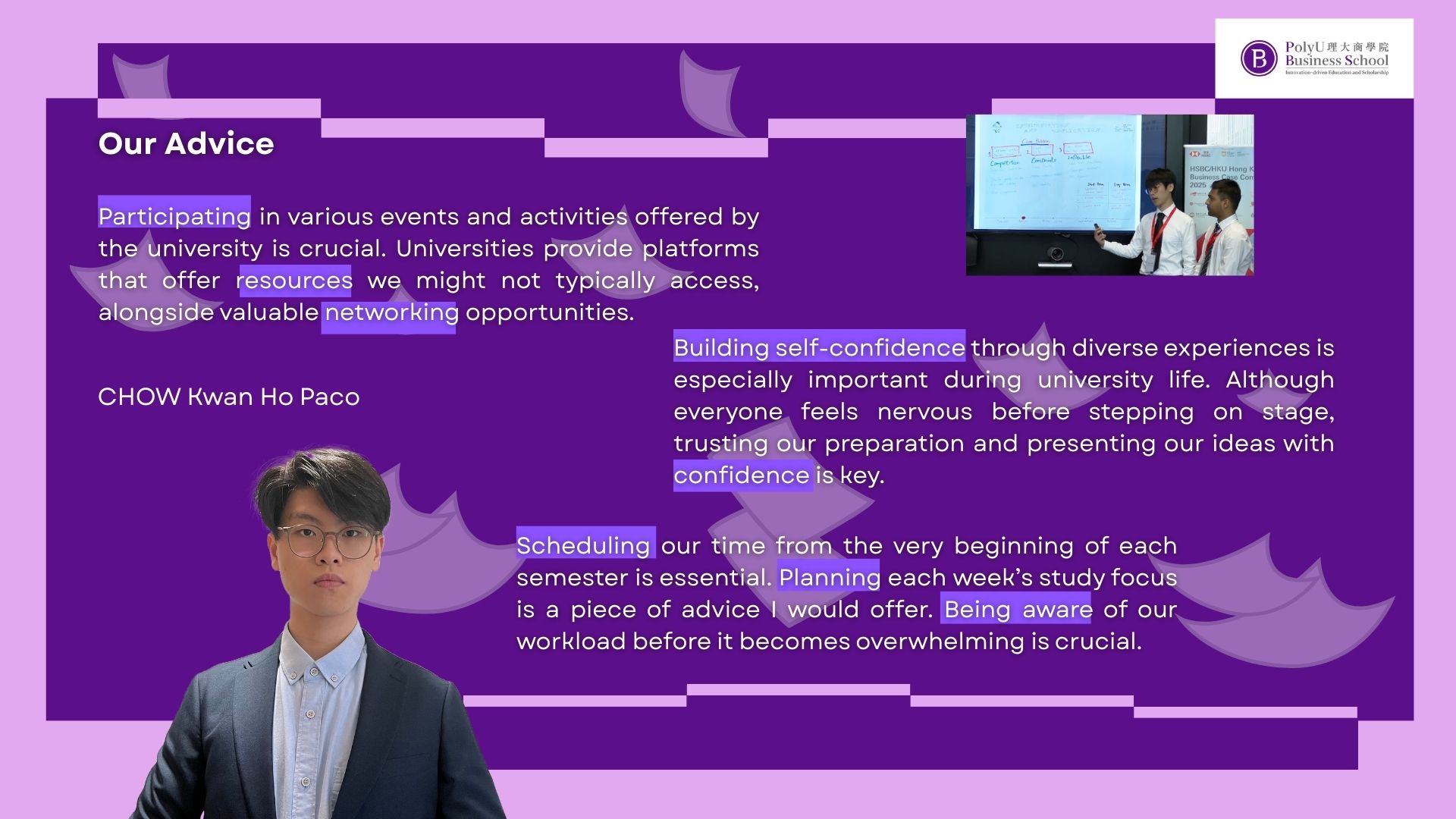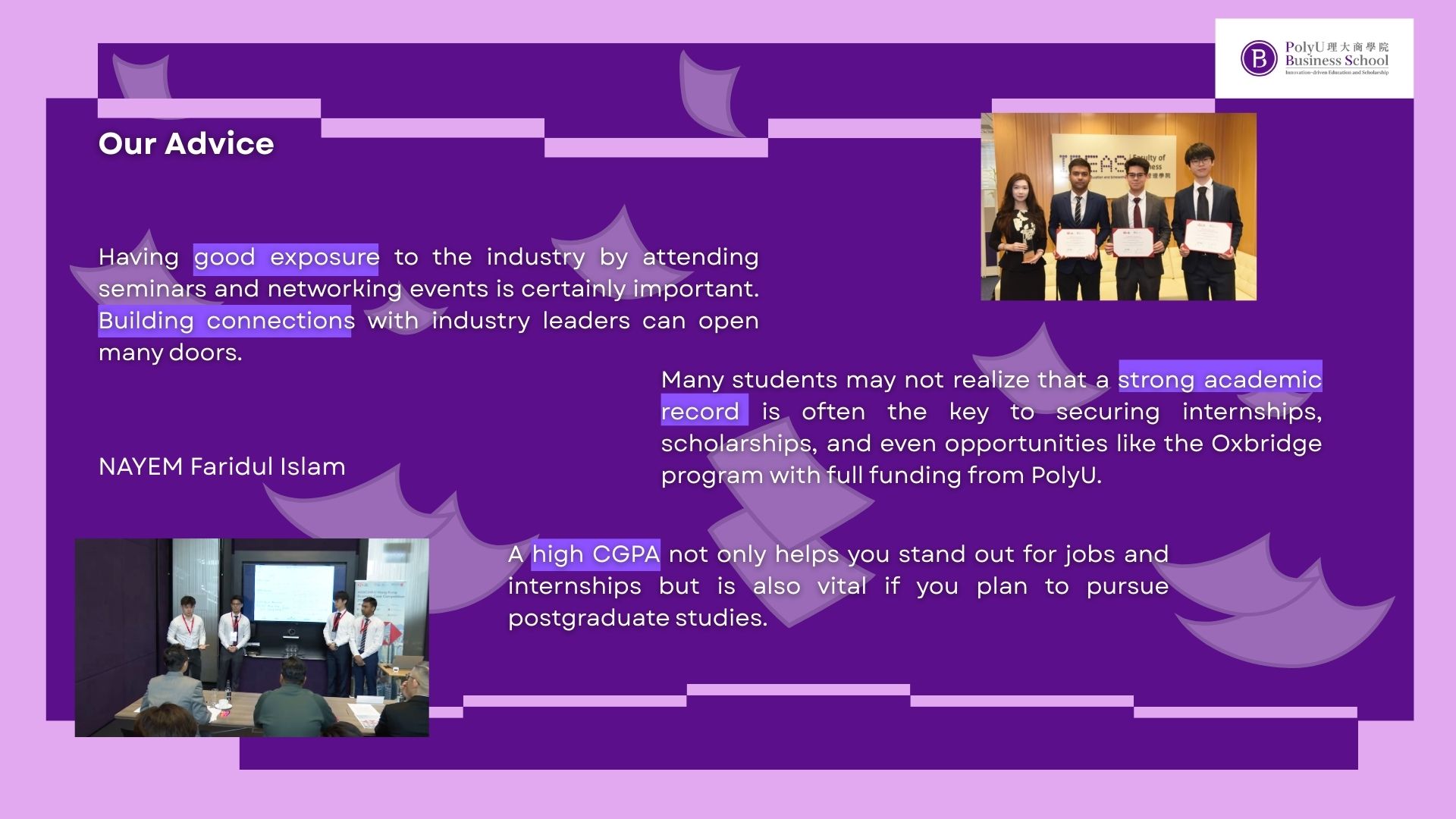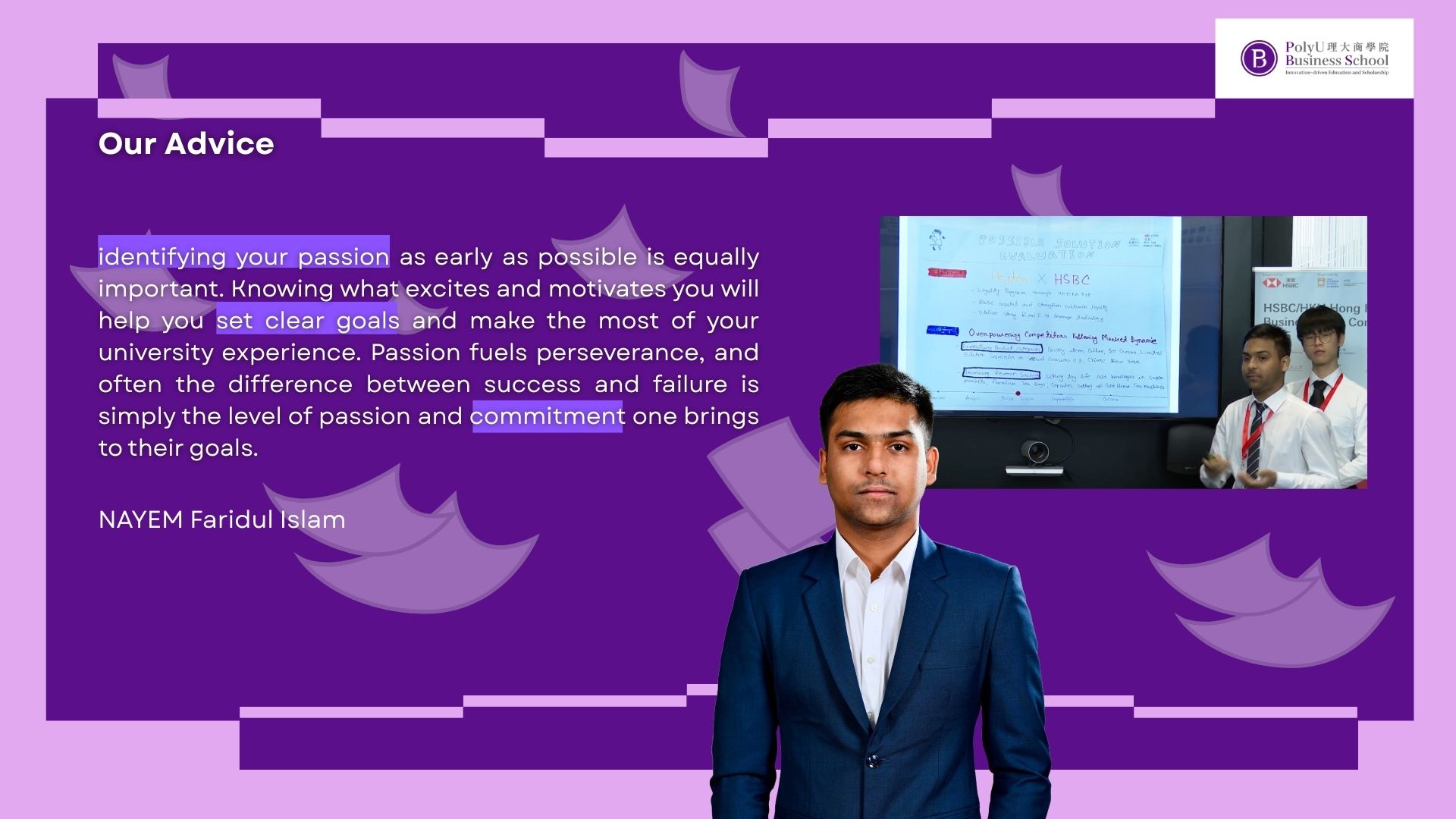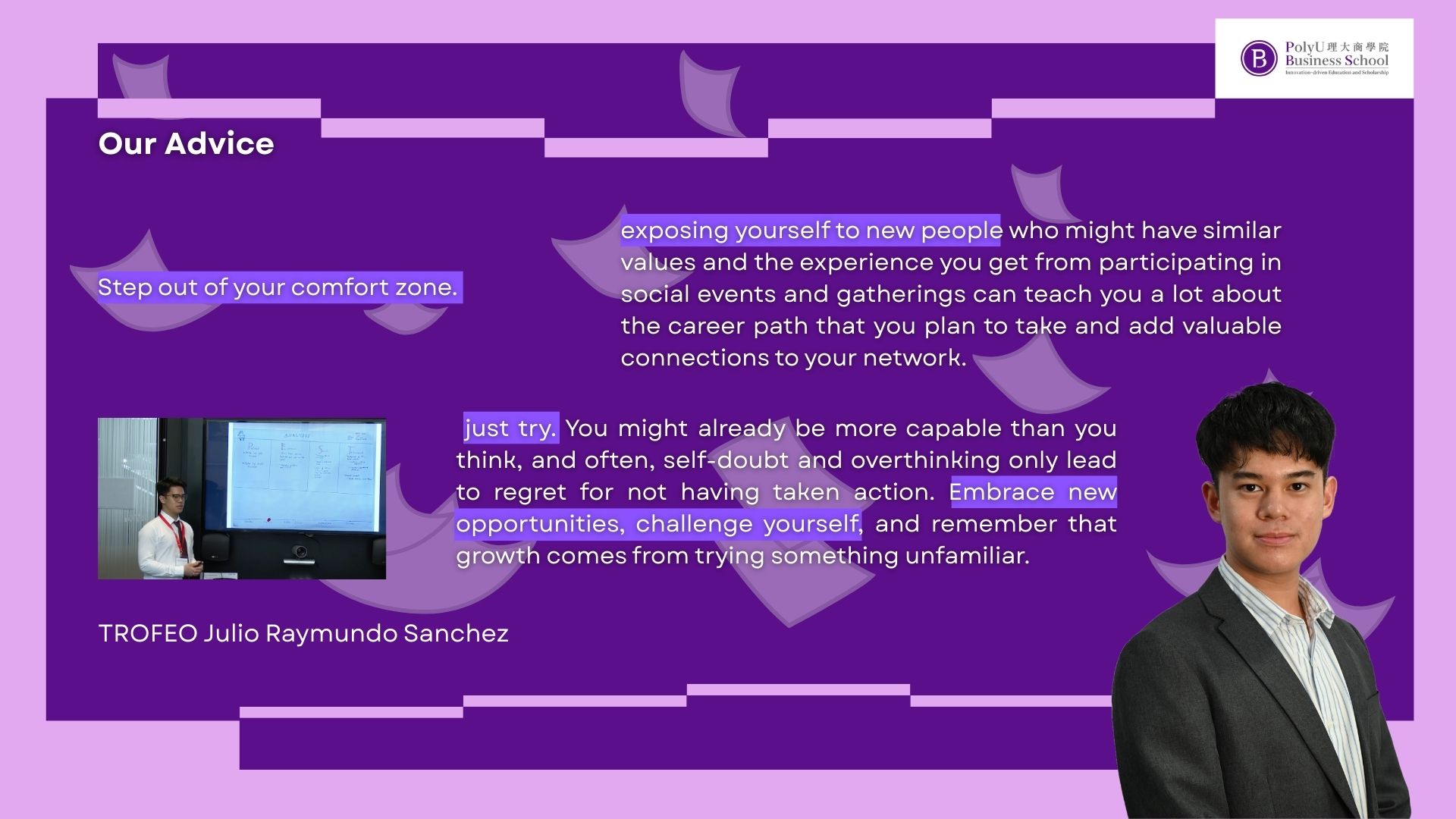


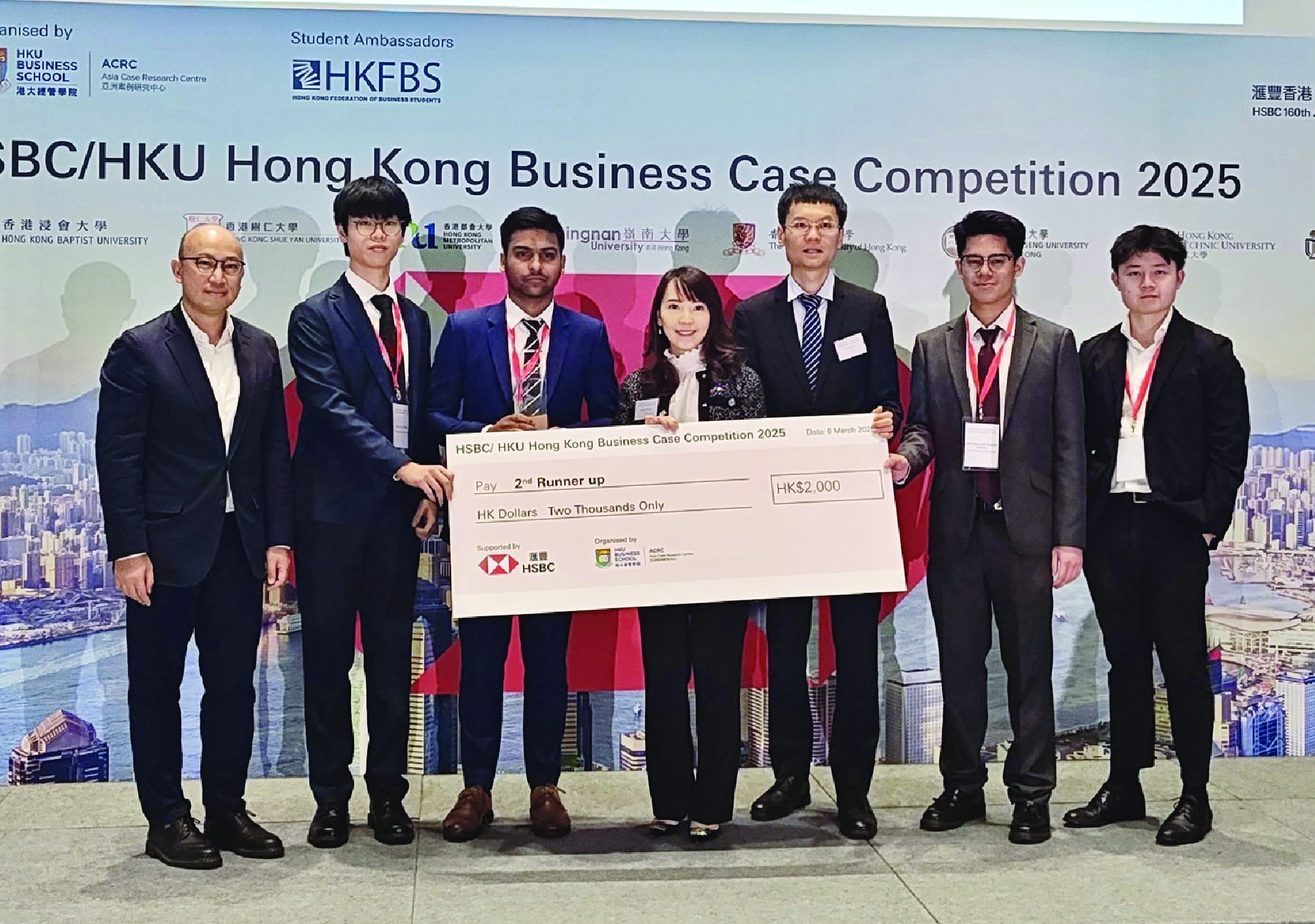
Seeking real-world experience, CHAN King Ming Scott, CHOW Kwan Ho Paco, NAYEM Faridul Islam, and TROFEO Julio Raymundo Sanchez entered the world’s largest undergraduate case competition. Guided by the Advanced Competition Club, the team transitioned from classroom learners to business strategists. They faced two intense stages: a 24-hour analysis of HeyTea and a rapid 4-hour challenge for Maxim’s Cakes. Without digital tools, they relied on Paco’s comparative research, Julio’s analytical frameworks, and Scott’s poise during daunting Q&A sessions.
The 2nd Runner-Up finish marked a milestone for PolyU, ending a five-year absence from the finals. This experience taught them the "big-picture" perspective, the importance of structure, and effective delegation. The team walked away not just with a trophy, but with the confidence to navigate the dynamic and unpredictable nature of the global business world.
Mr. CHAN King Ming Scott
Mr. CHOW Kwan Ho Paco
Mr. NAYEM Faridul Islam
Mr. TROFEO Julio Raymundo Sanchez
Faculty of Business
School of Accounting and Finance
Department of Management and Marketing
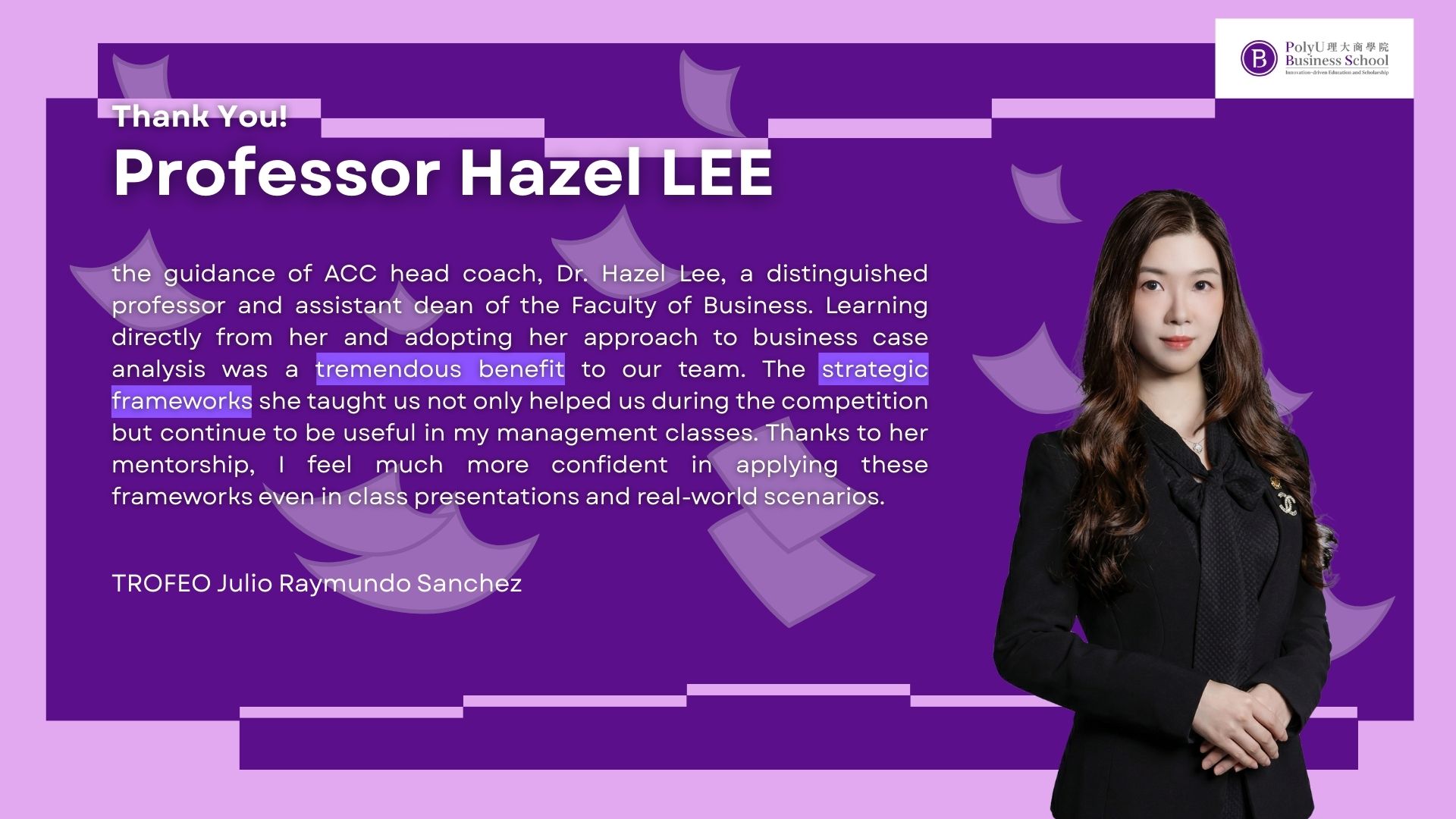
The team utilized frameworks to assess external and internal factors affecting businesses like HeyTea and Maxim’s Cakes. Julio highlighted the importance of analyzing "macro and micro environmental factors" to provide a logical foundation for their recommendations. This involved understanding how large-scale economic trends and specific industry dynamics influence a company’s current position and future growth.
Identifying what makes a company unique is central to business strategy. The team conducted "competitor analysis" to evaluate how HeyTea stood against its rivals in the new-style tea market. By identifying "competitive advantages," they could suggest ways for the company to outperform others. Scott further applied this by using the Q&A session to offer "unique insights," showing a deep understanding of how to differentiate a brand in a crowded market.
In the first round, the team analyzed the potential for HeyTea to explore an Initial Public Offering (IPO). This requires knowledge of financial markets, equity, and the criteria a private company must meet to go public. Paco and Scott had to evaluate market maturity and investor appeal, demonstrating an ability to think beyond operations and into the realm of high-level financial strategy.
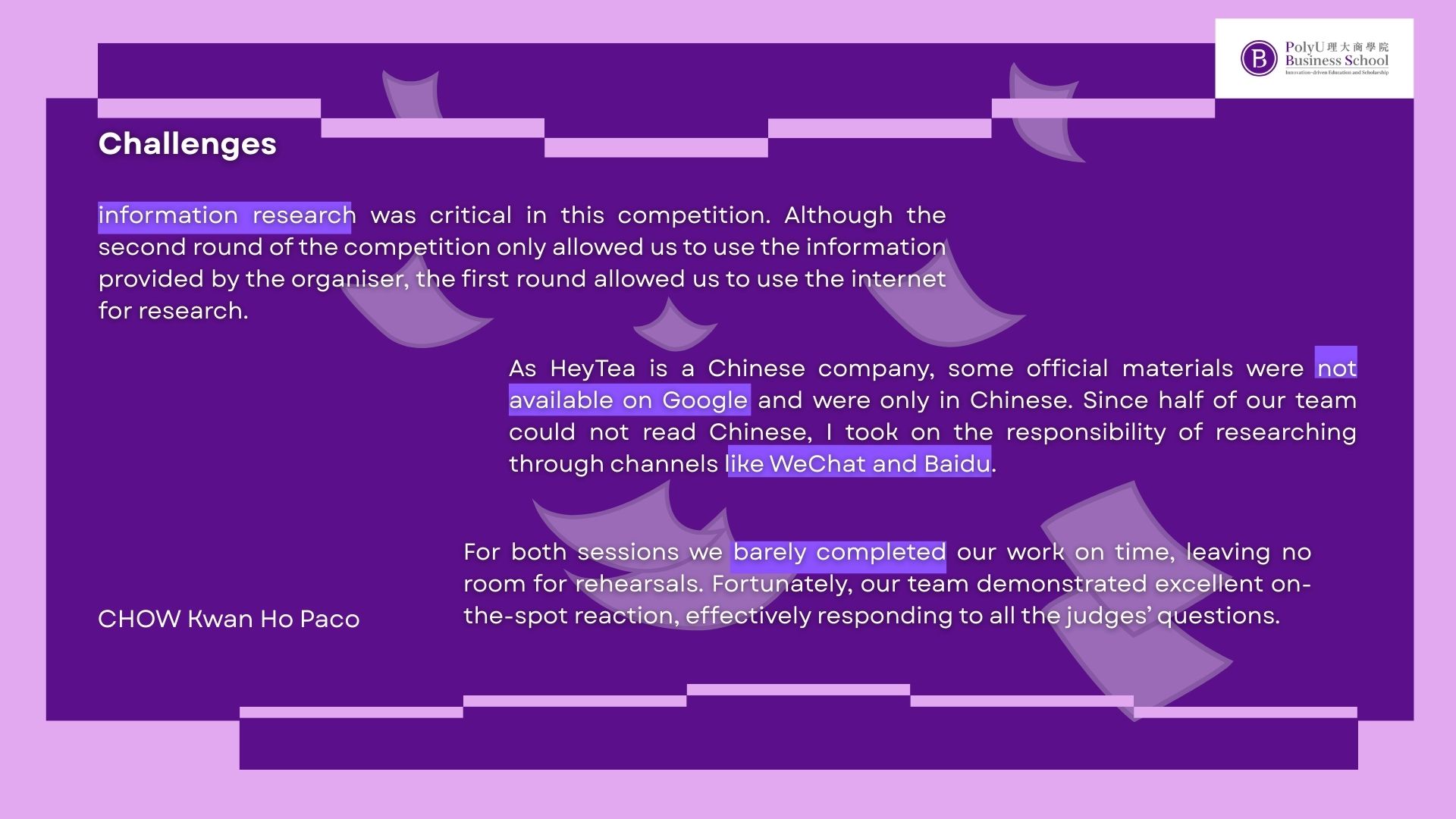
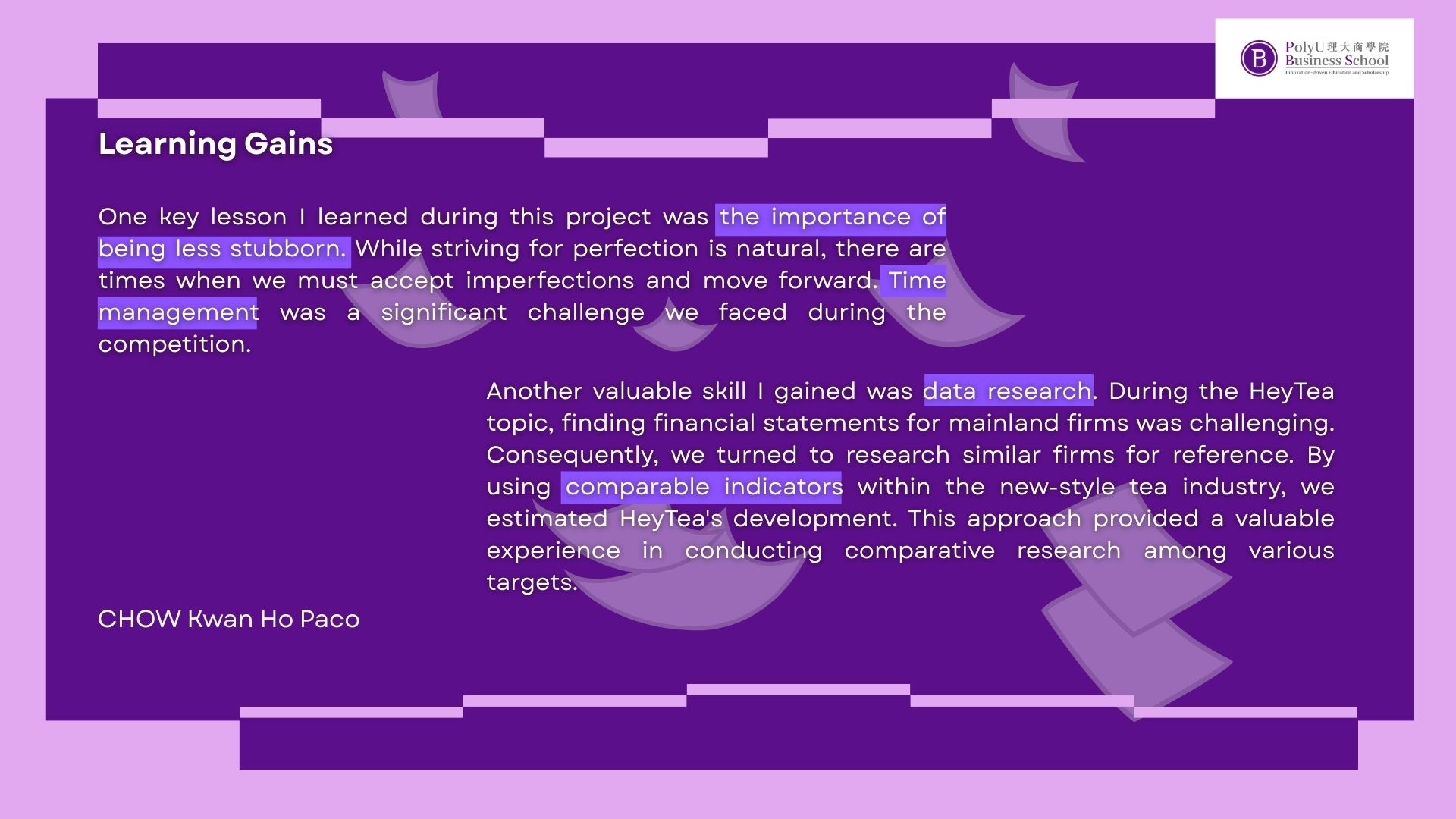
When official data for mainland Chinese firms was unavailable on standard search engines, Paco used regional channels like WeChat and Baidu. Because specific financial statements were hard to find, the team used "comparable indicators" within the industry to estimate company growth. This demonstrates the business skill of data triangulation—using proxy data from similar firms to build a reliable estimate when primary data is missing.
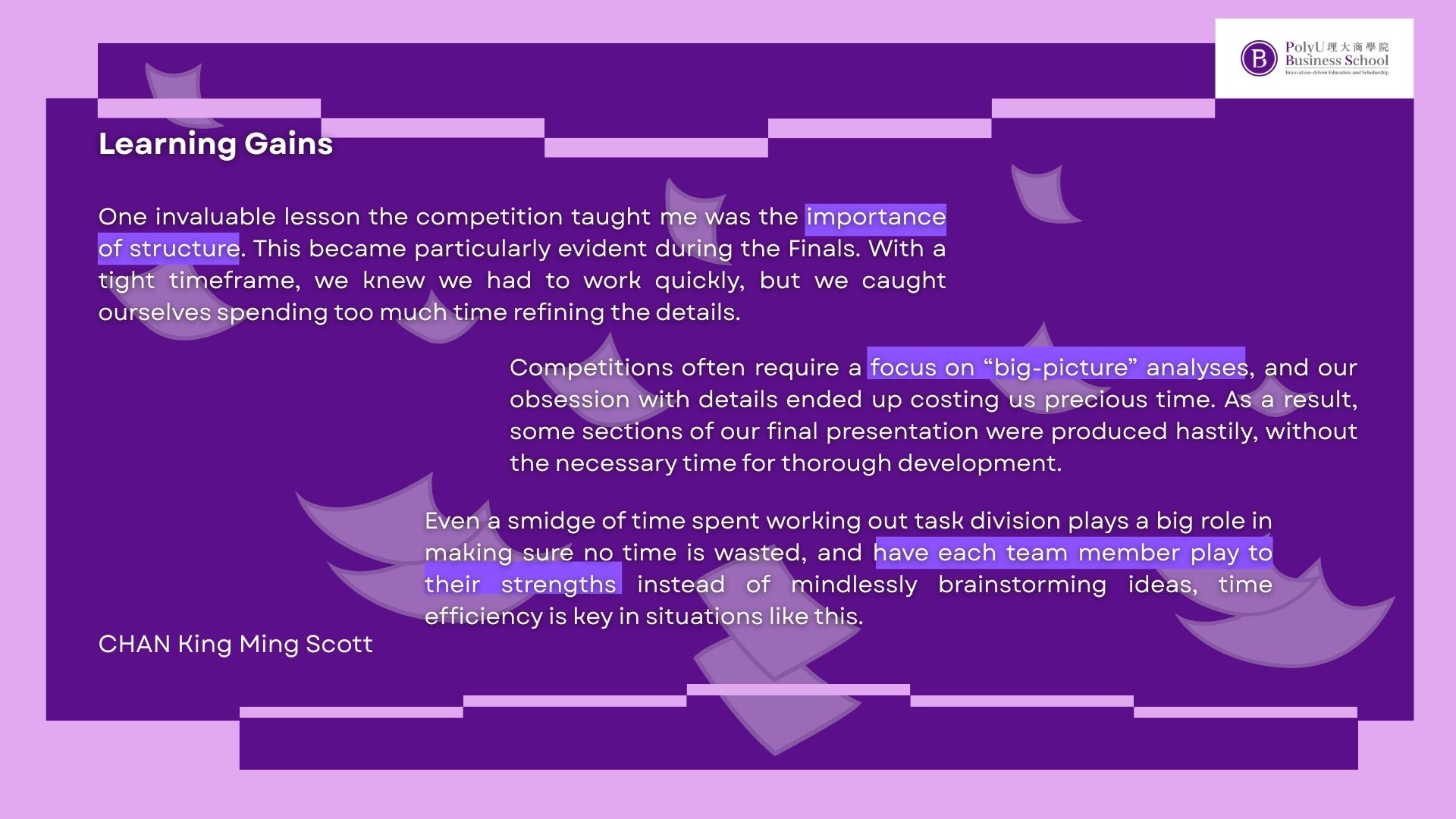
Under the "intense time constraints" of the final round (4 hours with no internet), the team applied principles of organizational management. Nayem and Scott emphasized the importance of task division, assigning roles based on each member’s strengths to avoid "mindless brainstorming." This ensured the team focused on "big-picture analysis" rather than getting bogged down in minor details, a crucial skill for efficient project management in high-pressure business environments.
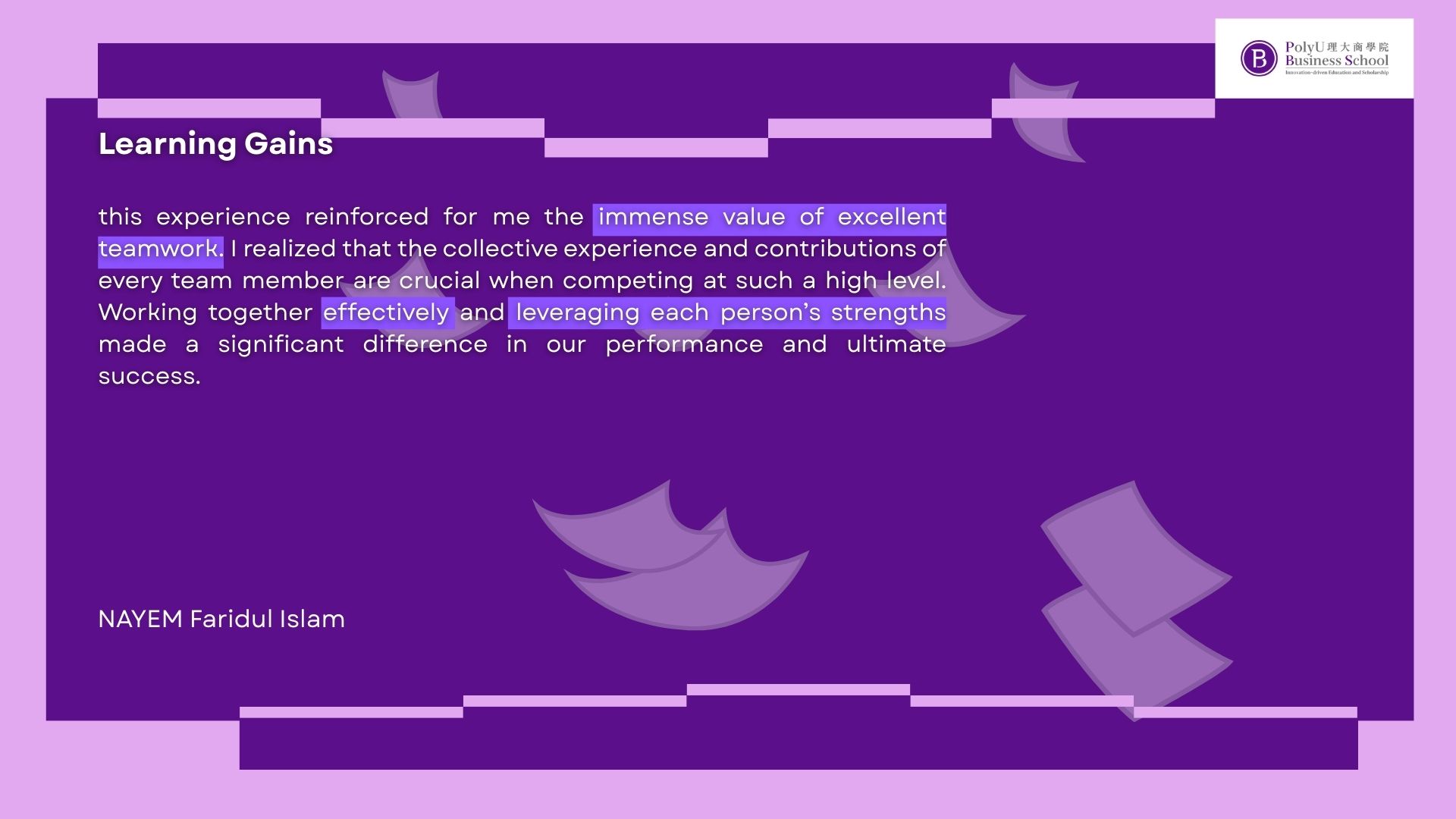
The team consistently demonstrated strong coordination under pressure. They divided roles clearly—strategy (Nayem), in-depth analysis (Julio), research (Paco), presentation (Scott)—and adjusted when circumstances changed (e.g., when Scott was absent during solution-writing, Nayem stepped up to coordinate and ensure all sections were completed to a high standard). In both rounds, they managed workflows for handwritten slides, task allocation, and last‑minute changes, showing they can plan, delegate, and work as a cohesive unit toward a shared goal.
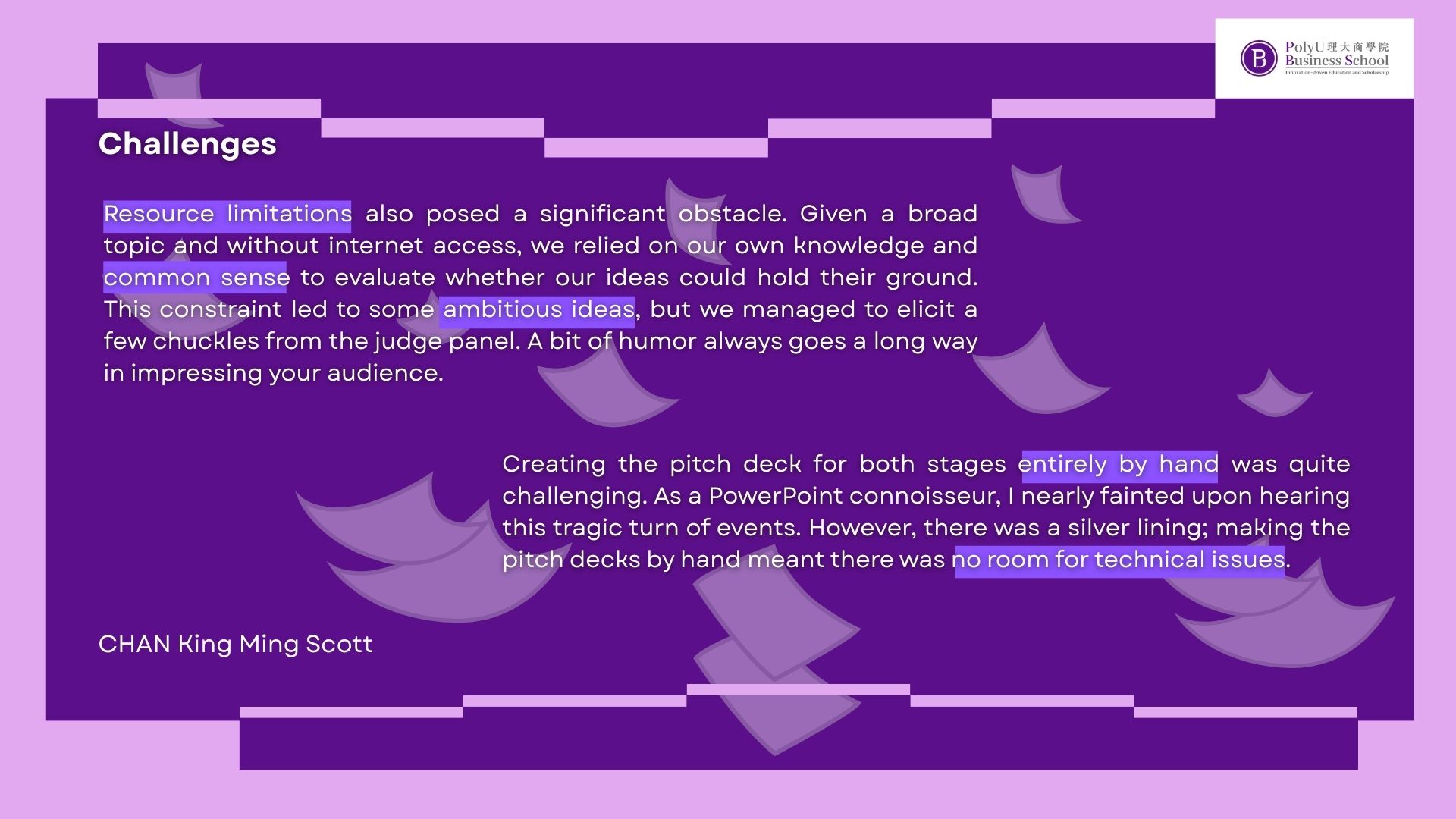
Both cases (HeyTea and Maxim’s Cakes) required the team to quickly identify key business problems, analyze competitors, evaluate macro/micro environments, and design feasible growth or IPO strategies. They also had to solve unexpected issues: handling missing slides in the first round, coping with zero internet in the second, and producing viable recommendations based only on limited case materials and their own judgment. This shows the ability to think analytically, work with incomplete information, and adapt solutions in real time.
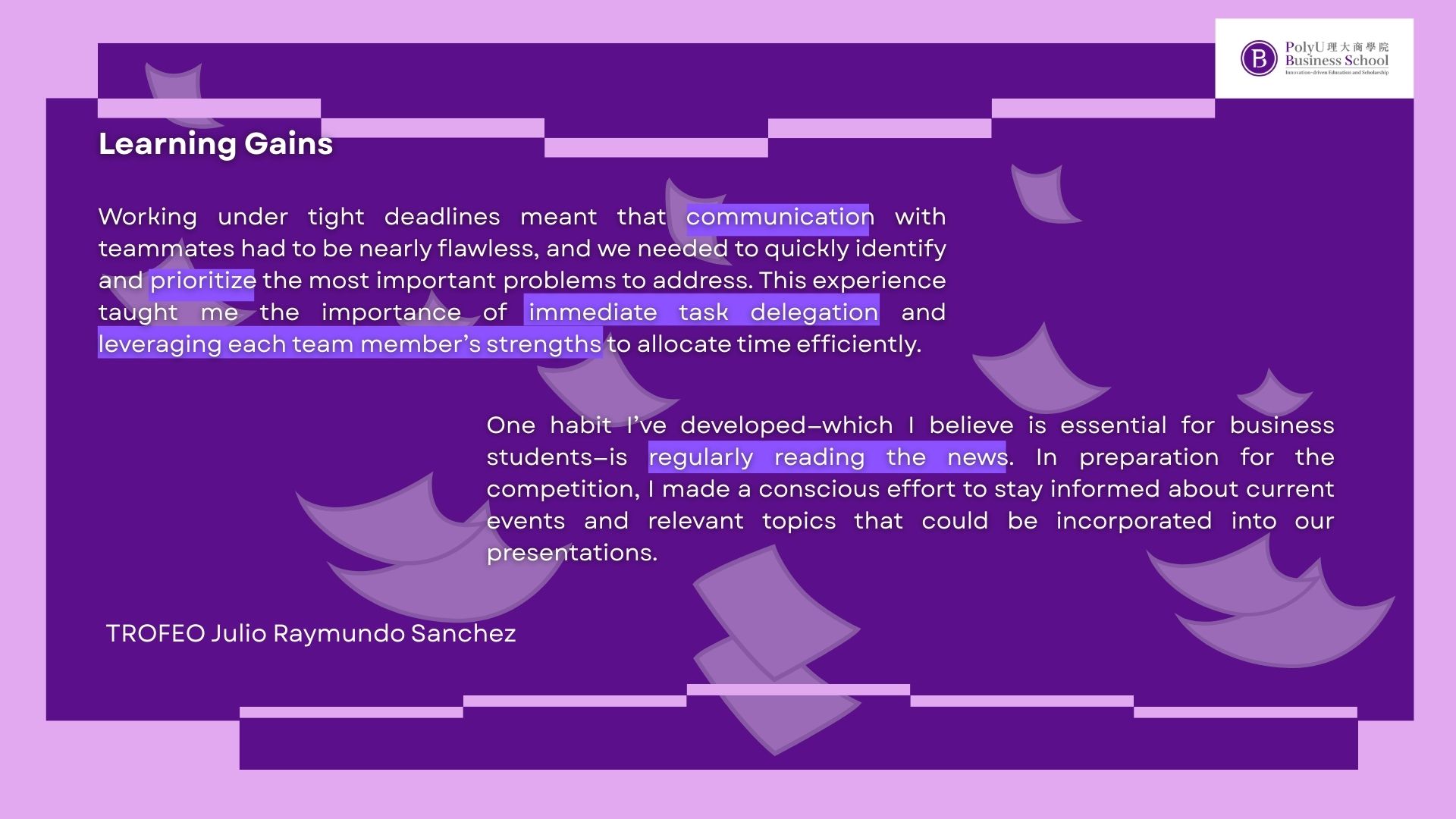
In the first round, the team made heavy use of research to build a solid foundation for their strategy. When official information on HeyTea wasn’t accessible in English or via Google, Paco proactively used Chinese platforms (WeChat, Baidu) and then translated/filtered the insights for the team. When direct financials were unavailable, they used comparable firms and industry indicators to estimate HeyTea’s performance. Julio’s habit of reading news (including using Bloomberg) further strengthened their ability to bring up‑to‑date, relevant insights into their analyses and presentations.
The team’s success depended heavily on clear communication—both internally and in front of judges. They produced handwritten slides that still managed to be “professional and impactful,” responded effectively to judges’ questions even without rehearsal, and used Q&A strategically to address missing points and stand out with creative, well-reasoned answers. Scott in particular viewed Q&A as an opportunity to differentiate the team by sharing unique angles and “backup ideas,” showing confidence and the ability to think on their feet.
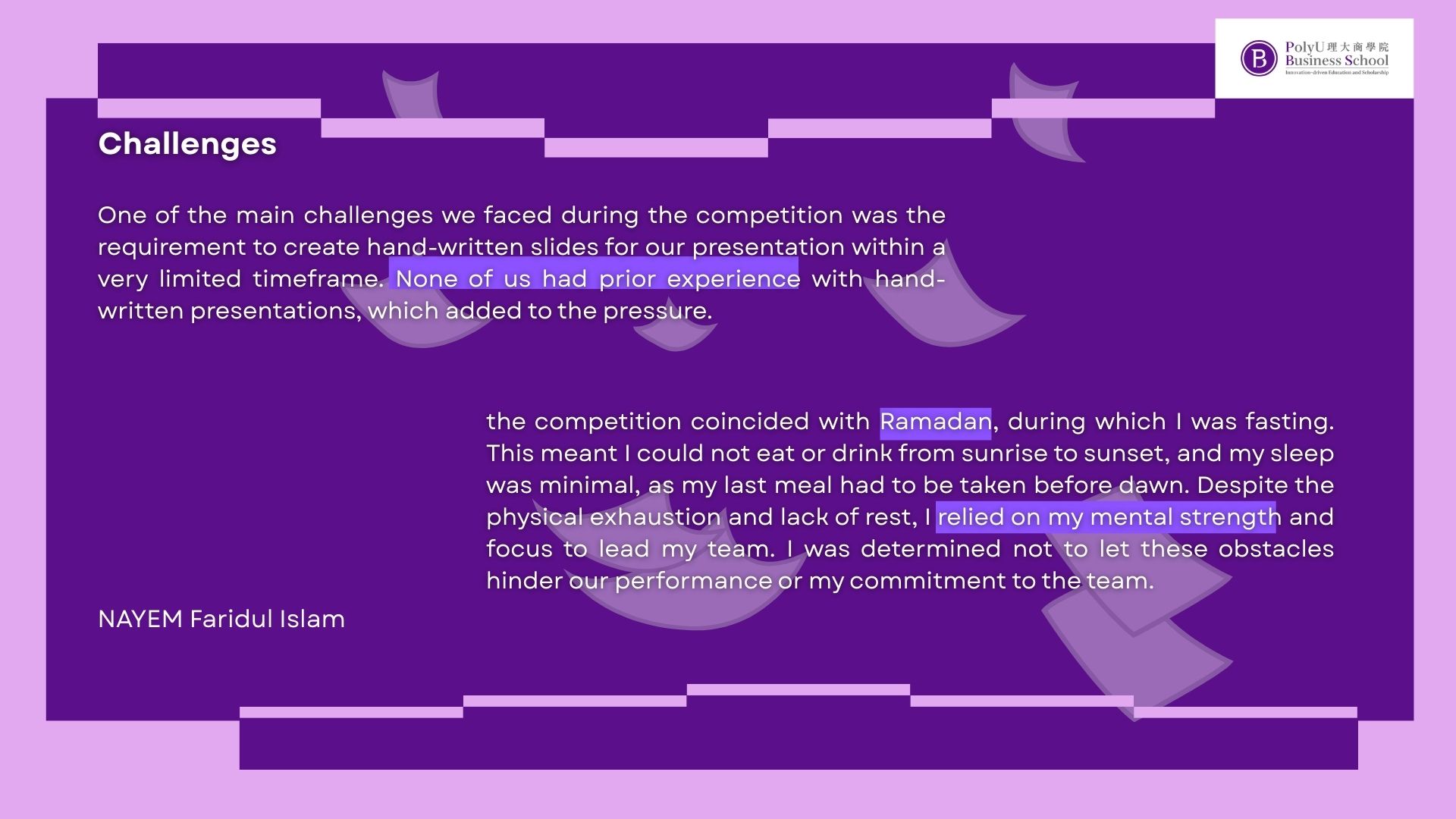
Working with 24 hours in Round 1 and only 4 hours in Round 2 forced the team to adapt quickly and learn from each stage. They recognized that over-focusing on details hurt their performance in the finals and reflected that they needed stronger structure, earlier task division, and better prioritization of “big-picture” issues. Julio highlighted immediate task delegation and playing to each member’s strengths; Paco learned to be less perfectionistic and accept “good enough” under time pressure; Nayem led despite fasting and fatigue during Ramadan, showing personal resilience. Together, these reflections show a commitment to adapting their approach, improving time management, and carrying those lessons into future work.
The pursuit of knowledge is a lifelong journey! To further expand your knowledge and continue your personal and professional growth. Click and explore the following learning resources:
Strategic Environmental Analysis
Project Management and Teamwork
Critical Thinking and Problem-solving
Research and Information Literacy