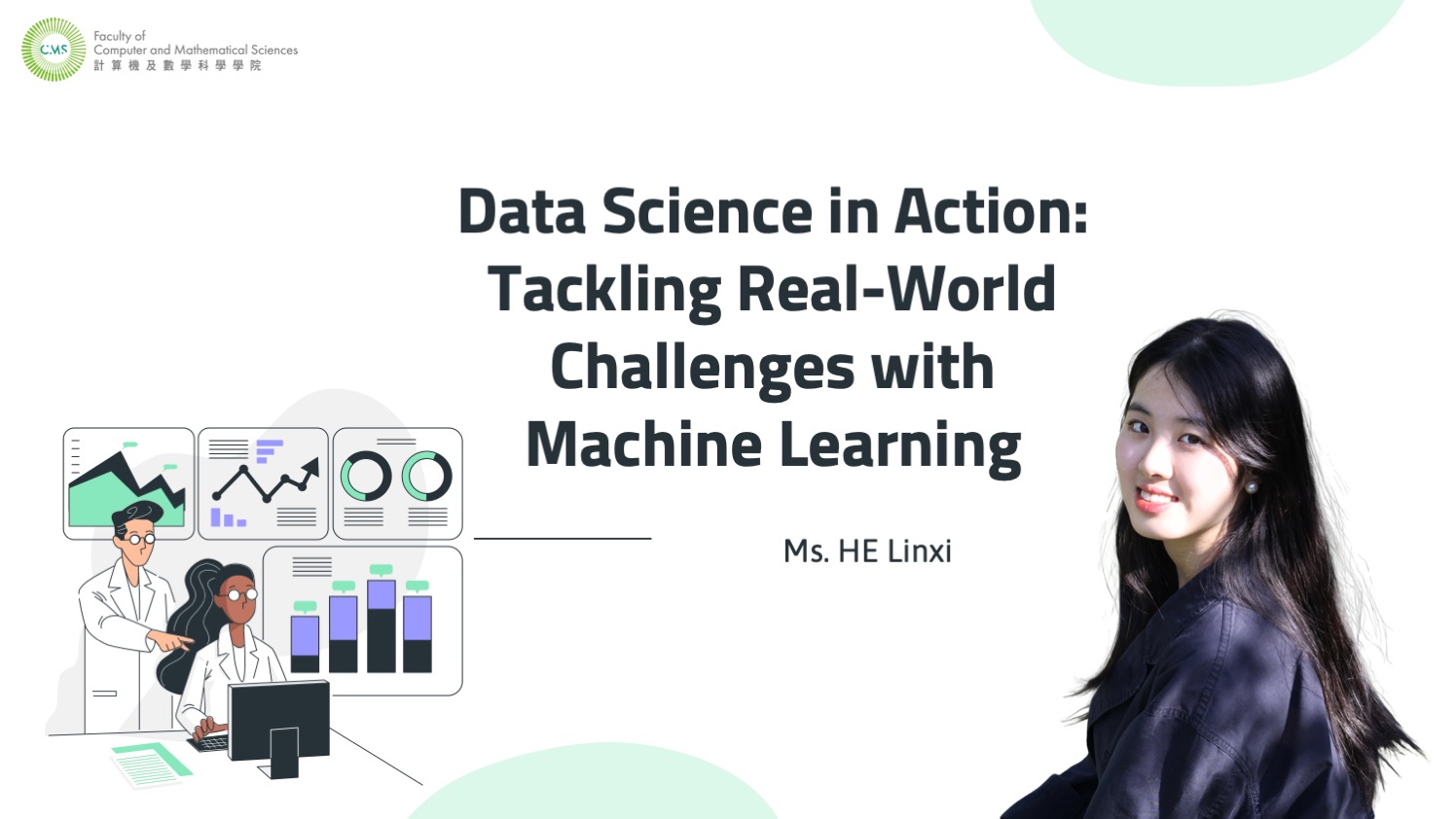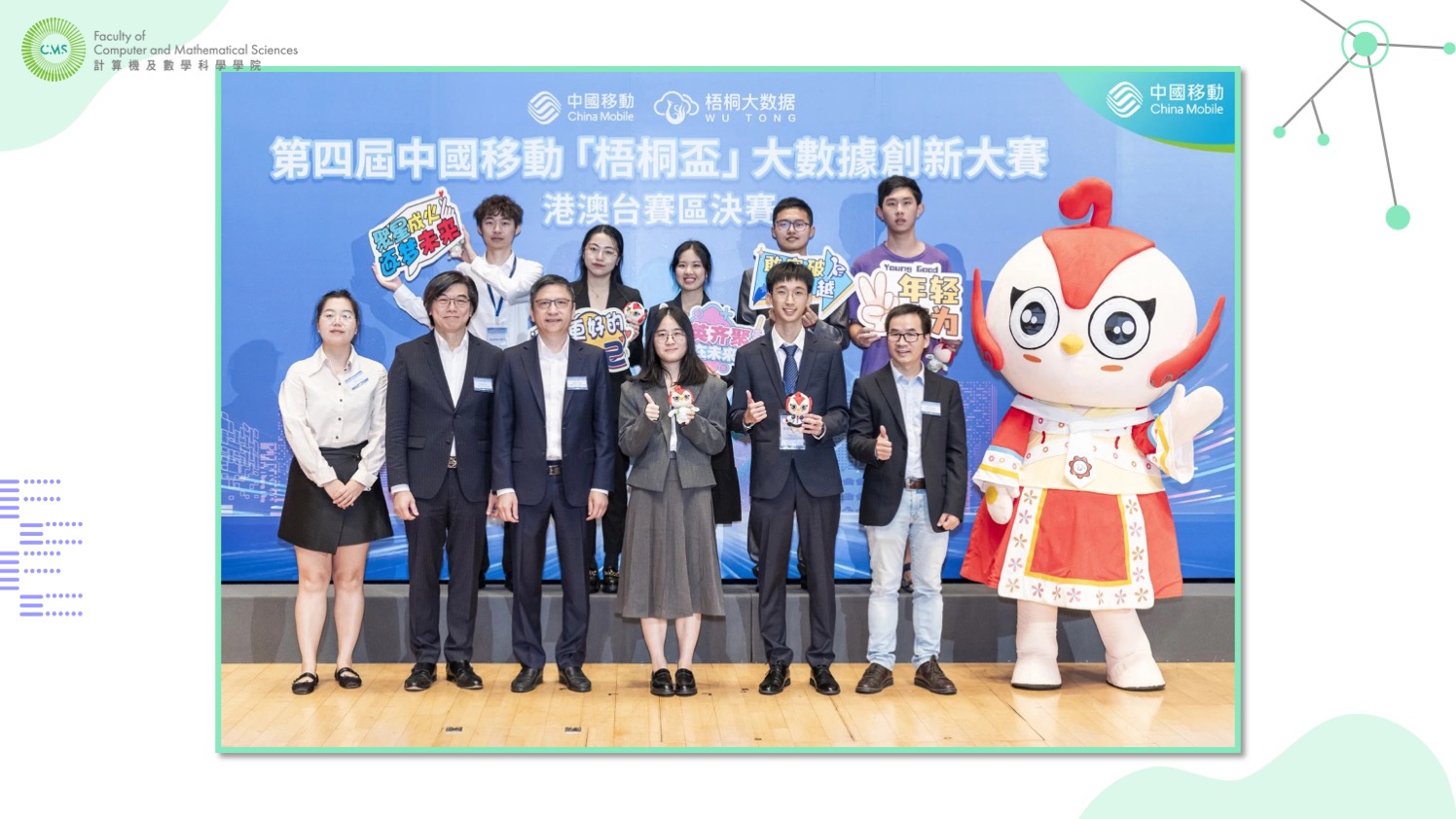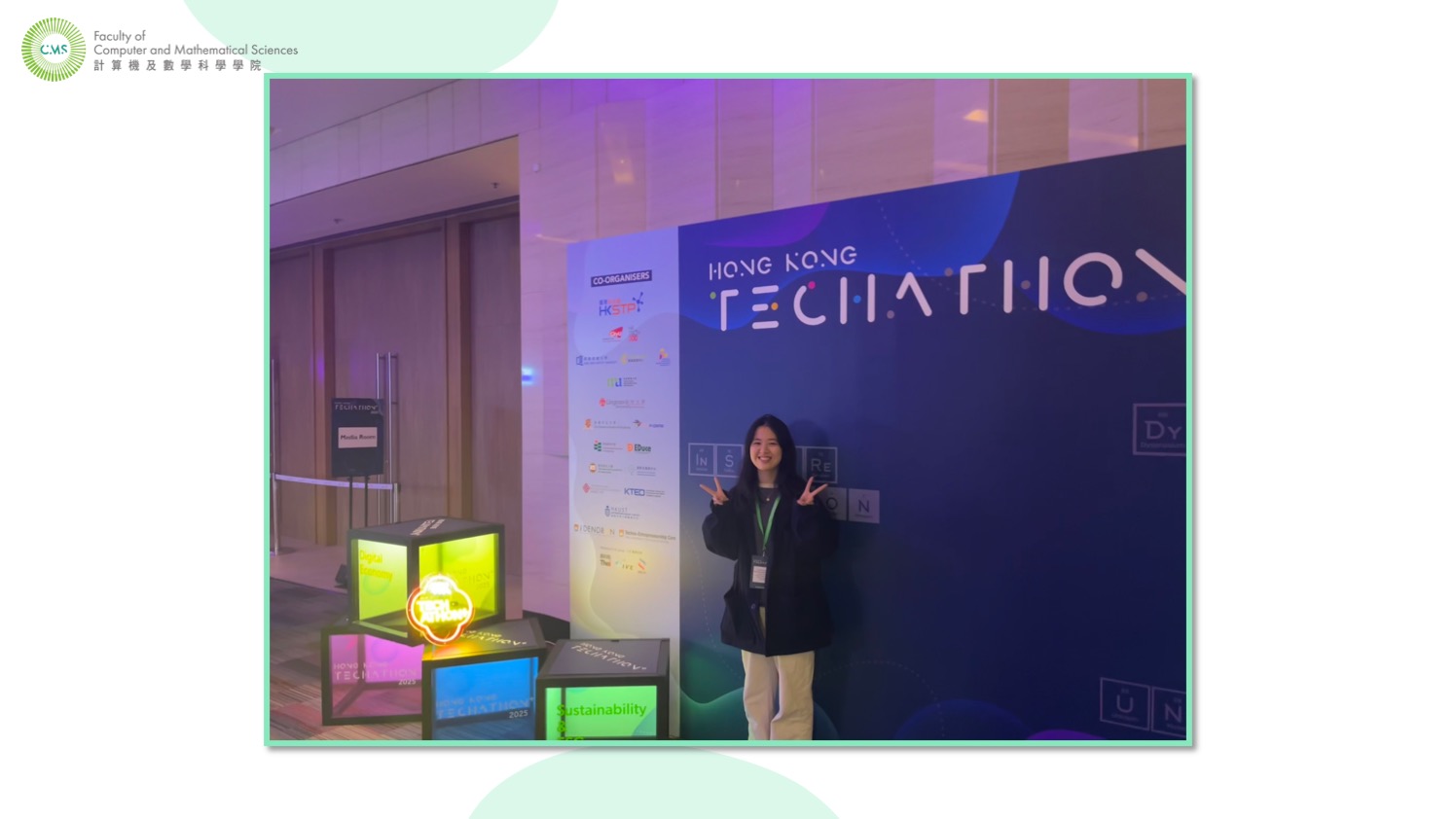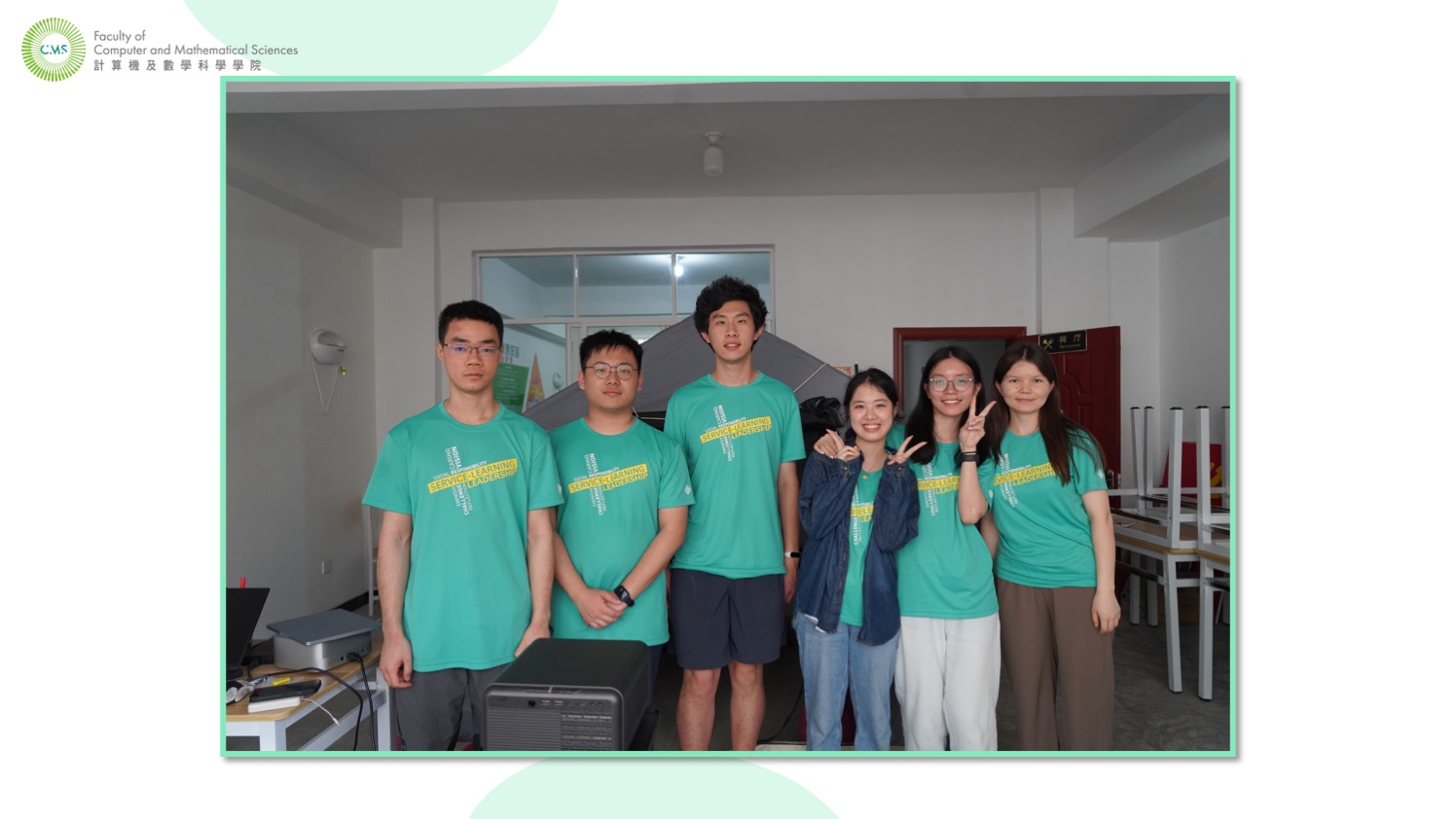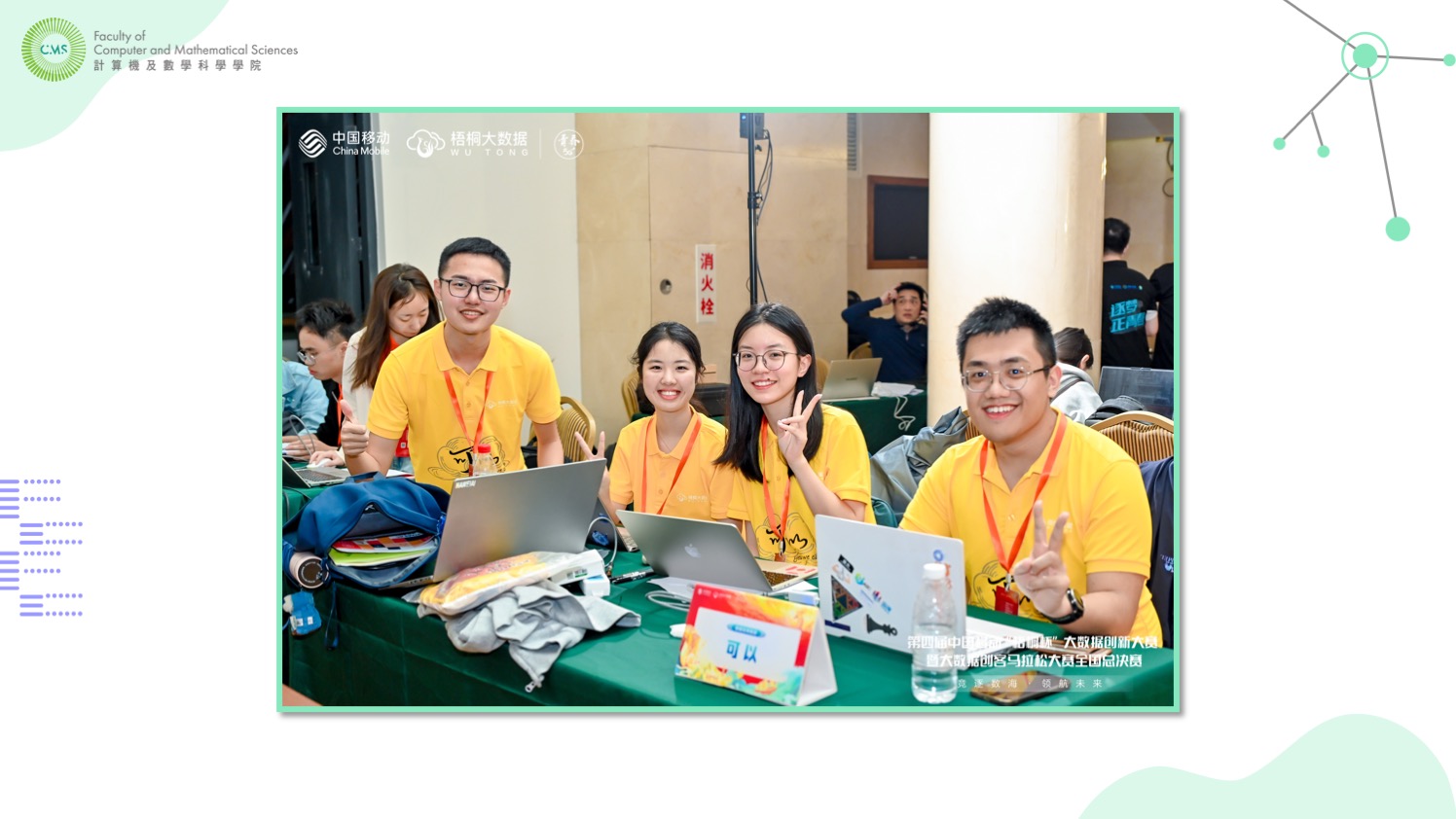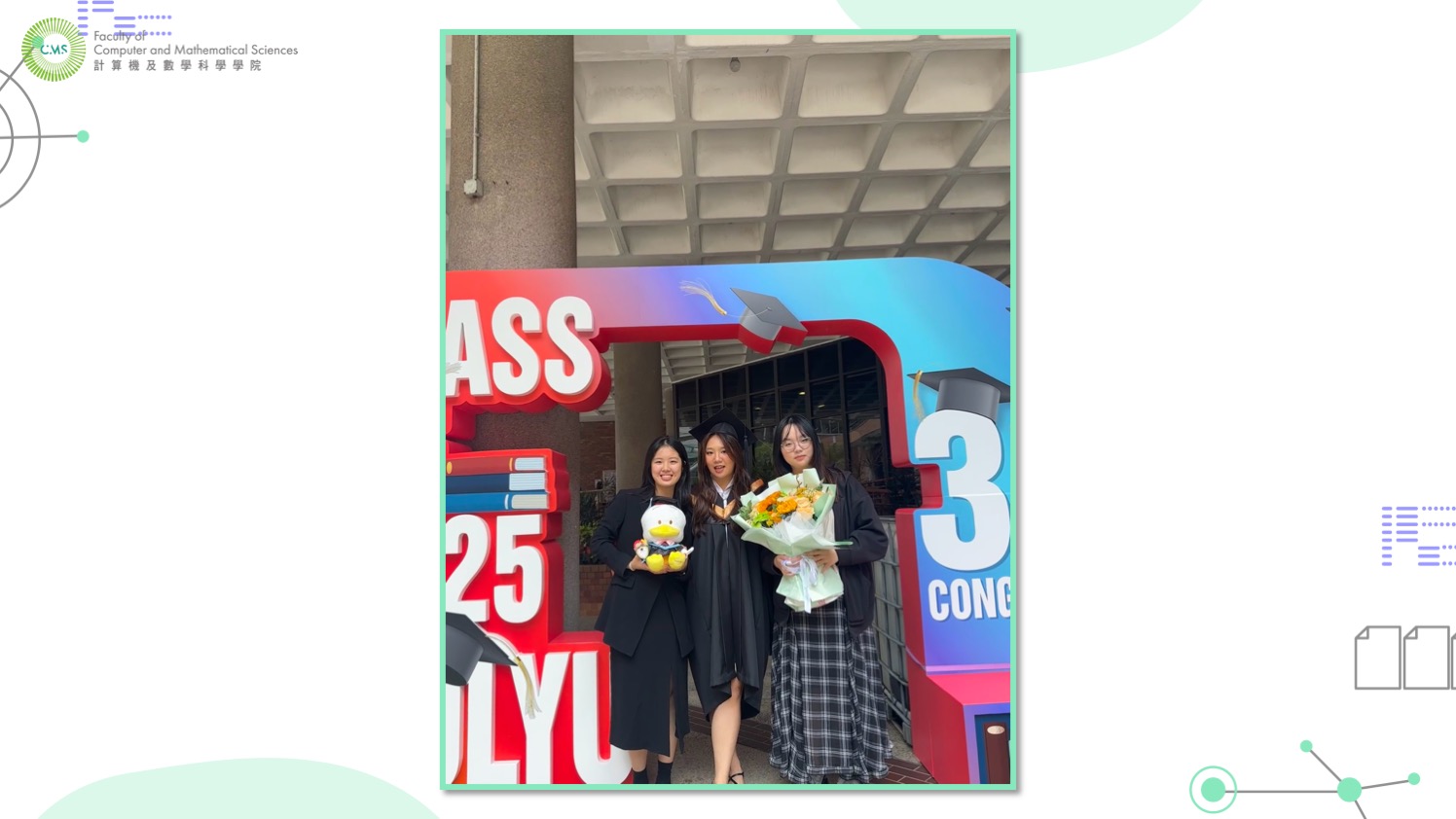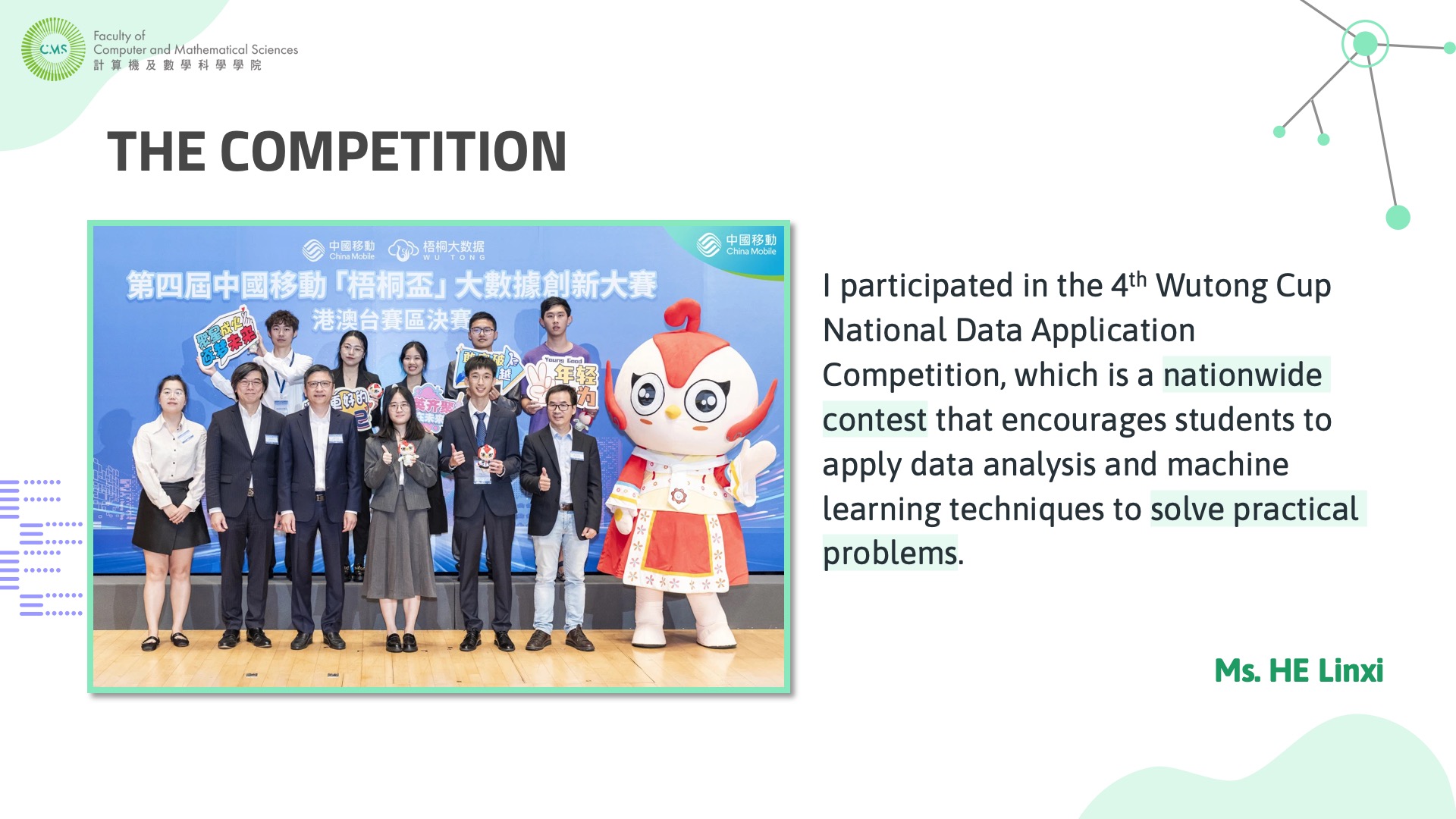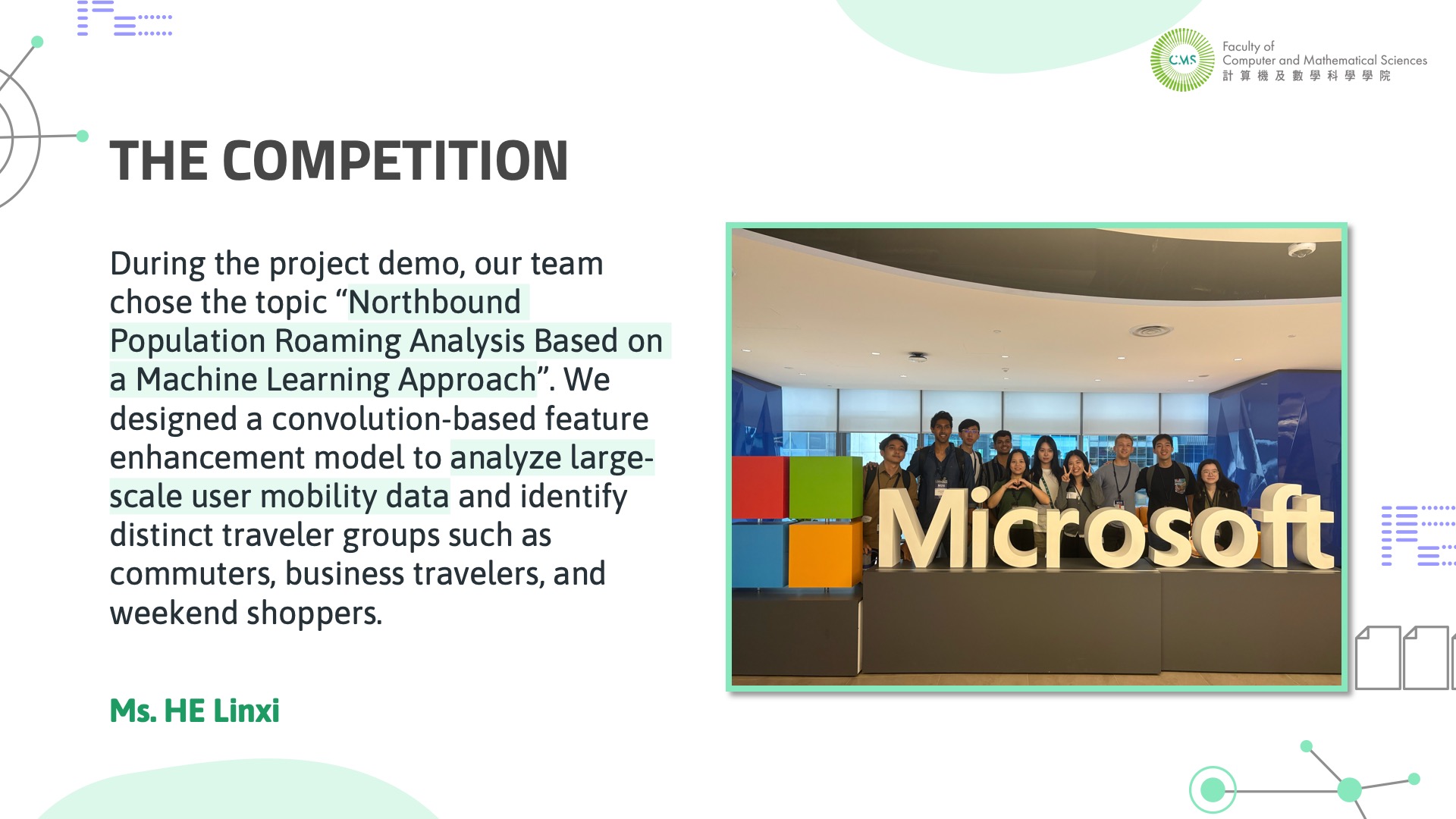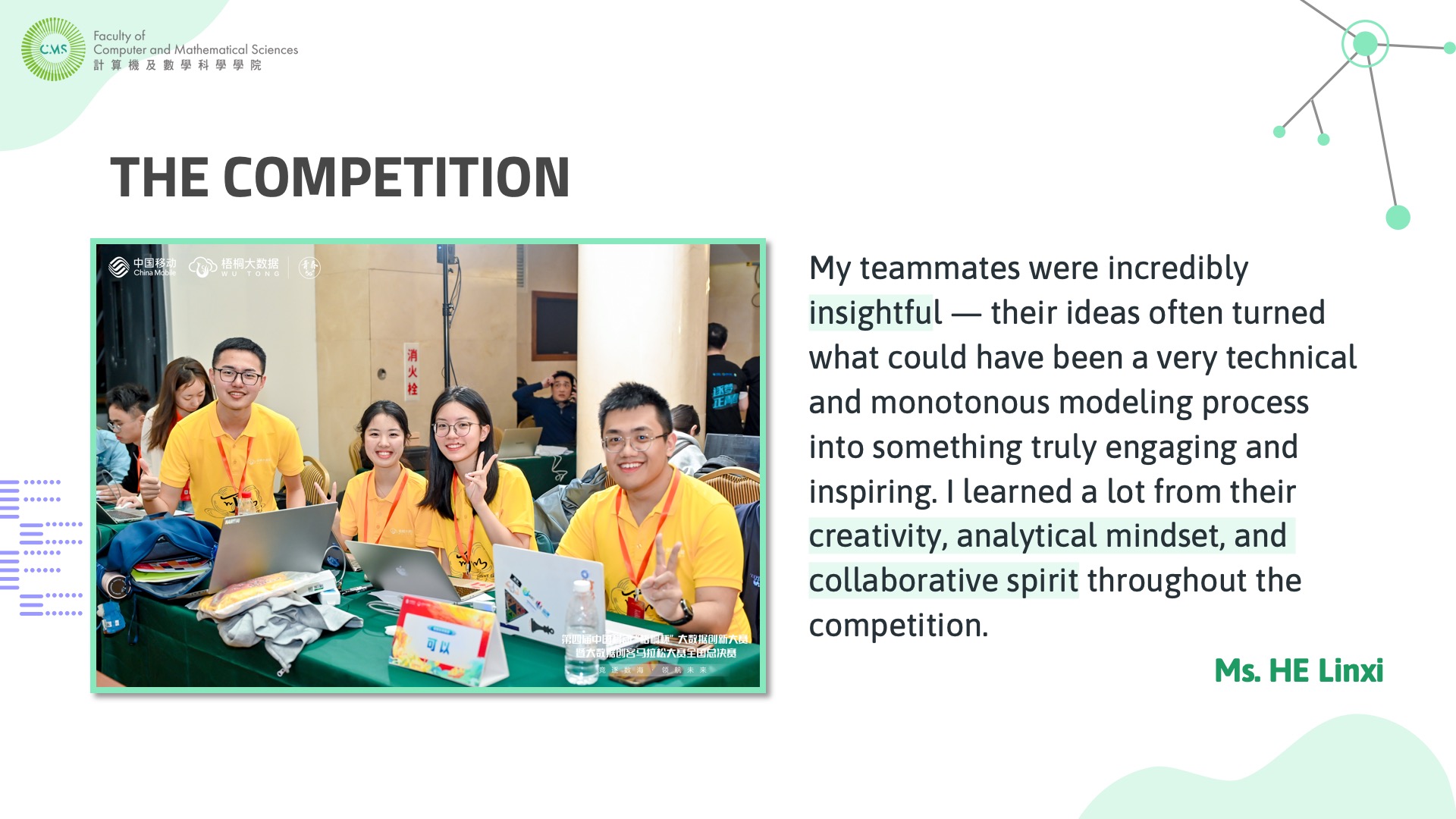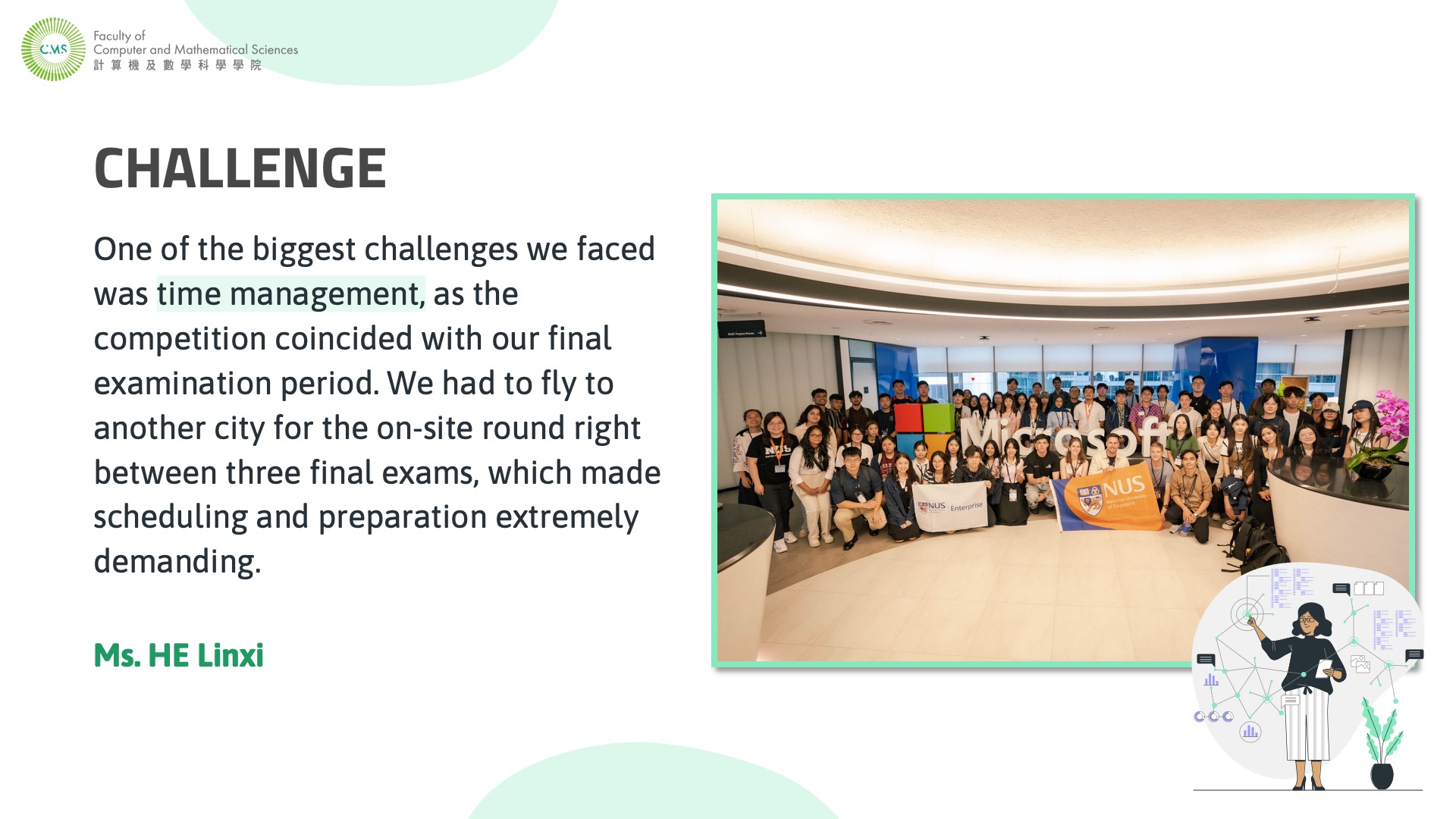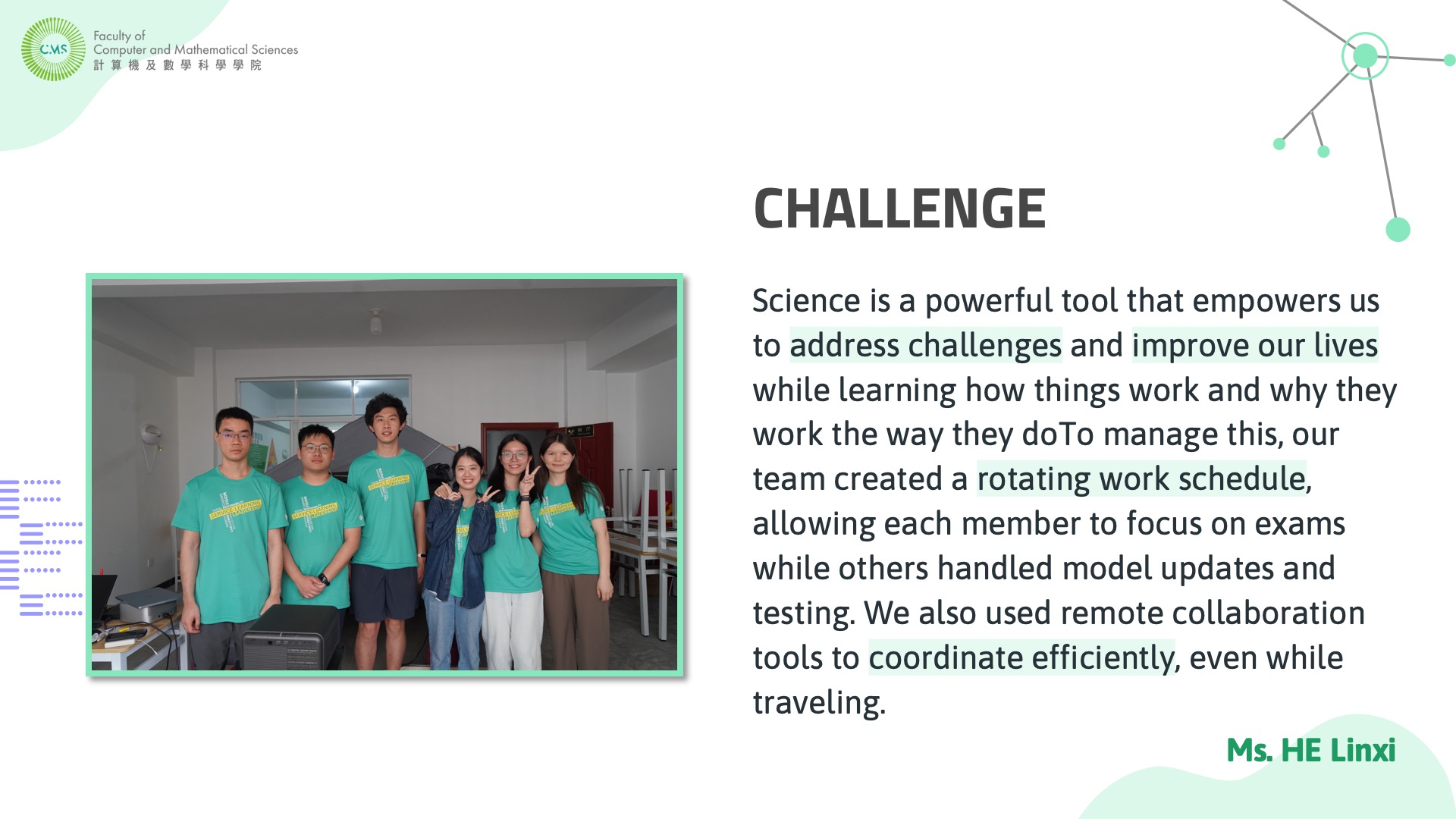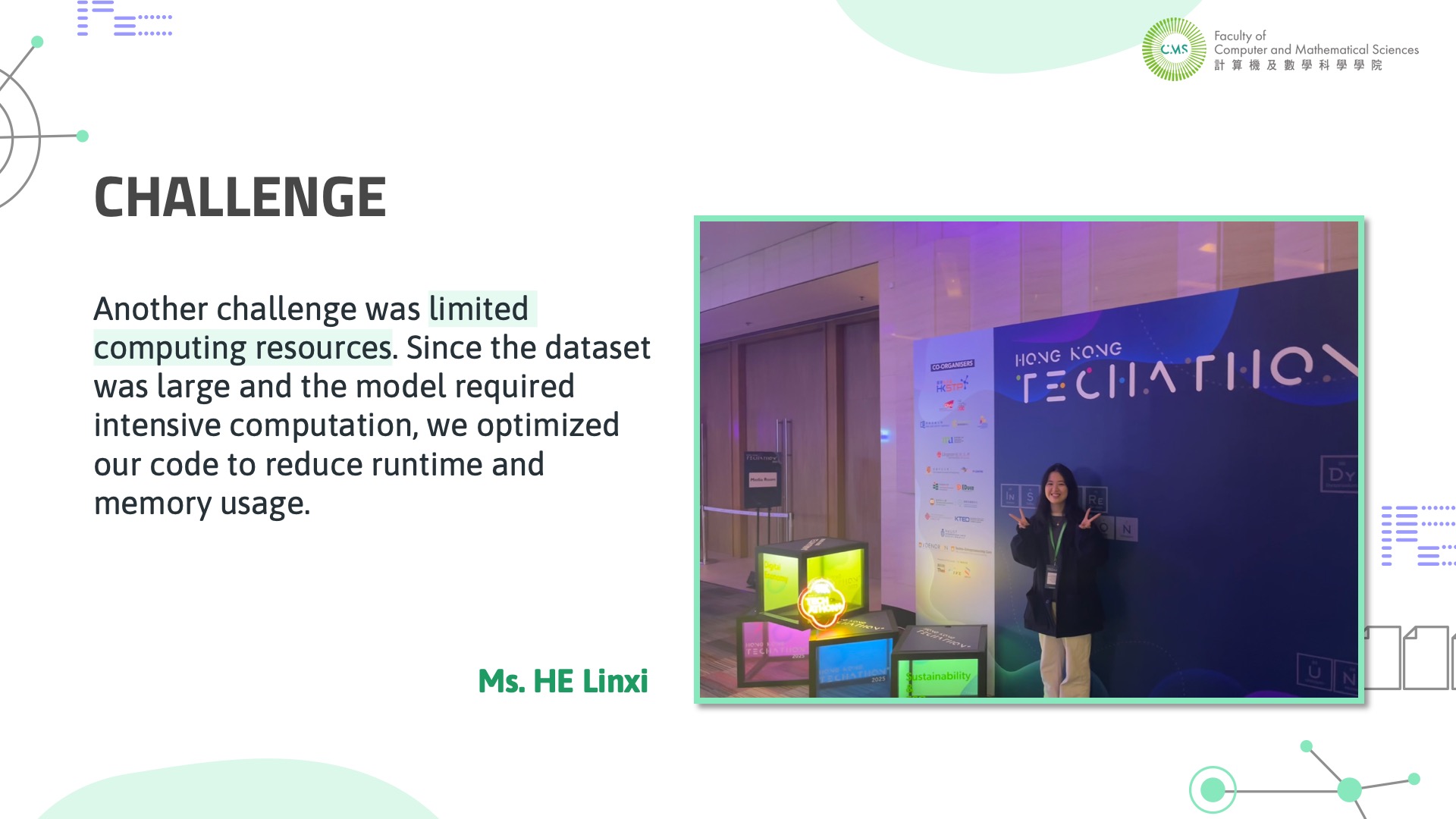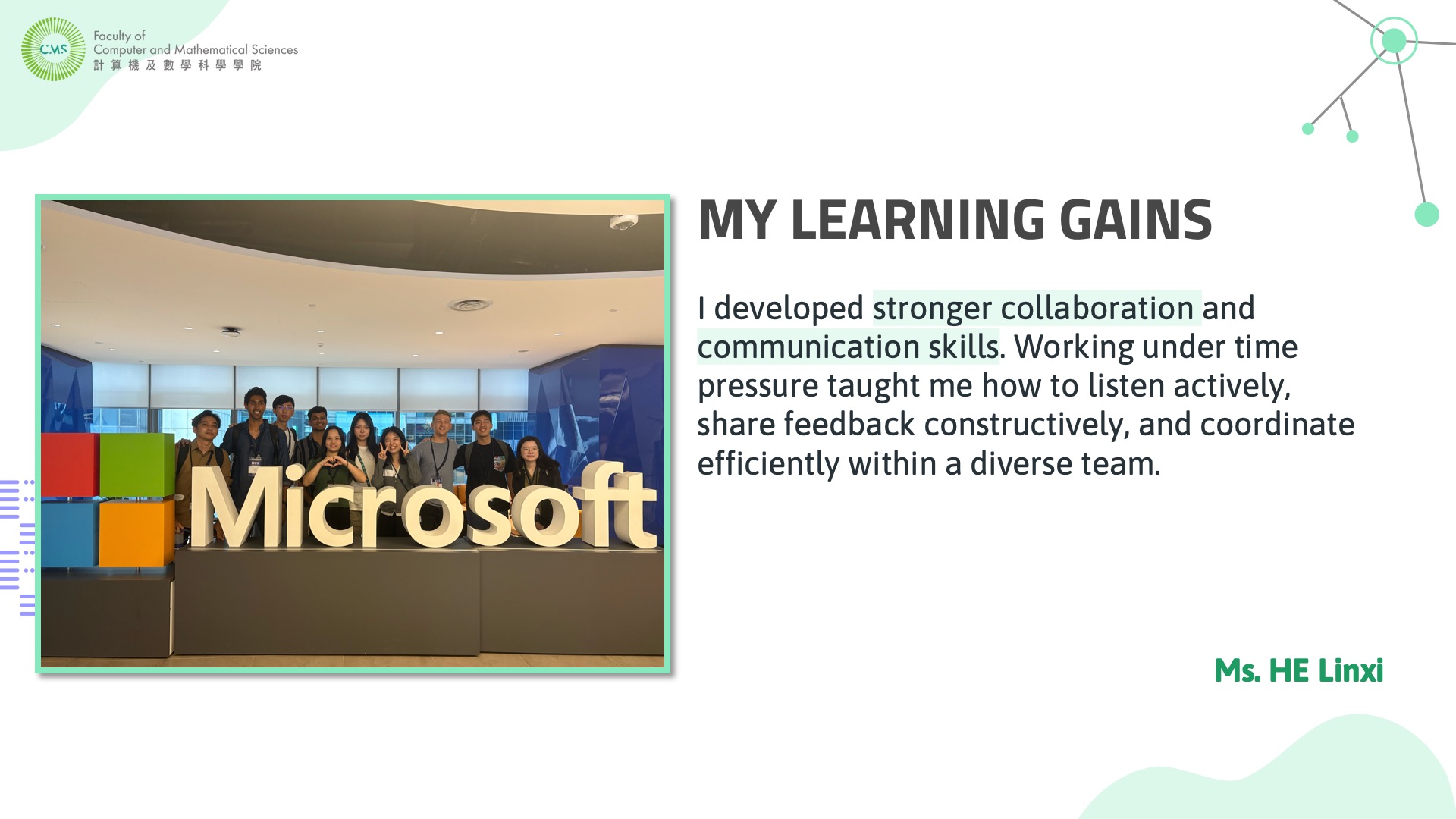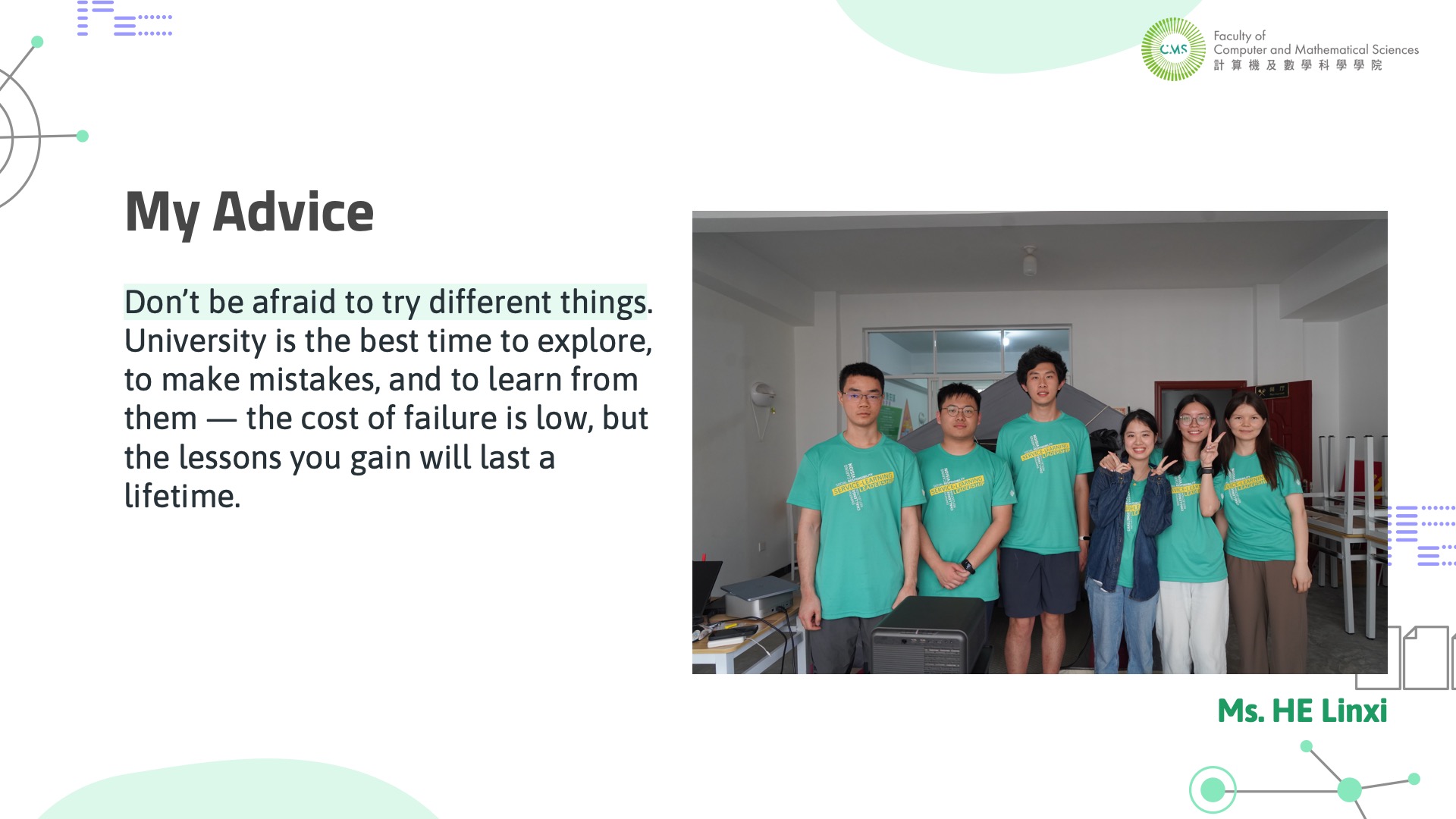



Linxi HE joined the 4th Wutong Cup National Data Application Competition, where students nationwide solve practical problems using data analysis and machine learning. Our team developed a convolution-based model for “Northbound Population Roaming Analysis,” uncovering unique traveler patterns. Balancing final exams and competition rounds was tough, but we managed with remote collaboration and code optimization.
A memorable moment was presenting our results, which resonated with the judges and earned us a National-Level Award. The competition taught me how to translate machine learning theory into practical solutions, communicate effectively, and collaborate under pressure. PolyU’s resources and my supervisor’s mentorship were crucial. The competition not only enhanced my technical skills but also prepared me for future academic and industry opportunities.

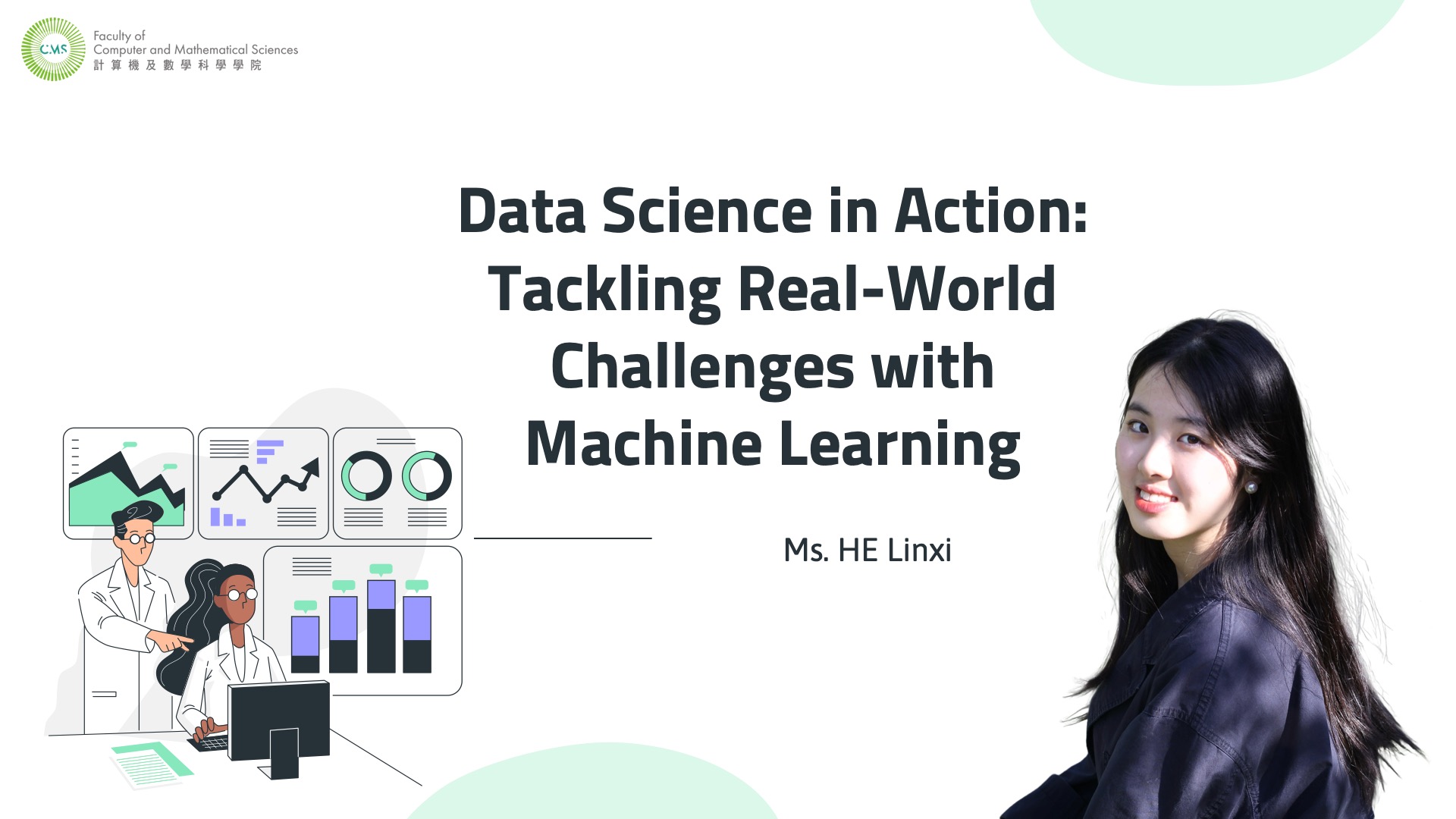
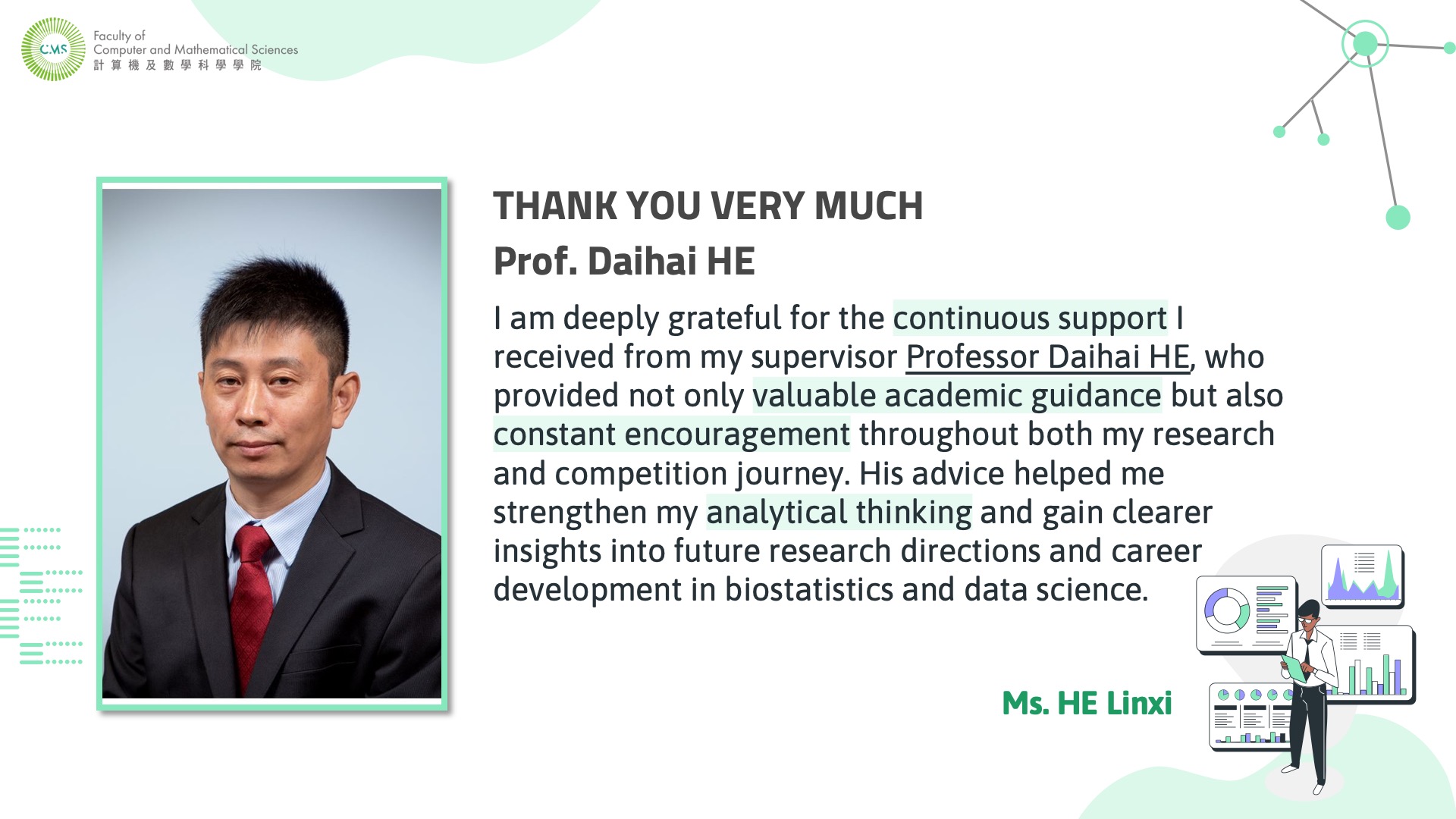
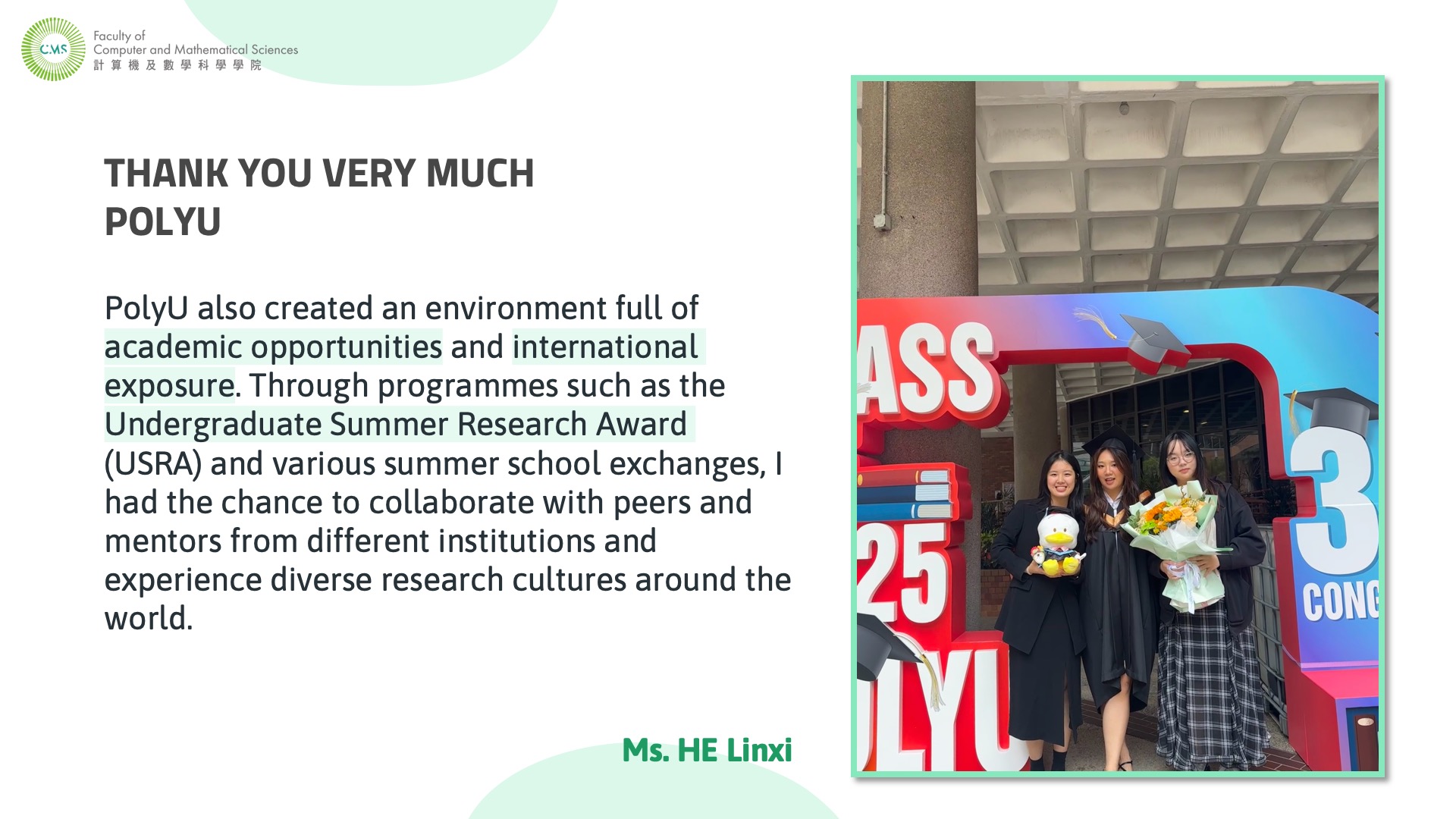
Ms. HE Linxi
Faculty of Computer and Mathematical Sciences
Department of Applied Mathematics
Linxi’s work references physics-based models such as finite element models, which are fundamental in structural engineering. The finite element method is a numerical technique for solving complex differential equations, especially in structural analysis. It involves discretizing a structure into smaller, manageable elements and assembling them to approximate the behavior of the entire system. Mastery of FEM requires understanding matrix algebra, numerical integration, and the formulation of stiffness matrices.
A core focus of Linxi’s project is the identification of nonlinear boundary conditions (NBC). This involves mathematical modeling of systems where the relationship between input and output is not linear, requiring knowledge of nonlinear differential equations, stability analysis, and iterative solution techniques. Understanding nonlinearities is crucial for accurately modeling real-world structures that do not behave in a purely linear fashion.
Linxi experimented with various response solvers and ultimately adopted a stabilized central difference method—a numerical integration technique used to solve dynamic equations of motion. This method is widely used in structural dynamics for time-stepping solutions of second-order differential equations. Proficiency in numerical methods is essential for implementing and validating computational models in engineering.
The hybrid modeling approach fuses physical models with neural networks. Understanding the mathematics behind neural networks involves linear algebra (for weights and activations), calculus (for backpropagation and optimization), and probability/statistics (for loss functions and regularization). Deep learning platforms require knowledge of how to structure, train, and validate neural network models mathematically.
Linxi mentions gaining knowledge in structural dynamics theory, which is grounded in solving ordinary and partial differential equations that describe how structures respond to dynamic loads. This includes concepts such as eigenvalues/eigenvectors (for modal analysis), damping, and resonance. Mathematical modeling of dynamic systems is essential for predicting and analyzing the behavior of structures under various loading conditions.
Linxi demonstrated adaptability when he shifted his research focus from a topic where he struggled for six months to the new area of hybrid modeling, upon his supervisor’s suggestion. This openness to change allowed him to make significant progress and reduced his stress. Lifelong learners must be willing to pivot, embrace new directions, and adjust their approaches when faced with obstacles or new opportunities.
Throughout the project, Linxi encountered technical challenges, such as integrating physics-based and data-driven models and selecting suitable response solvers. He addressed these by experimenting with various methods and consulting recent literature to find the stabilized central difference method. Lifelong learning involves the ability to analyze problems, seek out information, and apply critical thinking to develop effective solutions.
Linxi’s journey highlights the importance of collaboration—he worked closely with supervisors and peers, received academic guidance, and benefited from encouragement and diverse perspectives. Lifelong learners recognize the value of teamwork, mentorship, and building networks to enhance their learning and overcome challenges.
Linxi improved his academic writing through multiple manuscript revisions, learning to maintain objectivity, clarity, and conciseness. He also developed presentation skills through a dedicated course, gaining confidence in designing slides and engaging audiences. Effective communication—both written and oral—is essential for lifelong learners to share ideas, receive feedback, and contribute to their fields.
Linxi learned to cope with difficulties and maintain a calm mindset, recognizing that challenges can be opportunities for growth. He managed stress through support from friends and activities like hiking. Lifelong learning requires resilience—the ability to persevere through setbacks—and emotional intelligence to manage one’s feelings, seek help, and maintain motivation.
The pursuit of knowledge is a lifelong journey! To further expand your knowledge and continue your personal and professional growth. Click and explore the following learning resources:
Continuous Improvement and Learning from Mistakes
Critical Thinking and Problem-solving