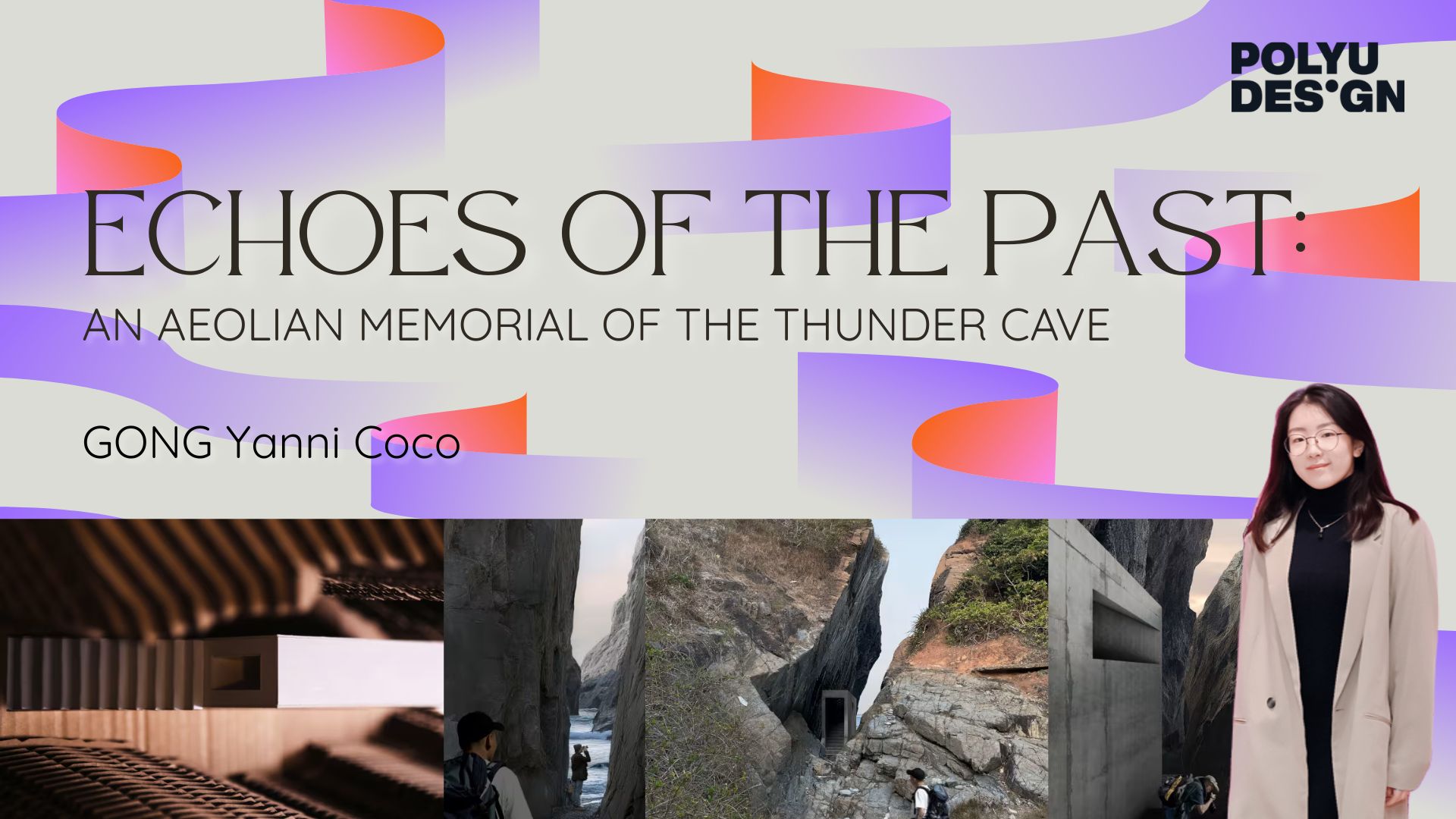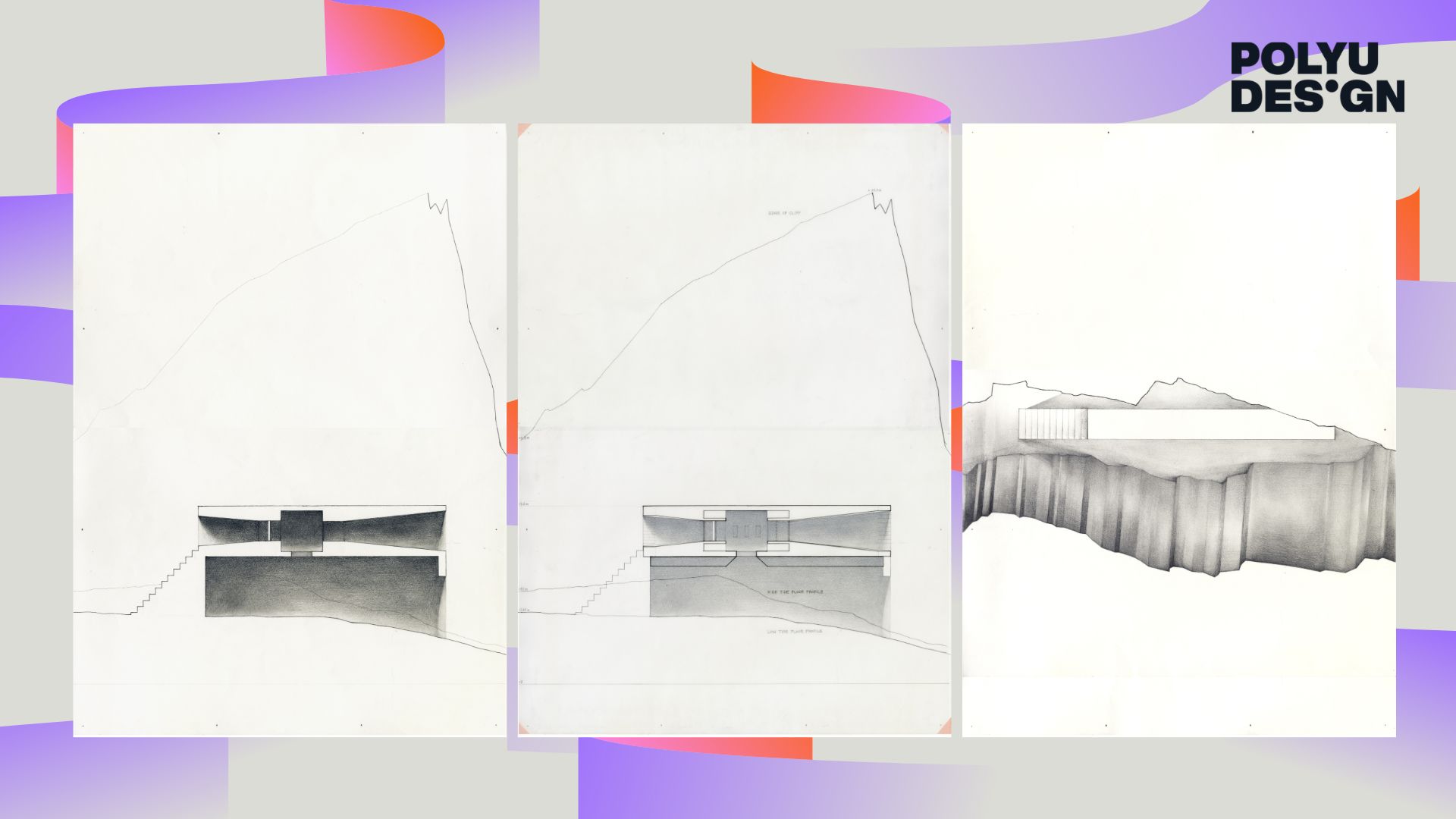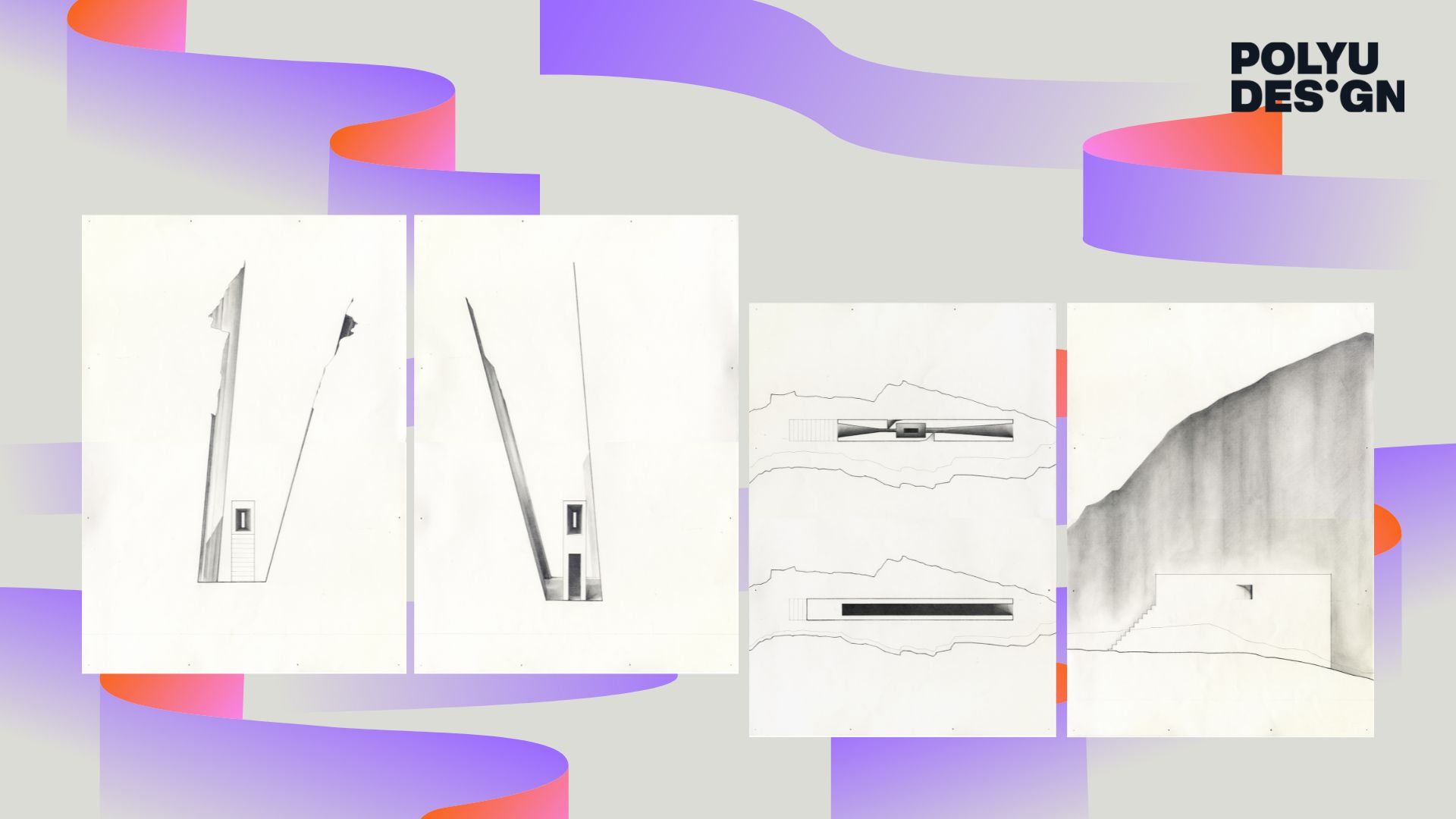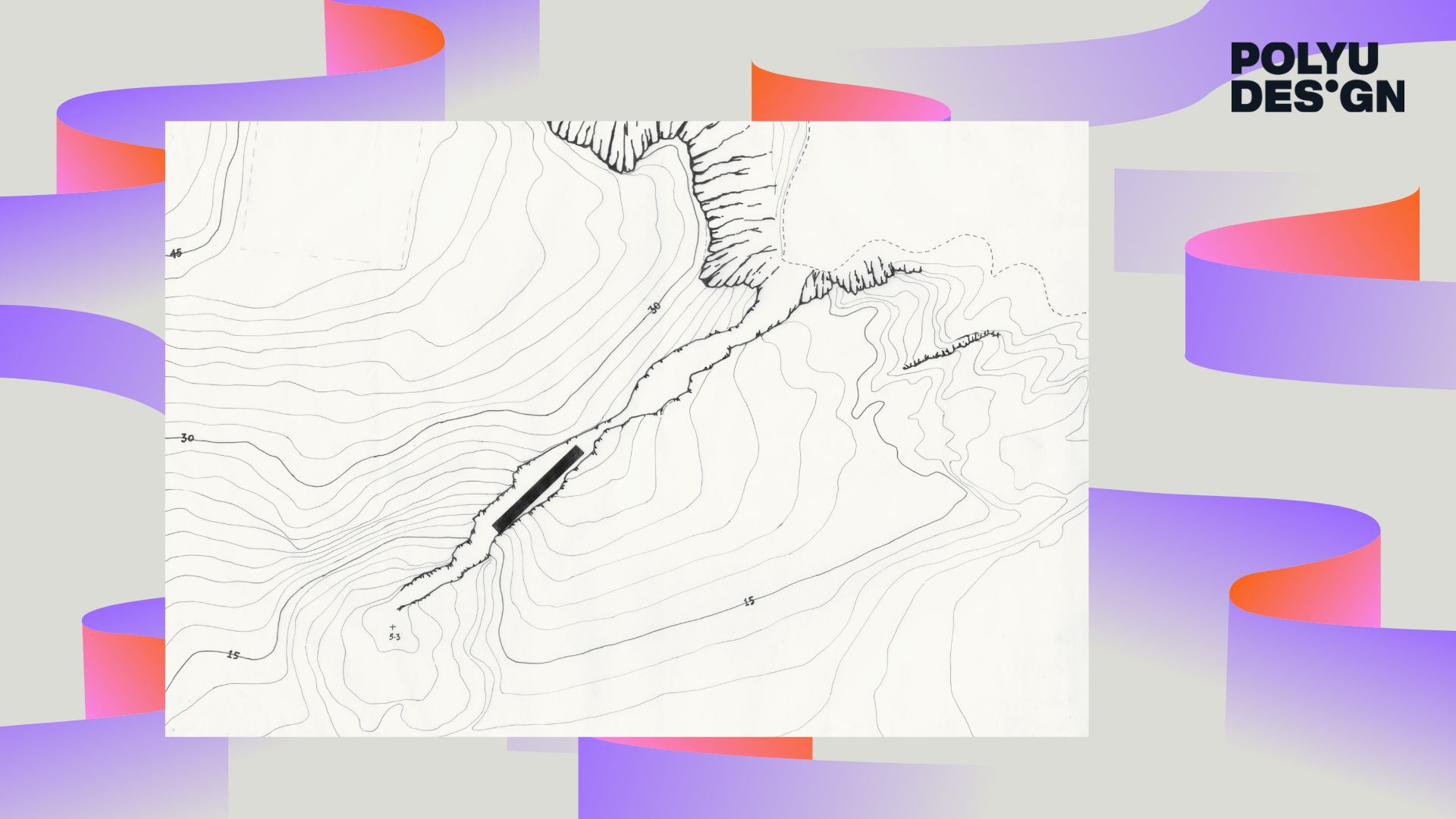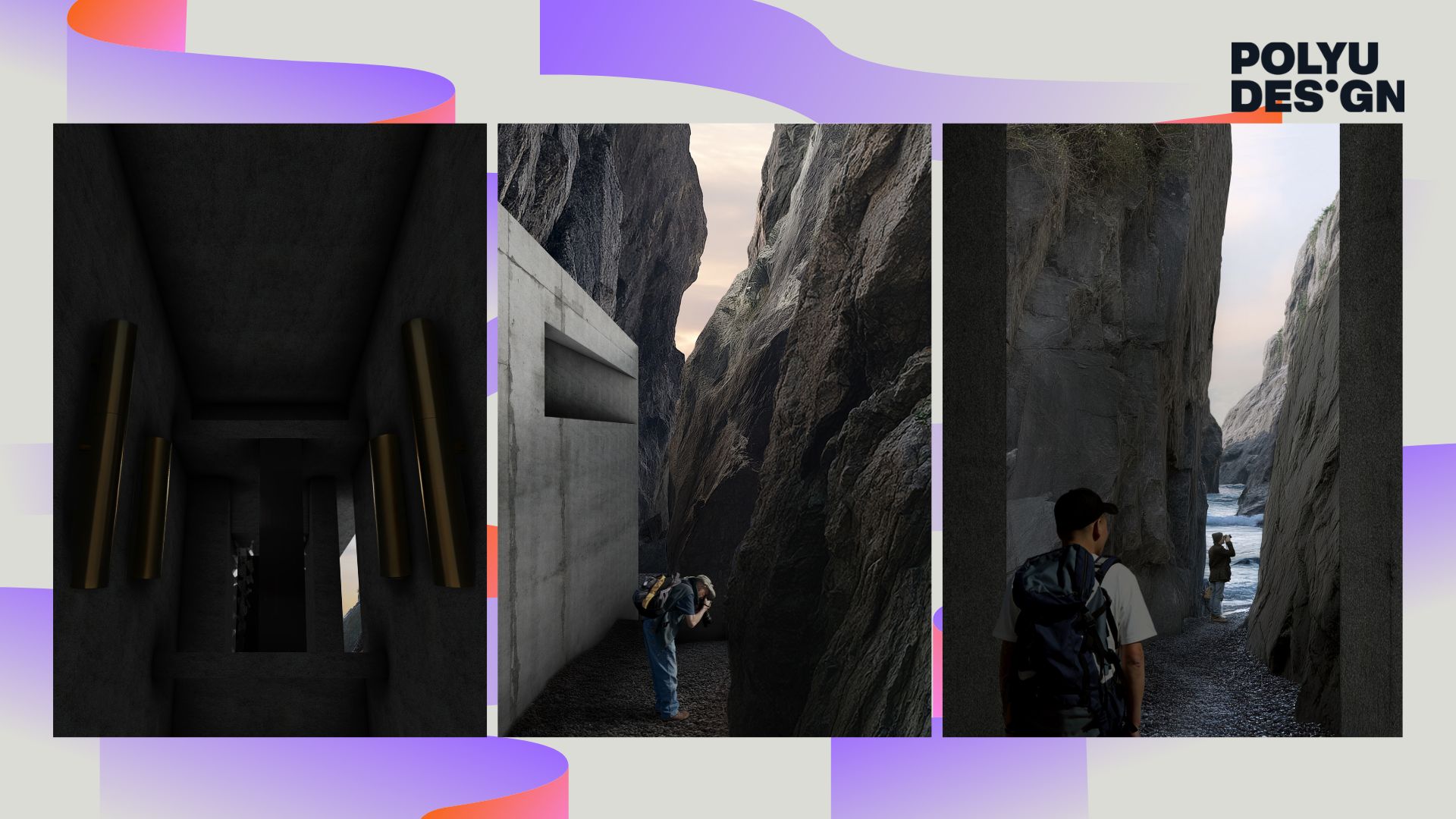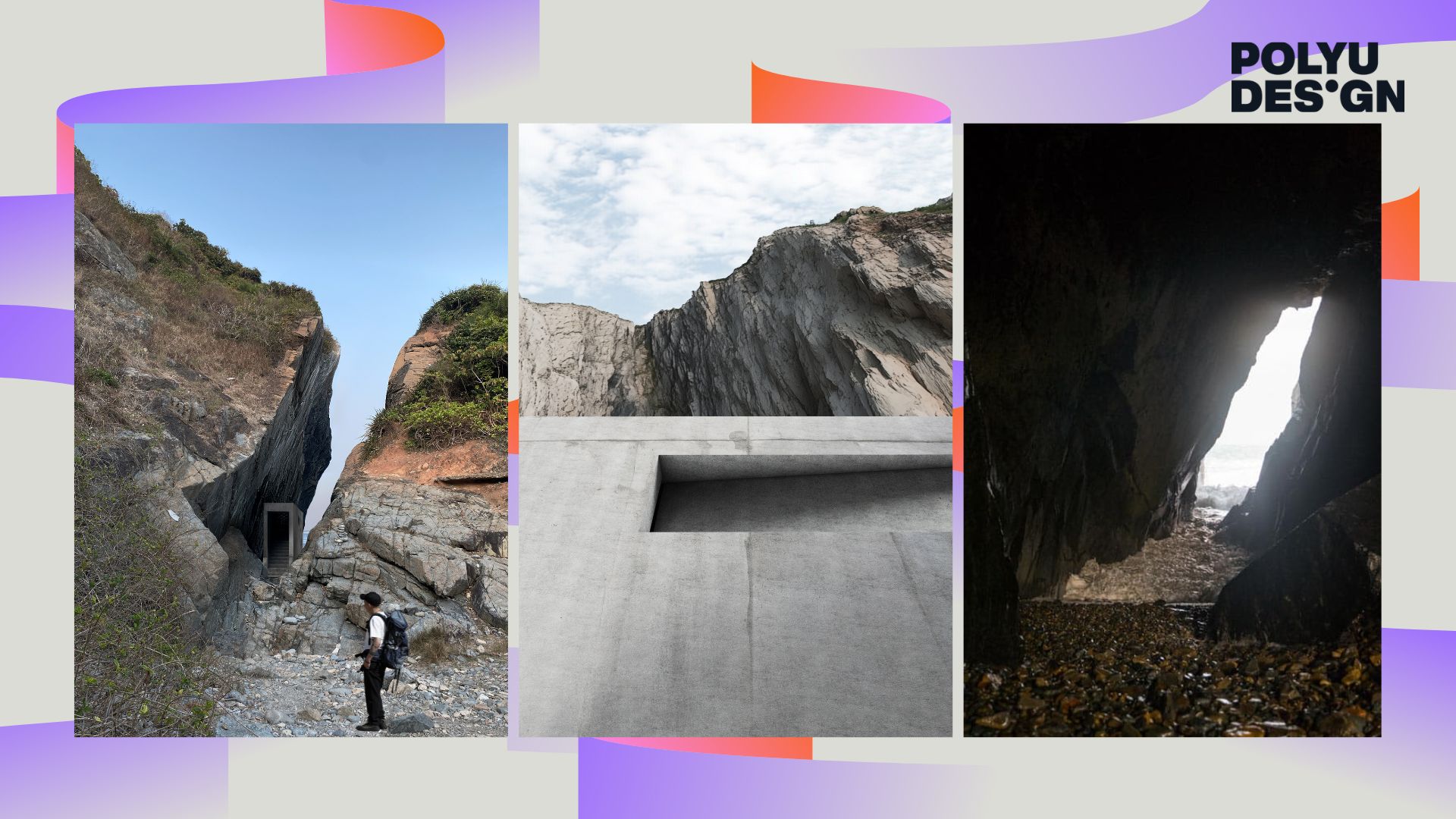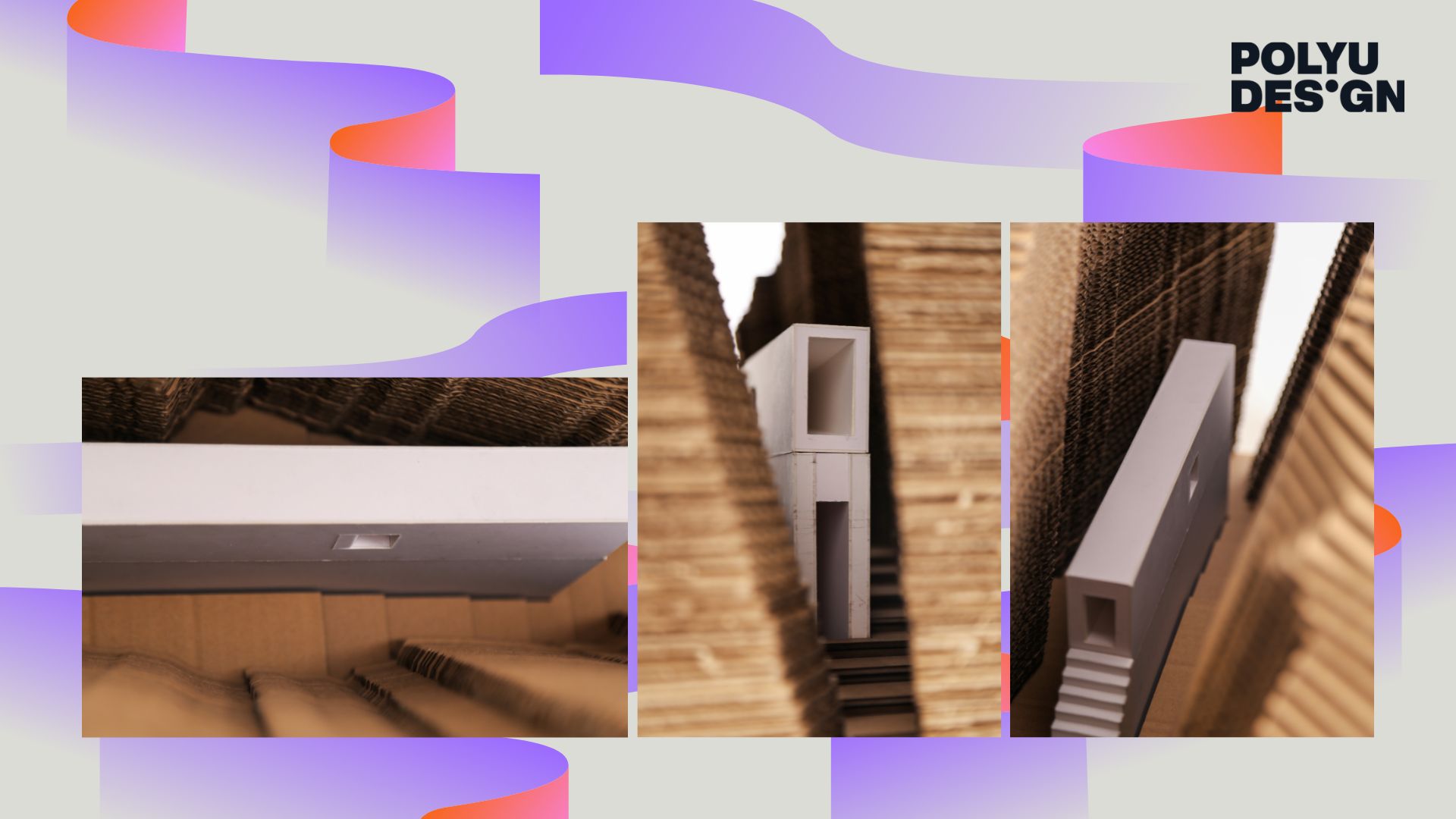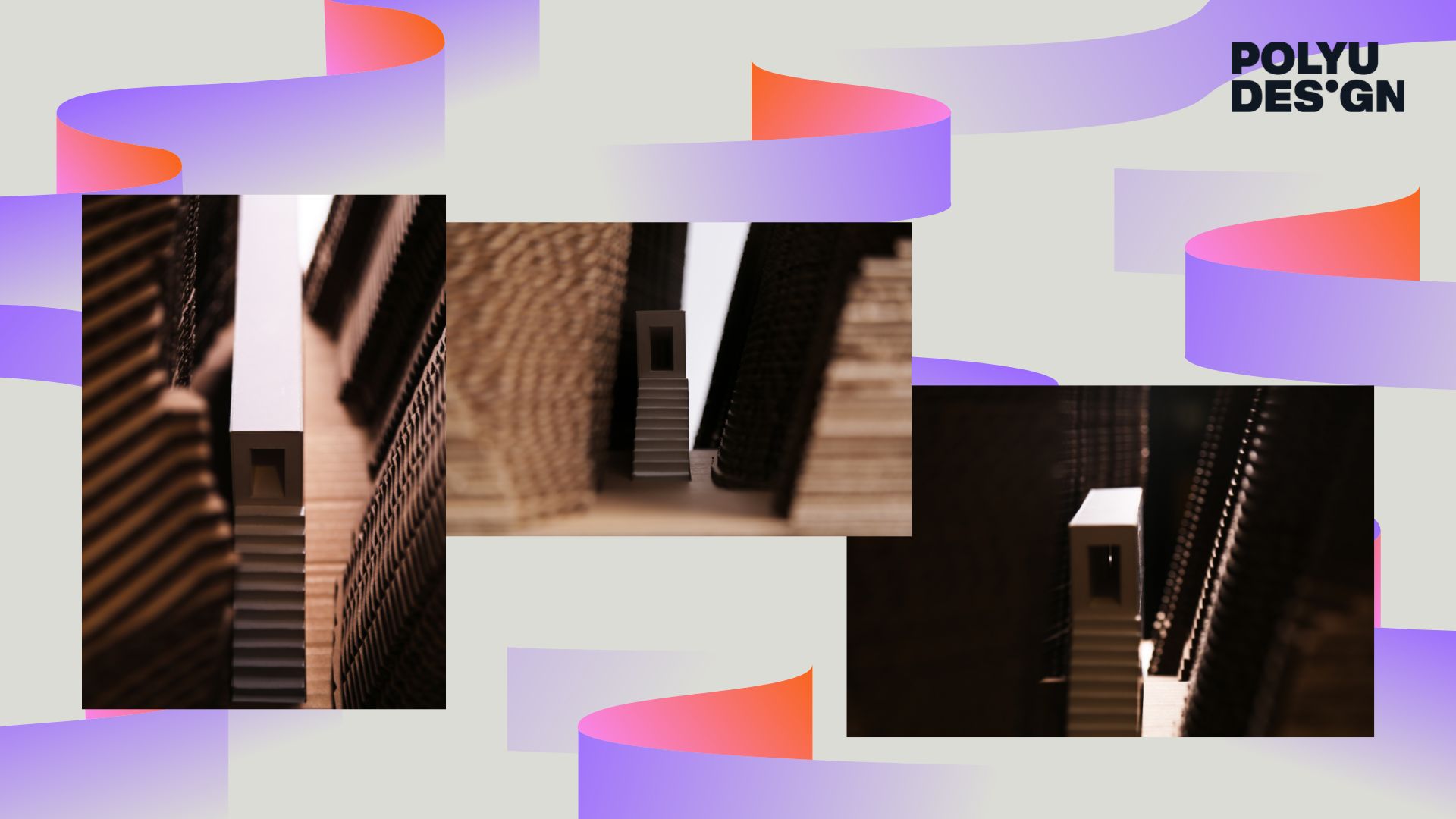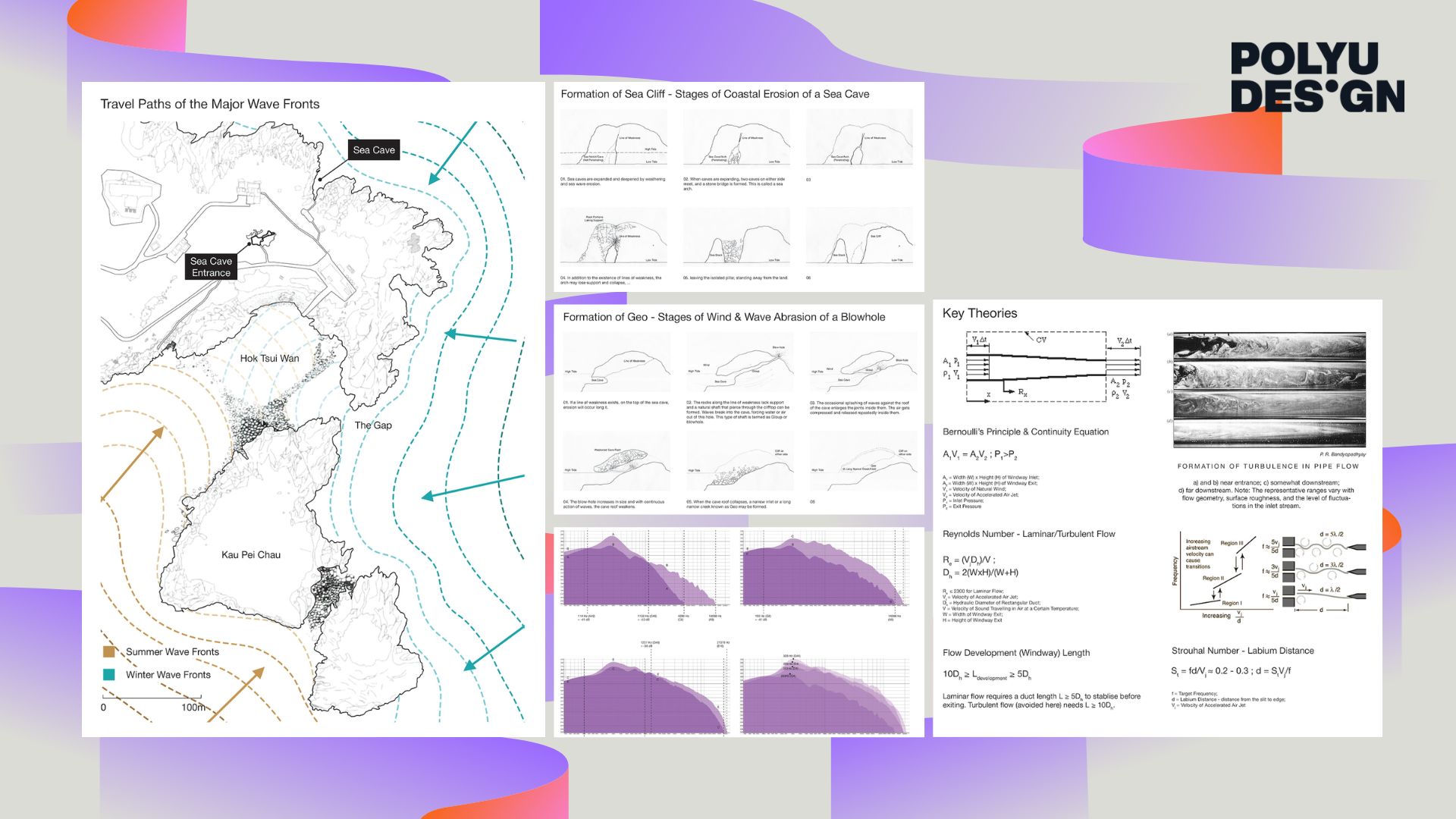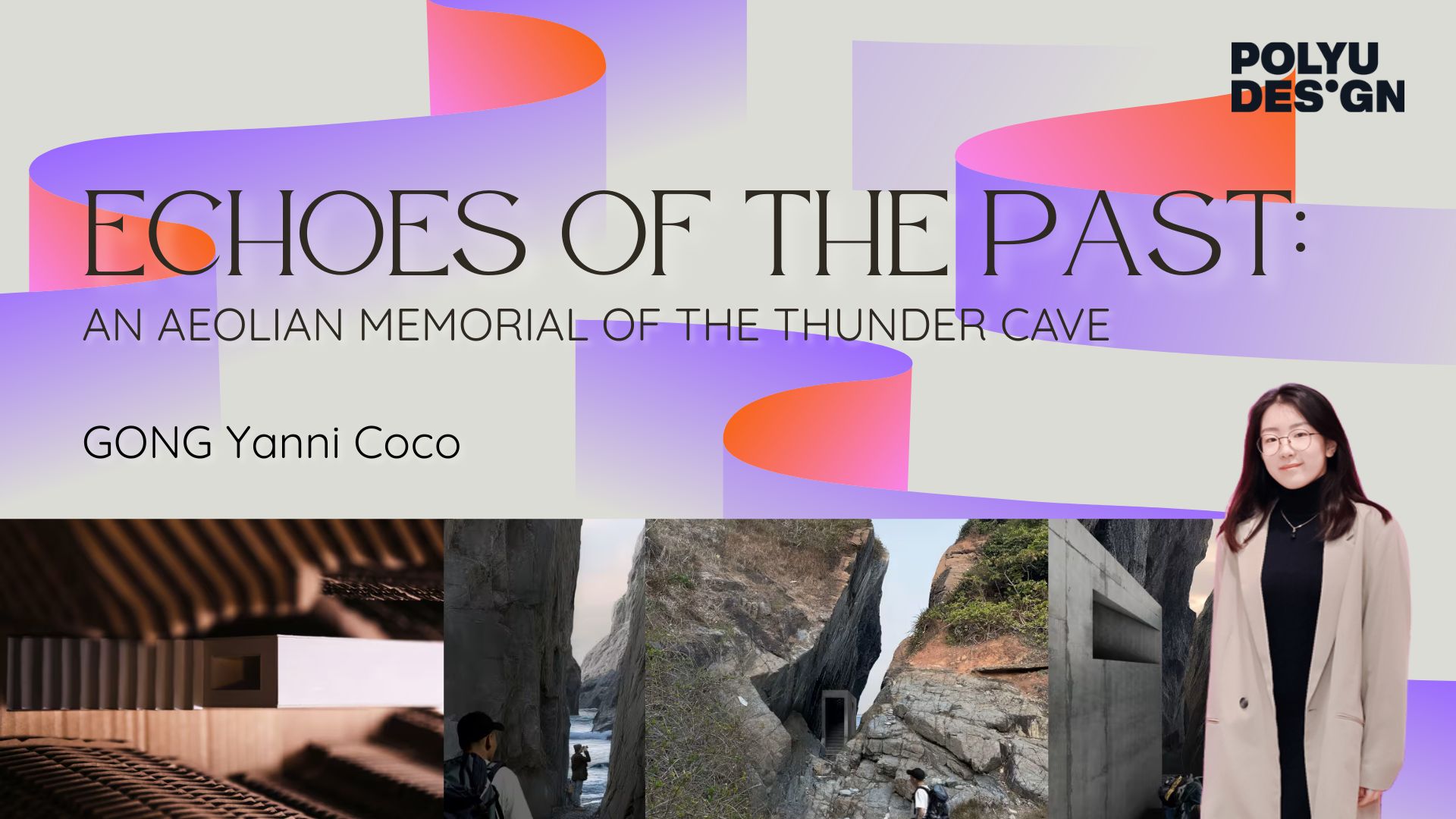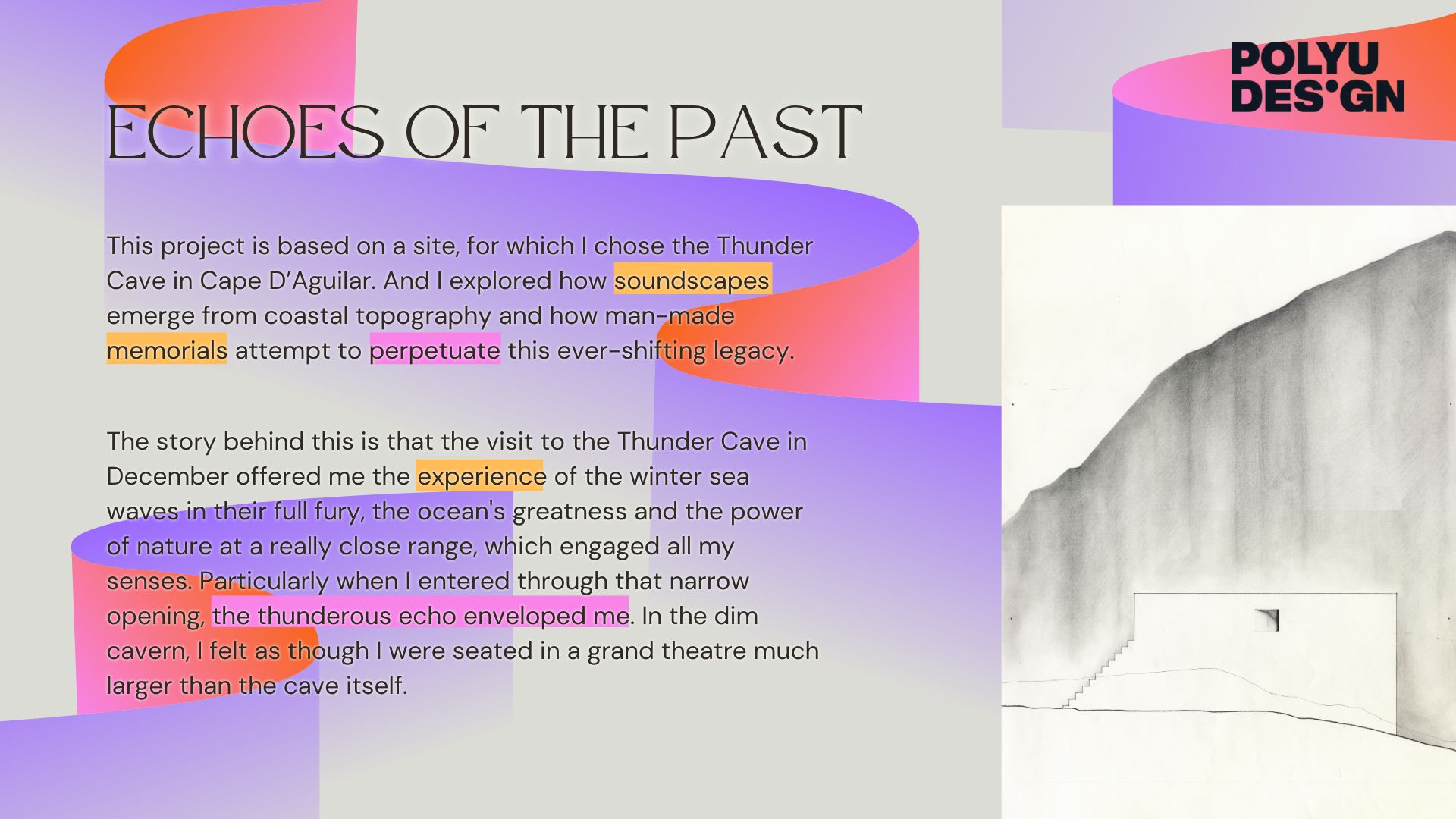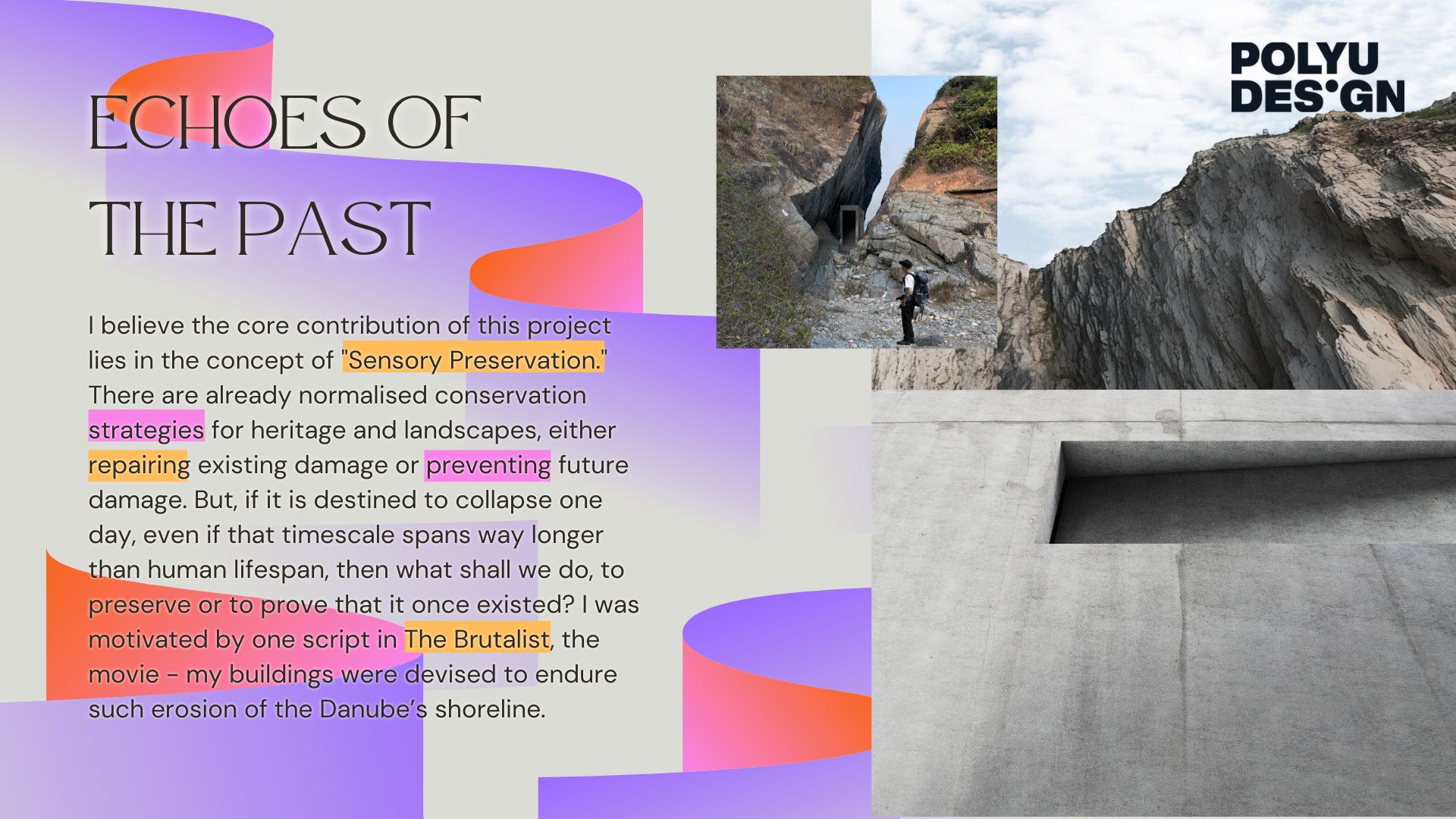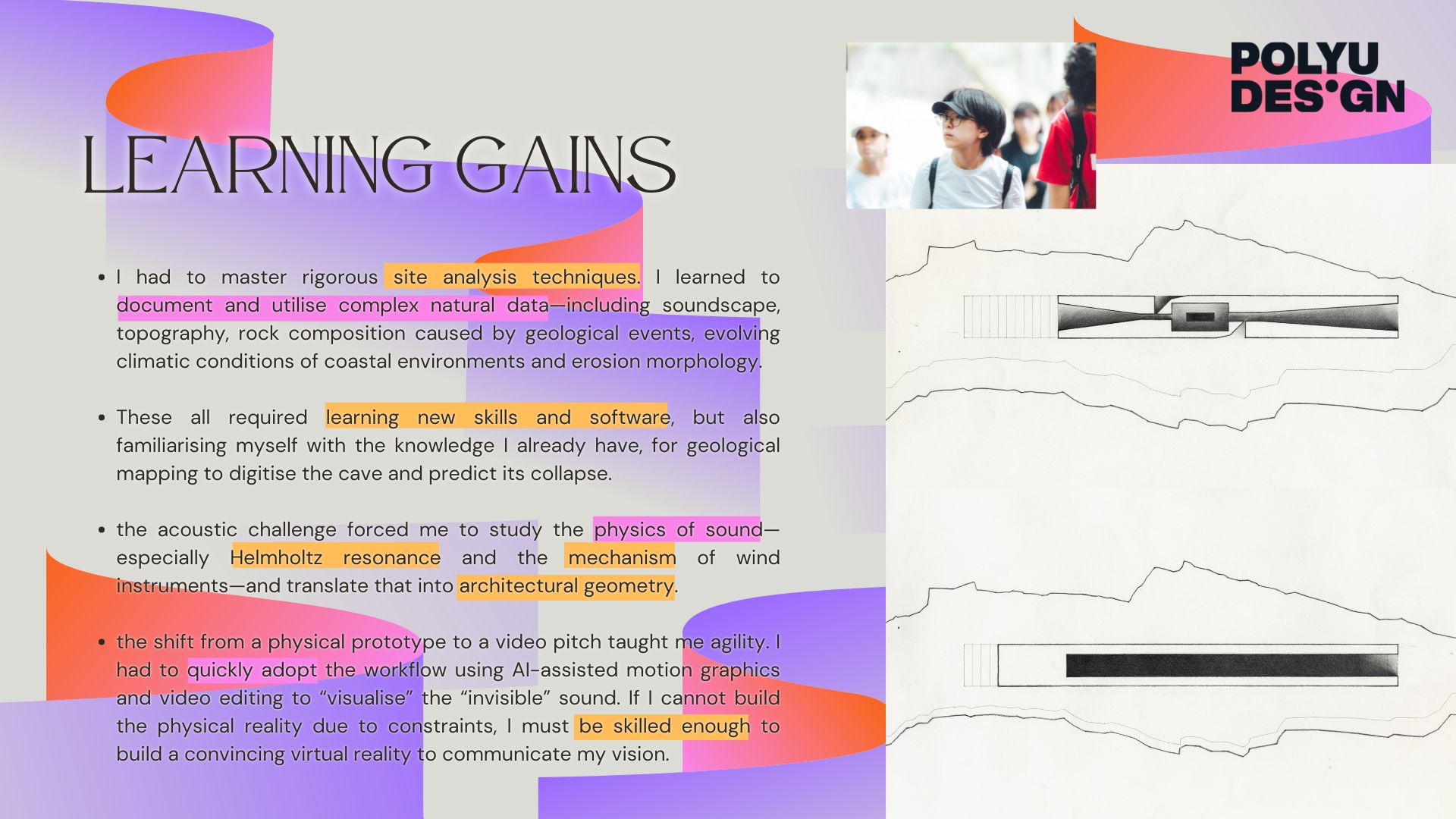



Coco’s project explores the creation of a coastal aeolian memorial at Thunder Cave, Cape D’Aguilar, Hong Kong, aiming to preserve and celebrate the unique acoustic and morphological features of the cave. The concrete structure sits within a Geo gap formed by a collapsed sea cave, designed to endure for millennia, emulating the cave's natural soundscape through its interaction with wind, water, and pebbles.
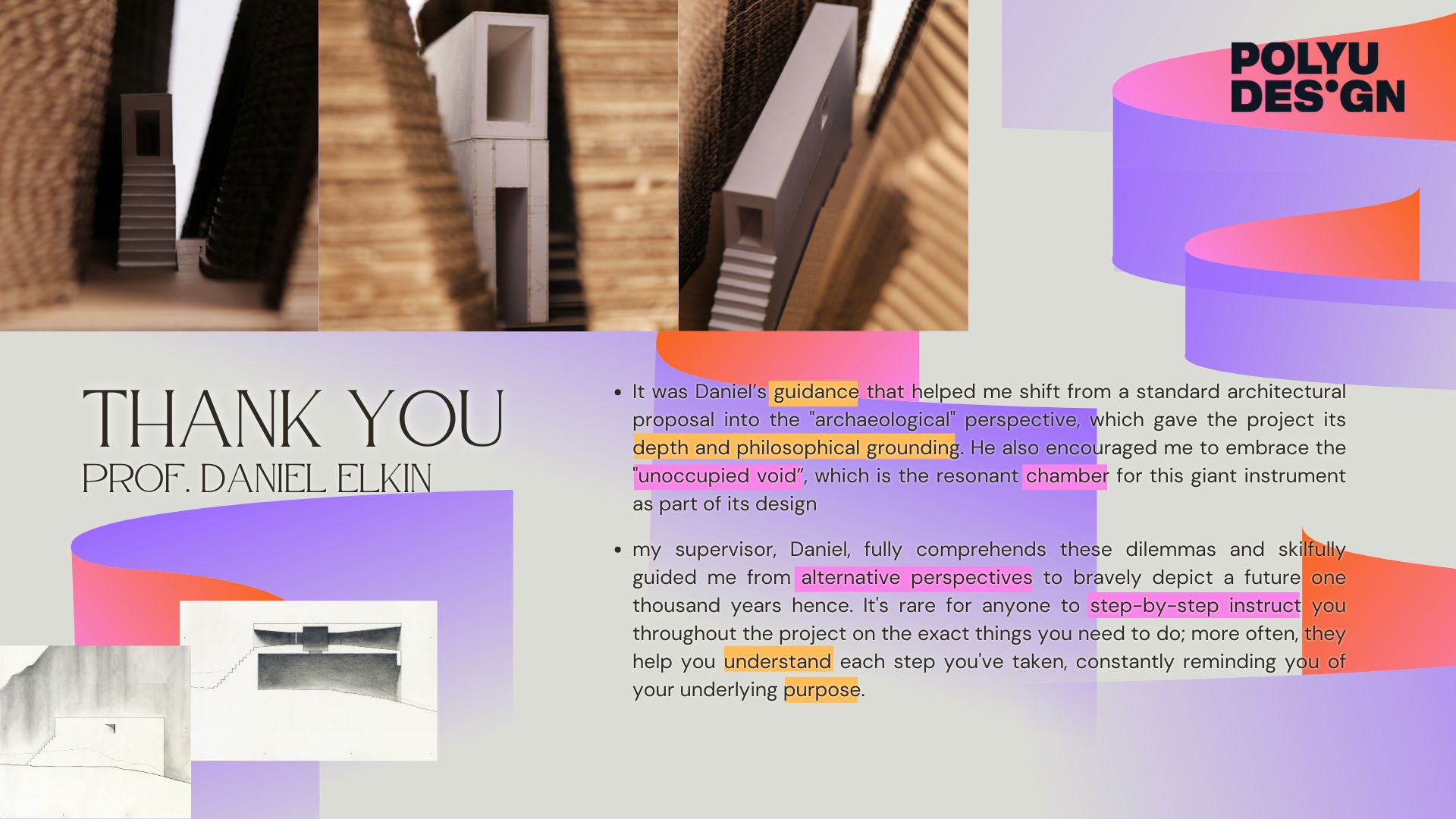
Inspired by resonating tubes and wind instruments, the design incorporates elements such as a dual channel to funnel wind, "fipples" akin to a recorder's mouthpiece, and a resonating chamber to amplify sound. The upper level remains unoccupied to ensure optimal airspeed and functionality, drawing on architectural concepts of "unoccupiable voids."The memorial serves as an intersection of natural and human history, designed for those who appreciate the symbiosis between landscape and soundscape.
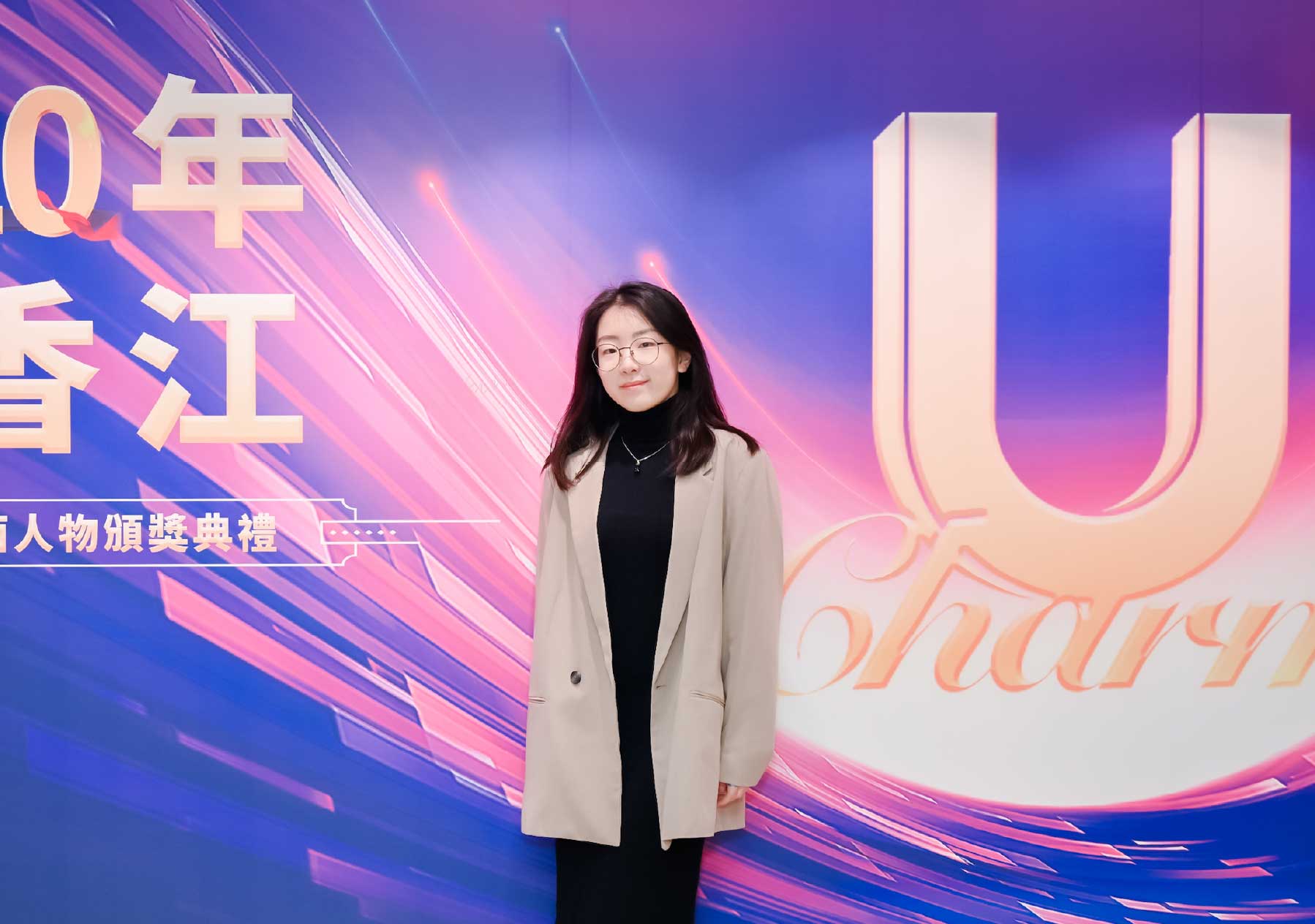
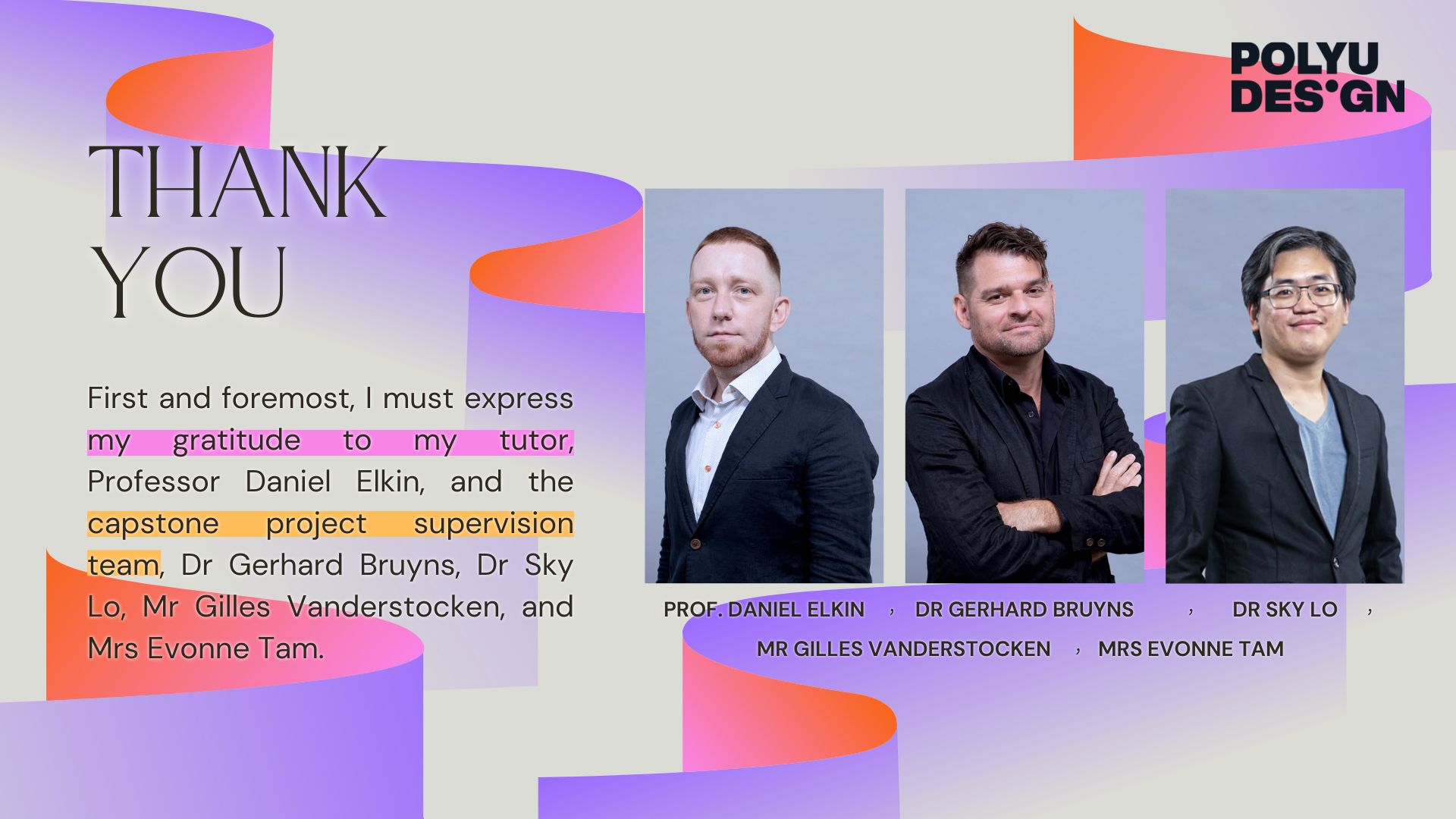
Ms. GONG Yanni Coco
School of Design
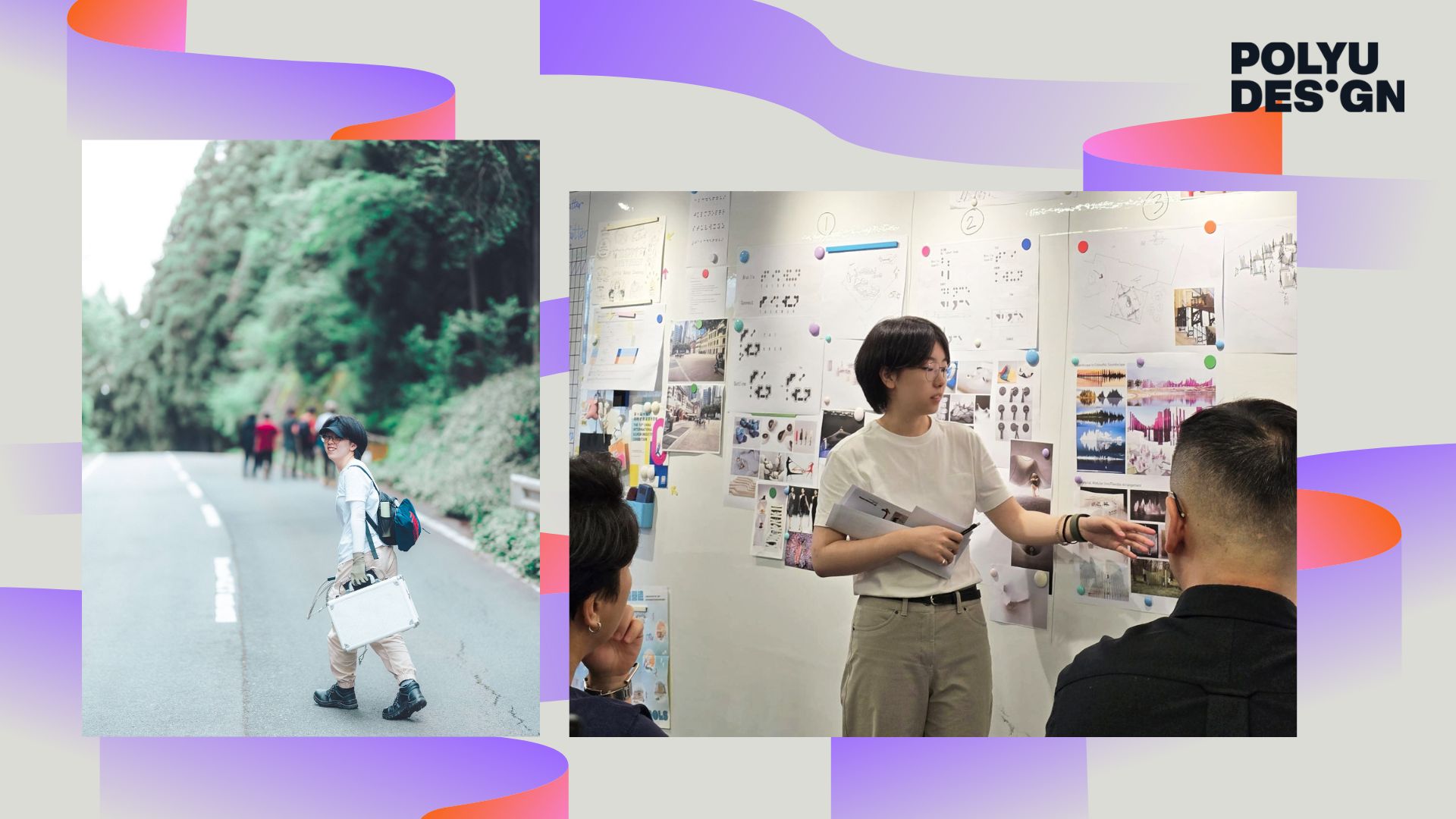
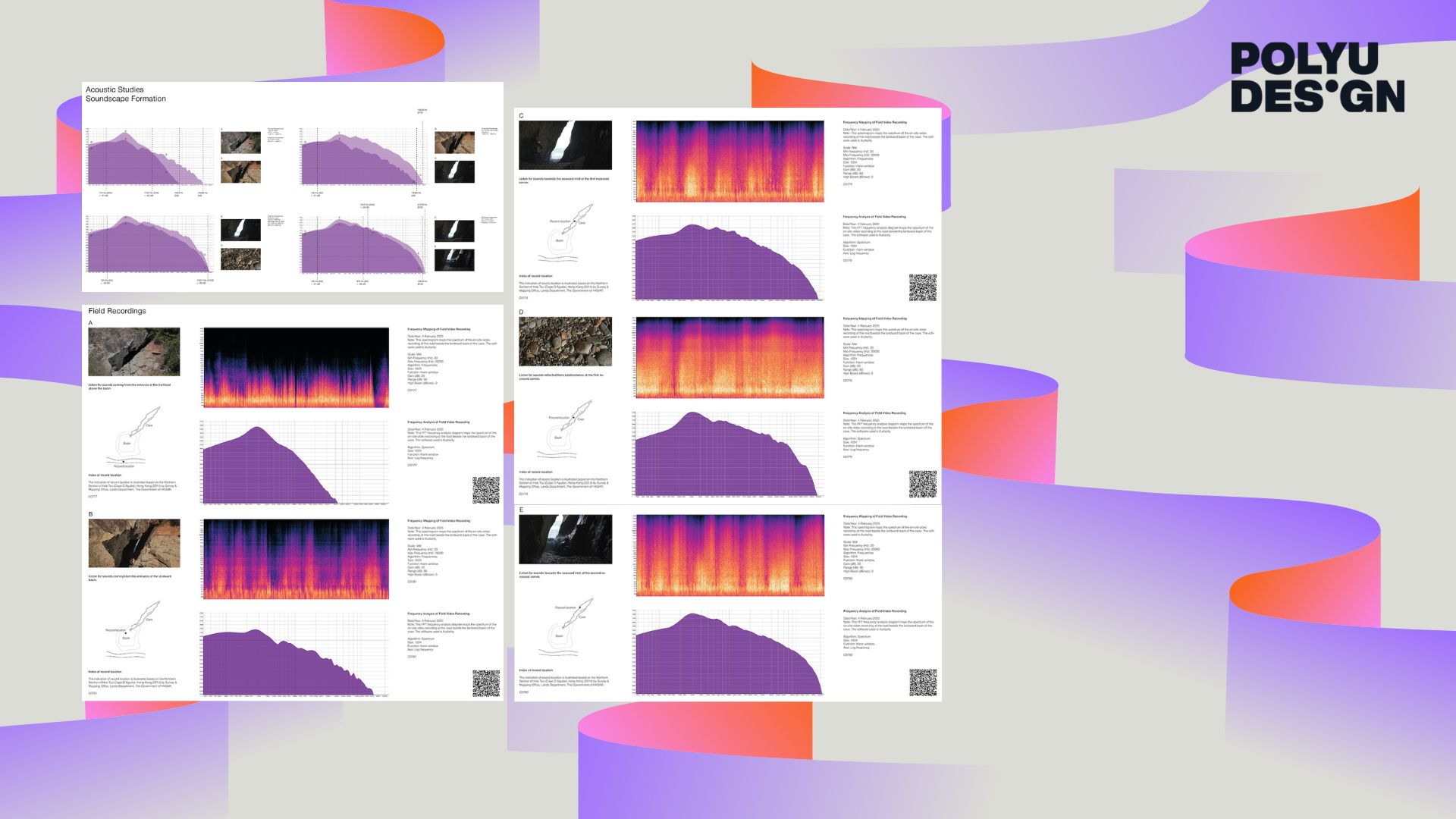
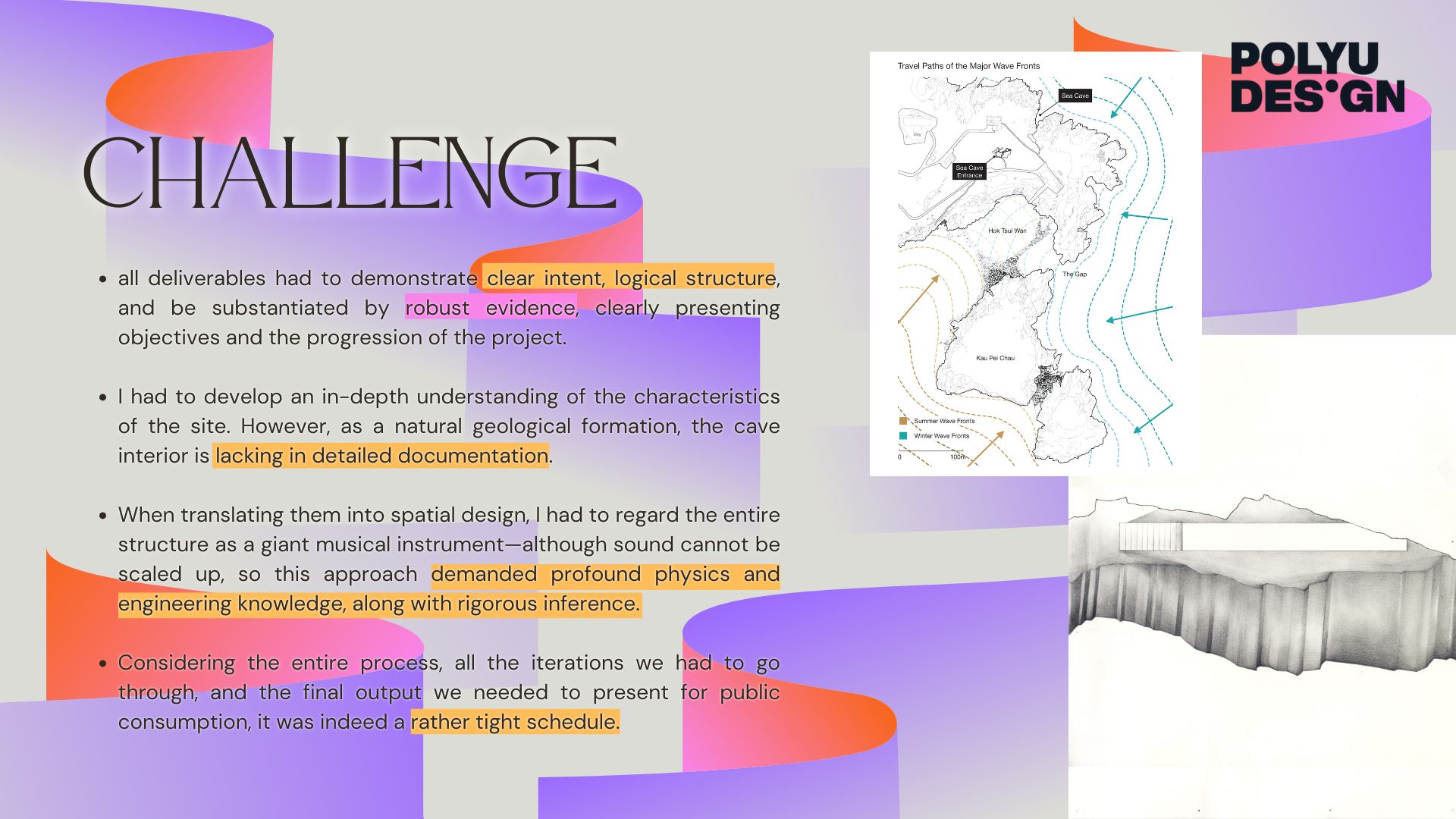
In design, especially when dealing with natural environments, "off-the-shelf" data is often insufficient. Coco identified a gap in existing documentation regarding the interior of the Thunder Cave. To overcome this, she had to act as a researcher and surveyor, employing techniques such as cave mapping, sketching, and video recording.
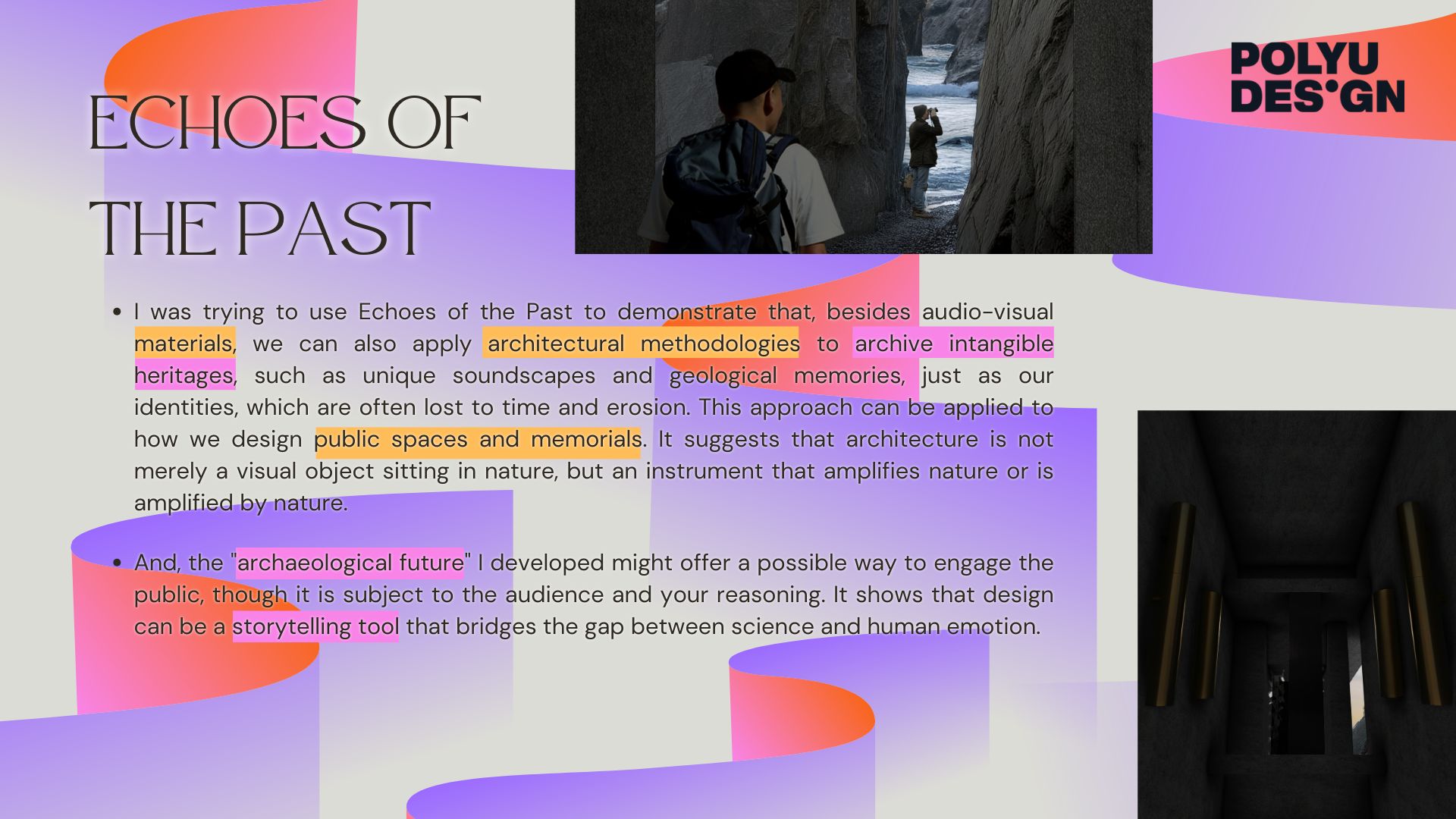
Coco moved beyond a "standard architectural proposal" by adopting a speculative narrative suggested by her supervisor. Instead of proposing a simple structure for today, she positioned herself as an archaeologist in the future discovering a memorial within a collapsed cave.
The project required "knowledge transfer" from fields outside of traditional interior design, specifically physics and musicology. Coco studied the mechanism of wind instruments and Helmholtz resonance to treat an entire architectural structure
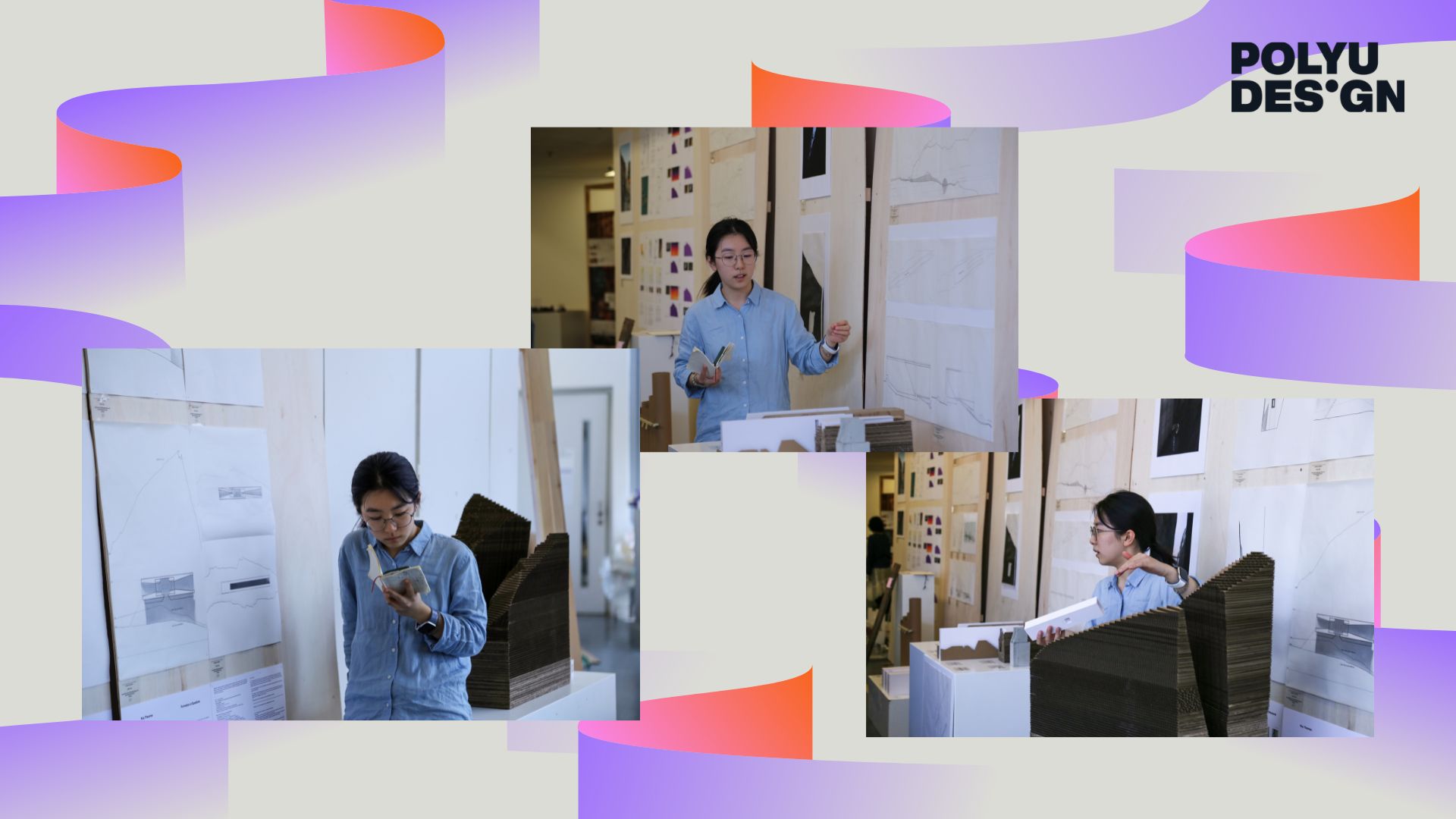
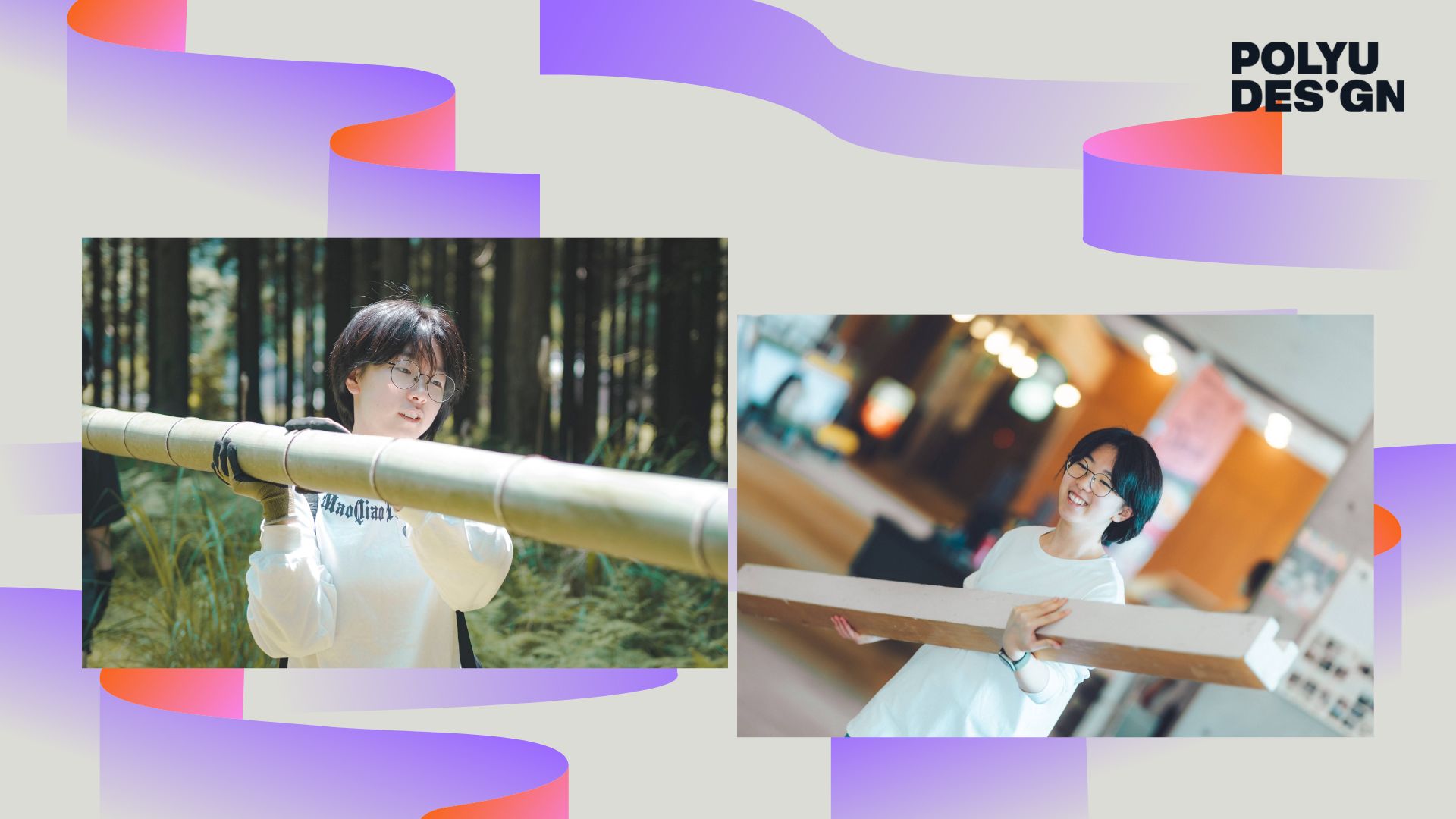
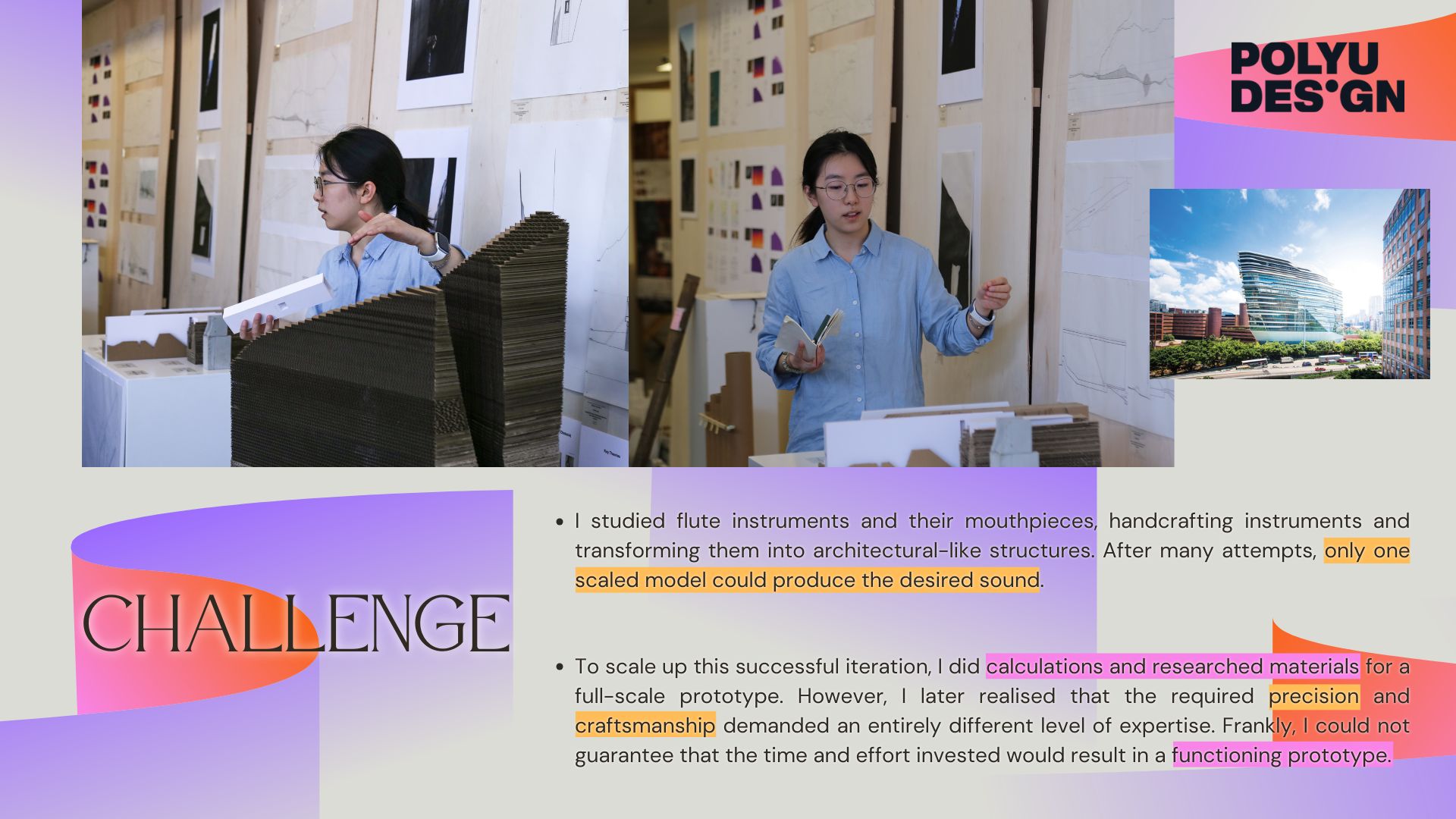
Coco engaged in "design-through-making" by handcrafting flute mouthpieces and scaled models to test her acoustic theories. She discovered through this process that while a small model worked, scaling it up to a full-size architectural prototype presented immense challenges in precision and craftsmanship.
When physical prototyping became unfeasible due to time and technical constraints, Coco pivoted to a "video pitch." She used AI-generated motion graphics, sound recordings of her scaled models, and renderings to simulate an "archaeological field survey."
Coco demonstrated advanced information literacy by synthesizing data from vastly different fields. Because the Thunder Cave lacked documentation, she conducted primary research through repetitive site visits, sketching, and cave surveying. She then combined this with secondary contextual data from the Hong Kong Government. Furthermore, she stepped into the fields of **geology and physics**, studying Helmholtz resonance and the mechanics of wind instruments to ensure her architectural design was grounded in scientific reality rather than just aesthetic choice
Coco’s project faced a significant technical hurdle when she realized that a full-scale functioning prototype of her "architectural instrument" required a level of craftsmanship and time she did not have. Instead of giving up or presenting a failed model, she exhibited **agility** by shifting her output. She pivoted from a physical prototype to a "video pitch," using AI-generated motion graphics and sound recordings of a smaller model to communicate her vision effectively within the project's constraints.
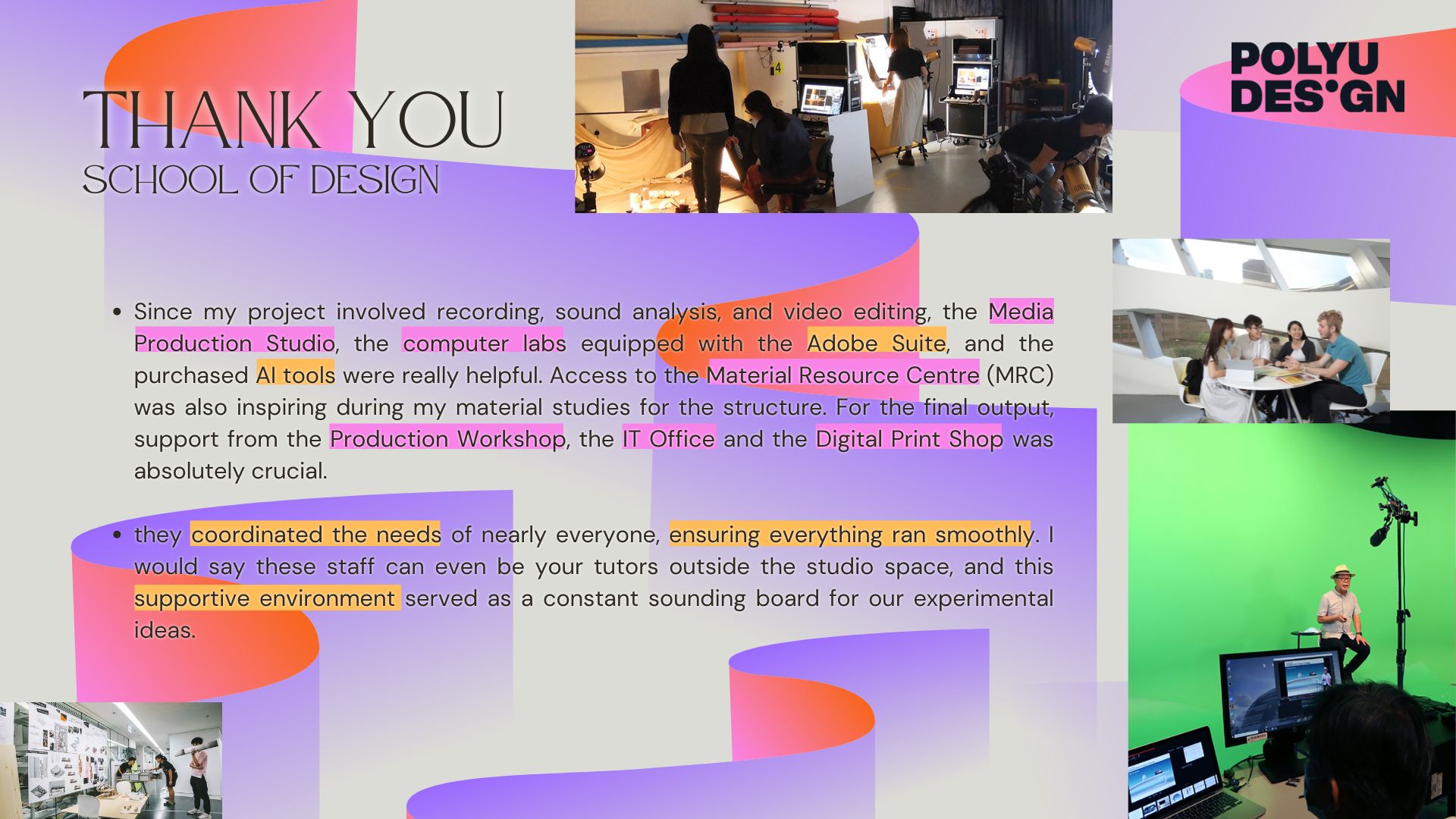
Coco showed immense resourcefulness by navigating the "ecosystem of resources" provided by PolyU. She utilized the Media Production Studio for sound, the Materials Research Centre for structural studies, and the Digital Print Shop for specialized binding. Additionally, she adapted her design to a **new narrative context**—moving from a standard architectural proposal to an "archaeological perspective" set one thousand years in the future. This allowed her to bypass the lack of significance in building a replica and instead create a "weaving fragment of history."
Coco explicitly mentions the necessity of stepping far outside her "comfort zone." She recognizes that being in her field requires "knowing something about everything." Her reflection on the "ever-increasing array of modelling software and emerging technologies" like AI shows an understanding that her current skills are not a final destination. Her commitment to "gaining a little more knowledge each time" to avoid future difficulties is the core of the learning-to-learn mindset.
Throughout her narrative, Coco displays high levels of self-awareness regarding both her strengths and her limitations. She openly admits that her "modelling and rendering skills still need strengthening" and confesses that the acoustic problem remained technically "unsolved" in the physical sense. By reflecting on the "sensations" of the cave and how they translated into her research theme, she shows an ability to connect personal growth and sensory experience to academic output.
The pursuit of knowledge is a lifelong journey! To further expand your knowledge and continue your personal and professional growth. Click and explore the following learning resources:
Research and Information Literacy