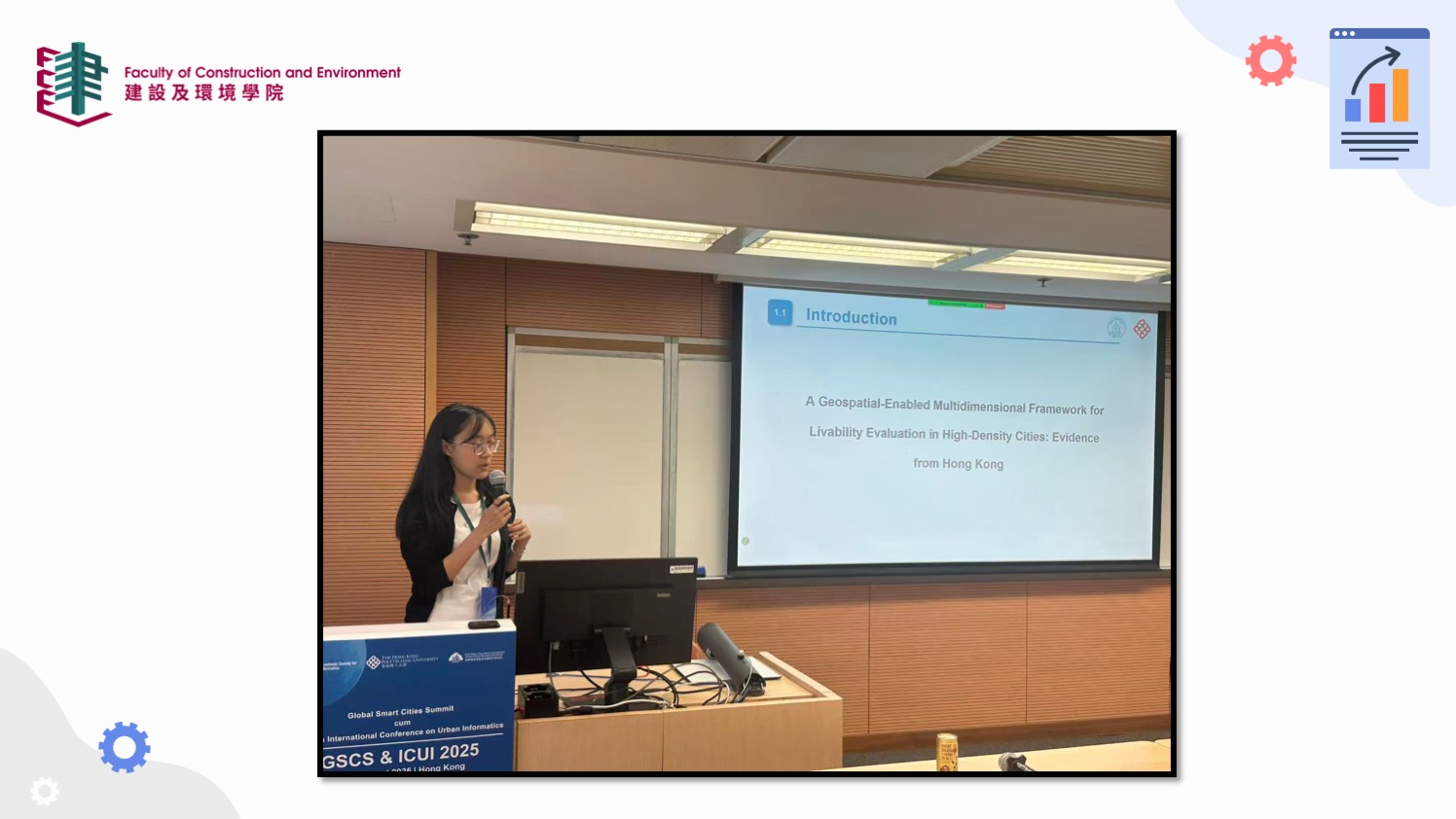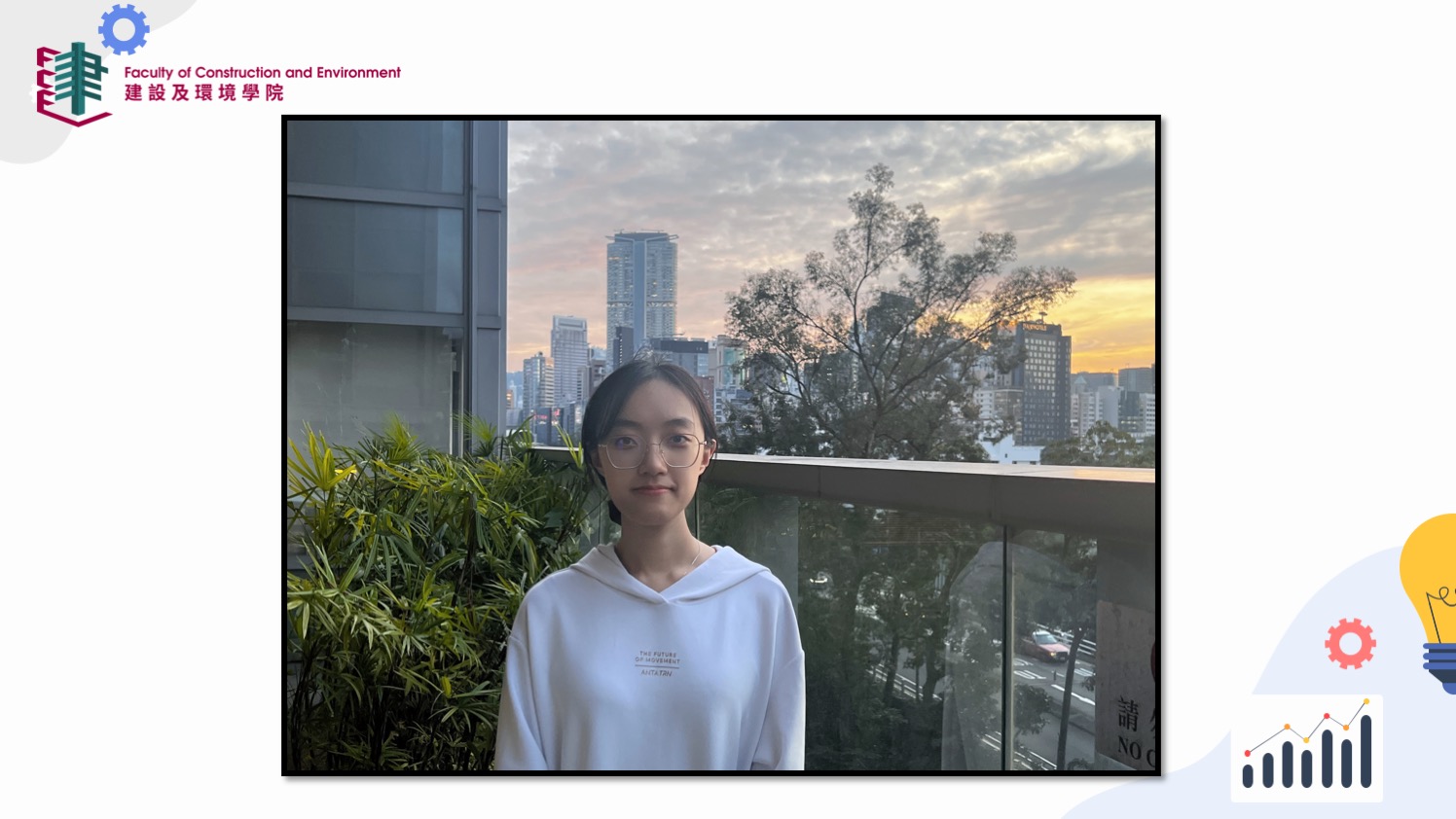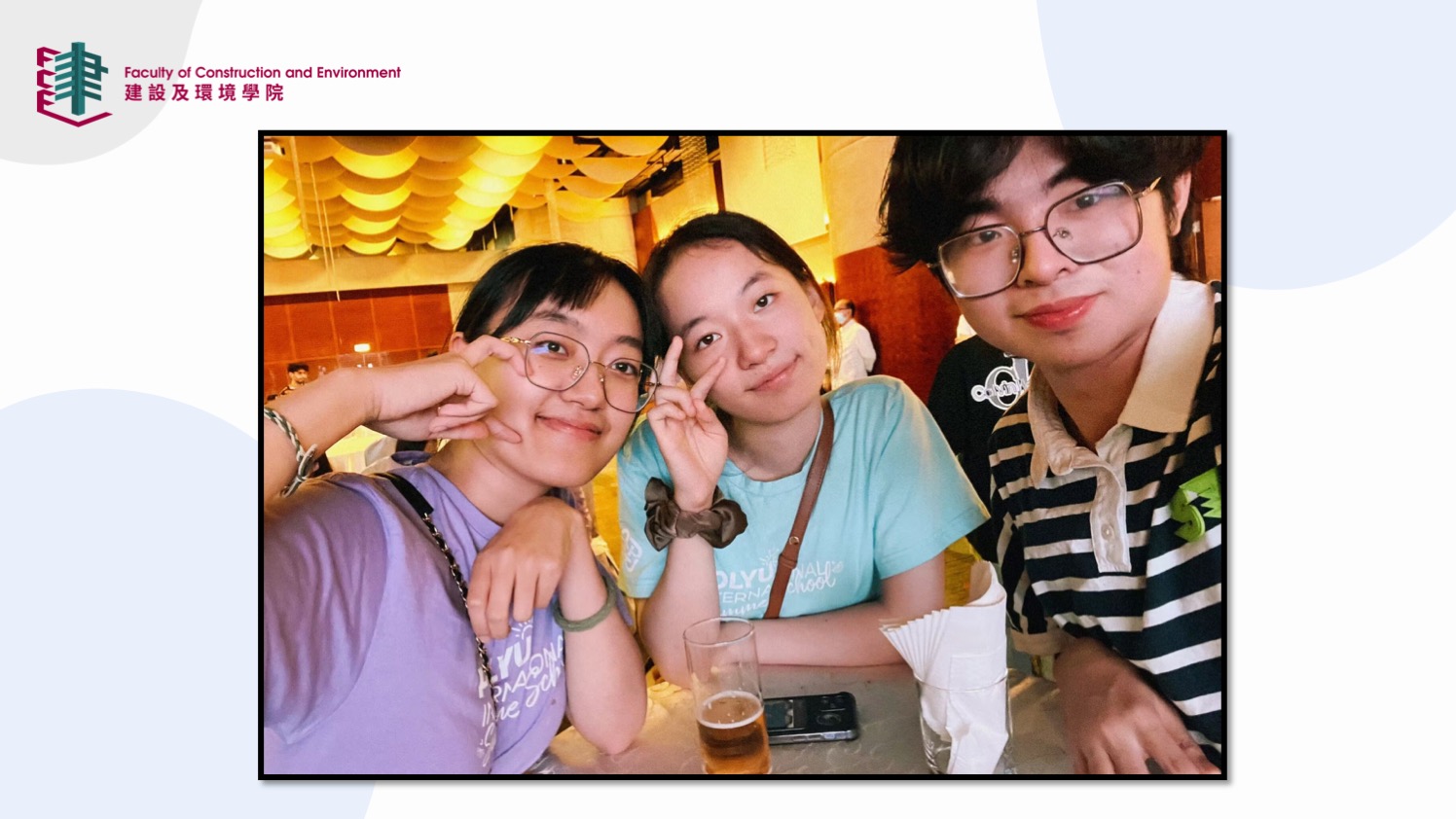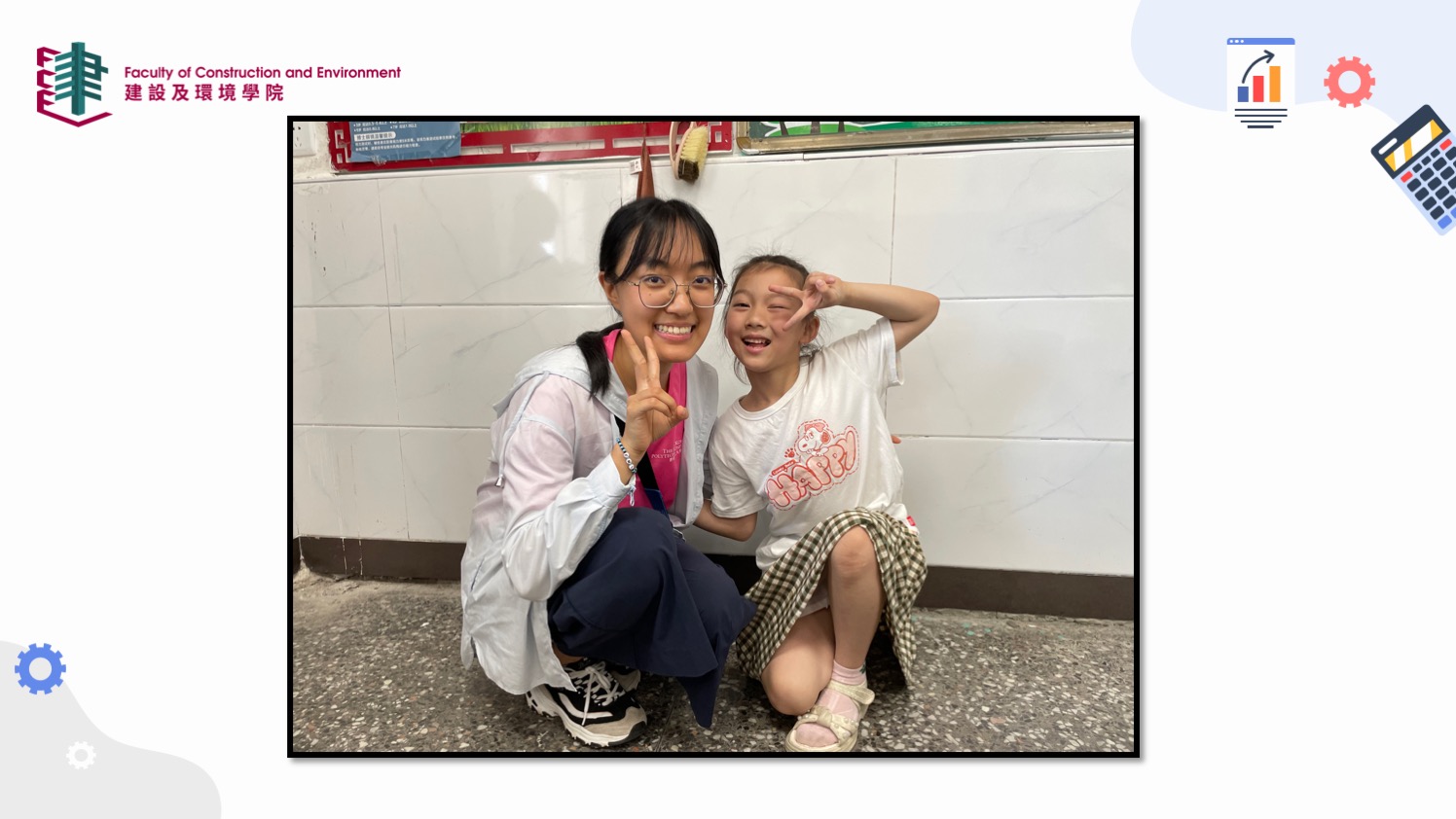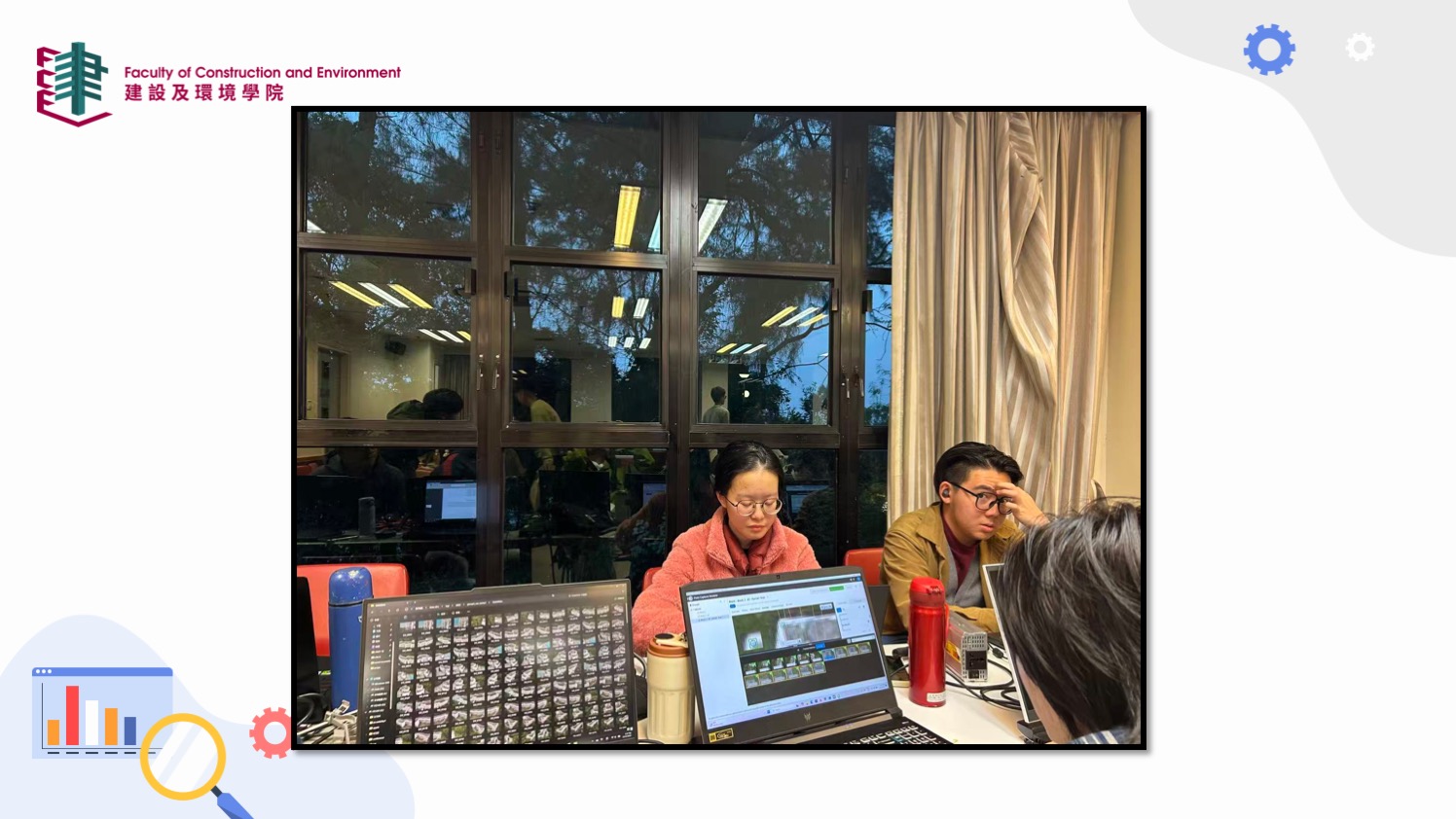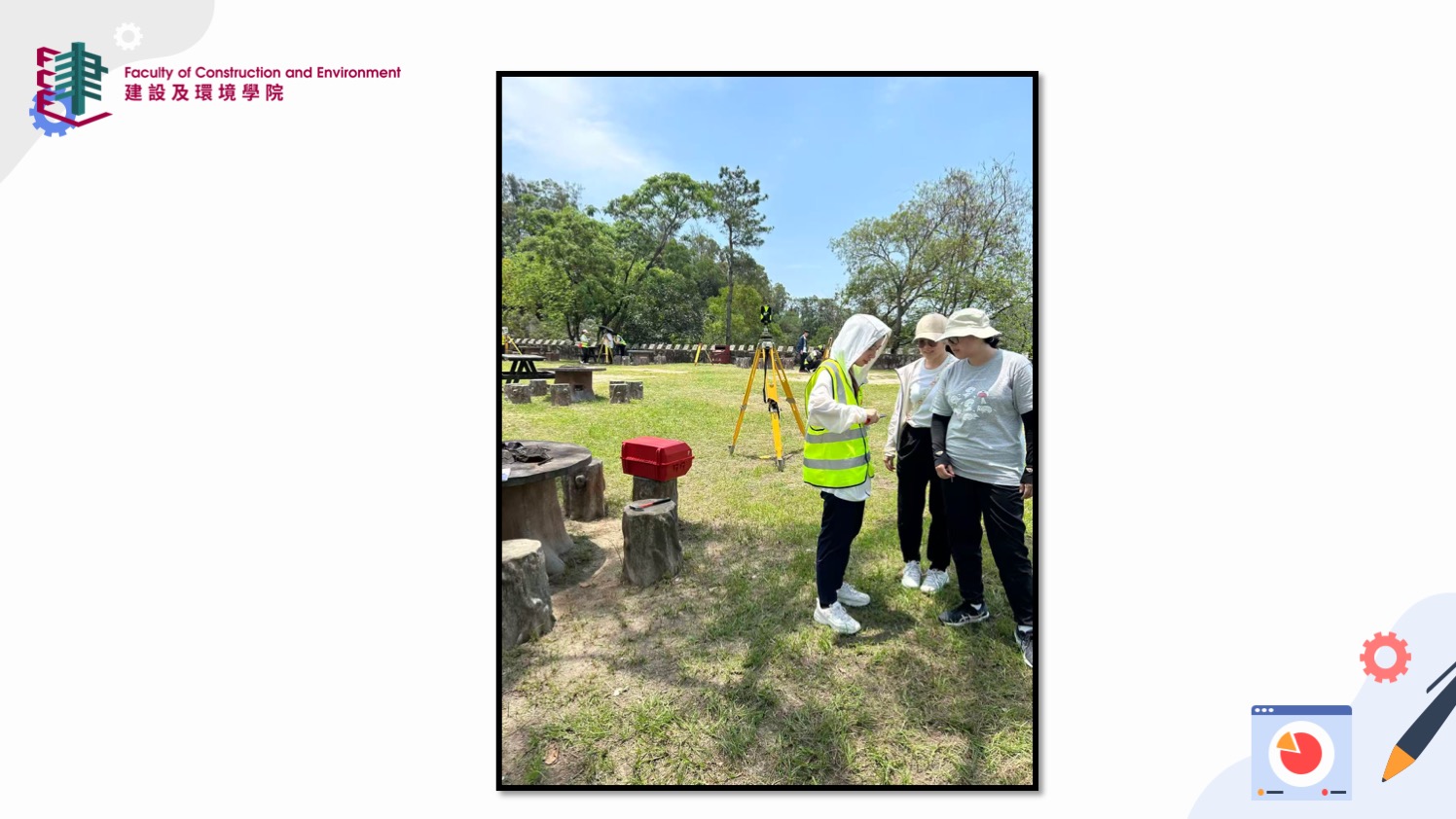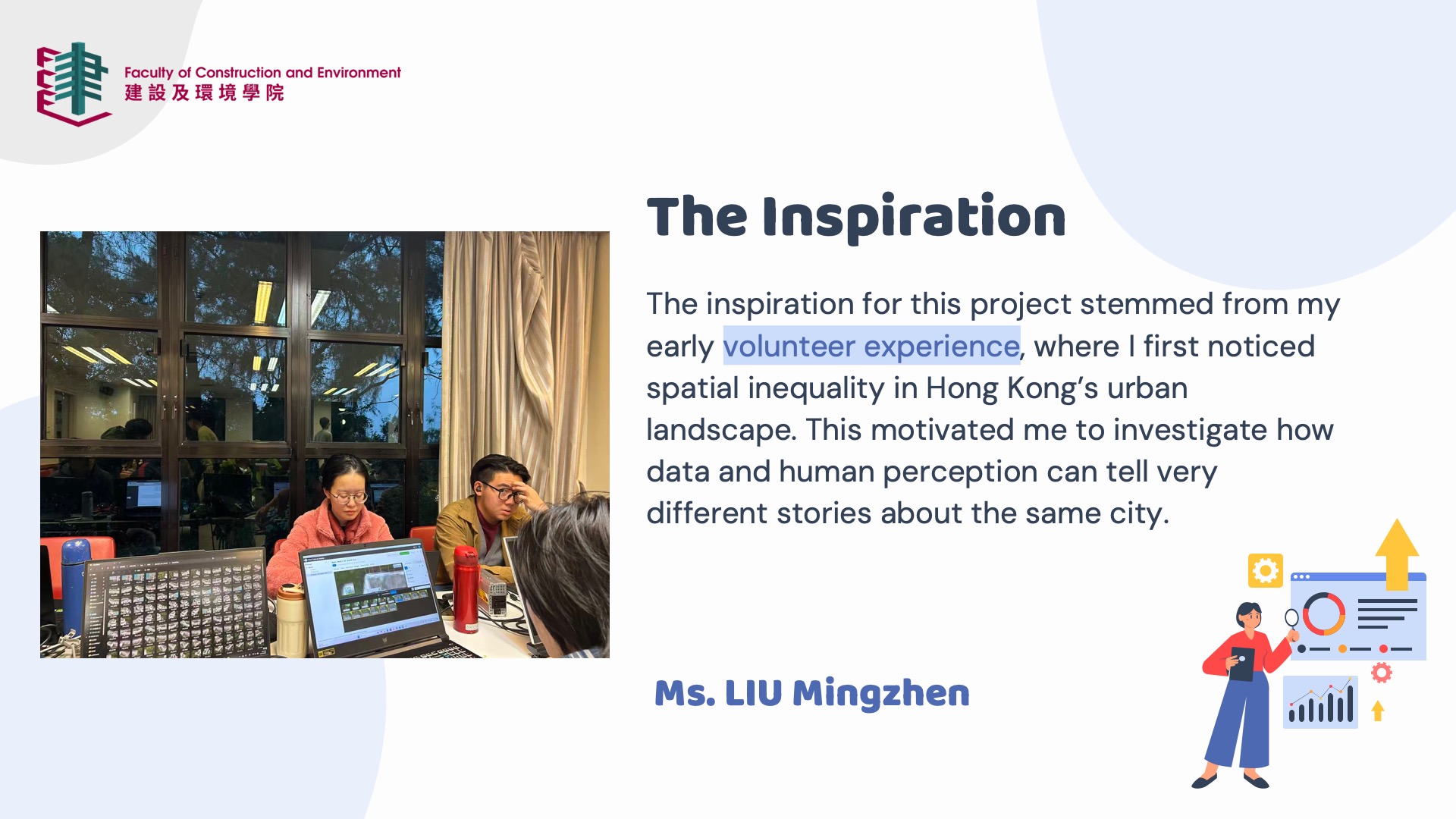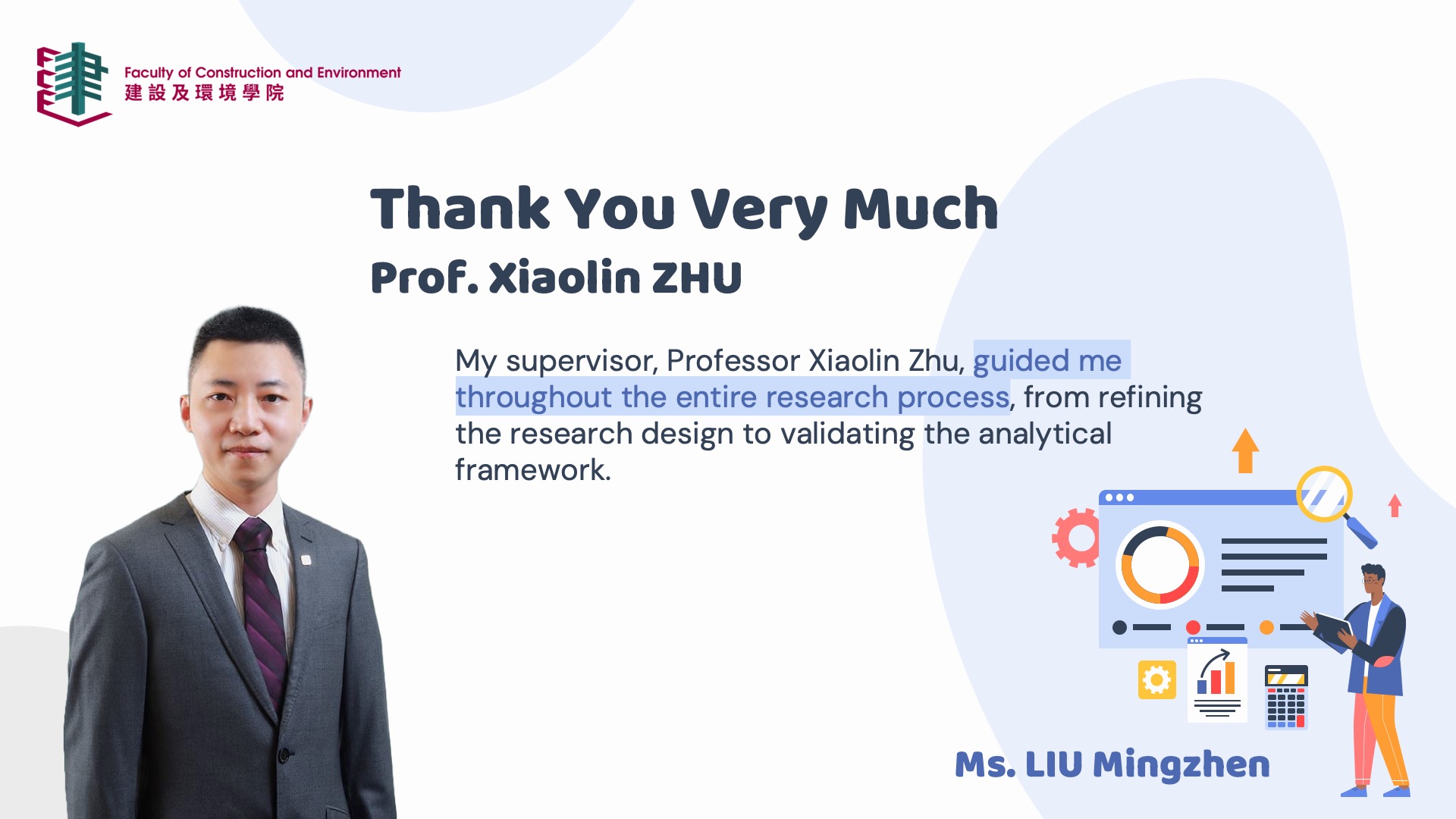



During her two-year research on livability in Hong Kong, LIU Mingzhen found that objective data and residents’ perceptions often tell different stories. With Professor Zhu’s guidance, she developed a geospatial framework and compared objective indices with survey-based subjective assessments. Integrating diverse datasets and managing time were major challenges, but she overcame them with systematic planning and technical innovation.
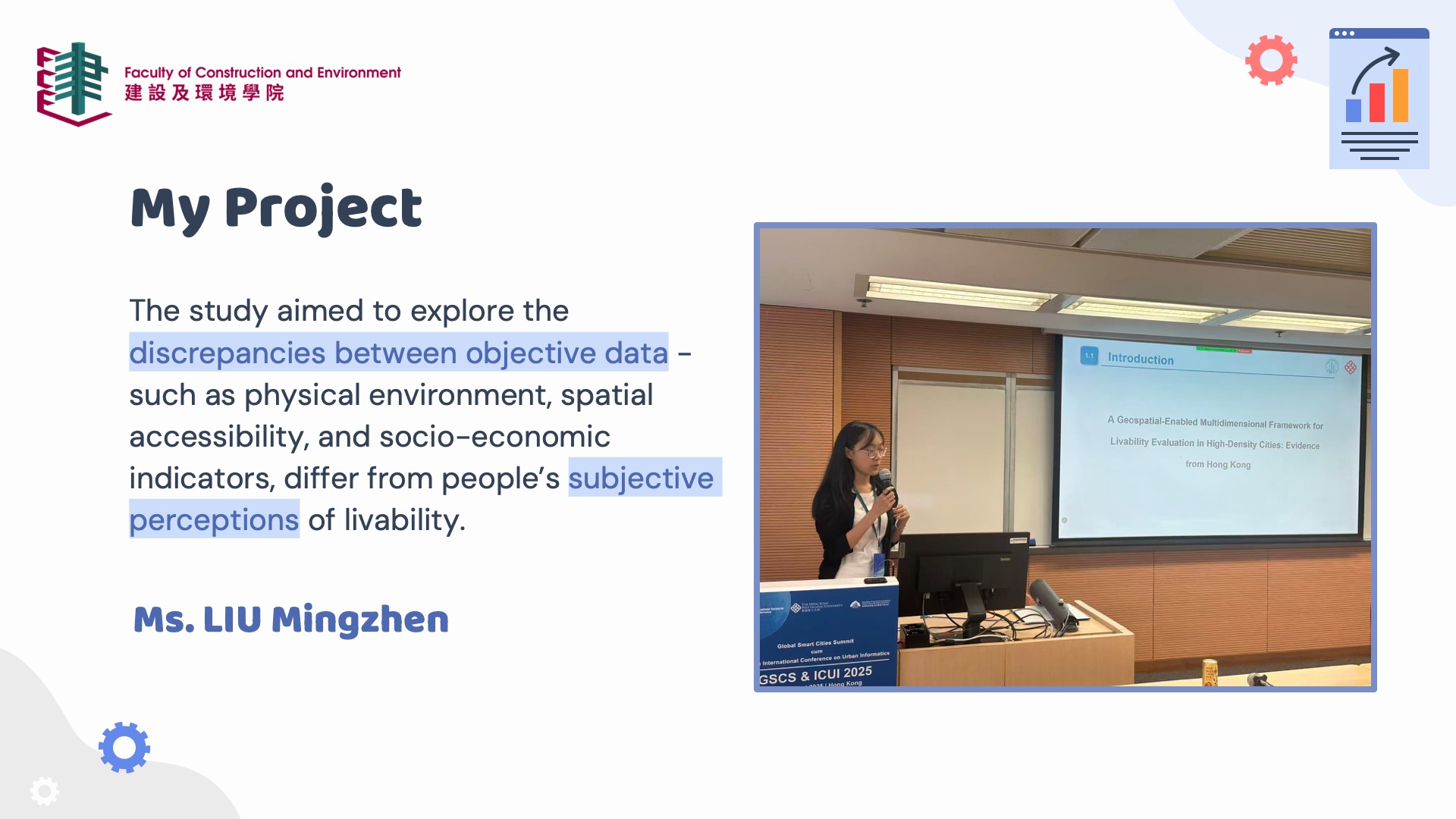
PolyU’s support and research funding enabled her to collect valuable data and present her findings internationally. This experience strengthened her skills in spatial analysis, survey design, and academic writing. Most importantly, Mingzhen learned that urban research should not only focus on data, but also consider the voices and experiences of the people who live in the city.
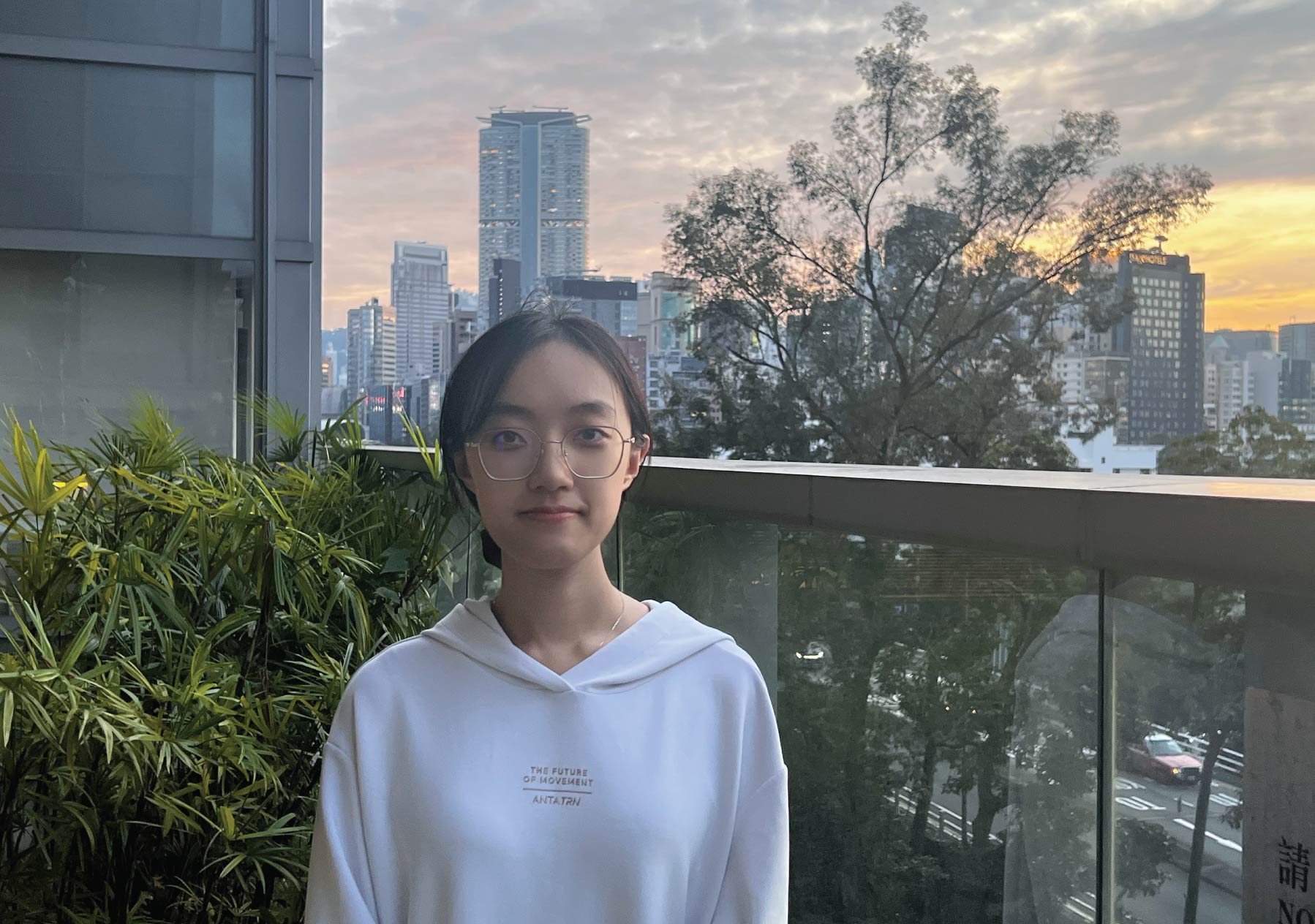
Ms. LIU, Mingzhen
Faculty of Construction and Environment
Department of Land Surveying and Geo-Informatics
Mingzhen developed expertise in assessing urban livability, which involves evaluating how well urban spaces support the well-being of residents. She learned to analyze both objective factors (physical environment, spatial accessibility, socio-economic indicators) and subjective perceptions (residents’ experiences and preferences). This knowledge is crucial in construction and urban planning for designing cities that are not only functional but also enjoyable and inclusive for their inhabitants.
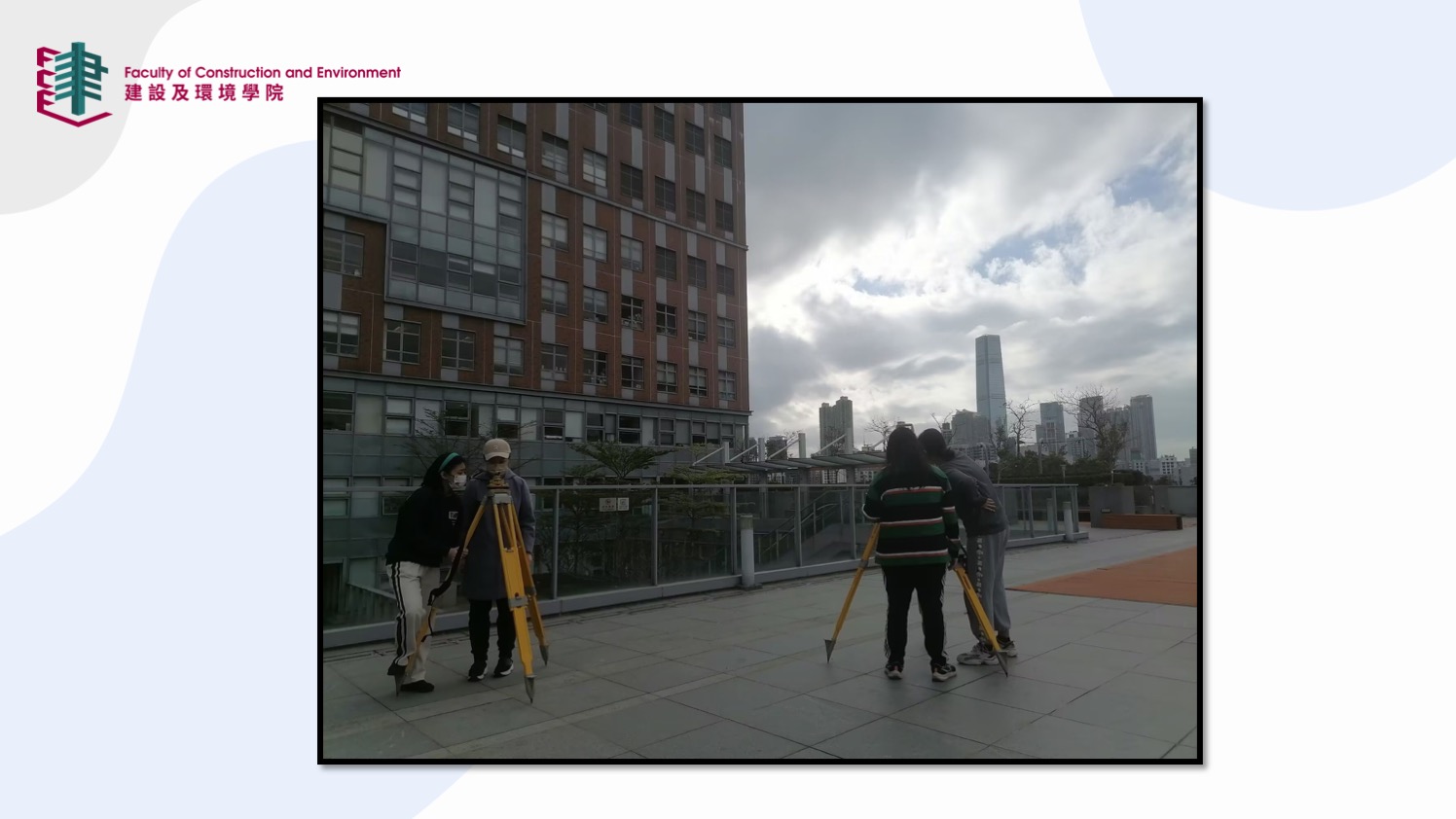
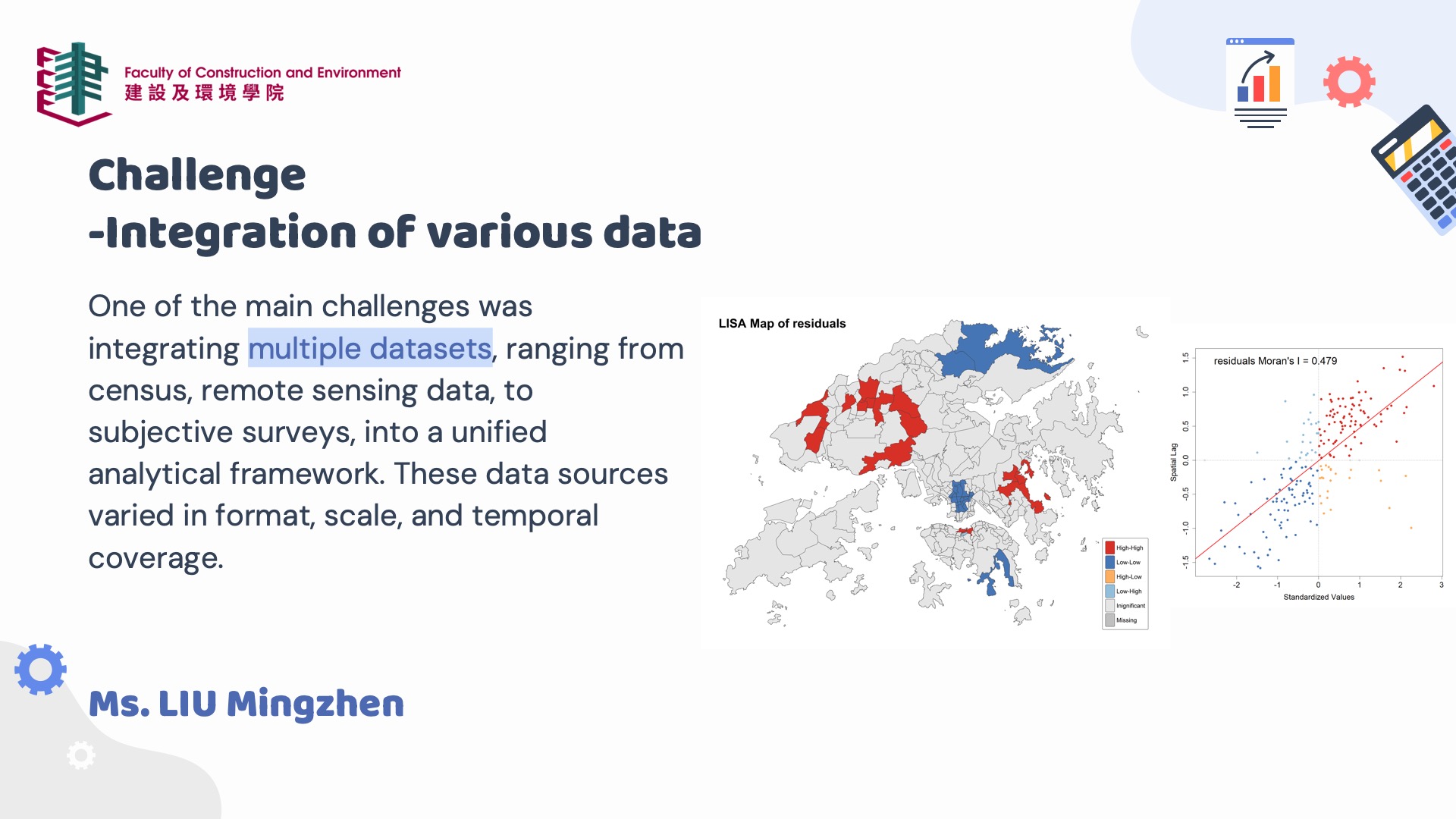
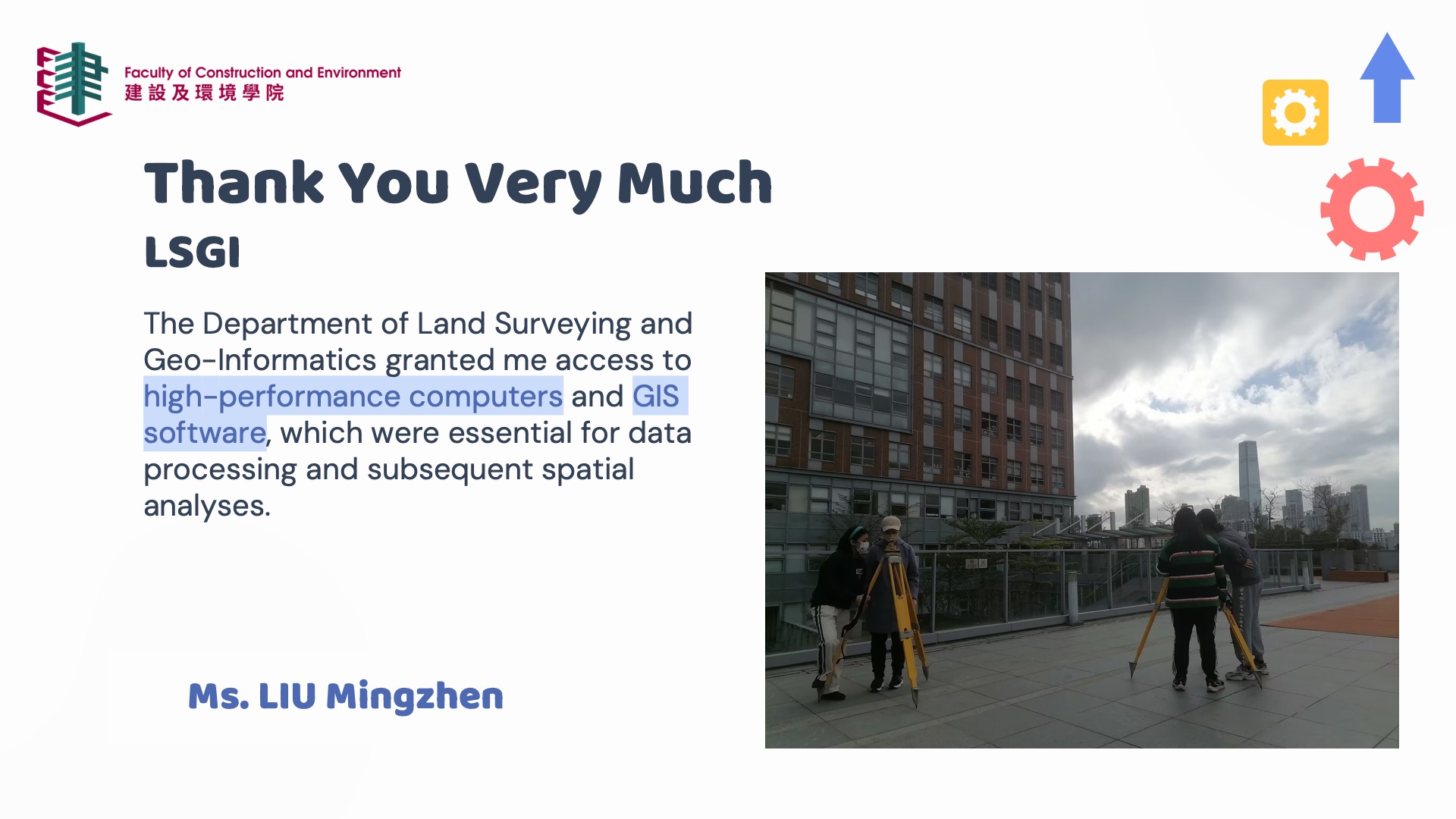
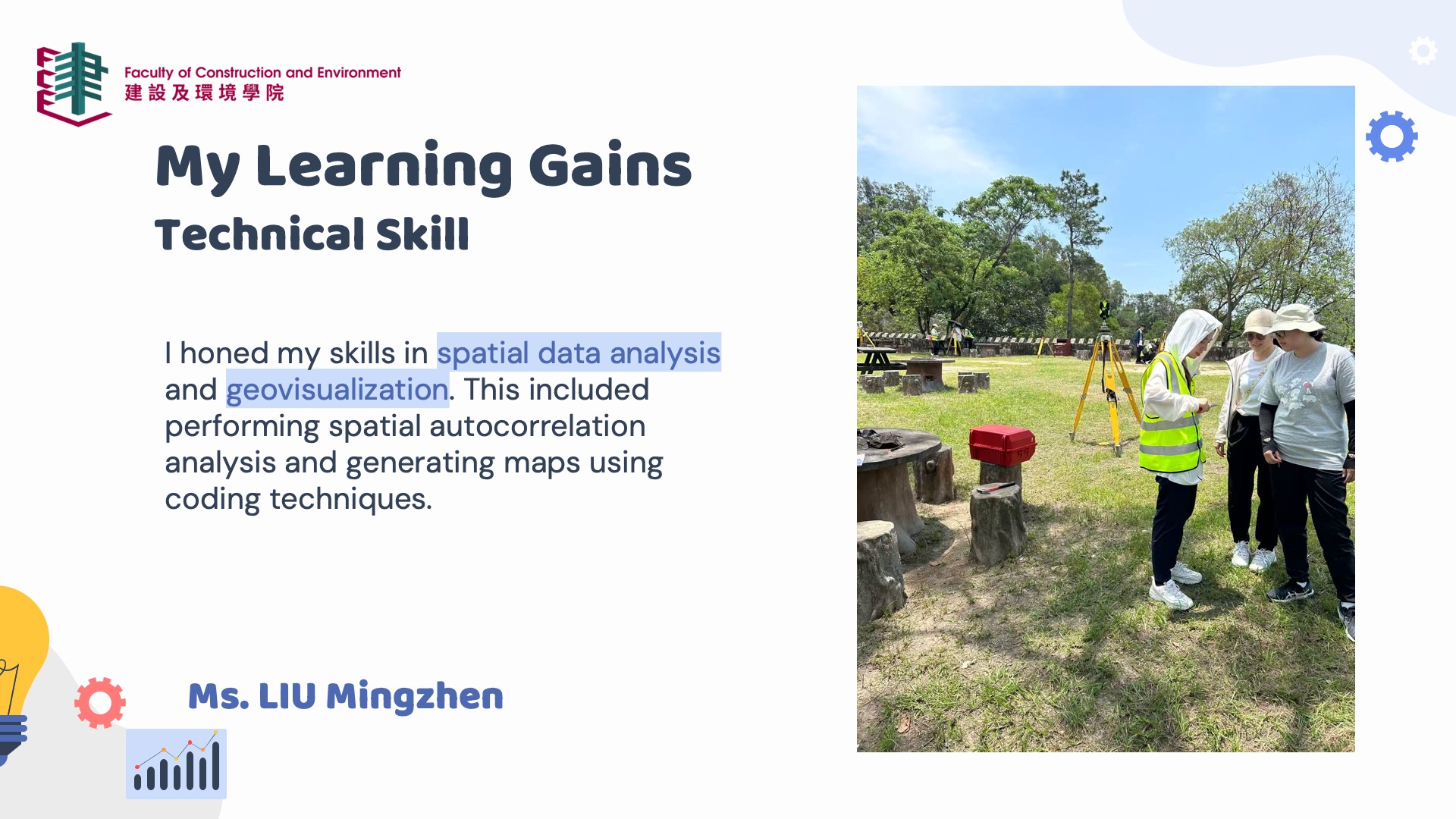
Her project required advanced skills in collecting, processing, and visualizing spatial data using GIS software and coding techniques. Mingzhen performed spatial autocorrelation analysis and generated maps to uncover hidden patterns and inequalities in urban areas. Geospatial analysis is fundamental in construction for site selection, infrastructure planning, and monitoring urban development.
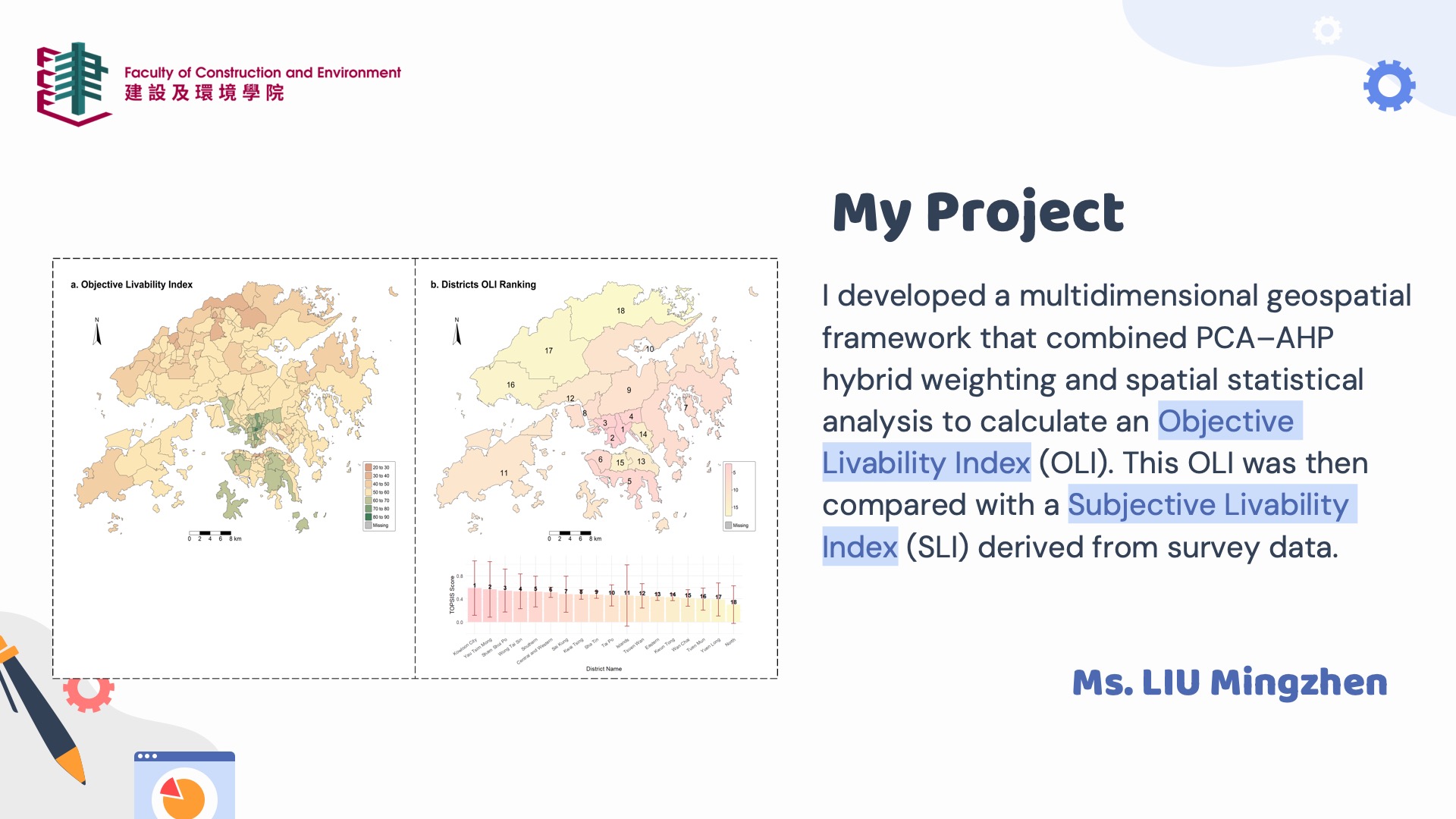
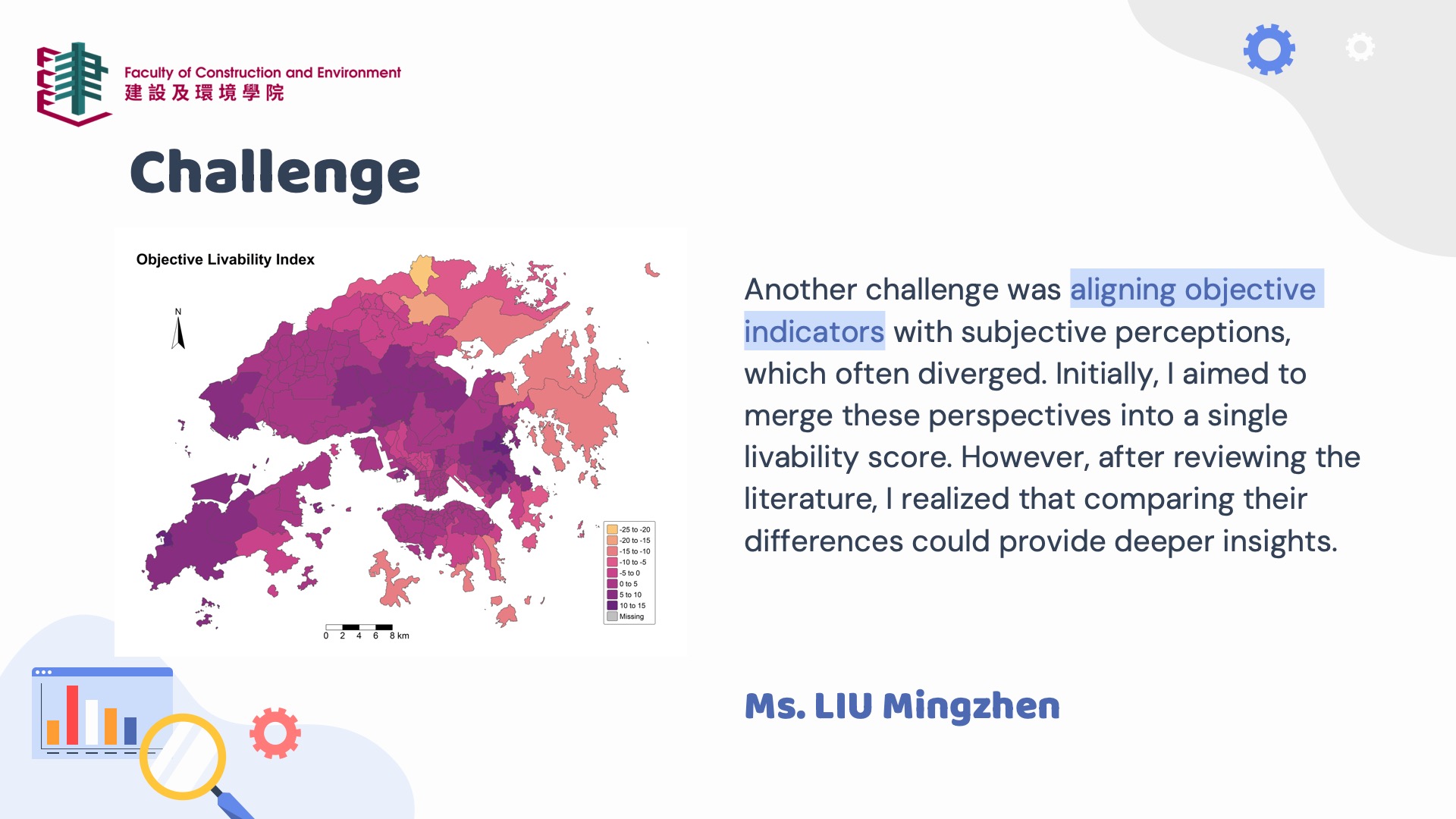
Mingzhen designed a multidimensional geospatial framework that combined PCA–AHP hybrid weighting and spatial statistical analysis to calculate an Objective Livability Index (OLI). She learned to integrate multiple datasets (census, remote sensing, surveys) and apply normalization and hierarchical weighting systems. These modeling and statistical skills are essential in construction for evaluating project impacts, optimizing resource allocation, and supporting evidence-based decision-making.
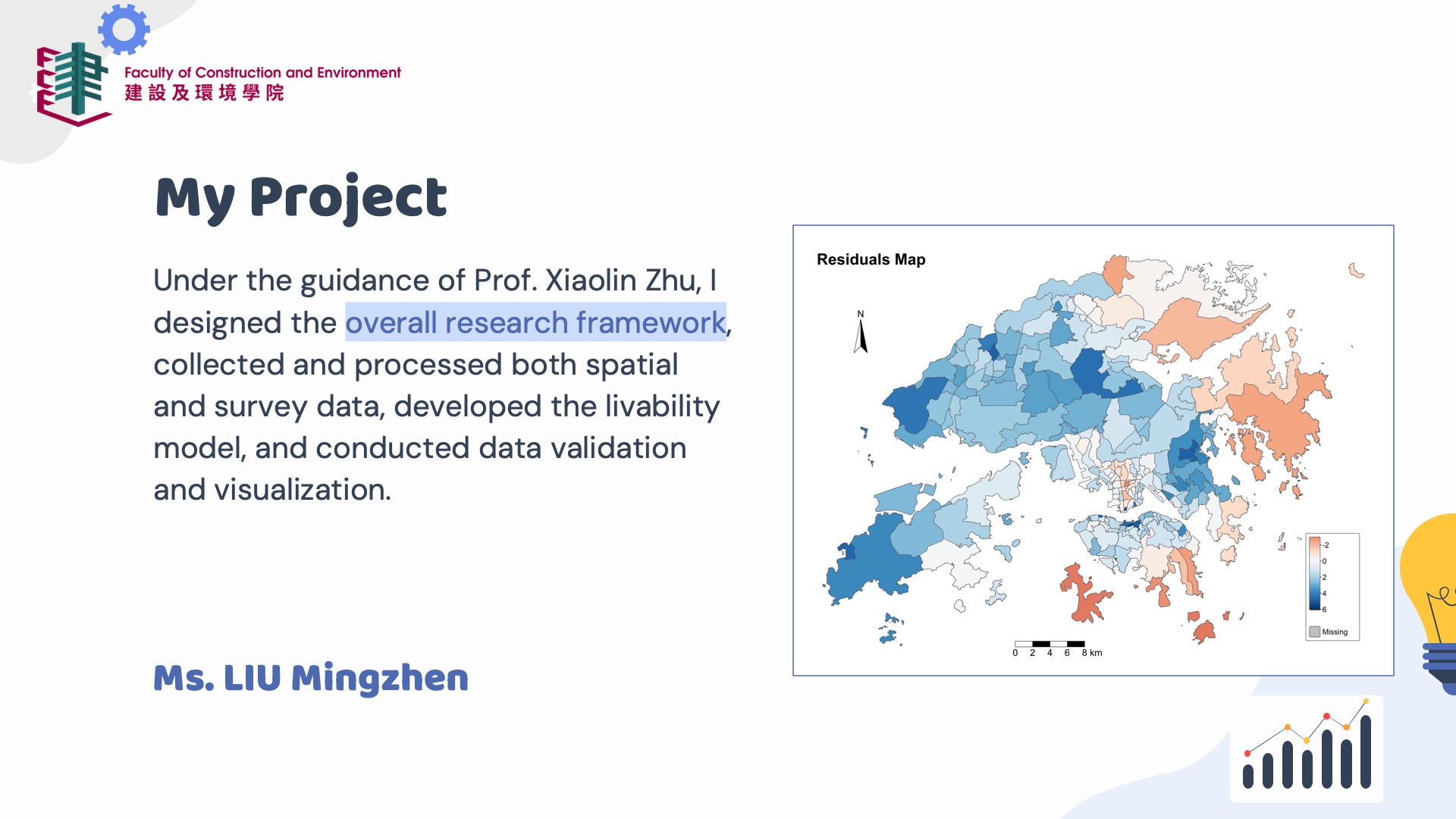
Through her research, Mingzhen discovered critical trade-offs in urban construction, such as how areas with excellent accessibility may sacrifice environmental quality. She used residual and spatial autocorrelation analyses to investigate mismatches between objective and subjective livability. Understanding and managing such trade-offs is vital in construction, as planners must balance competing priorities like accessibility, sustainability, and quality of life.
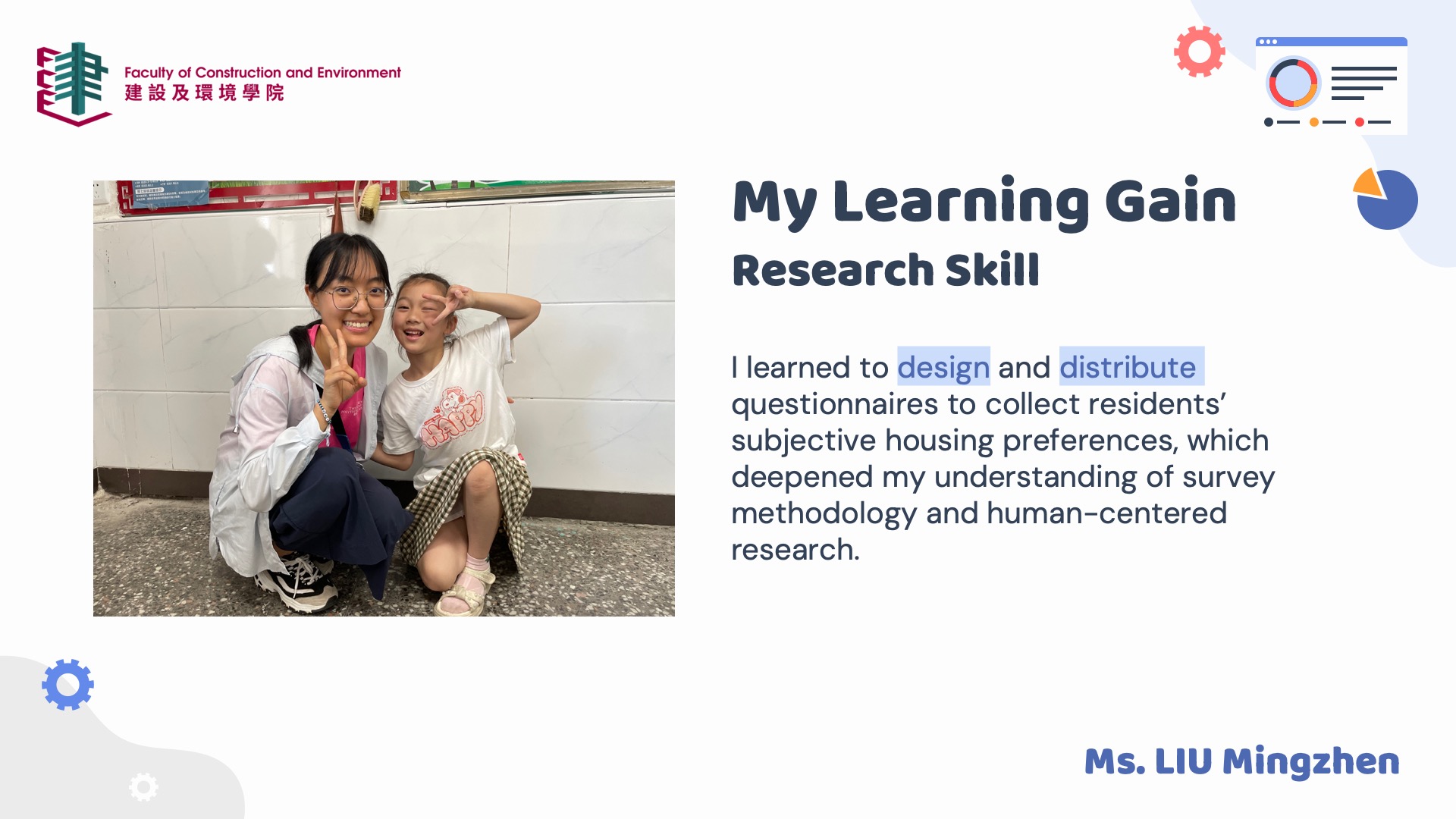
Mingzhen learned to design and distribute questionnaires to collect residents’ subjective housing preferences, deepening her understanding of survey methodology and human-centered research. This skill is increasingly important in construction and urban development, as engaging stakeholders and understanding their needs leads to more successful and accepted projects.
Mingzhen faced complex challenges such as integrating diverse datasets (census, remote sensing, surveys) and aligning objective indicators with subjective perceptions. She overcame these by applying geostatistical normalization, designing hierarchical weighting systems, and using residual and spatial autocorrelation analyses. This demonstrates her ability to tackle multifaceted problems with creative and analytical solutions—a key lifelong skill.
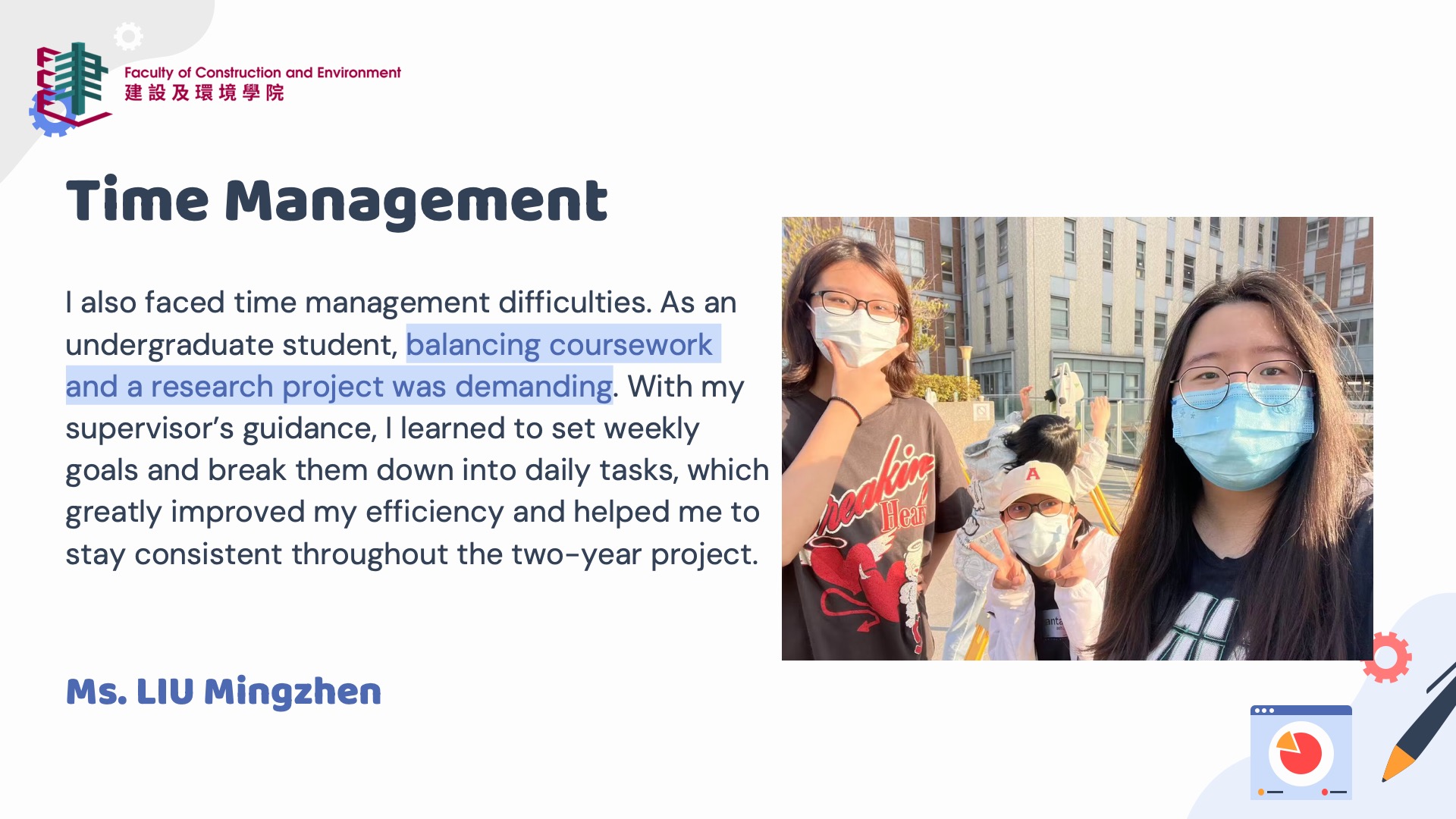
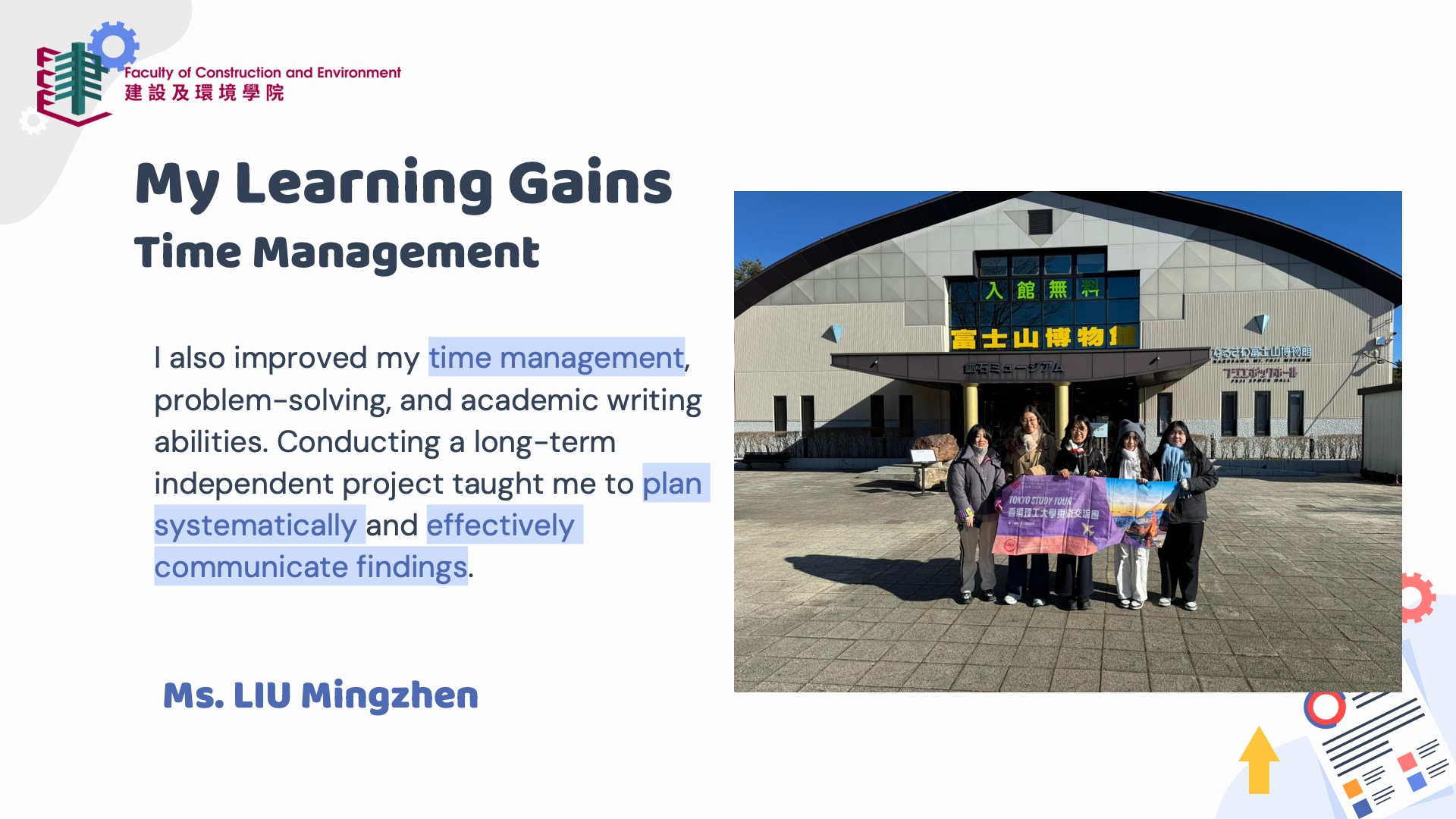
Balancing coursework with a demanding two-year research project required Mingzhen to develop strong time management skills. With her supervisor’s guidance, she learned to set weekly goals and break them down into daily tasks, improving her efficiency and consistency. Effective time management is essential for lifelong learning, enabling individuals to juggle multiple responsibilities and maintain productivity.
Mingzhen adapted her research approach after reviewing literature, shifting from merging objective and subjective livability scores to comparing their differences for deeper insights. She also embraced new technical skills, such as coding for geovisualization and designing surveys. This openness to learning and adapting methods is crucial for growth in any field.
Through authoring manuscripts and presenting at international conferences, Mingzhen honed her ability to communicate complex research findings clearly and effectively. She learned to convey her ideas to both technical and non-technical audiences, a vital skill for sharing knowledge, influencing others, and advancing professionally.
The pursuit of knowledge is a lifelong journey! To further expand your knowledge and continue your personal and professional growth. Click and explore the following learning resources:
Critical Thinking and Problem-solving