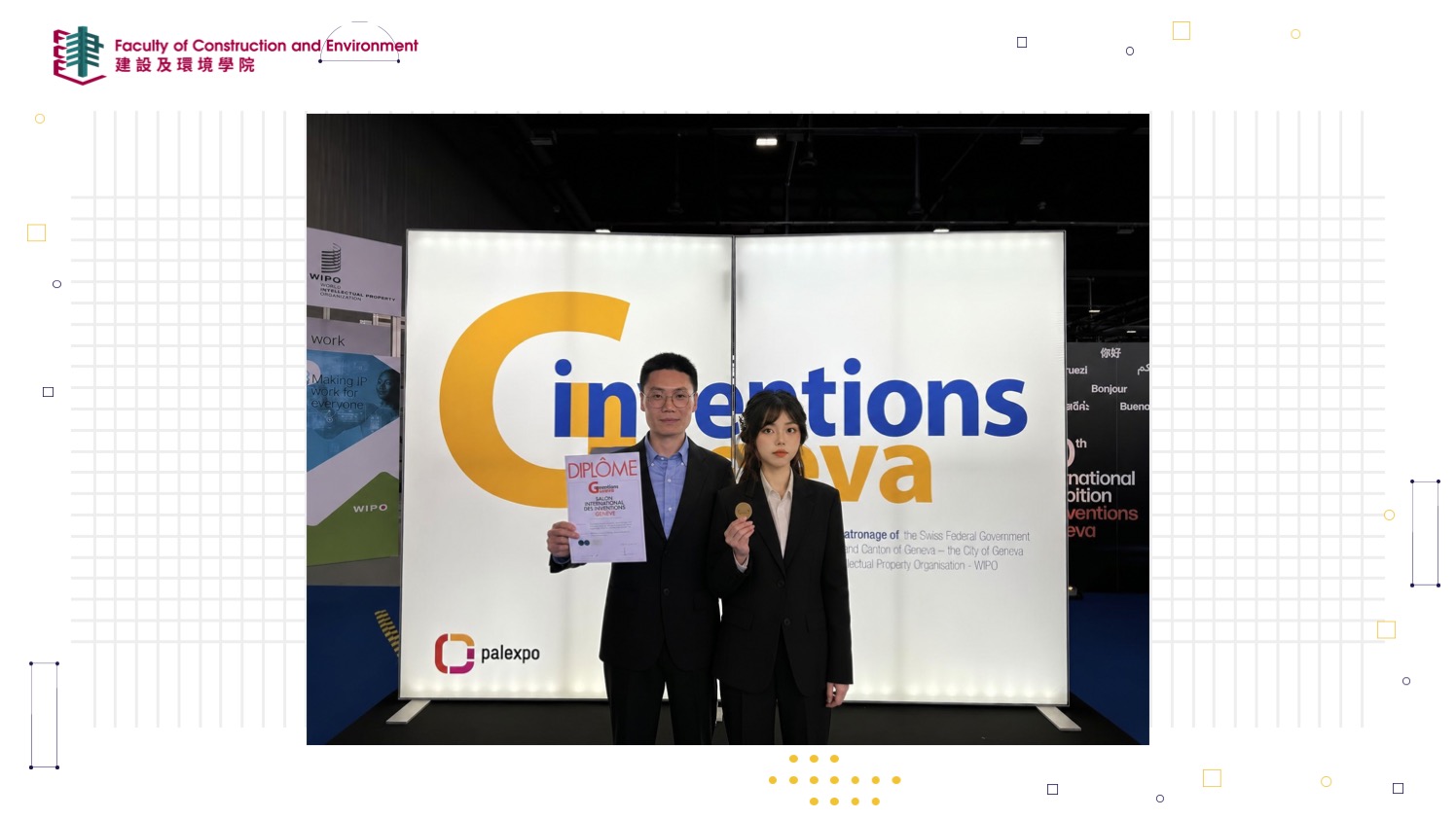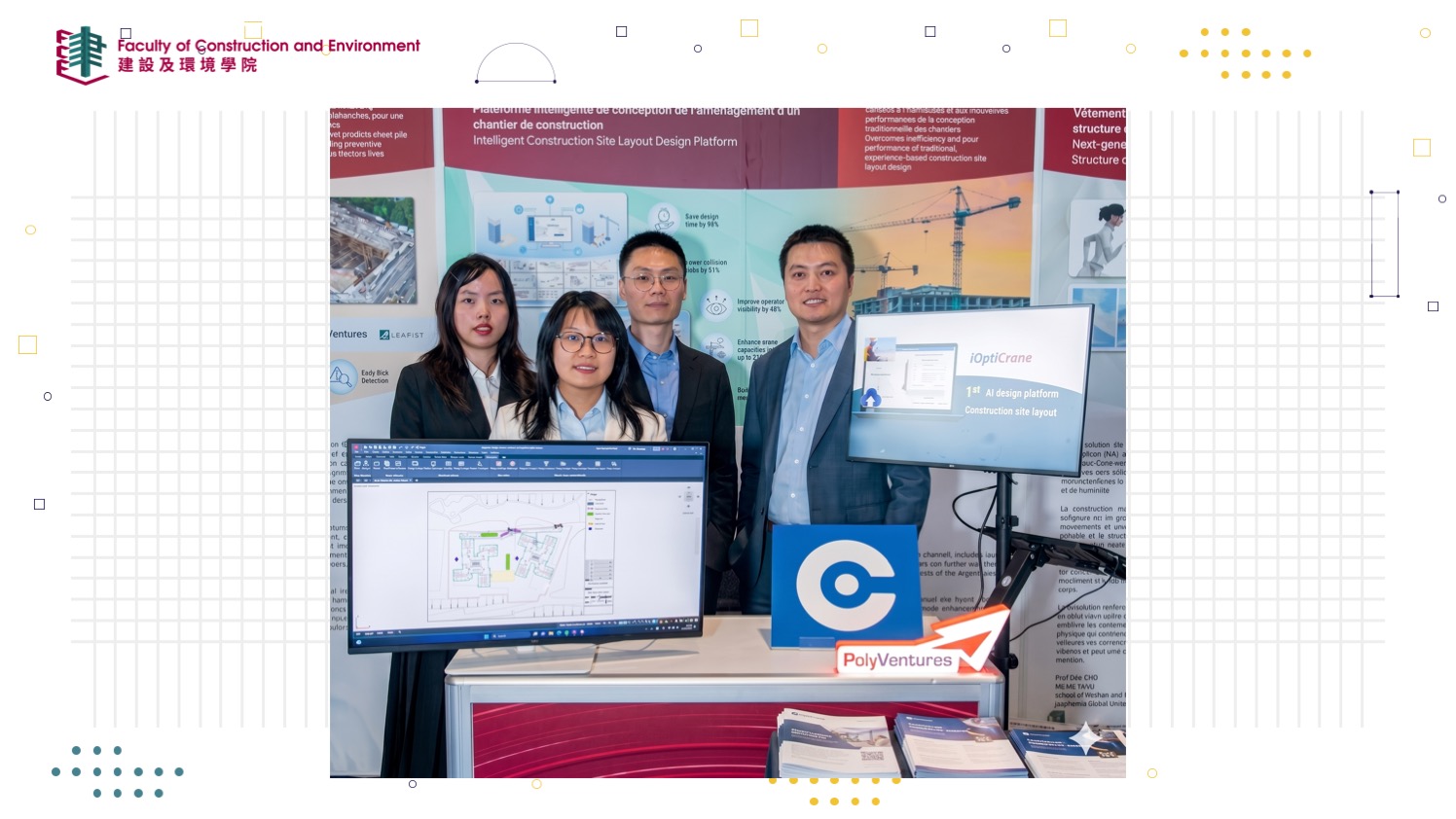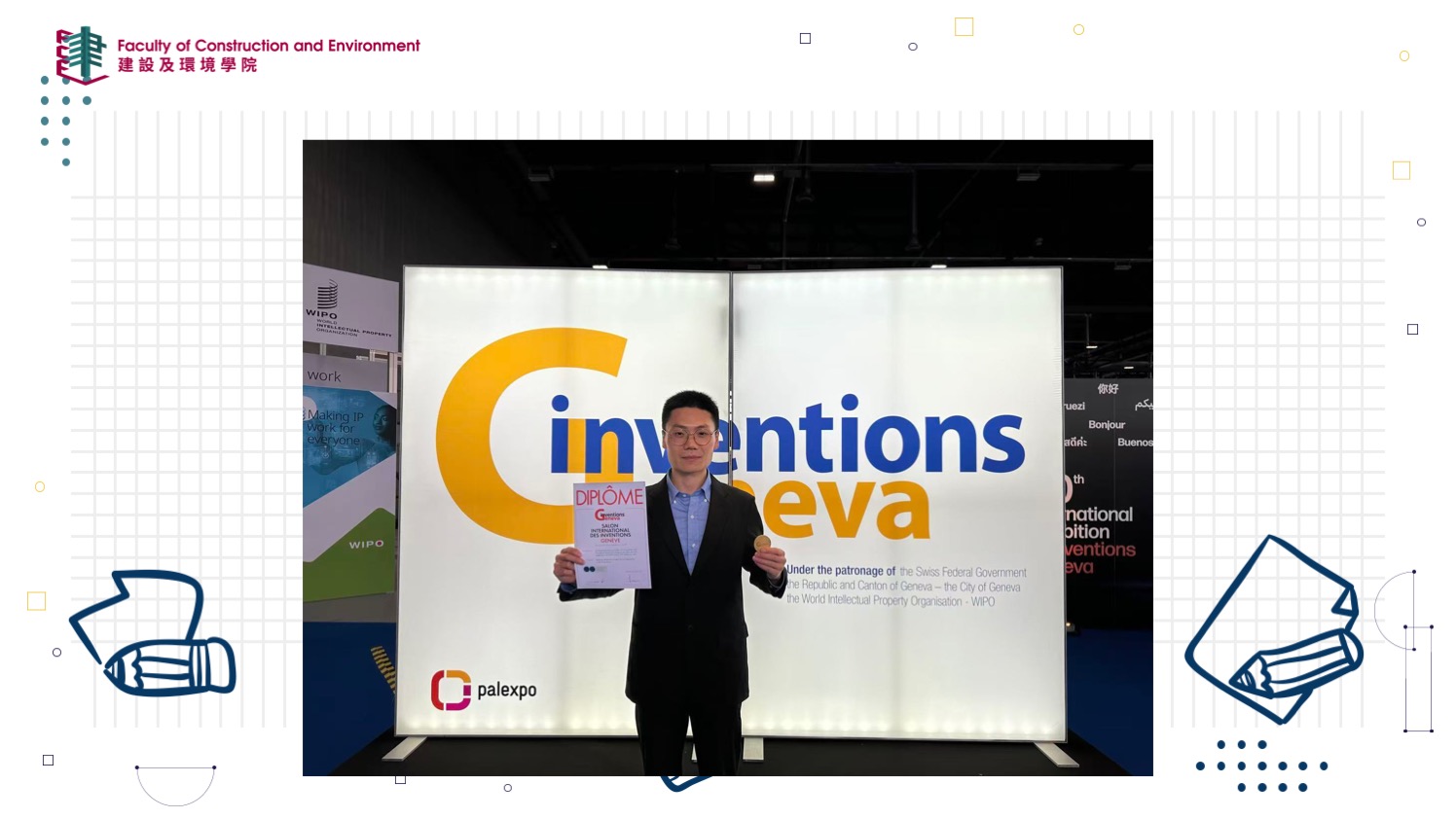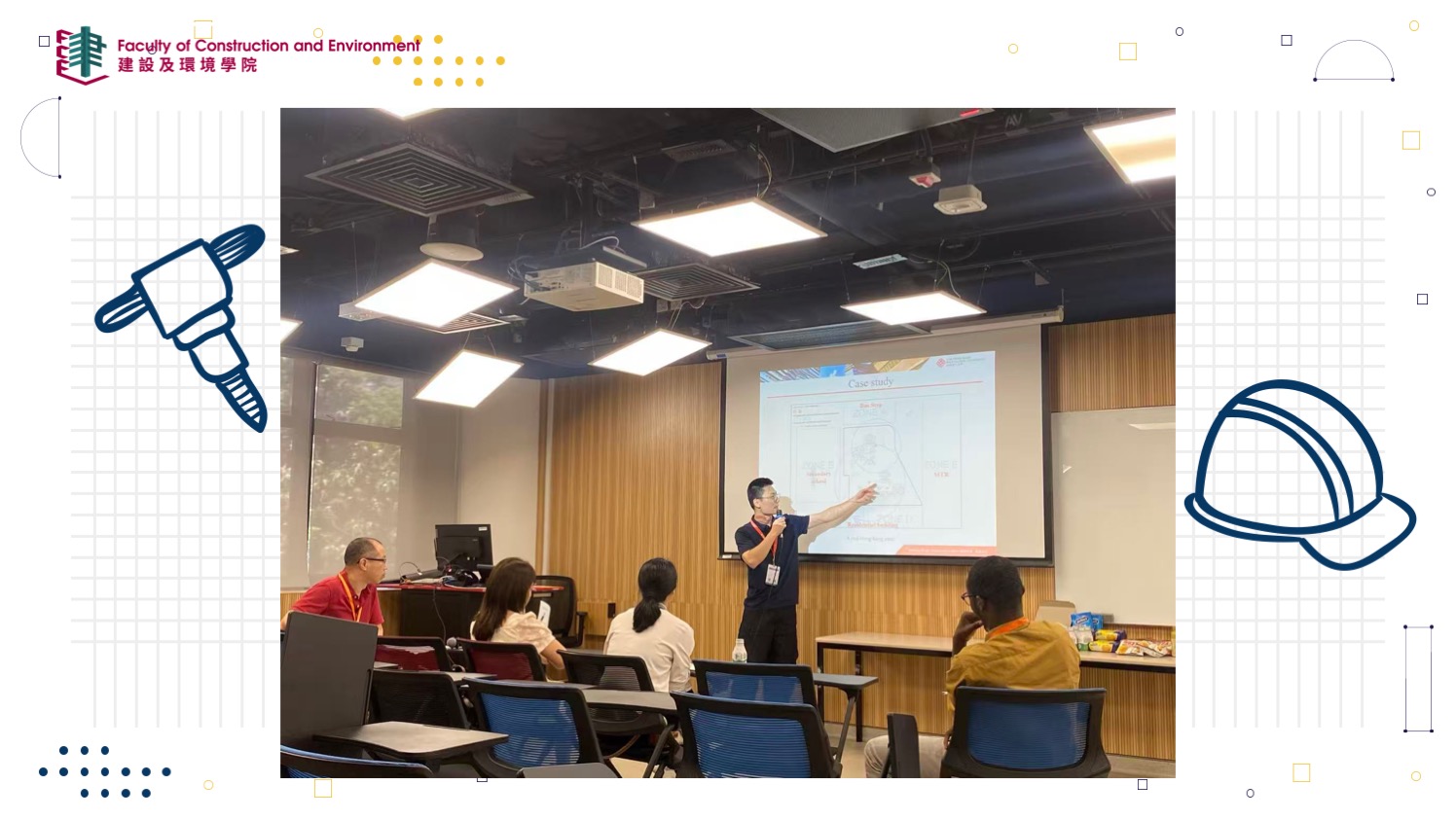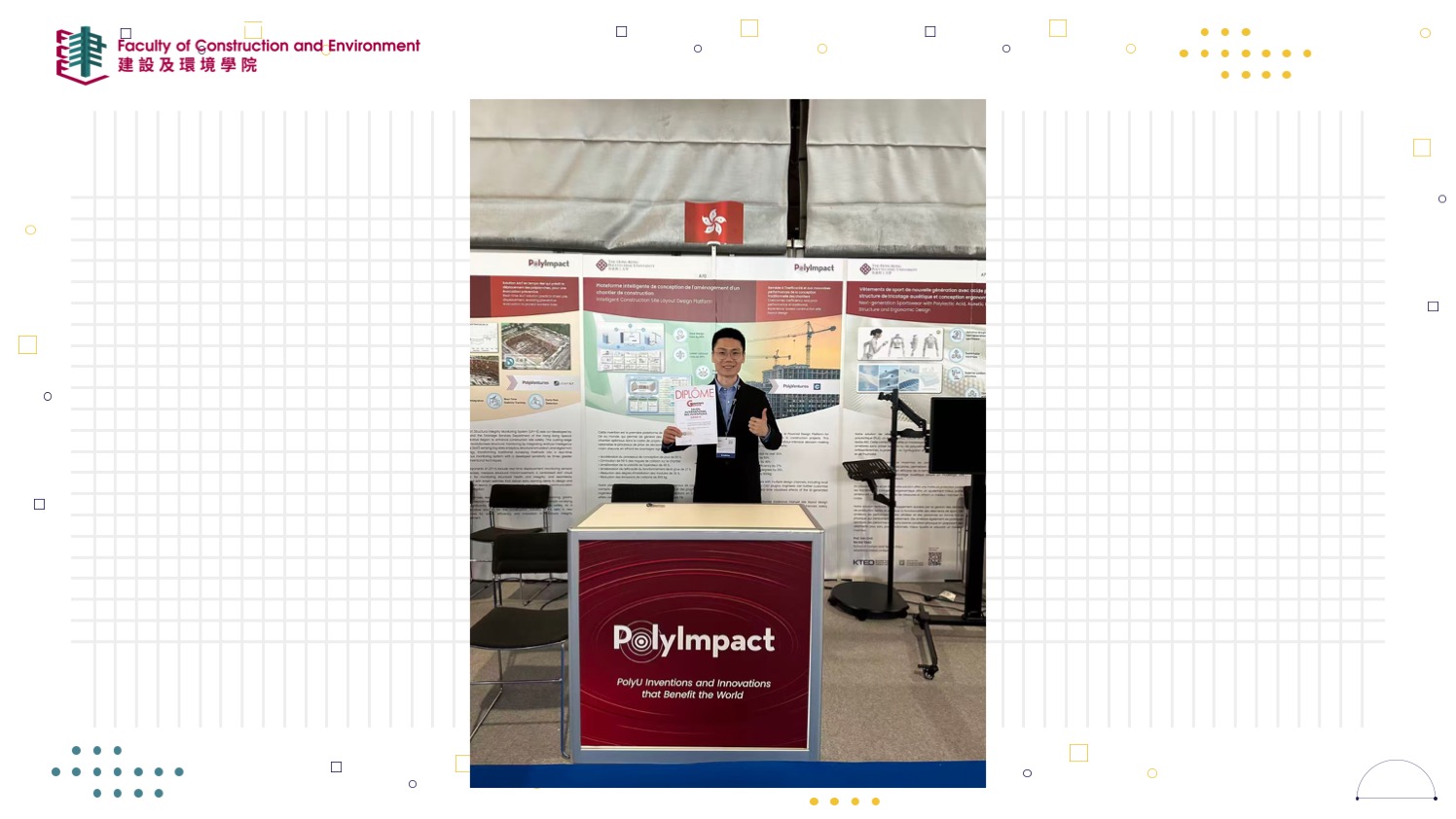



Li Fanzheng and Zou Zhe’s iOptiCrane project showcases the power of AI in solving complex structural engineering challenges. Tasked with automating tower crane layouts, Fanzheng refined the AI training and UI design, while Zhe developed the core optimization models. They navigated significant data hurdles by leveraging institutional support from professors Tarek, Chi, and Geoffrey.
Through this process, they gained invaluable experience in team communication and user-centric design—skills often missed in traditional coding curricula. Their iterative approach transformed a conceptual AI model into a professional-grade tool. By bridging the gap between academic theory and construction practice, Fanzheng and Zhe have built a foundation for future research careers dedicated to making global infrastructure safer and more efficient.

Mr. LI Fangzheng
Ms. ZOU Zhe
Department of Building and Real Estate
Faculty of Construction and Environment
Construction Site Layout Planning (CSLP) is a fundamental phase in construction project management. It involves the optimal spatial allocation of temporary facilities, material storage areas, fabrication yards, and heavy machinery within the boundaries of a construction site. CSLP is a highly constrained, non-convex spatial optimization problem. The goal is to maximize operational productivity, minimize material handling costs and times, and maintain strict safety clearances to prevent hazards on-site.
The students’ project, iOptiCrane, directly targets this domain by using "AI methods for the design of construction site layout." By transitioning from traditional hand-drafted layouts to an automated, intelligent platform, their tool optimizes the physical arrangement of the site, ensuring that the heavy machinery and material supply zones are positioned to maximize logistical efficiency.
Tower cranes are the central logistical drivers of high-rise construction, and their placement is governed by strict mechanical, structural, and spatial constraints. Engineers must calculate the crane’s maximum lifting capacity at varying distances (load charts), hook coverage over supply (unloading) and demand (installation) zones, tail swing clearance to avoid surrounding structures, and overlap zones to prevent crane-to-crane collisions. Failing to plan these variables accurately can result in project delays or catastrophic structural failures.
iOptiCrane was developed to automate this highly technical engineering evaluation. By utilizing optimization and AI models, the platform mathematically calculates crane coverage and capacity boundaries. This replaces traditional, subjective layout methods with an algorithmic approach that ensures the selected tower cranes can physically and safely reach all necessary lifting points on the job site.
In construction engineering, structural and architectural drawings (2D CAD drawings or 3D Building Information Modeling (BIM) files) contain the exact geometric coordinates, elevations, and structural boundaries of a project. To automate site layout design, software tools must be capable of parsing these complex graphic files to extract spatial data, identify structural obstacles, and locate target installation coordinates (such as heavy precast concrete elements or steel columns).
The students highlighted that "construction drawings are the key data for our project". A massive challenge they overcame was collecting and digitizing these private, real-world construction drawings. They processed these technical blueprints to feed high-quality spatial data into their AI models, transforming static structural lines into dynamic coordinates for their automated crane layout algorithms.
Traditional crane layout heavily relies on the personal "experience of designers," which is prone to human oversight and lacks "scientific evaluation". In modern construction management, layouts are evaluated using quantitative performance metrics, such as crane cycle times (the time taken to hook, lift, swing, place, and return), blind spot indices, overlap collision risks, and structural foundation loading requirements.
The iOptiCrane platform solves this operational gap by enabling "automated evaluation" of proposed site designs. Supported by construction engineering faculty members (Prof. Tarek, Prof. Chi, and Prof. Geoffrey), the students developed optimization algorithms to scientifically rate and compare different layout configurations. This ensures site managers receive an objective, data-backed assessment of site safety and efficiency before physical cranes are erected.
Construction informatics is the study of how information technology, AI, and software engineering integrate into physical construction practices. A major hurdle in this field is usability; advanced mathematical algorithms are of little use if field engineers and site superintendents cannot easily operate them. Developing computerized Decision Support Systems (DSS) with intuitive user interfaces (UI) is essential to translate complex optimization back-ends into practical, actionable construction plans.
The team recognized that creating an optimization algorithm was only half the battle. To "turn [their] technical idea into a product that construction practice could actually use," they focused heavily on platform surface design, user-centric interfaces, and clear navigation. By designing an effective UI/UX, they created a practical tool that allows field personnel to interact with complex AI-driven site layout planning without needing to understand the underlying code.
The students successfully bridged the gap between advanced academic AI models and practical, real-world construction needs.
Traditional site layout relies heavily on manual designer experience, which is prone to human error. The students creatively designed iOptiCrane to automate this process, balancing complex AI algorithms with practical site layout evaluation.
Zhe highlighted that a key breakthrough was learning "how to build a user-friendly tool." He balanced technical innovation with practicality by "thinking from the user’s perspective," simplifying the interface, and adding clear navigation to turn a highly technical AI concept into a product that construction practitioners can actually use.
The development of iOptiCrane required deep, sustained research and active outreach to industry experts to acquire high-quality, restricted data.
The team dedicated a full year solely to "conducting research and collecting data for model development" before they even began building the platform.
When faced with the major challenge of sourcing private, highly confidential construction drawings, the team actively sought help from their professors (Prof. Tarek, Prof. Chi, and Prof. Geoffrey). These mentors connected them with construction consultants, allowing the students to obtain the necessary high-quality datasets and professional feedback.
The team embraced an iterative development cycle, refusing to move forward with subpar results and systematically addressing failures.
Fangzheng noted that the model's initial training performance was "unsatisfactory" and the platform's visual presentation did not meet their expectations.
Whenever they noticed discrepancies between their current outcomes and their original vision, the team "would immediately hold meetings to clarify [their] thoughts and brainstorm solutions." They committed to resolving all uncertainties before moving to the next phase, which ultimately led to a highly successful final product.
The successful launch of iOptiCrane required structured phases, clear division of labor, and a long-term commitment.
The team managed a structured, 1.5-year timeline—spending 12 months on data collection and research, followed by 6 months on platform design and execution.
They split technical responsibilities effectively; while Fangzheng and Zhe both worked on the complex AI/optimization models, they also divided frontend/backend duties, with Zhe focusing on the platform surface design. Fangzheng explicitly noted that "efficient team collaboration and communication" was one of his most valuable takeaways.
The students recognized that a great technical tool is only effective if its value is communicated clearly to users and stakeholders.
Both students emphasized that they had to learn how to communicate complex AI data through an "effective UI." By creating a simplified interface, they translated backend AI calculations into clear, visual, and navigable layouts for non-technical users.
Beyond coding, Fangzheng highlighted that he learned "how to design a well-structured report." This skill was essential for presenting their project's impact and scientific validity to competition judges and academic evaluators.
The pursuit of knowledge is a lifelong journey! To further expand your knowledge and continue your personal and professional growth. Click and explore the following learning resources:
Construction Site Layout Planning
Quantitative Performance and Safety Evaluation
Research and Information Literacy
Continuous Improvement and Learning from Mistakes