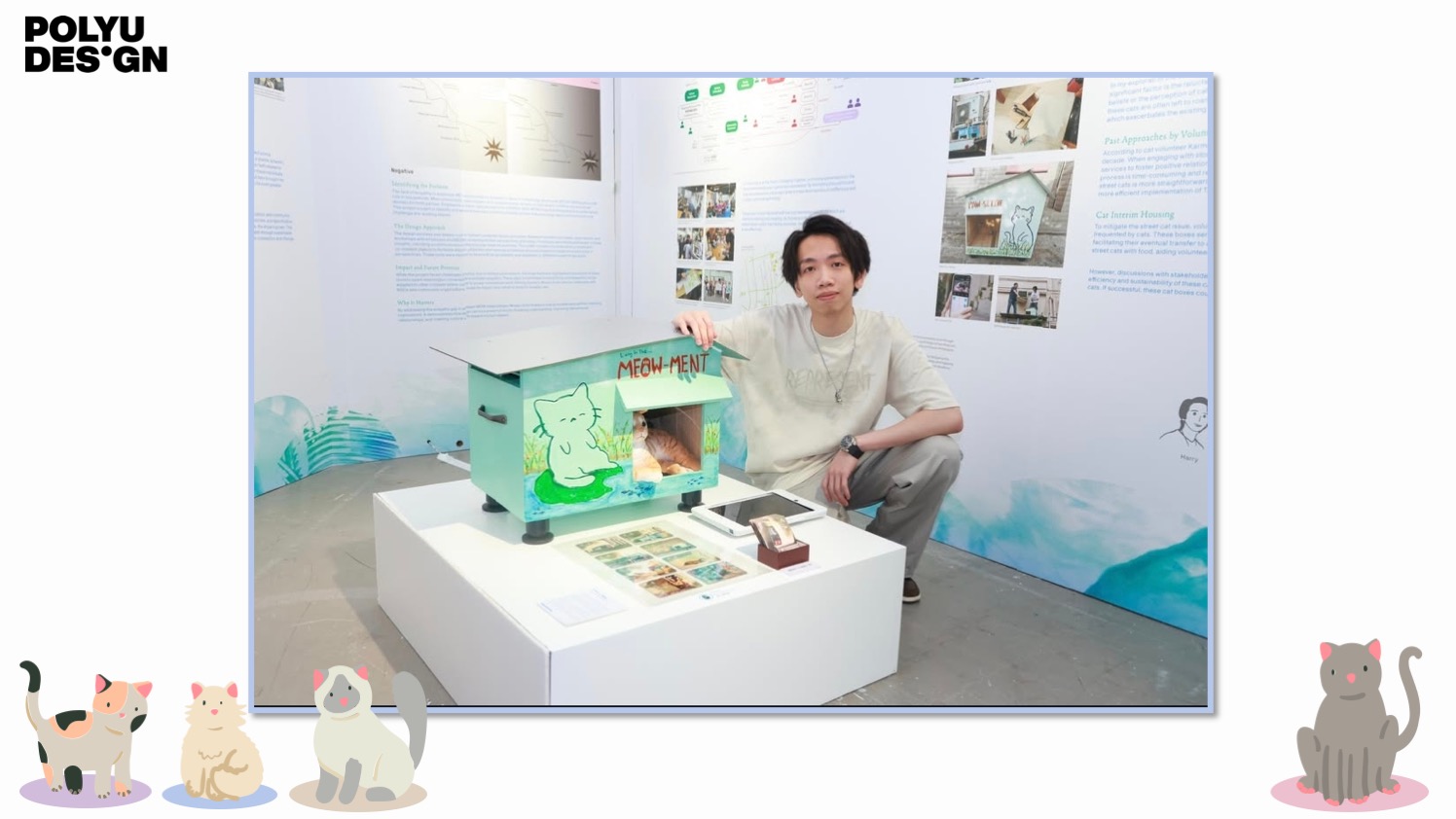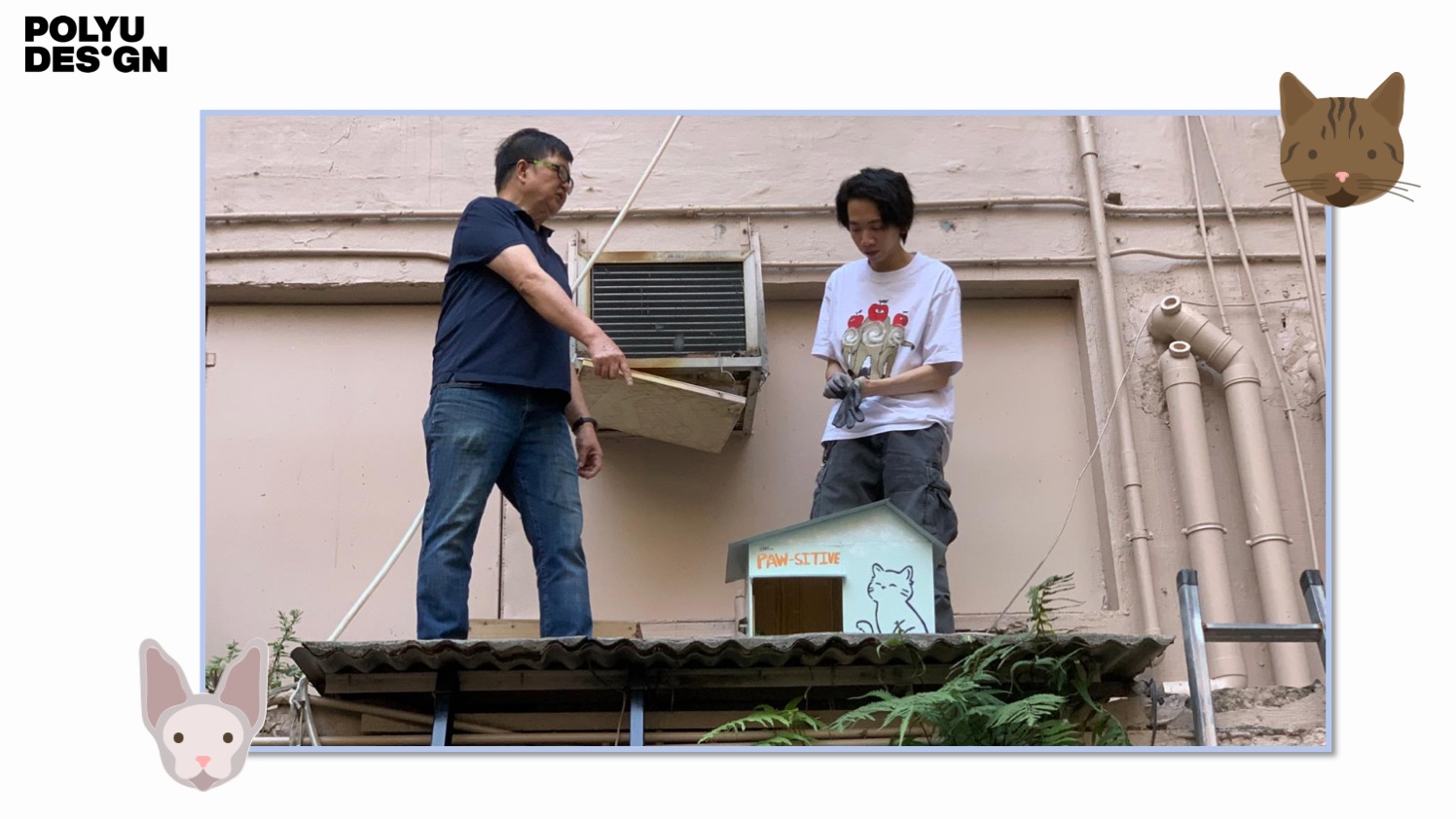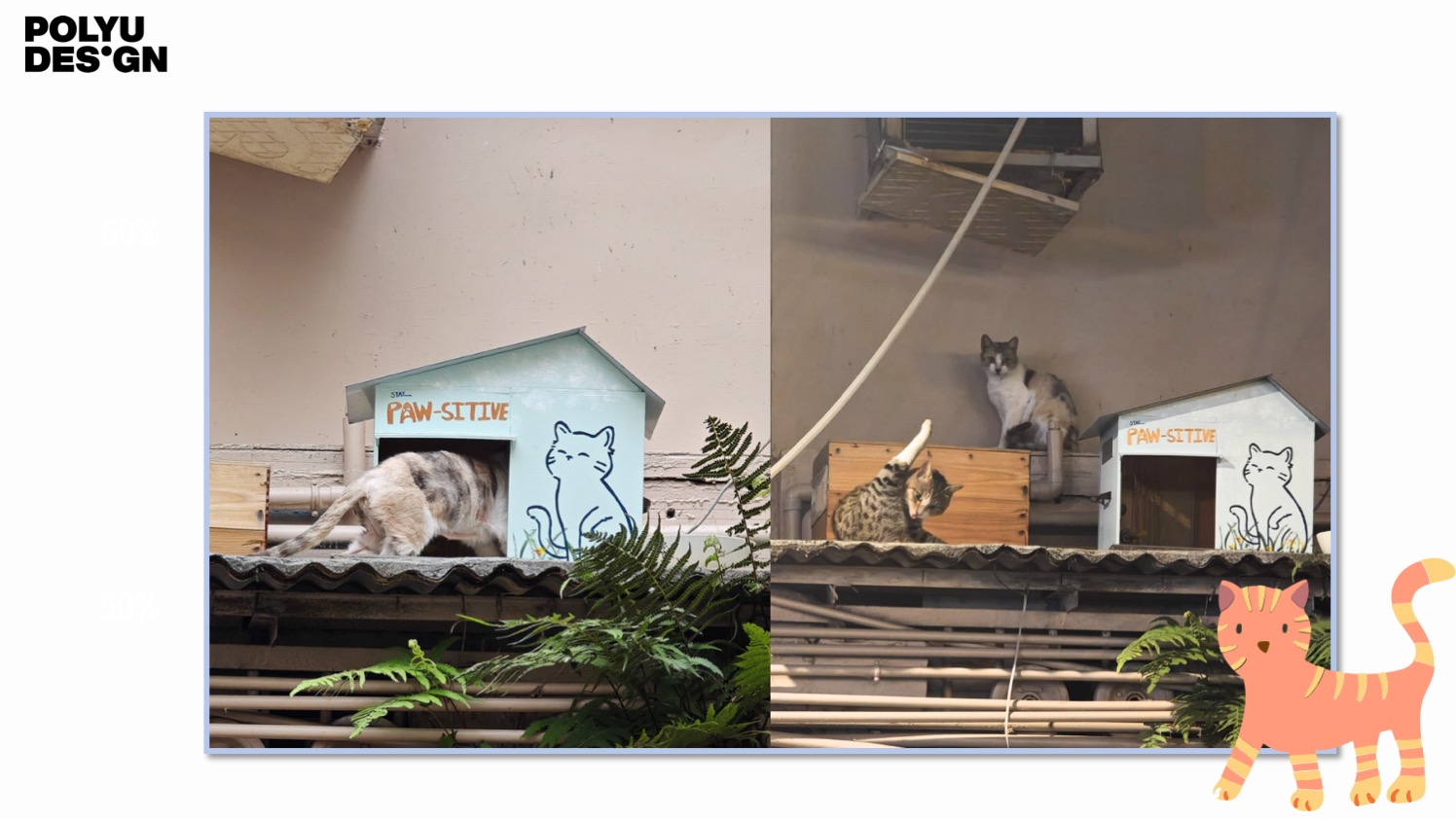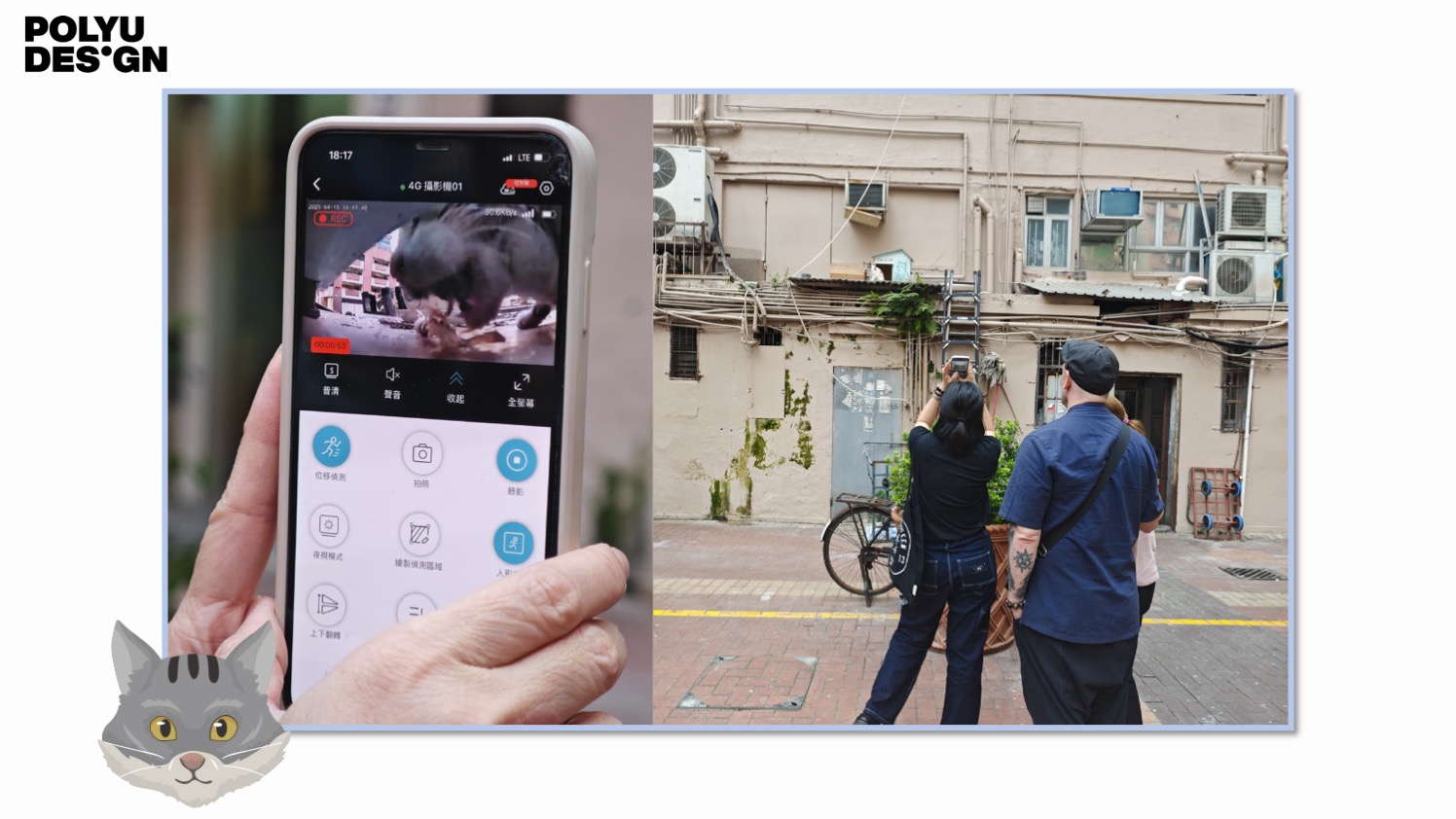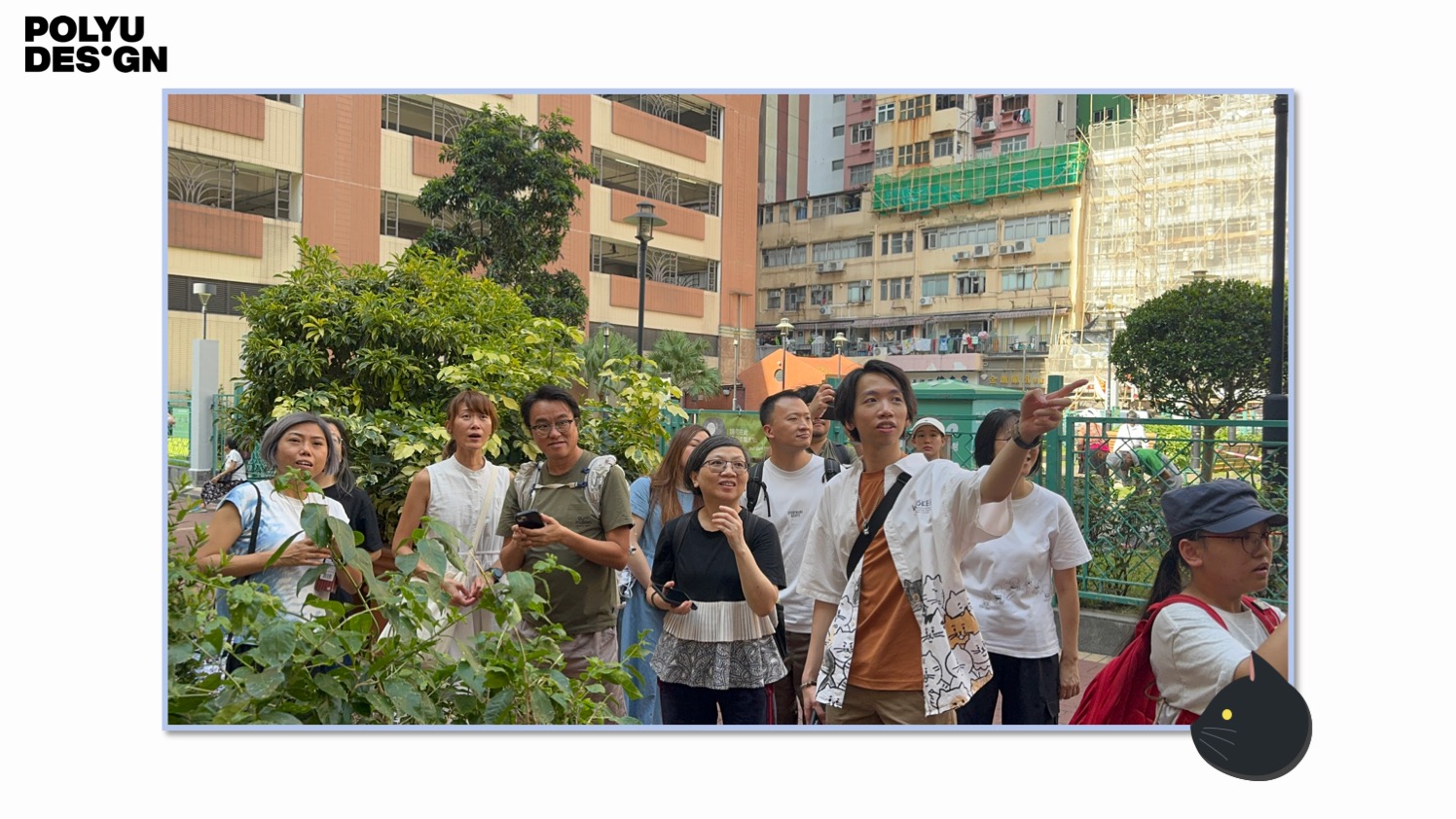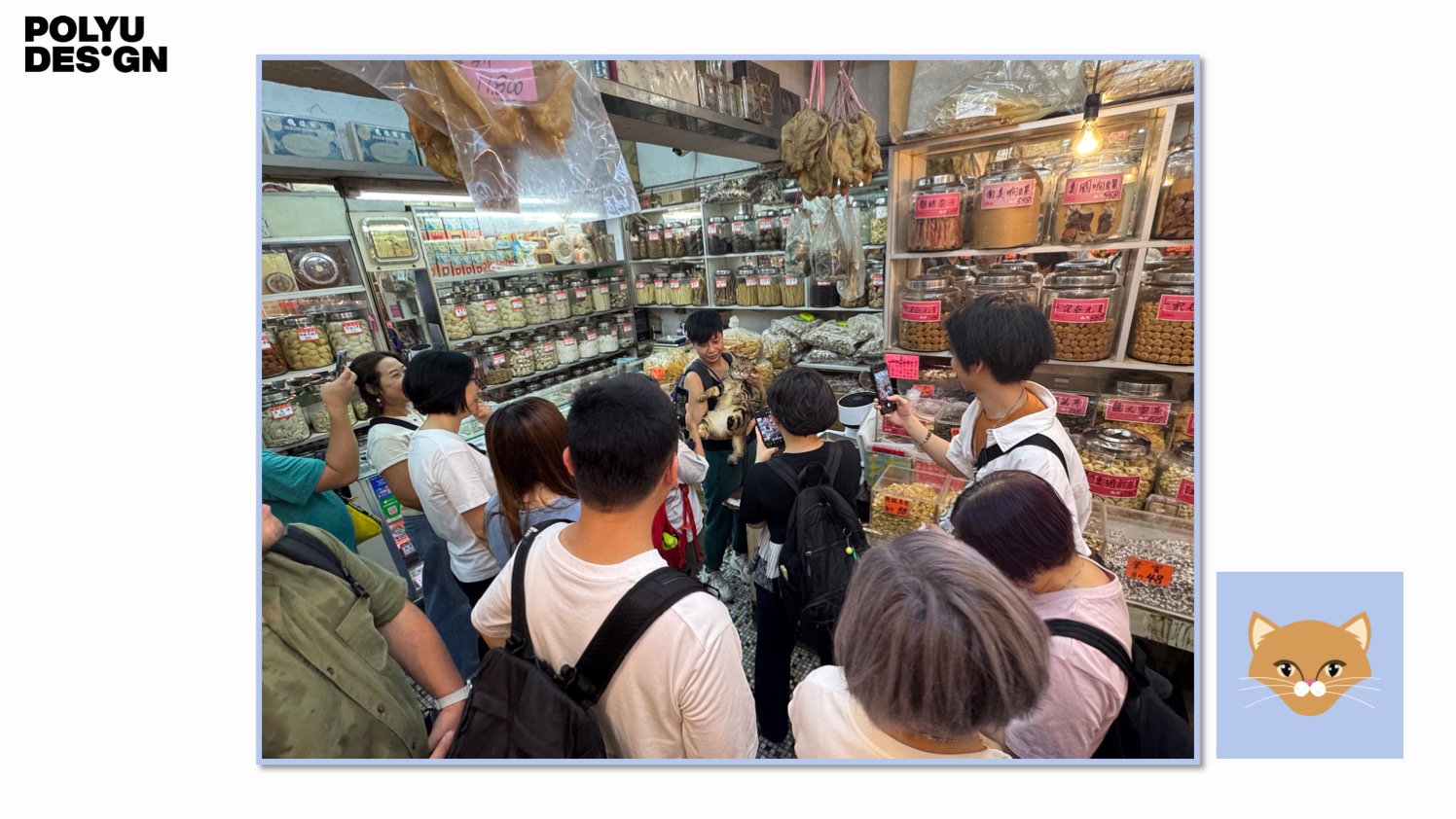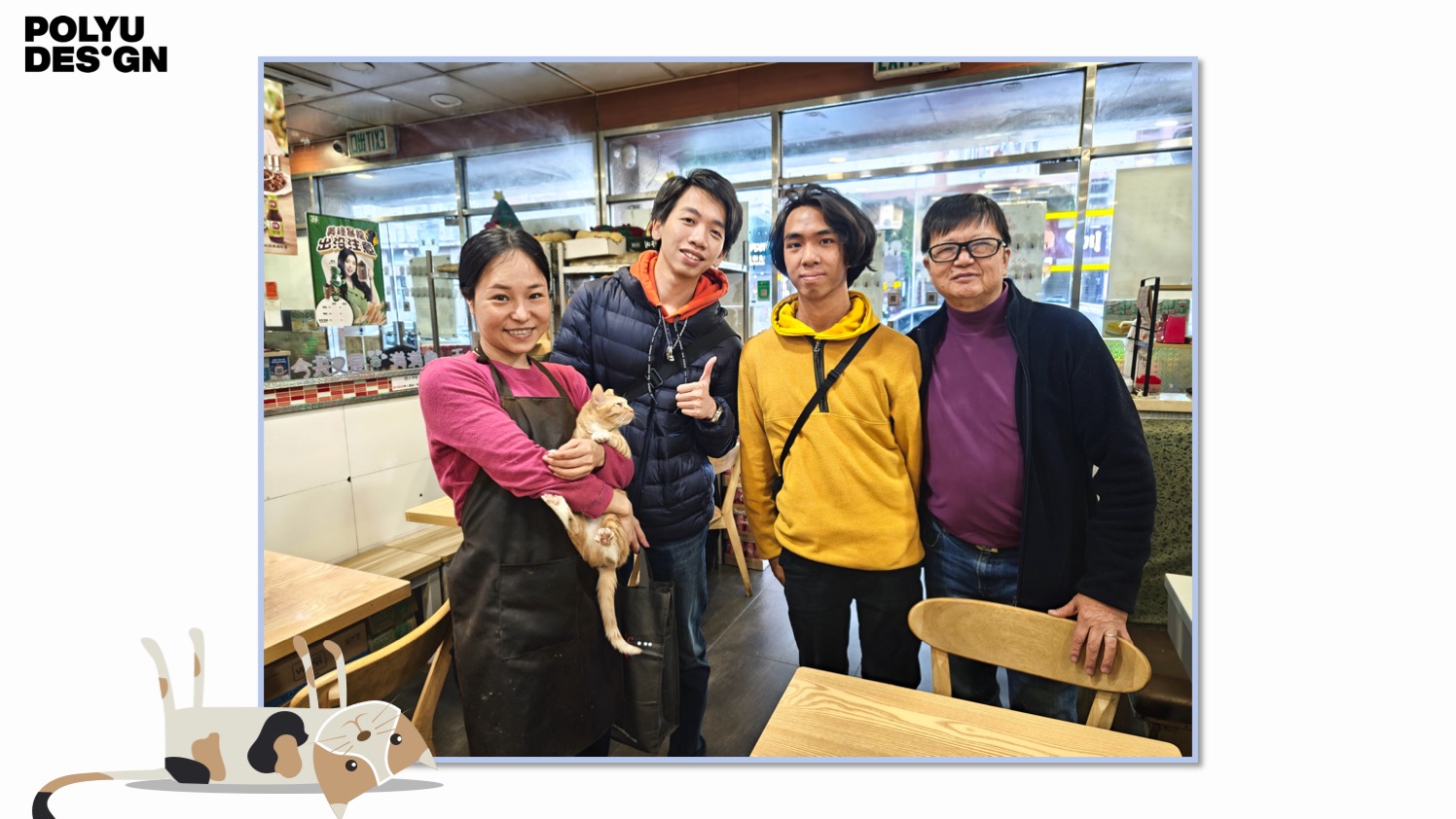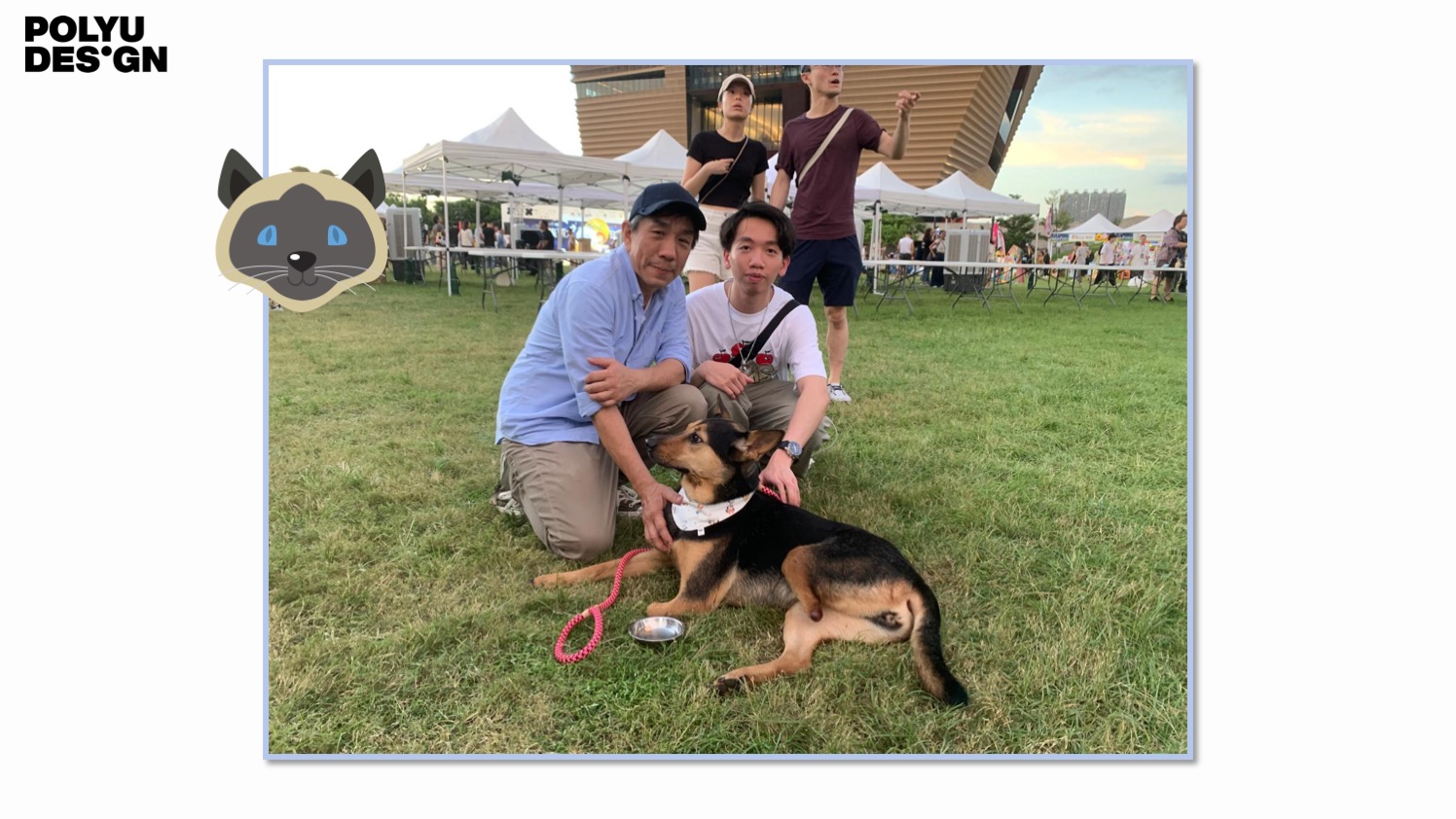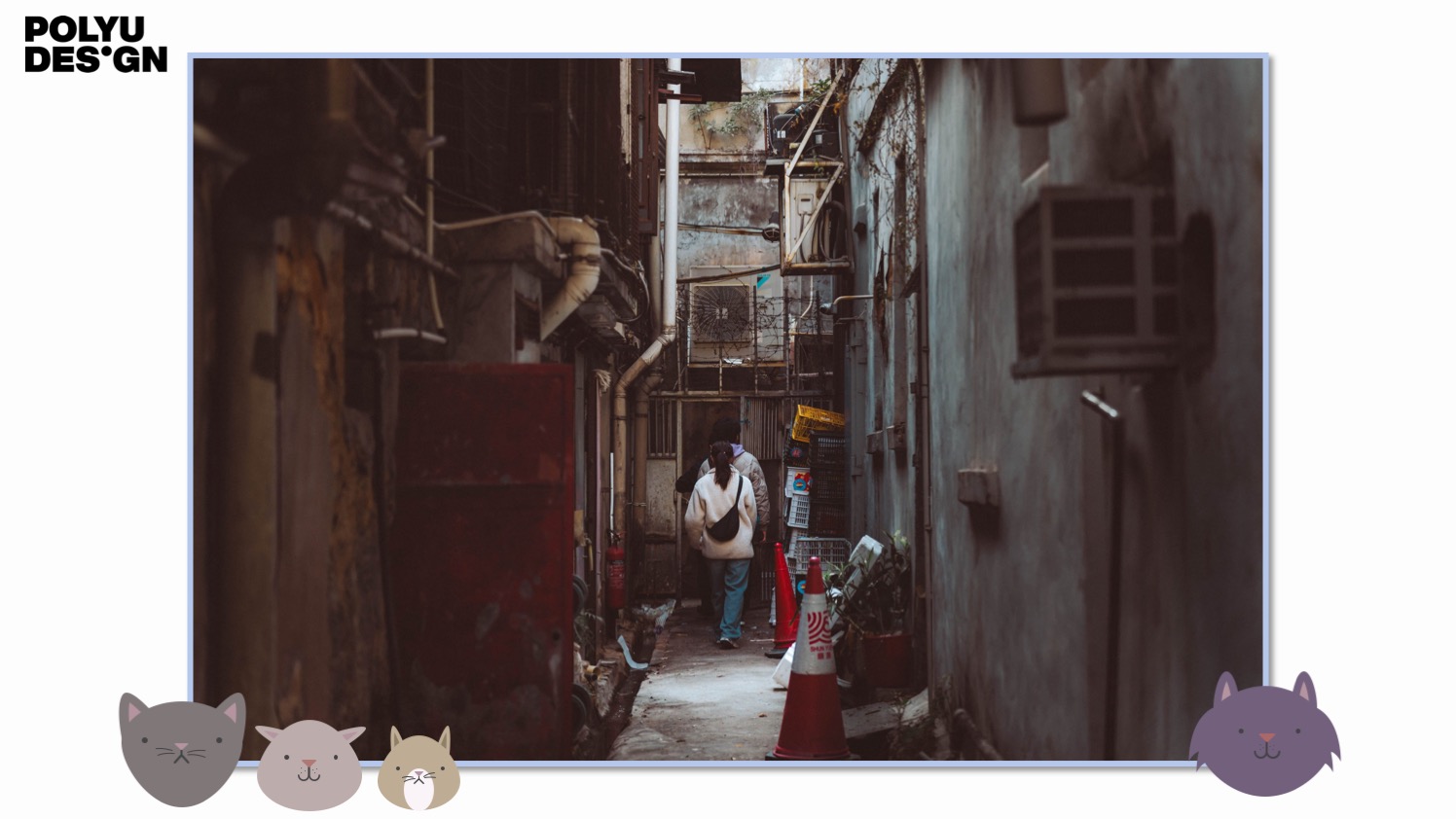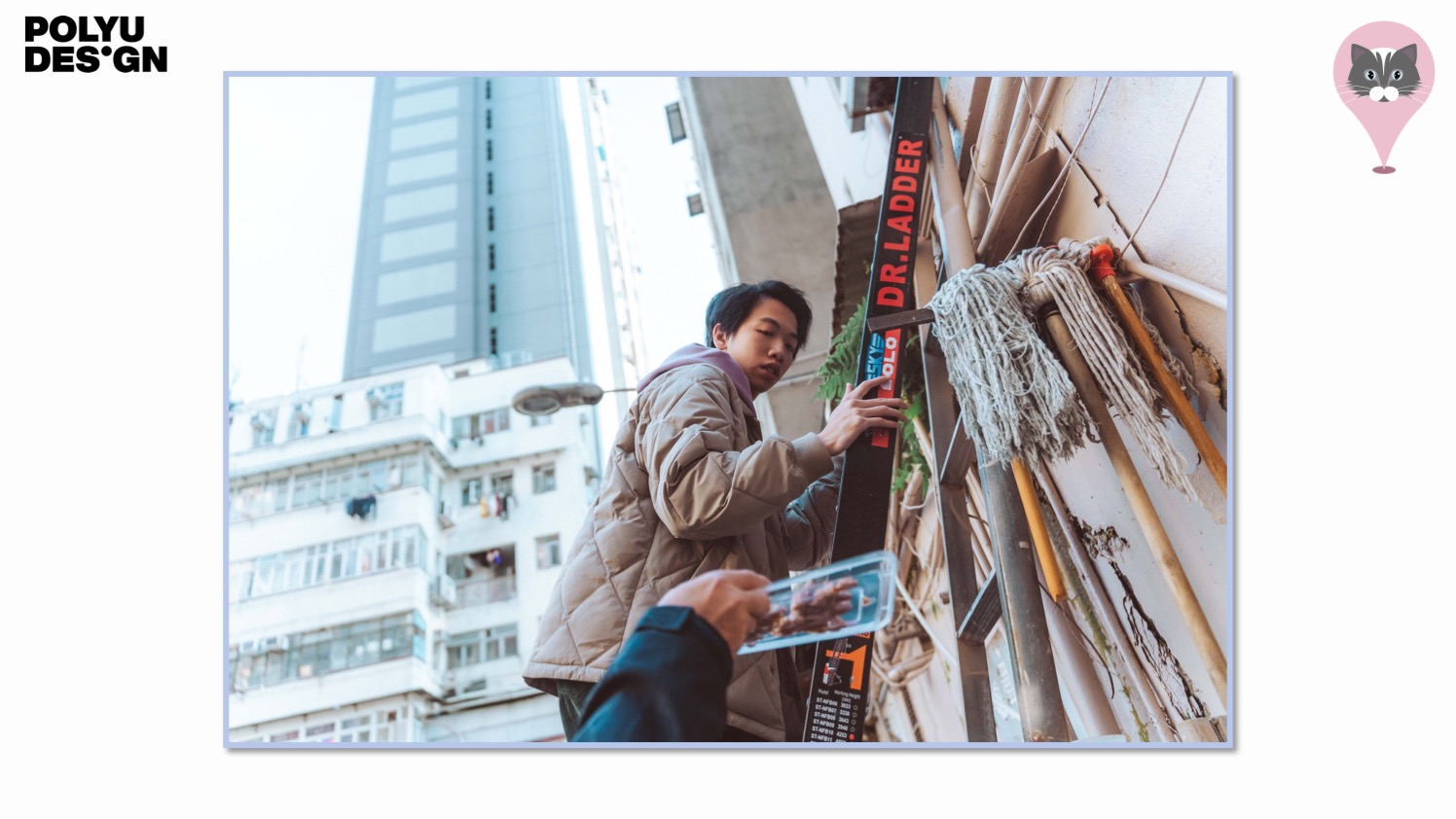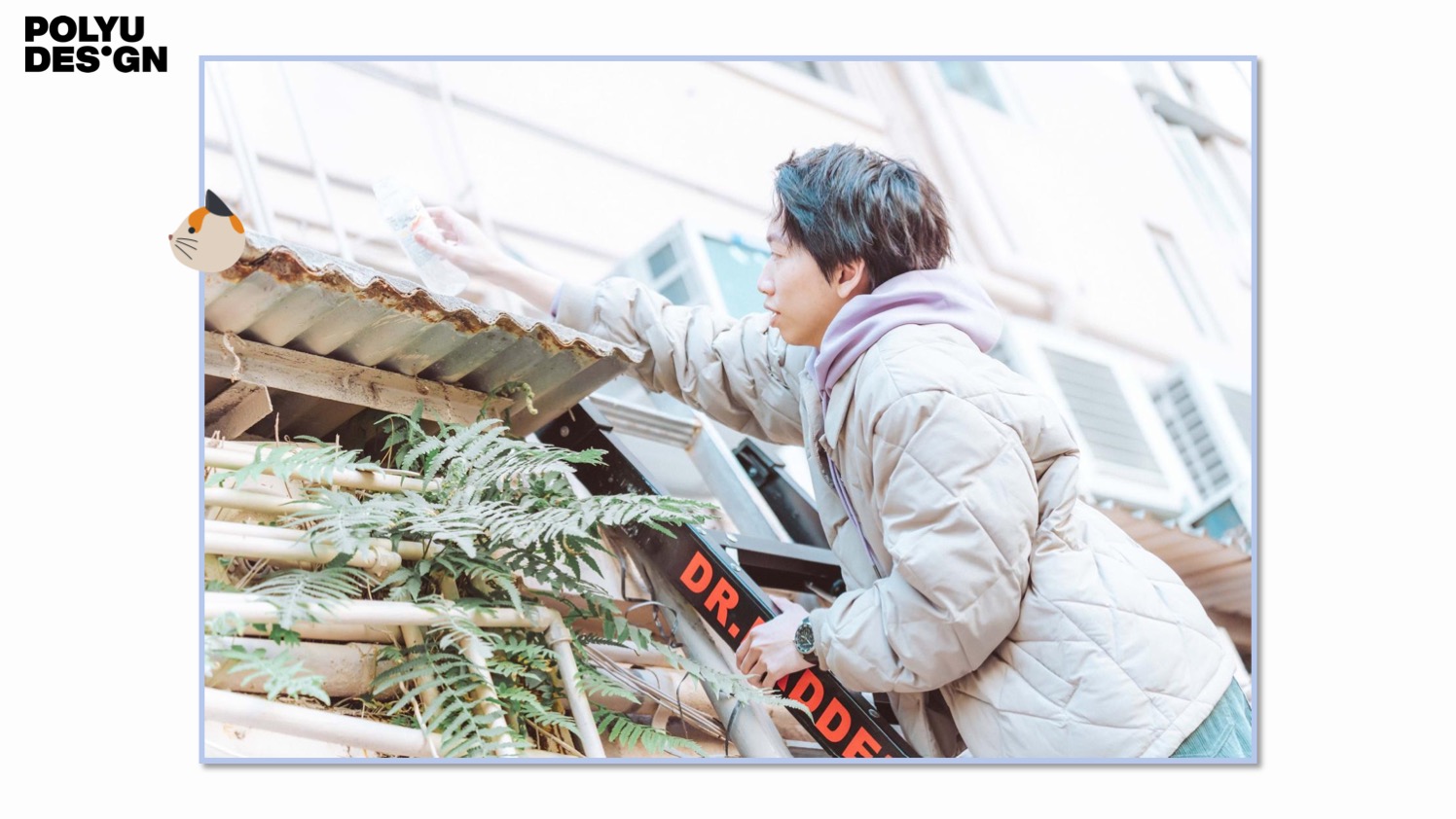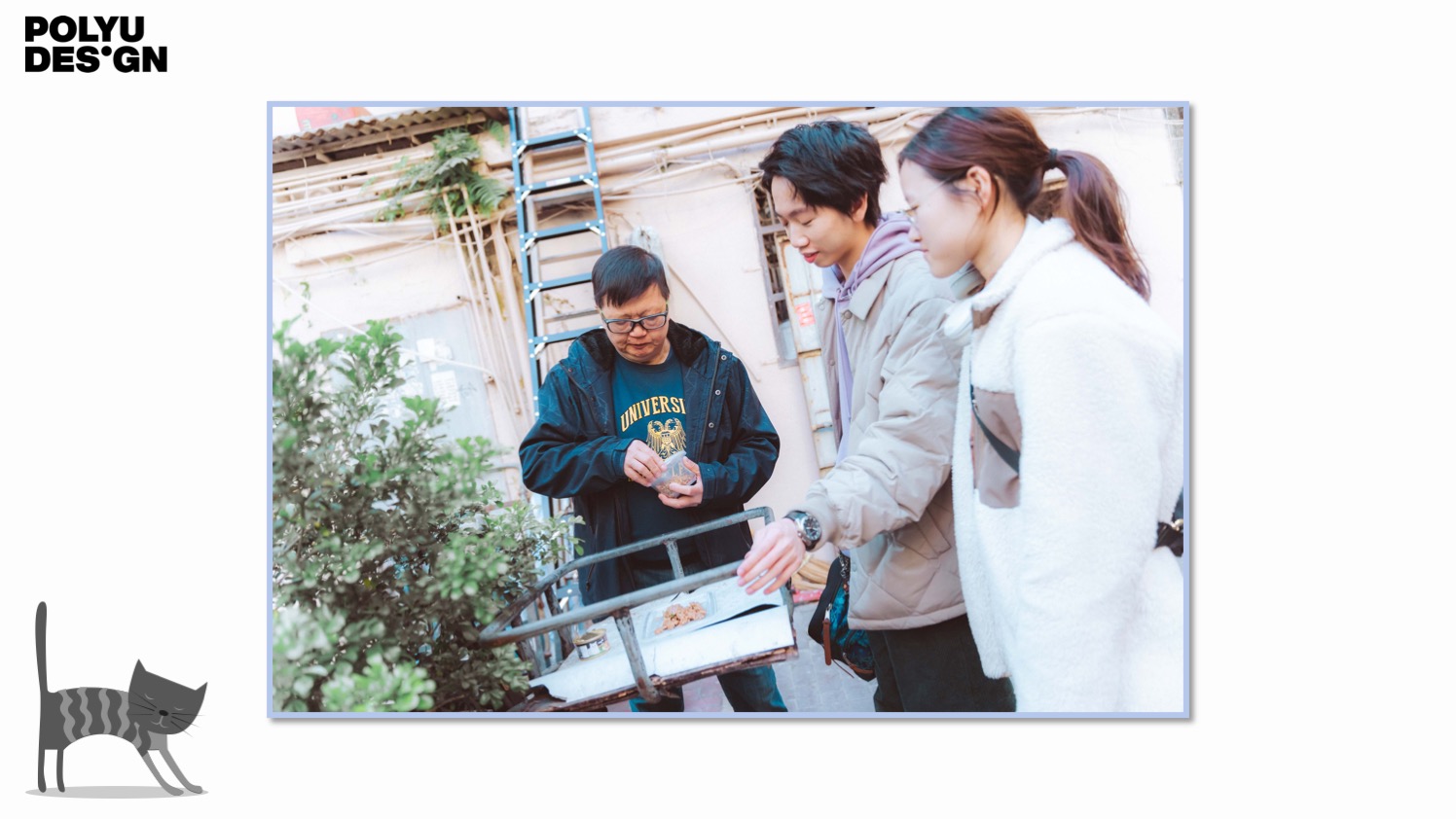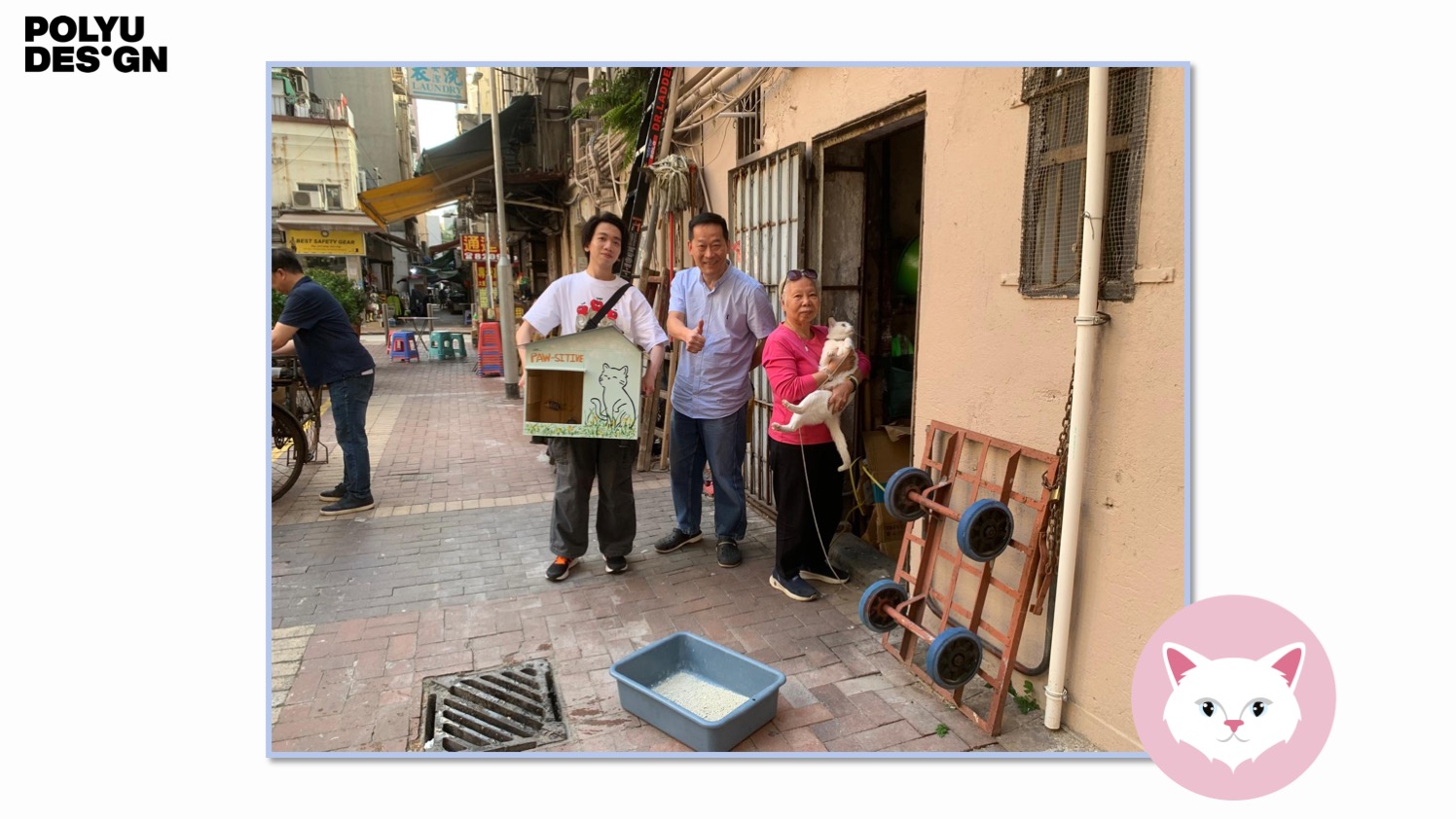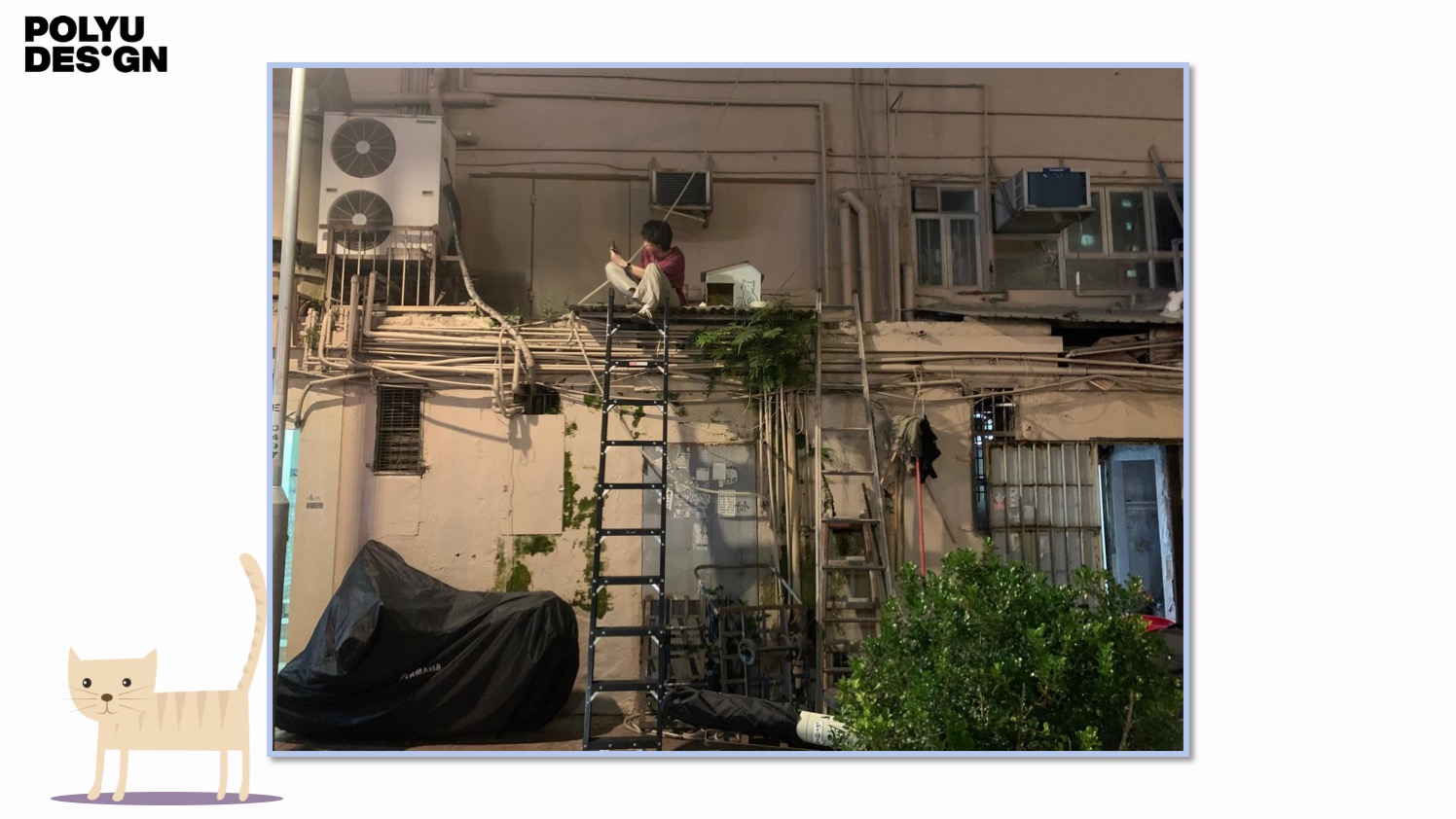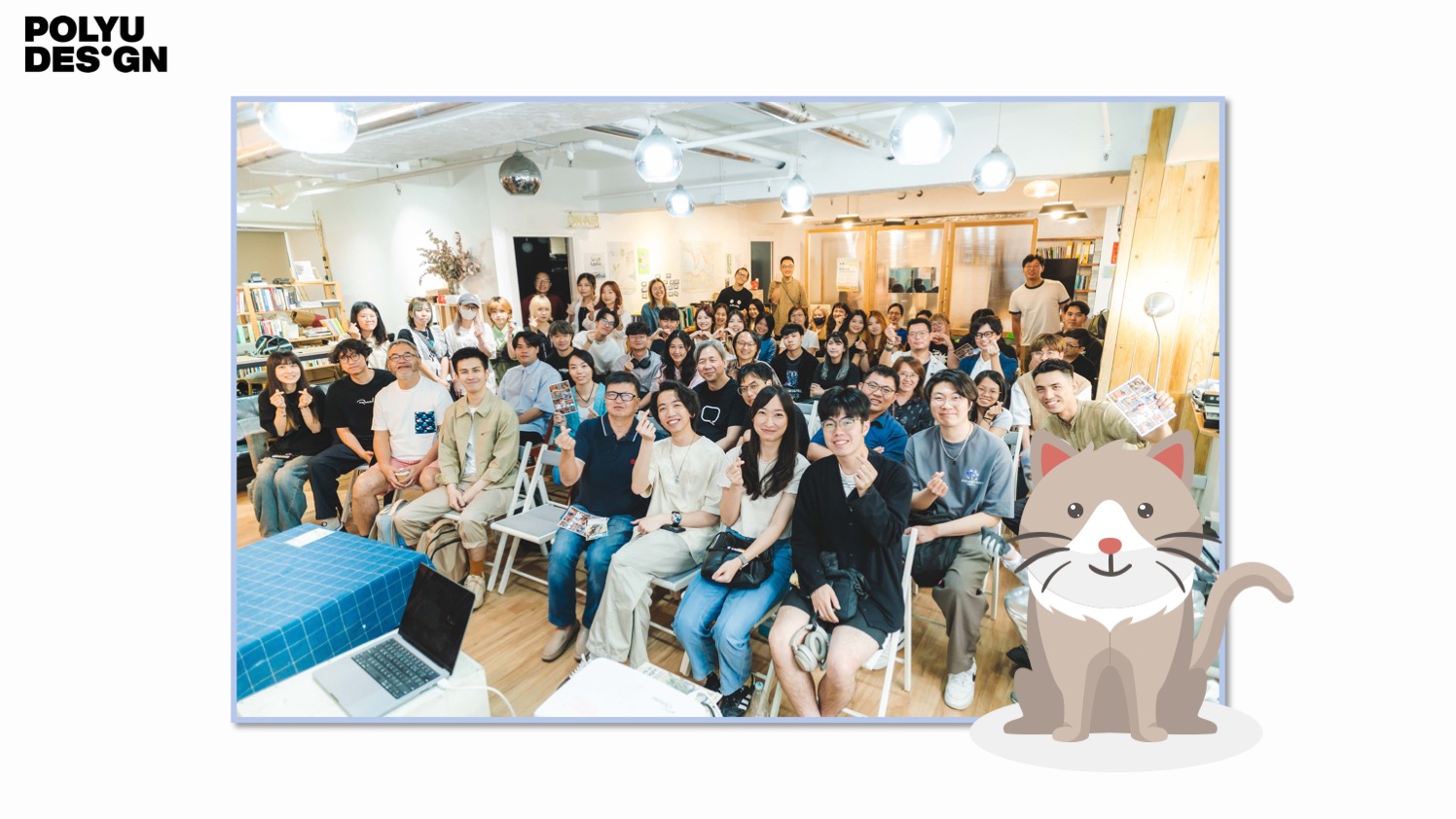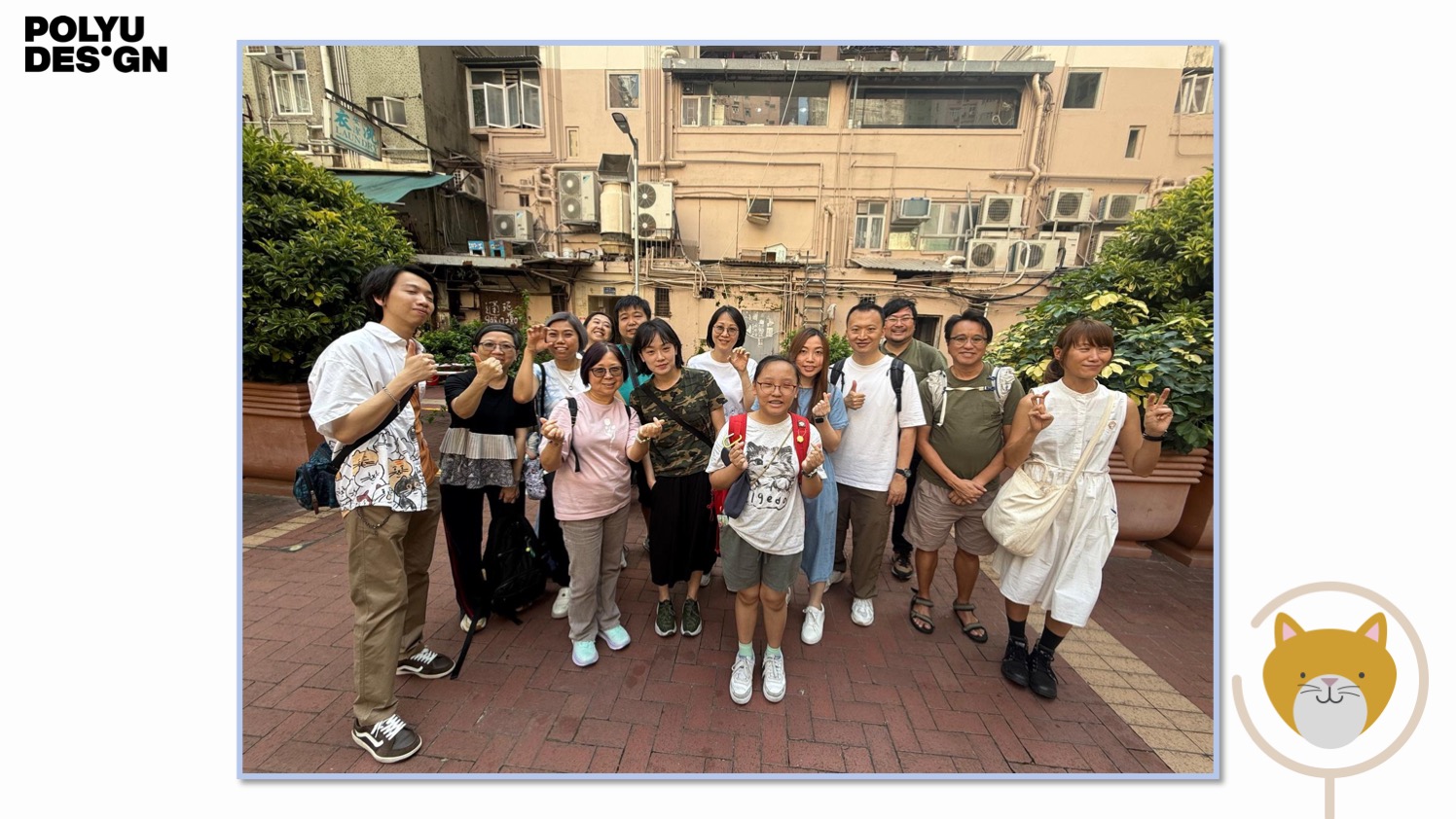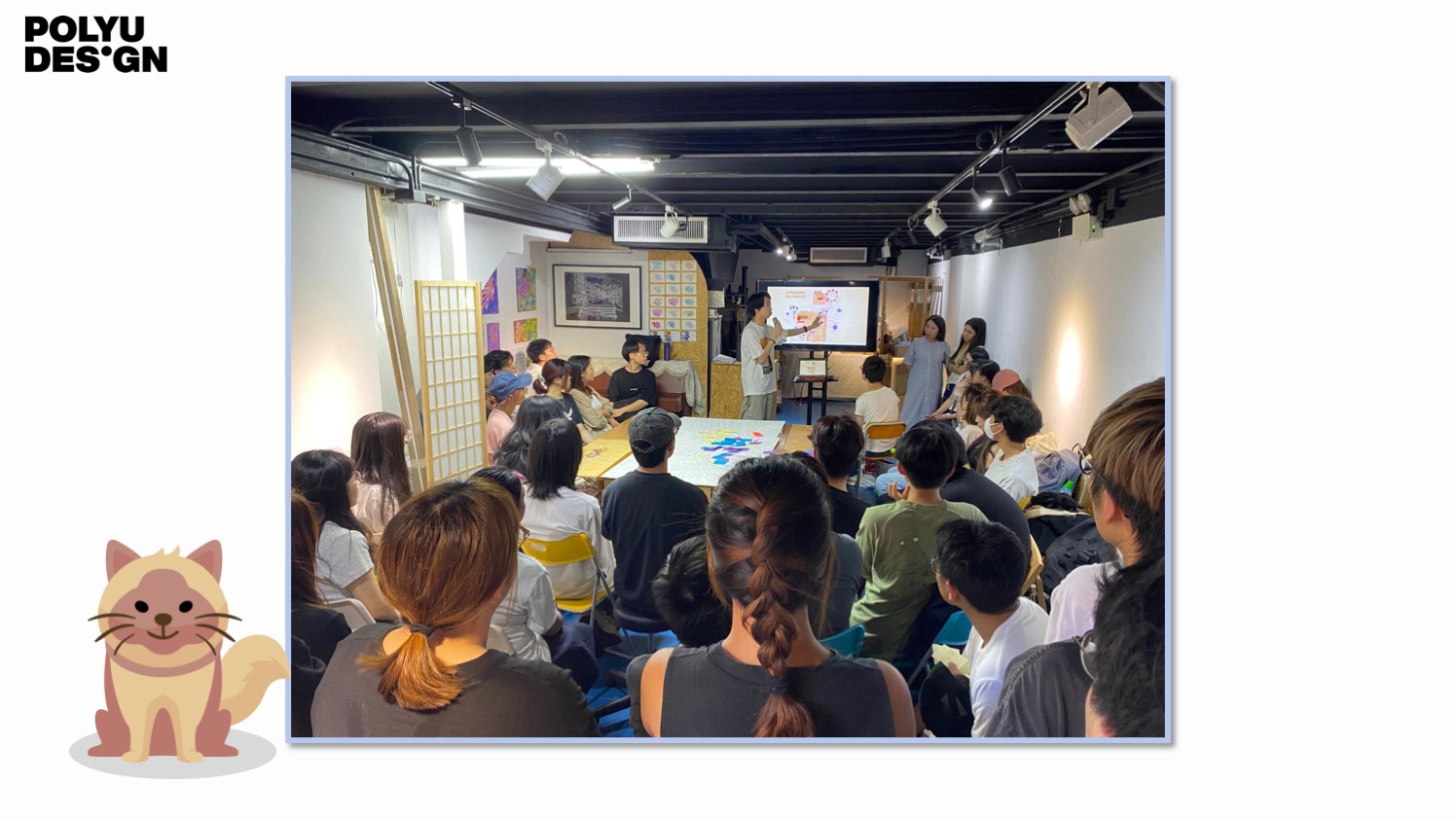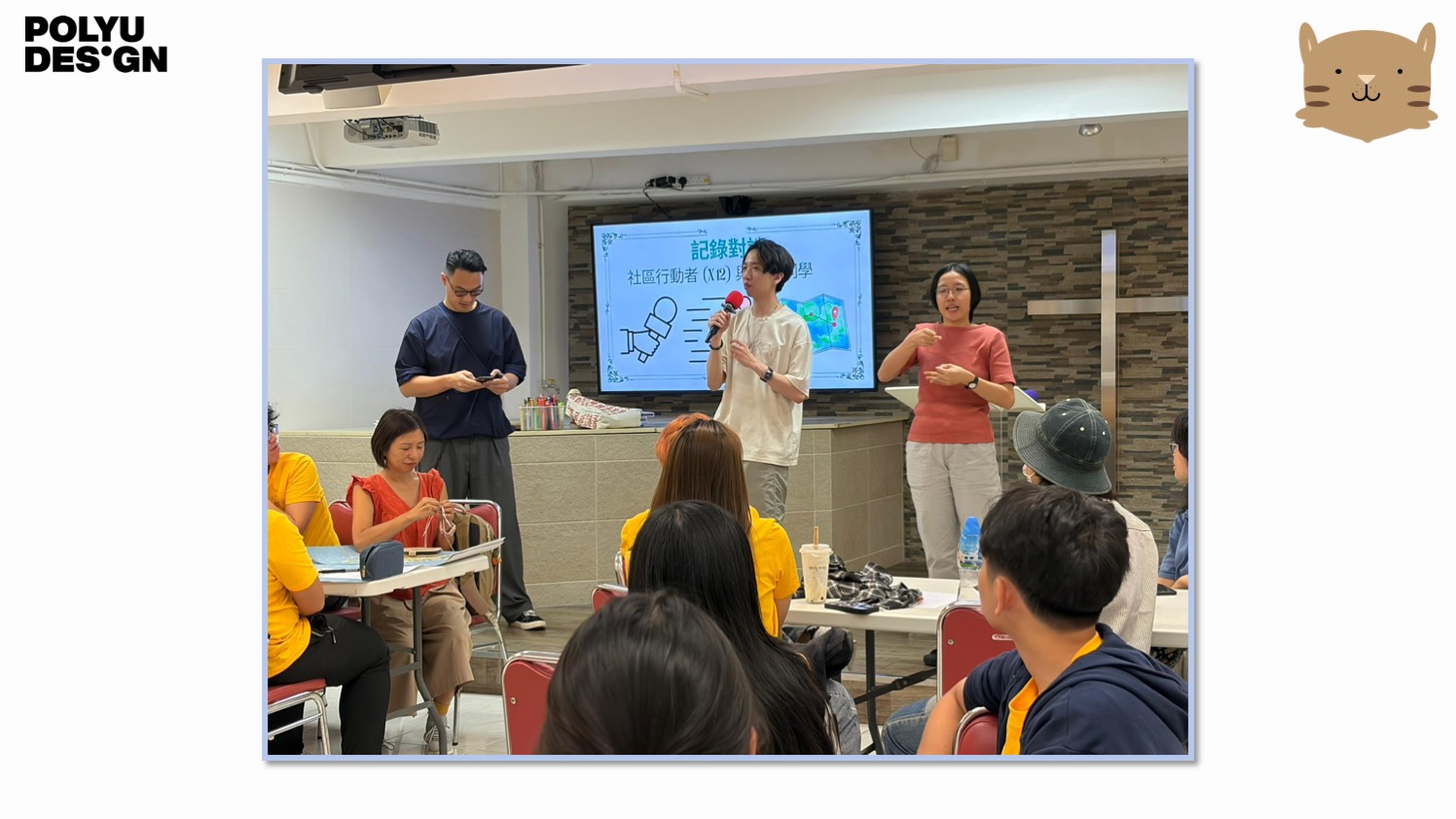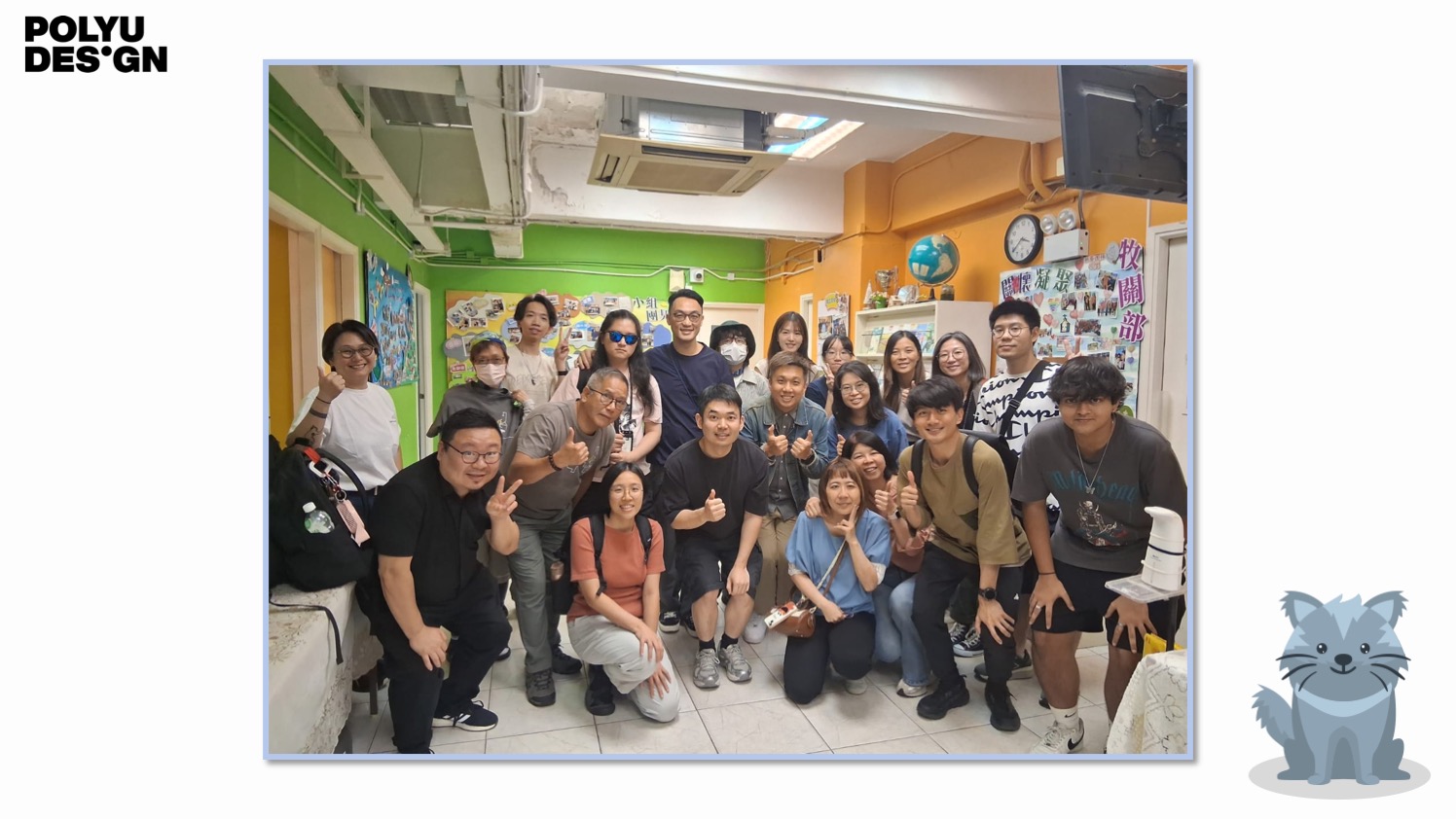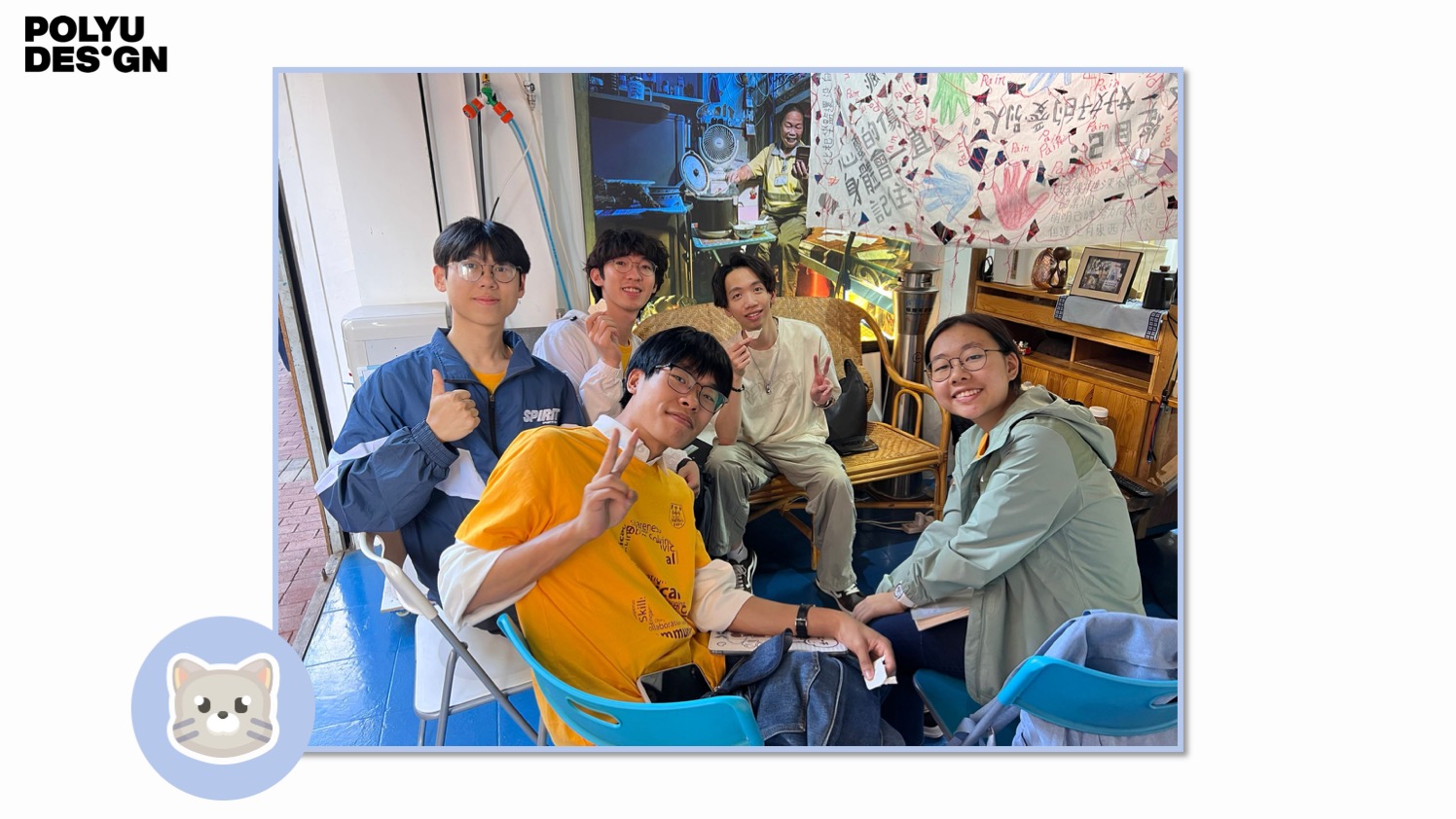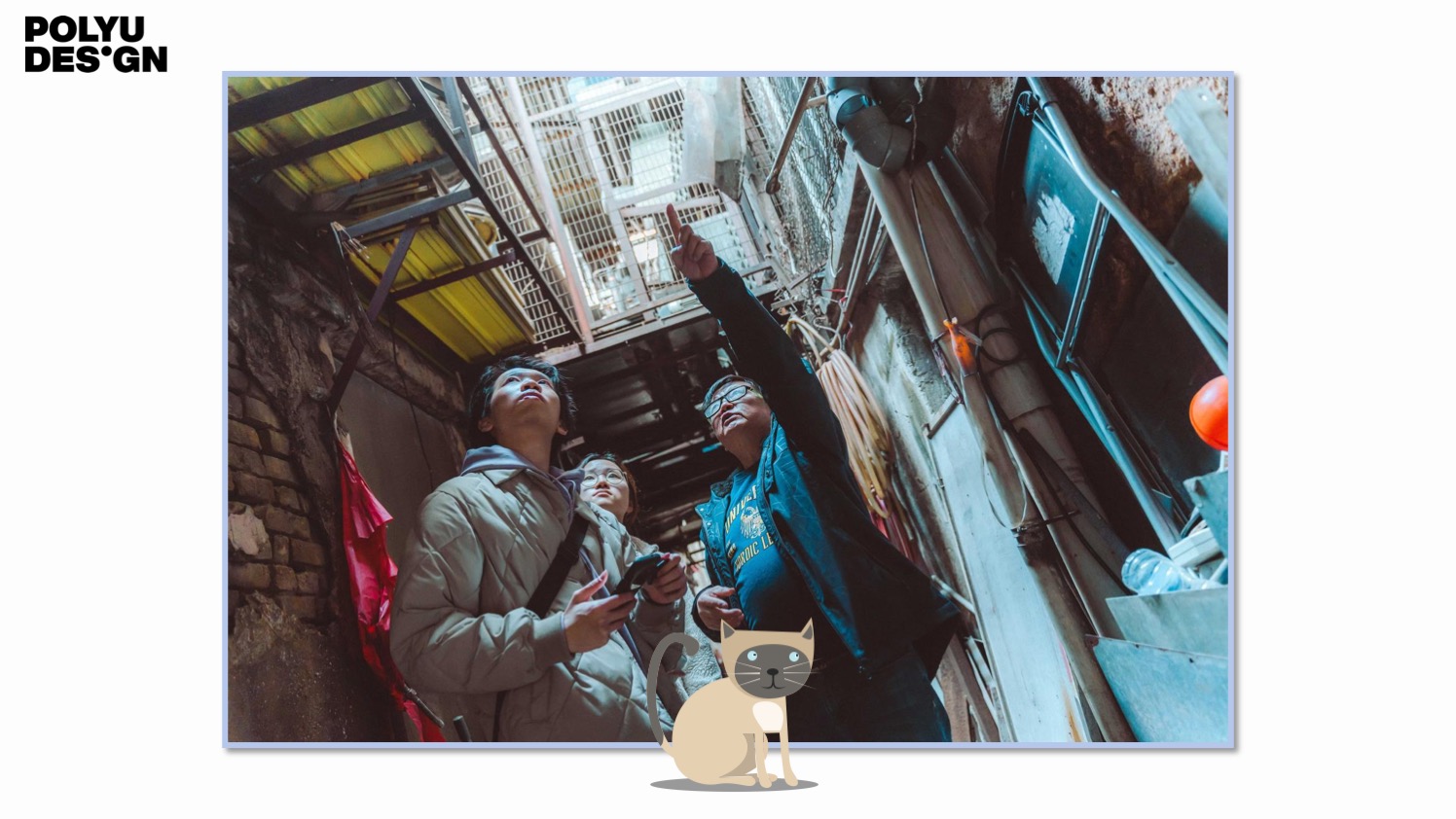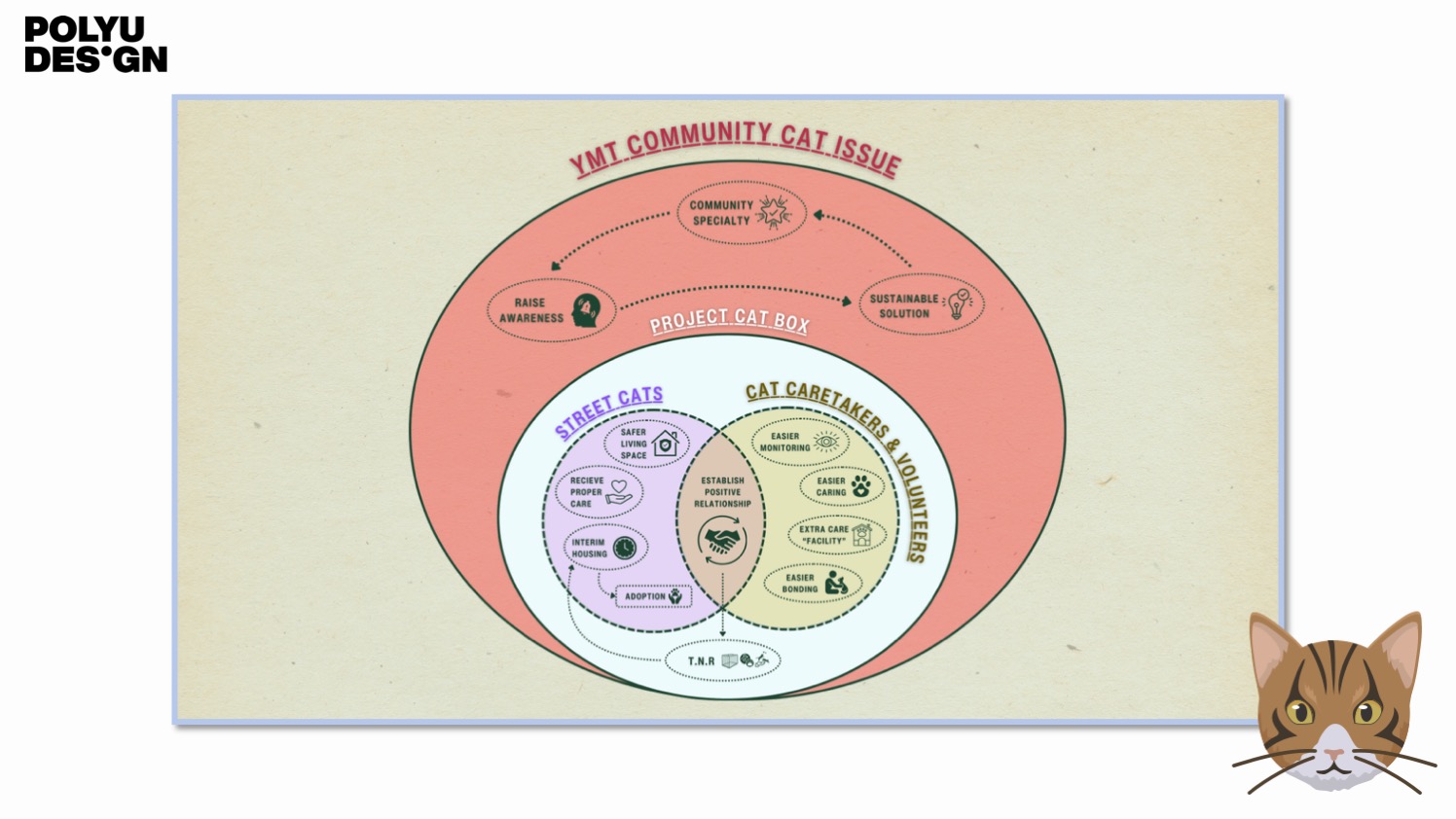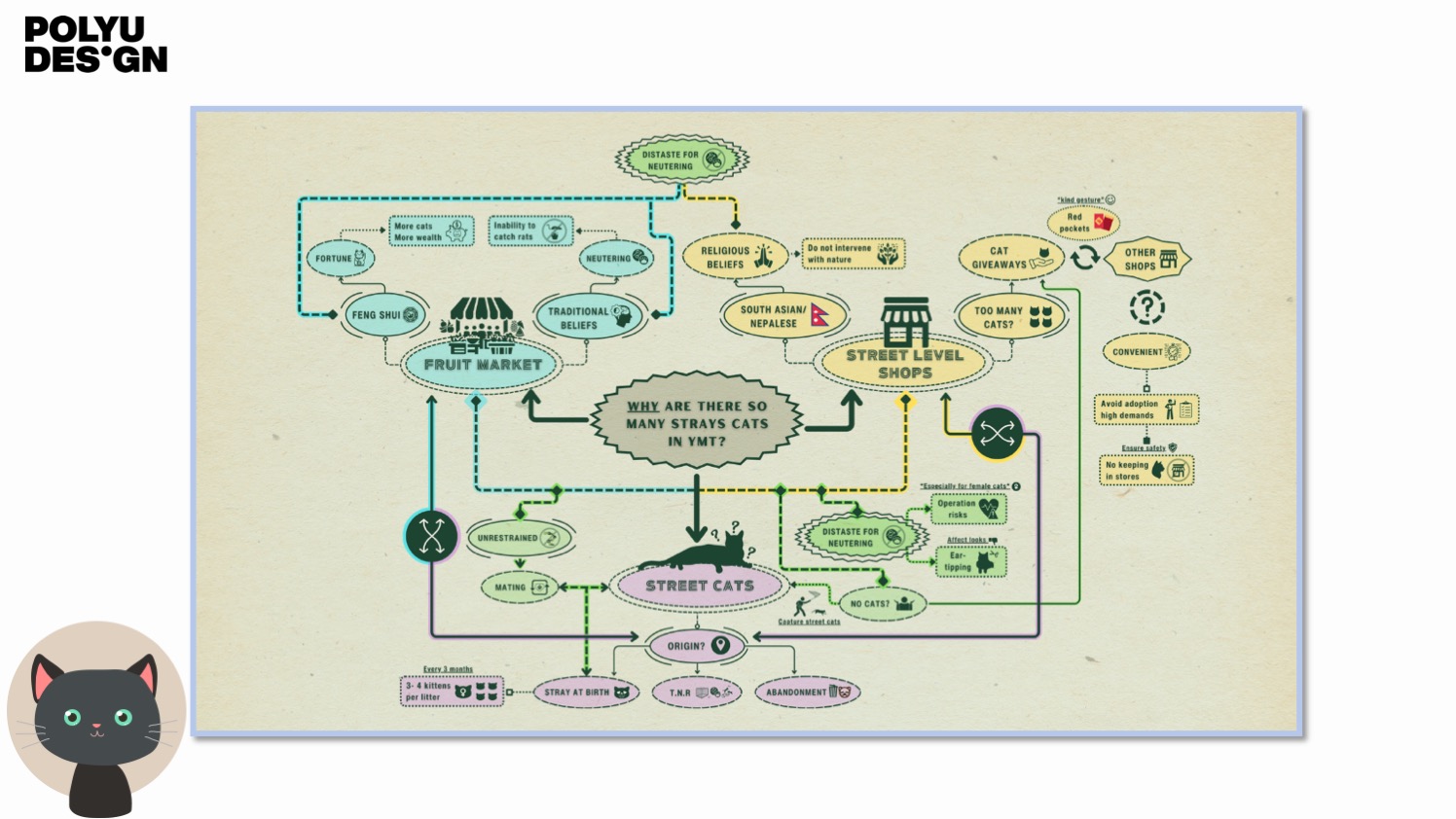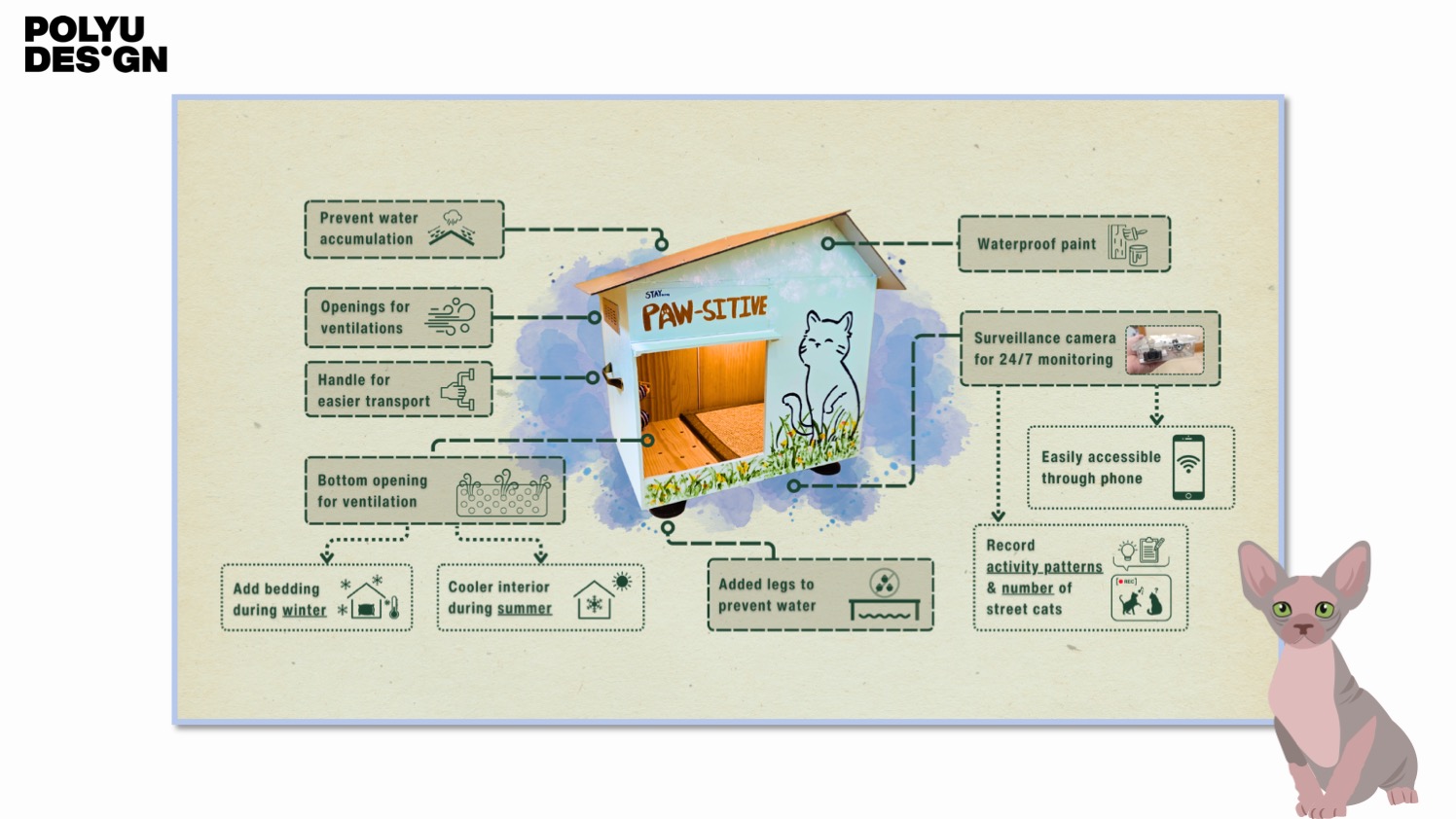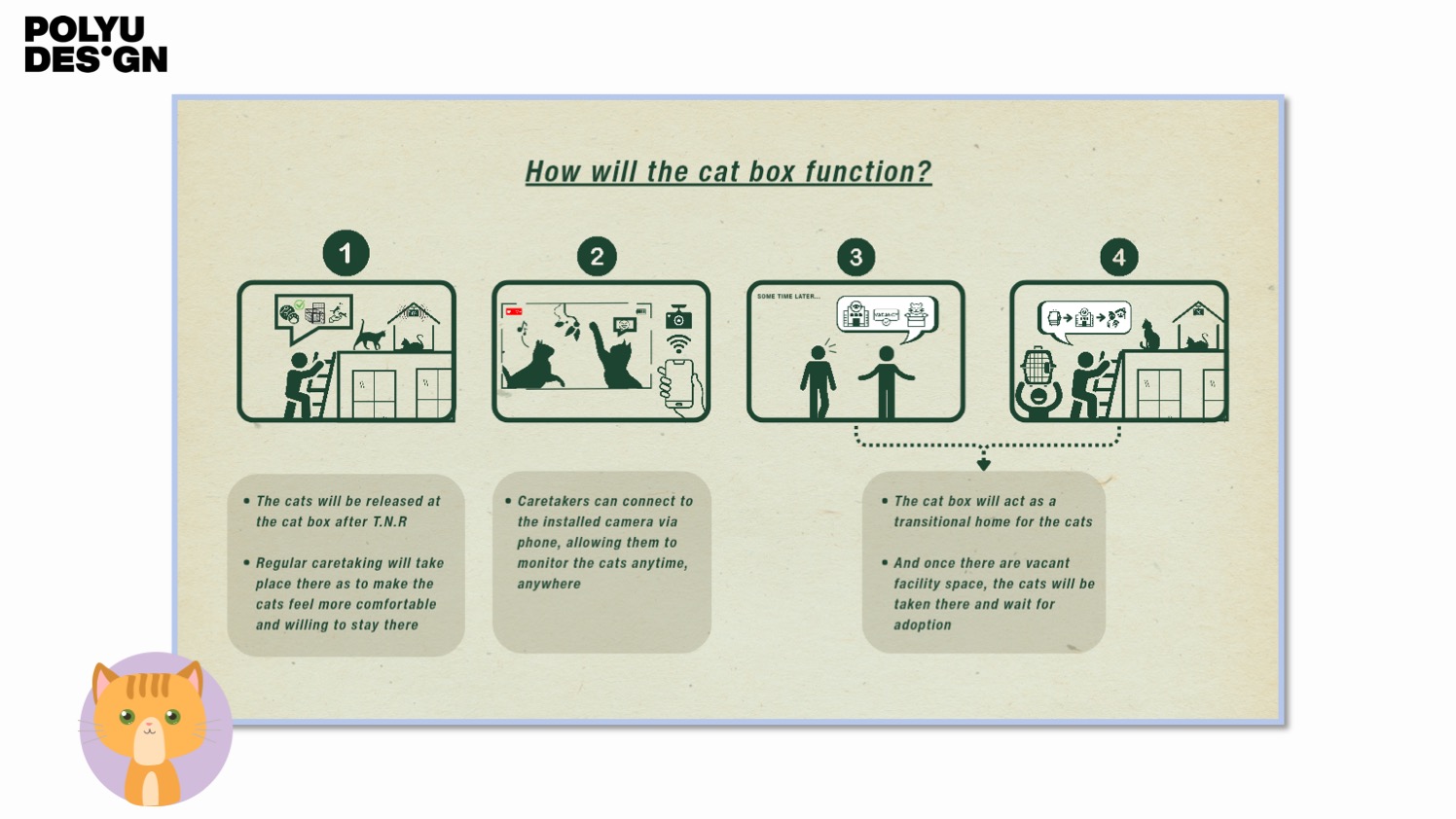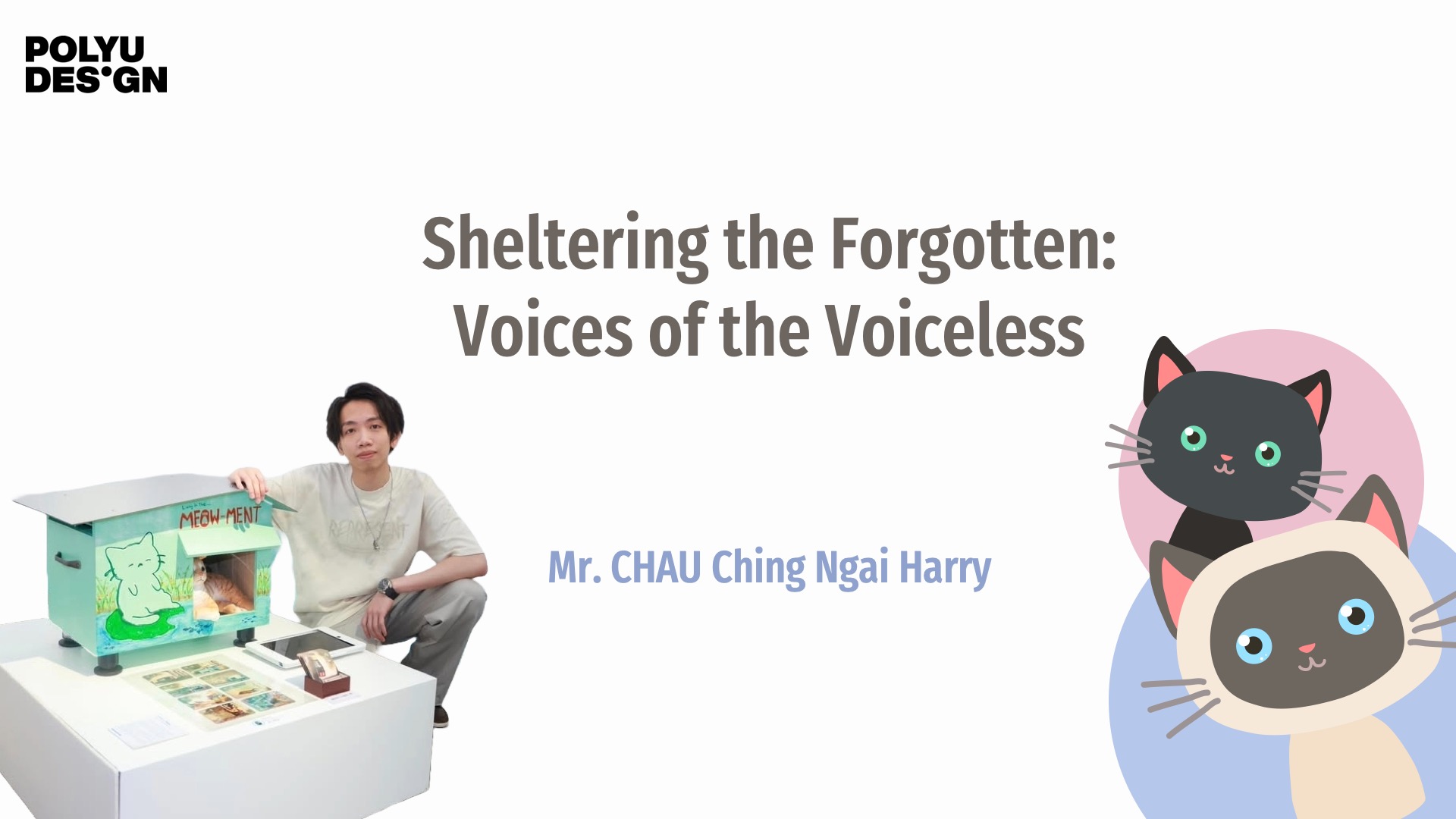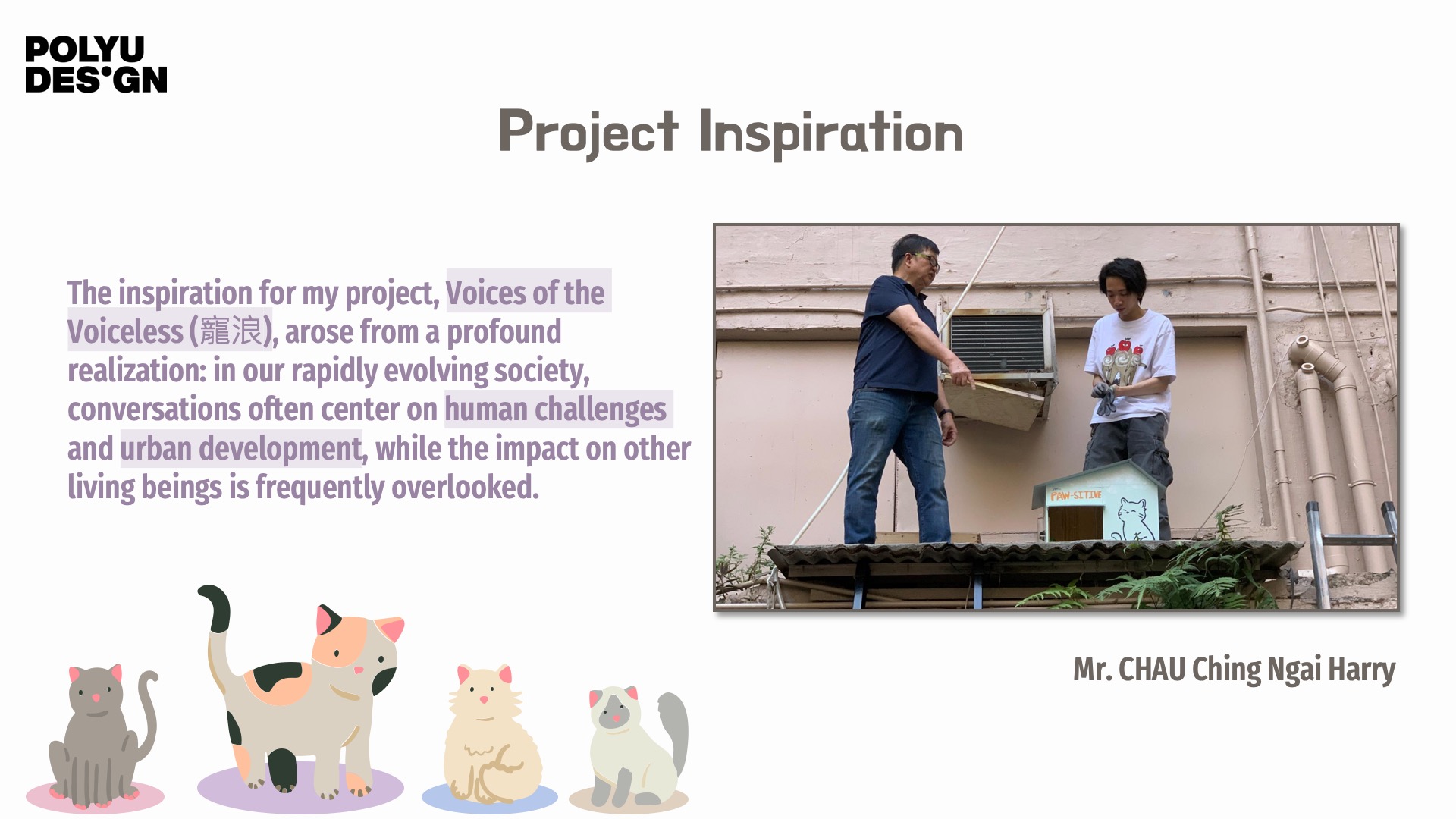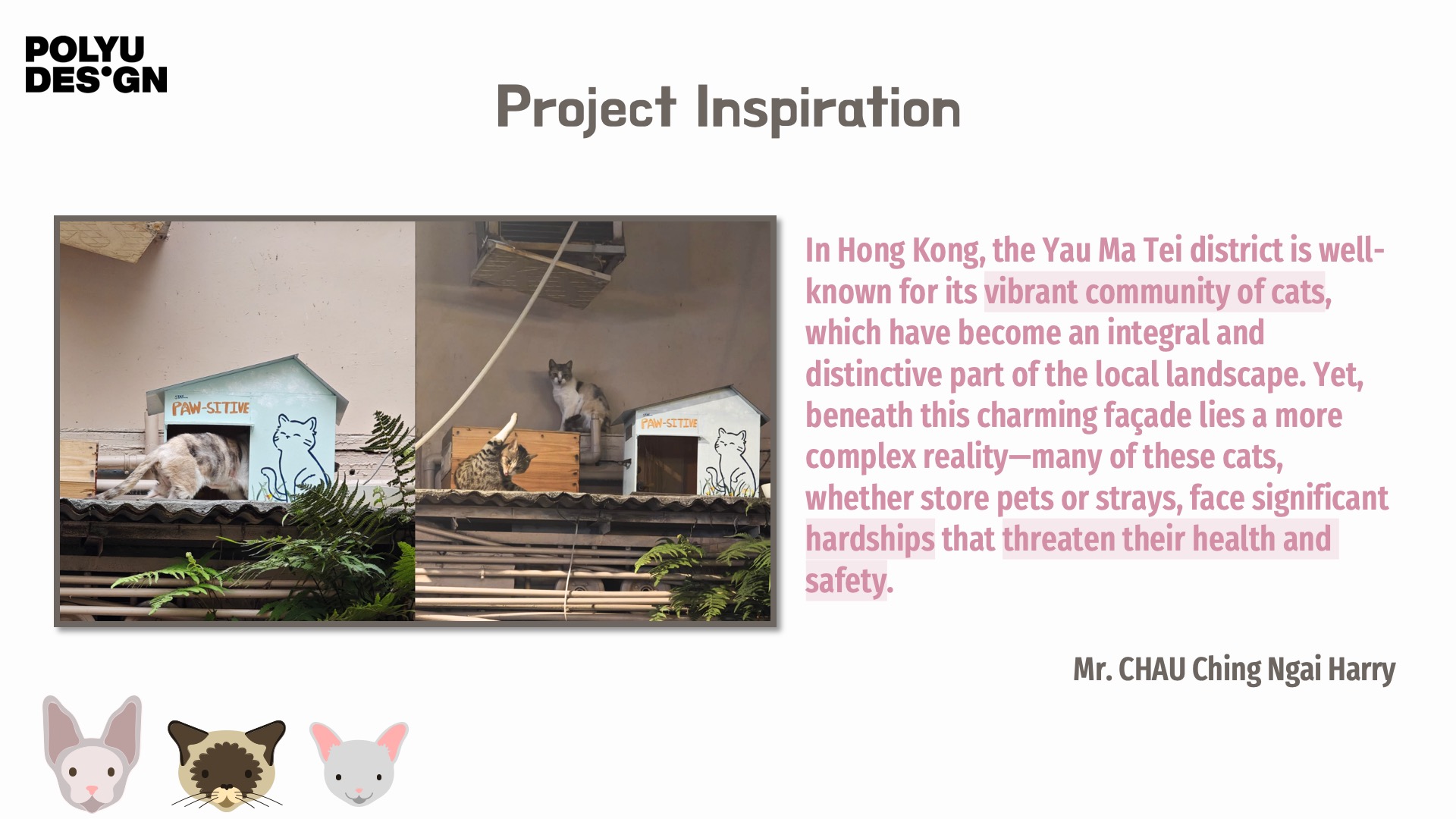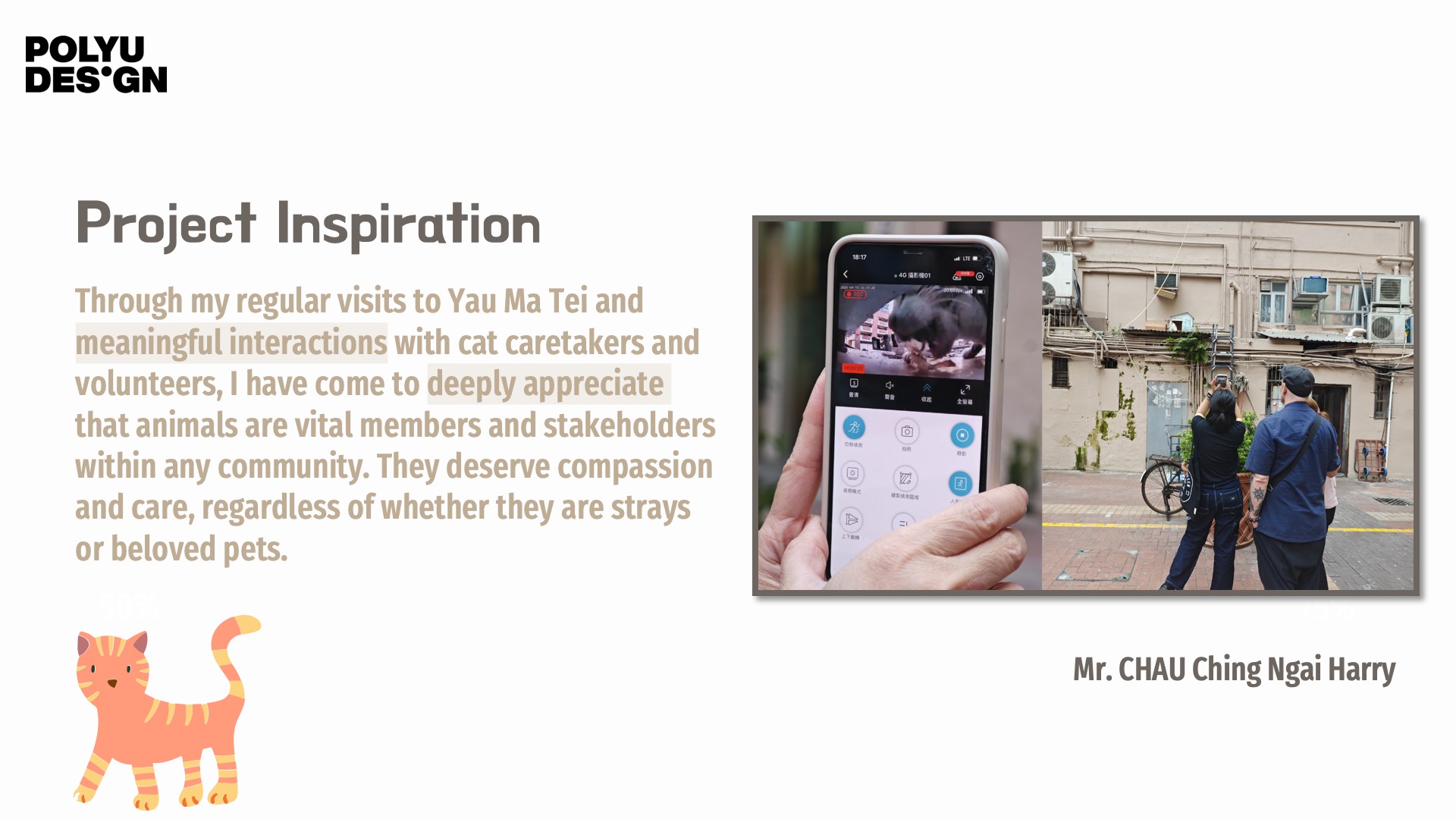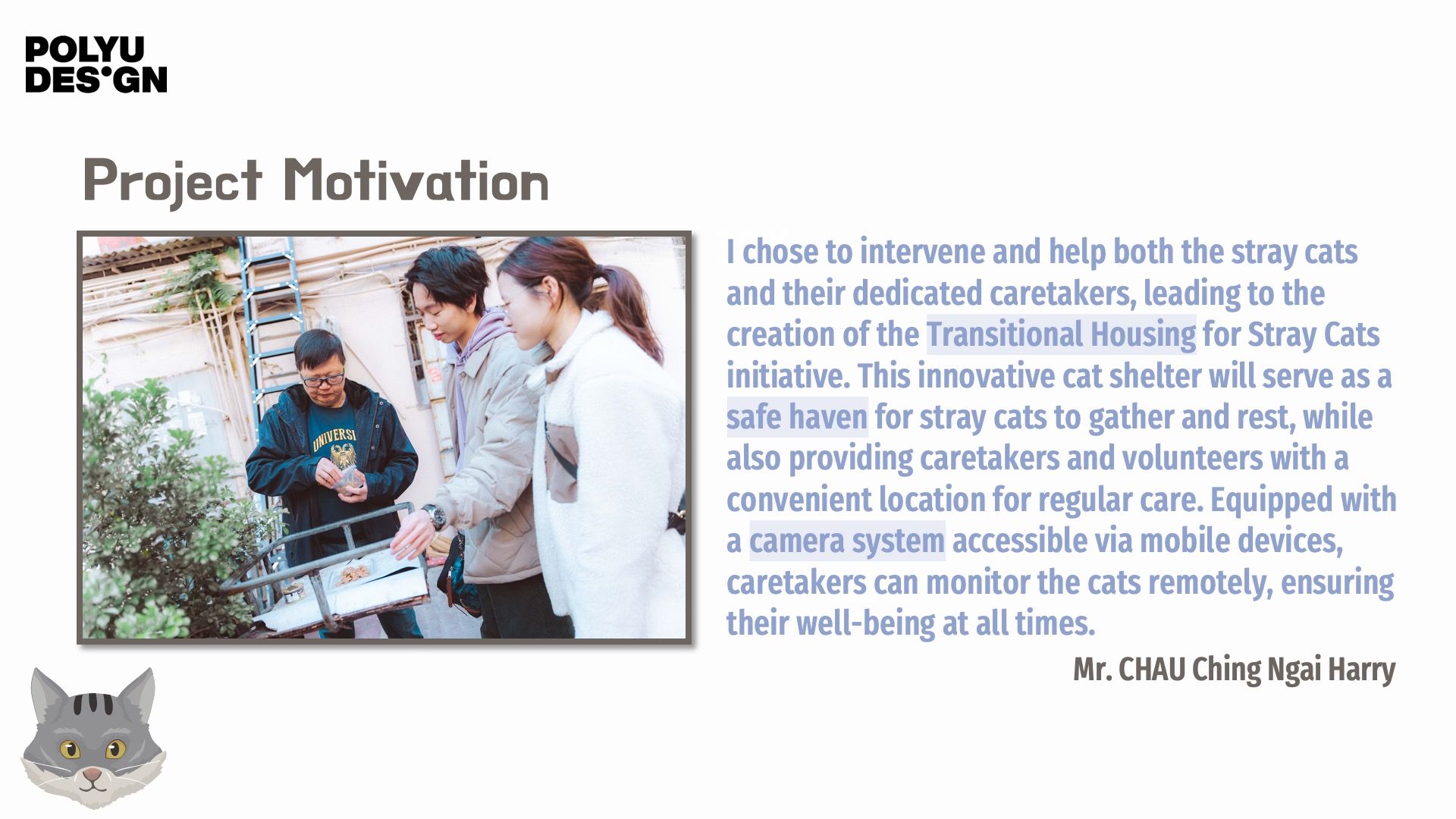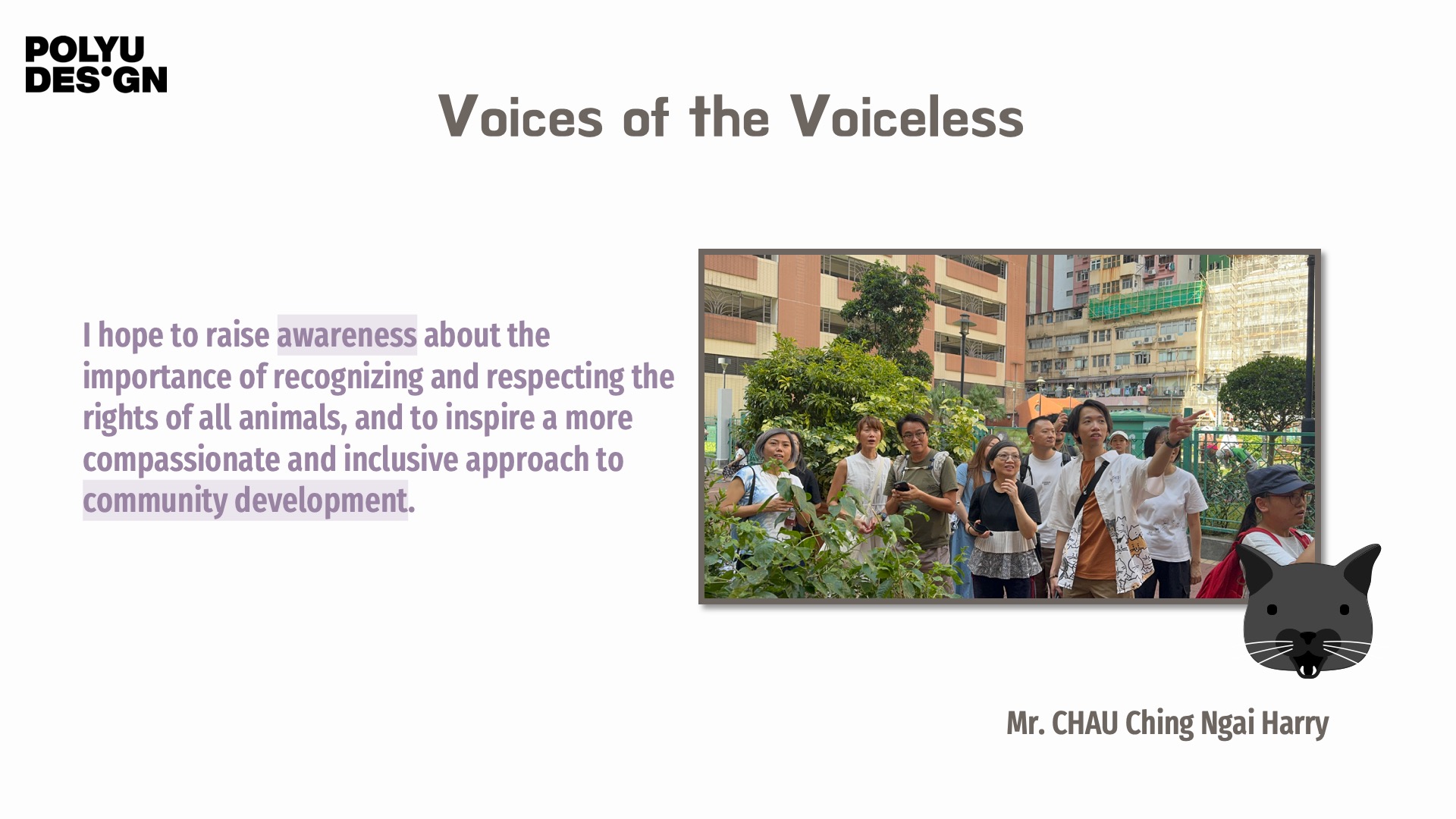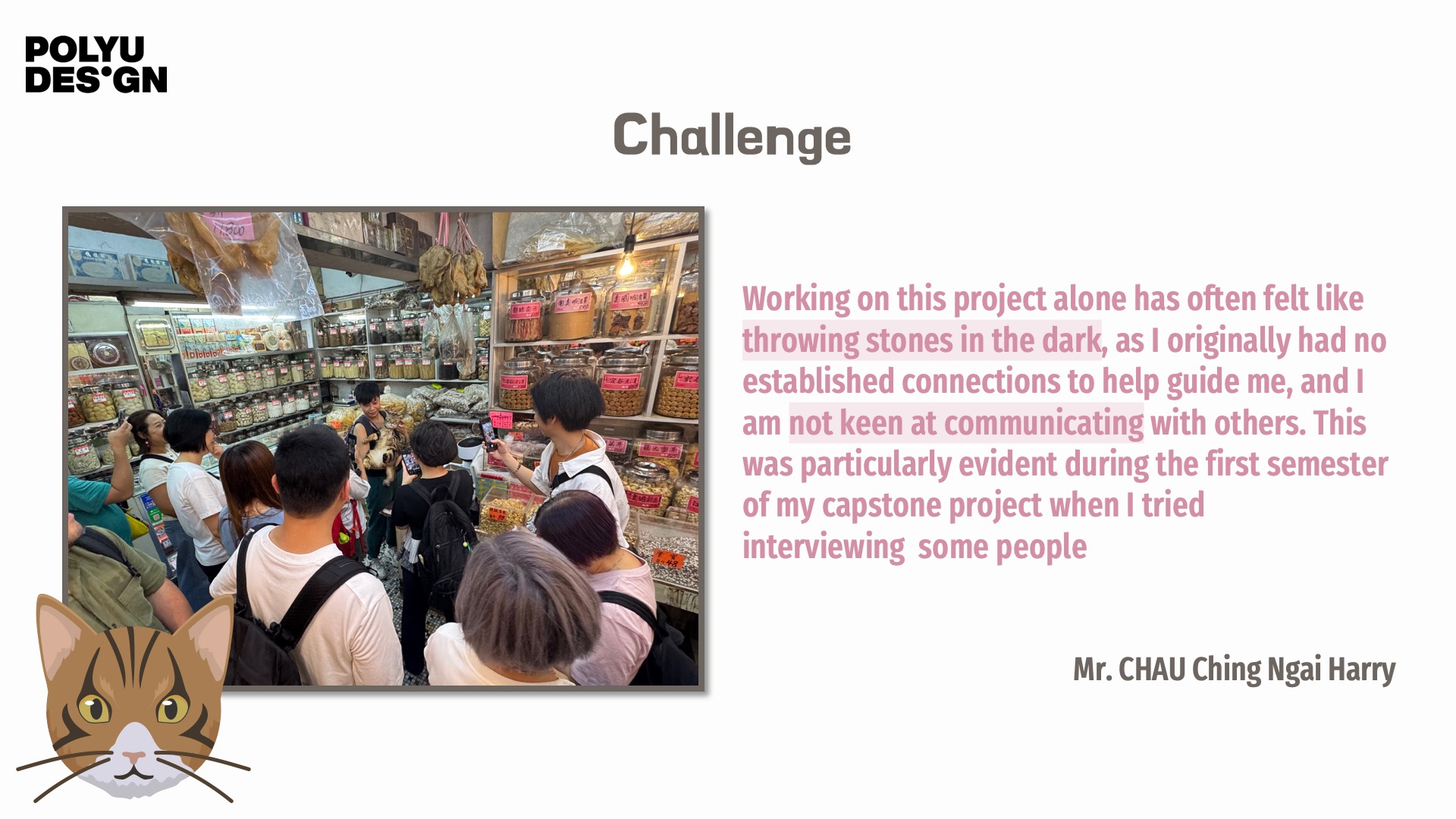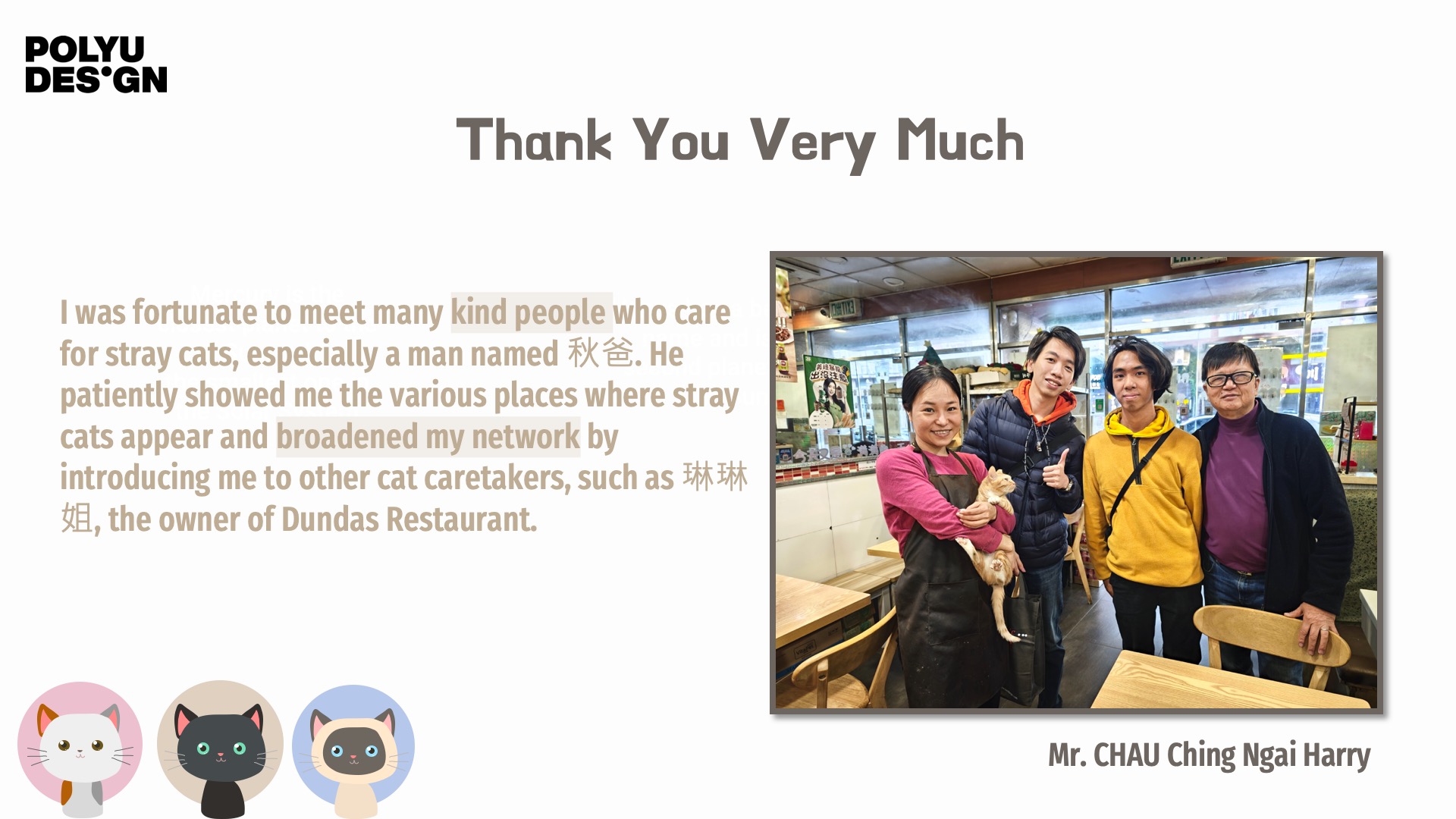



The invisible struggles of stray cats in Yau Ma Tei inspired Harry’s Voices of the Voiceless (寵浪) project. Realizing their importance to the community, Harry designed a Transitional Housing initiative—a shelter with remote monitoring for both cats and caretakers. Initial setbacks, including communication difficulties and rejected ideas, challenged him, but support from local caretakers and volunteers helped him refine his concept. The project not only provides temporary refuge for cats but also raises awareness about animal welfare.
Winning “Tutor’s Choice” at the PolyU Design Show validated Harry’s efforts. He learned to analyze root causes and create solutions that foster compassion and inclusivity, making a lasting impact on both animals and people.

Mr. CHAU Ching Ngai Harry
School of Design
Harry’s project demonstrates the importance of identifying and involving all relevant stakeholders—including stray cats, caretakers, volunteers, and the broader community—in the design process. He learned that animals, often overlooked, are vital members of the urban ecosystem and must be considered in community-oriented solutions. This approach ensures that design outcomes are inclusive and address the needs of all affected parties.
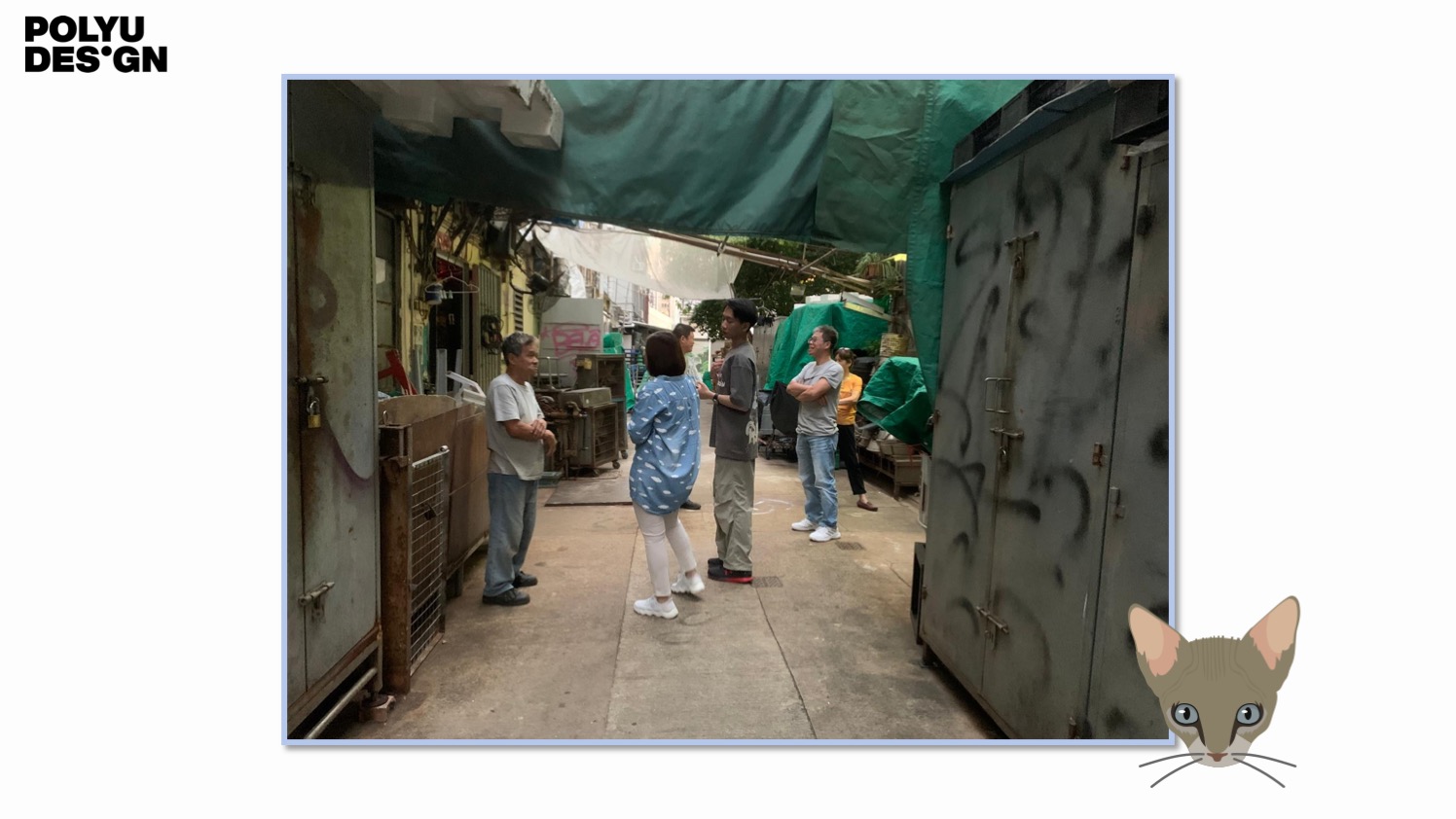
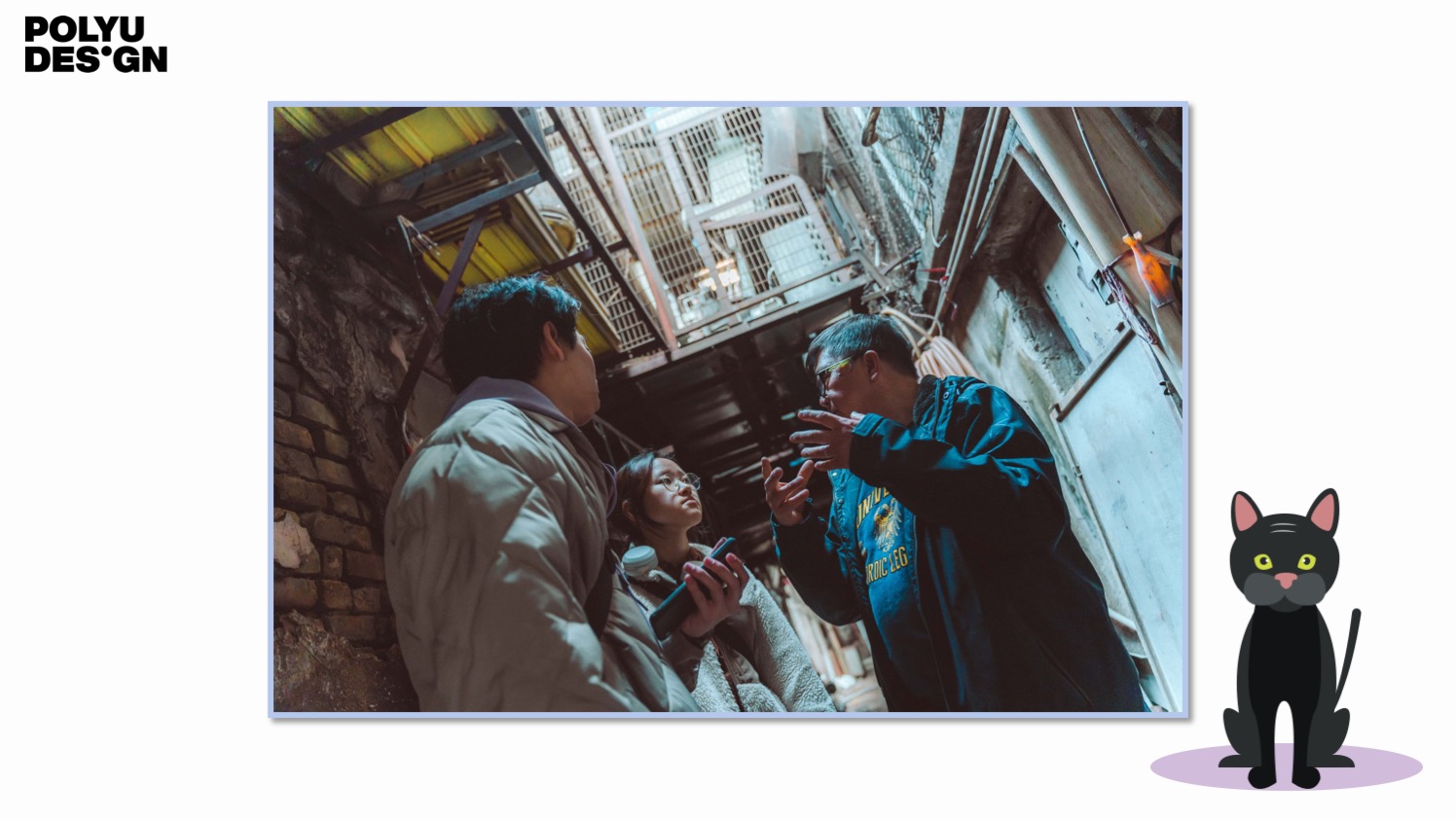
Through regular visits, interviews, and relationship-building with cat caretakers and volunteers, Harry practiced participatory research. He engaged directly with the community to understand their experiences, challenges, and needs. This knowledge is crucial in social design, as it leads to more relevant, accepted, and sustainable solutions by co-creating with those who are impacted.
Harry learned to look beyond surface-level symptoms (e.g., stray cats needing shelter) to analyze deeper, systemic causes (e.g., why there are so many strays in the first place). By addressing root causes rather than just immediate problems, social design can create more effective and lasting change in communities.
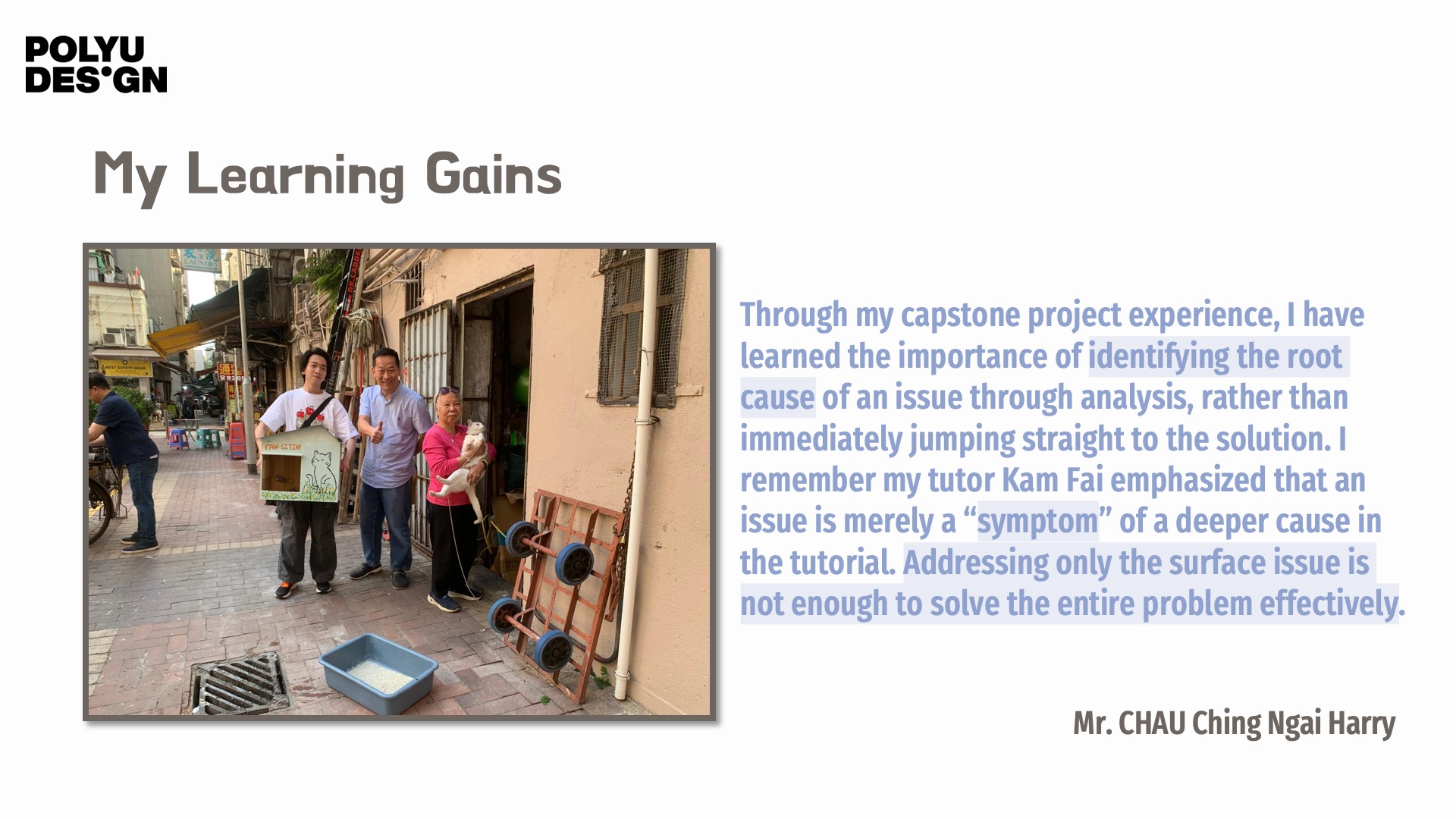
The development of the transitional cat shelter (cat box) involved prototyping, testing, and refining the design based on feedback from users (caretakers and volunteers). Harry’s willingness to adapt and improve his design in response to real-world challenges and critiques exemplifies the iterative nature of social design, where solutions evolve through cycles of feedback and improvement.
A core goal of Harry’s project was to raise public awareness about the rights and needs of animals in urban environments. By creating a visible, functional solution and sharing the story behind it, he used design as a tool for advocacy—encouraging more compassionate, inclusive attitudes and inspiring broader social change.
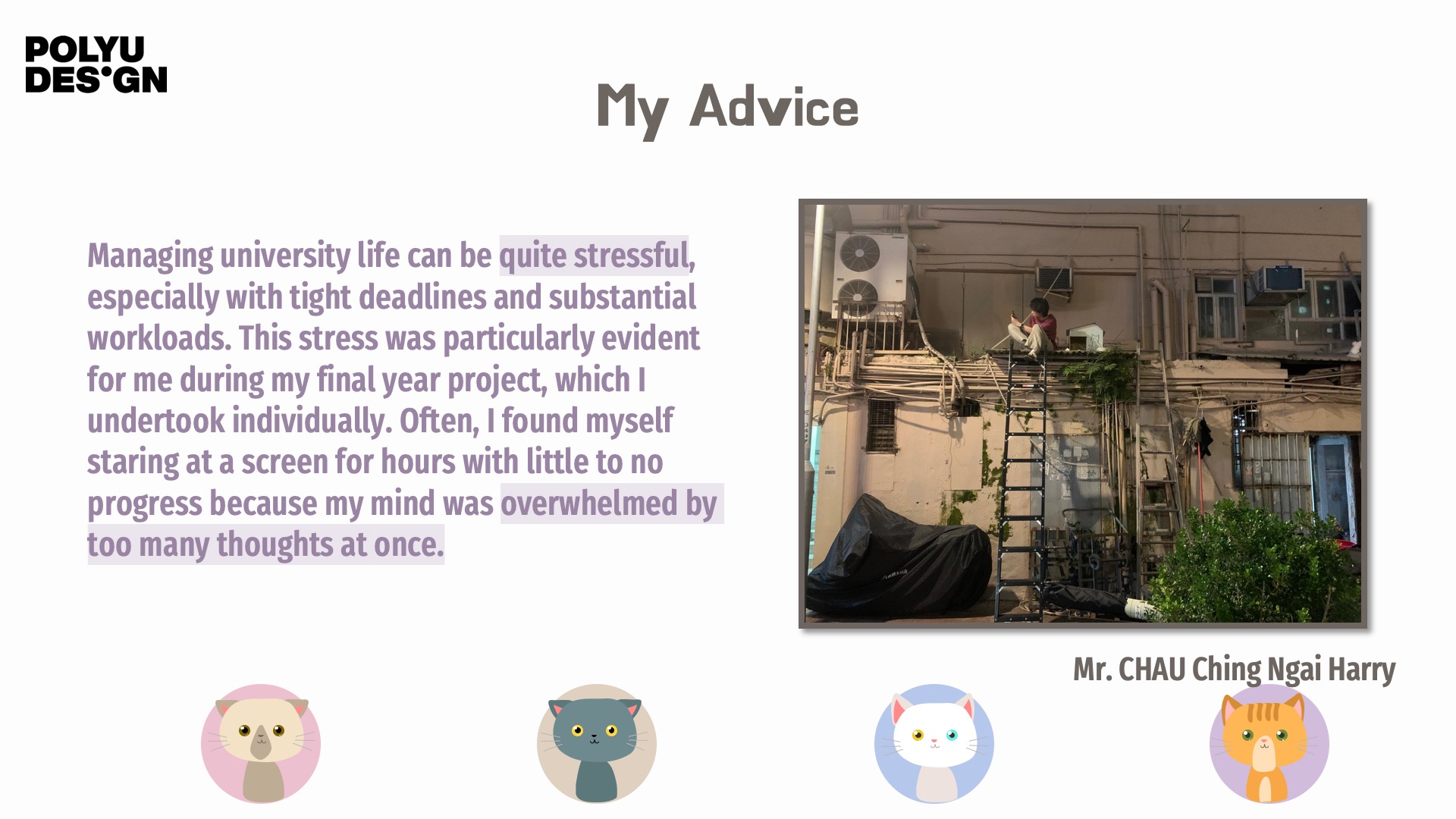
Harry faced numerous setbacks, such as initial rejection and suspicion during interviews, and the closure of a key community venue. Despite these challenges, he persisted, adapted his approach, and continued to seek solutions. Resilience and perseverance are essential lifelong skills for overcoming obstacles and achieving long-term goals.
Although Harry started with no connections, he gradually built a network by engaging with cat caretakers and volunteers. These relationships provided valuable insights and support, helping him refine his project. Networking and relationship building are crucial lifelong skills for accessing resources, gaining new perspectives, and collaborating effectively.
Guided by his tutor’s advice, Harry learned to analyze issues deeply and identify root causes rather than just addressing symptoms. This skill enabled him to design more effective and sustainable solutions for the stray cat community. Critical thinking and root cause analysis are vital for lifelong learning, as they lead to better decision-making and problem-solving.
Harry experienced disappointment when his ideas were rejected by tutors, but he learned to view critiques as opportunities for growth. He reflected on feedback, used it to deepen his research, and refined his design. Openness to feedback and a commitment to continuous improvement are lifelong skills that drive personal and professional development.
Harry’s project was inspired by a deep appreciation for the overlooked needs of stray cats and their caretakers in the community. He learned to recognize animals as vital stakeholders and developed a compassionate approach to problem-solving. Empathy and social awareness are lifelong skills that help individuals understand and address the needs of others, fostering inclusive and meaningful change.
The pursuit of knowledge is a lifelong journey! To further expand your knowledge and continue your personal and professional growth. Click and explore the following learning resources:
Prototyping and Iterative Design
Critical Thinking and Problem-solving