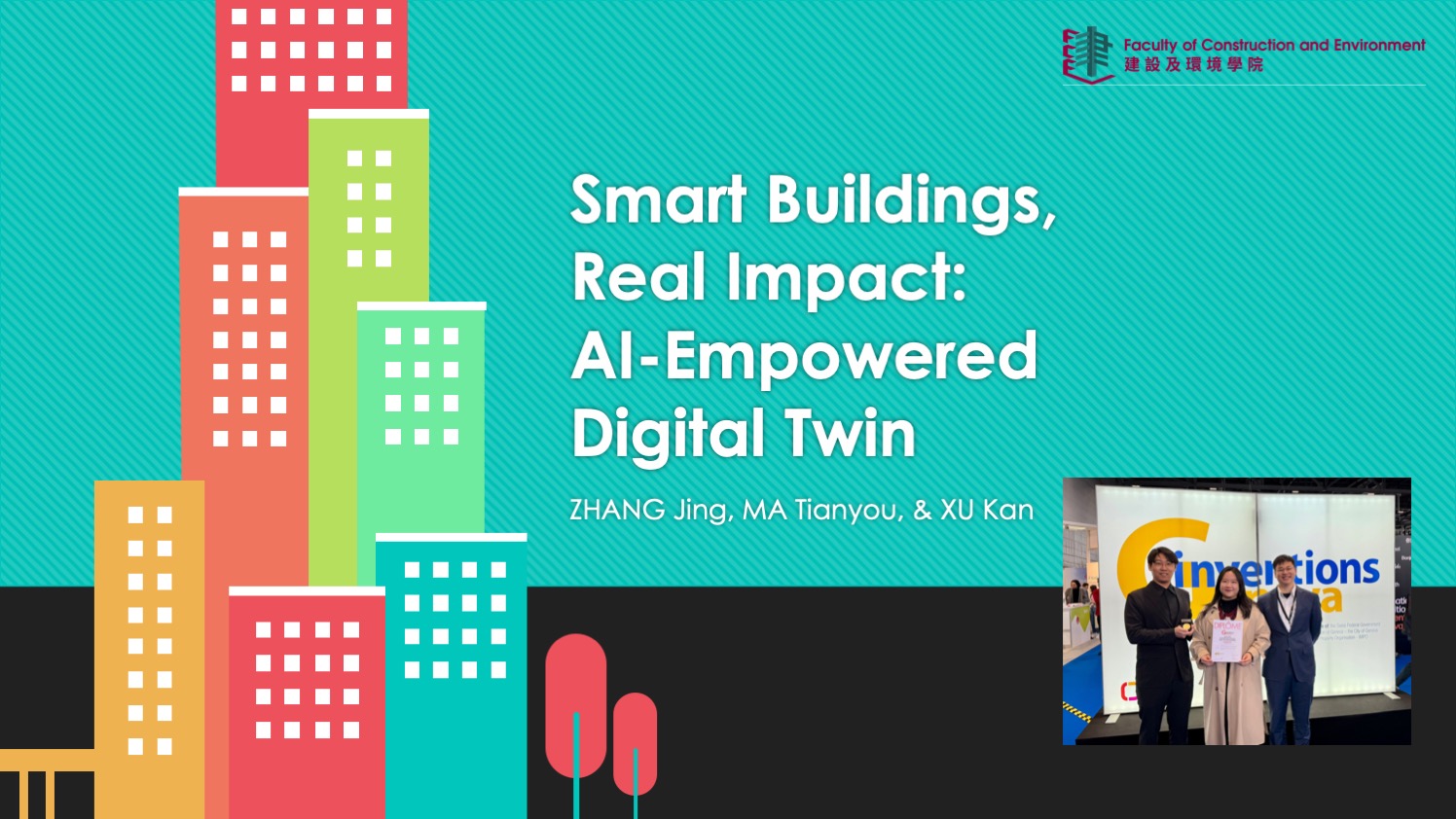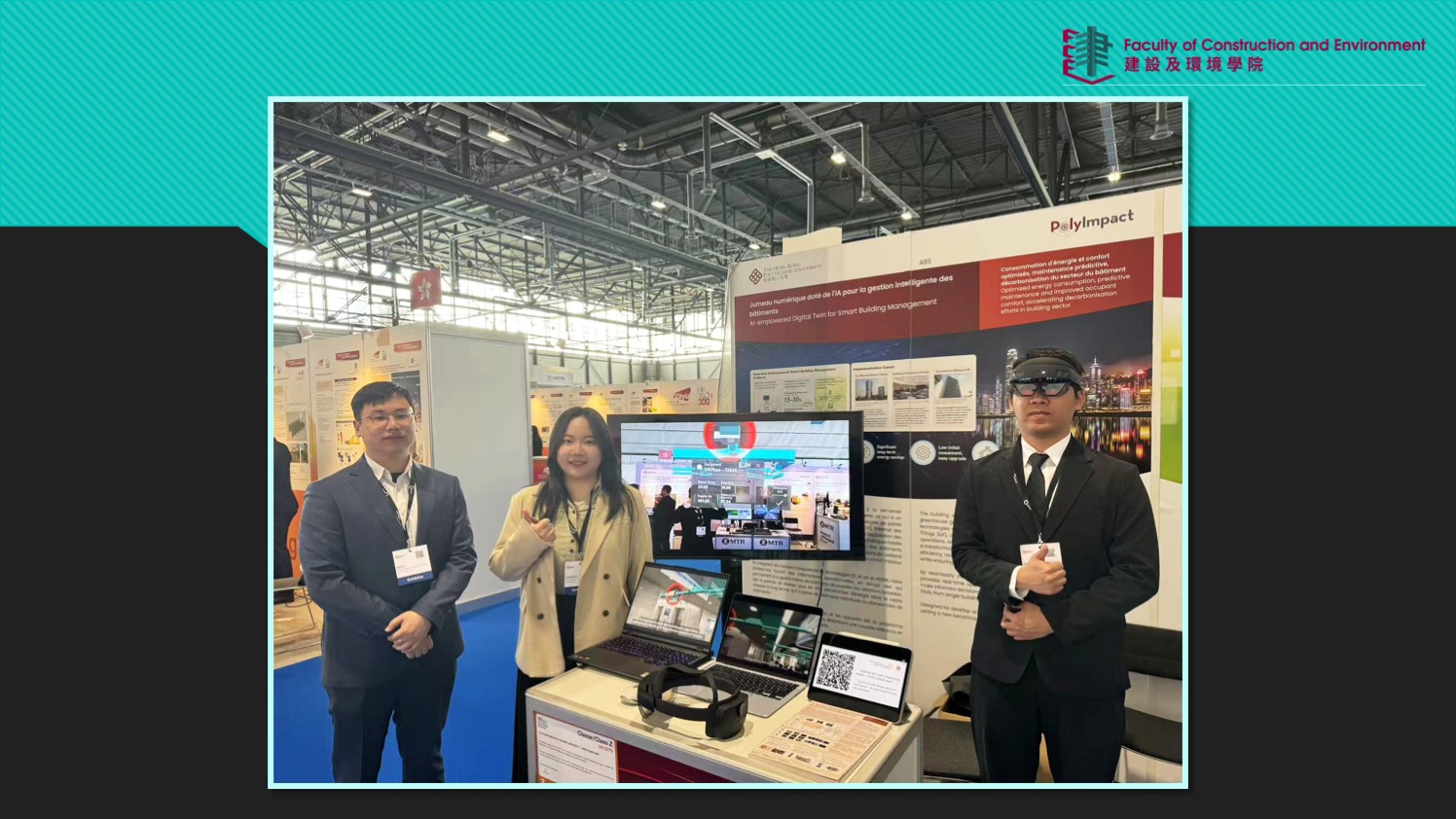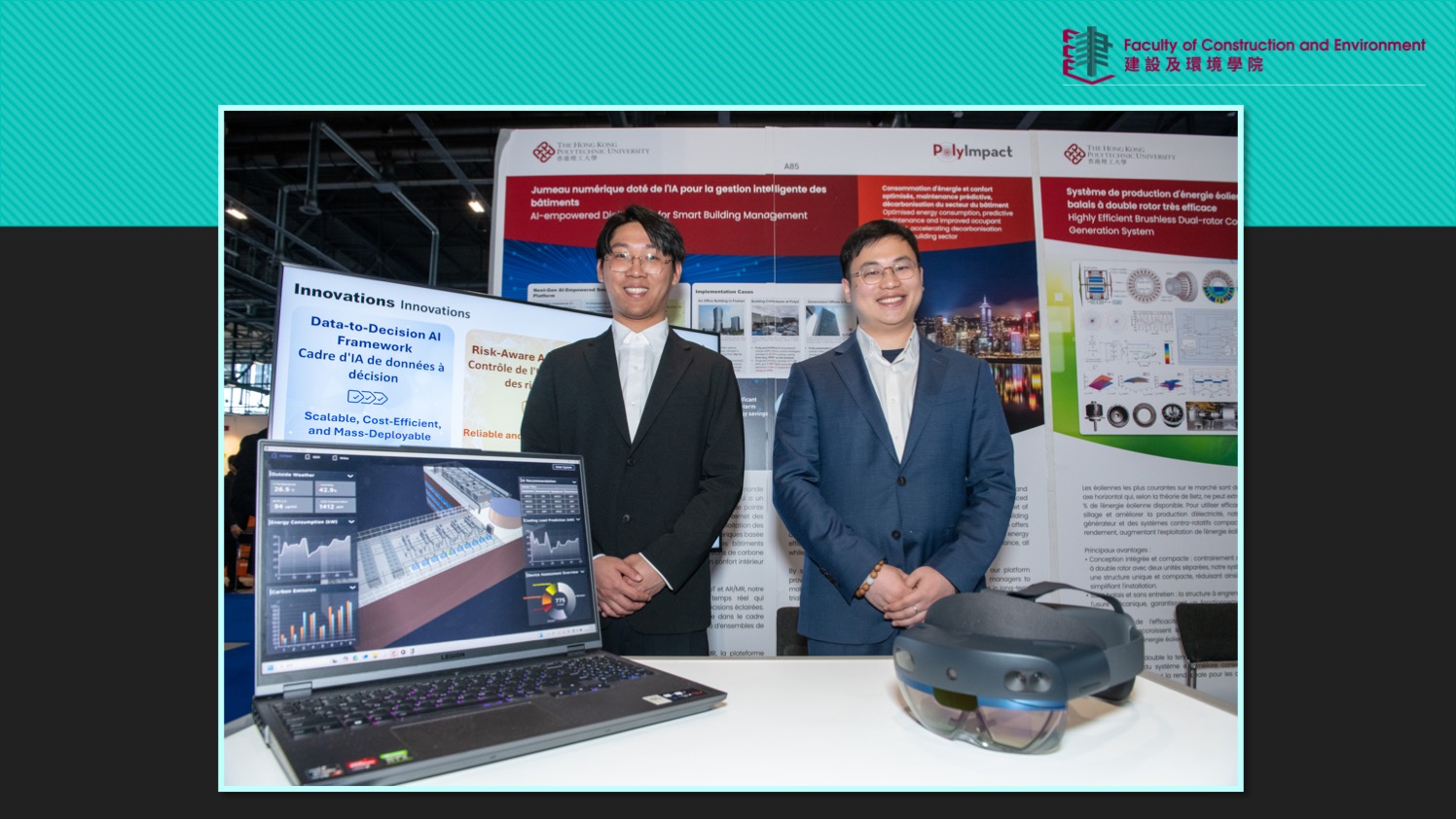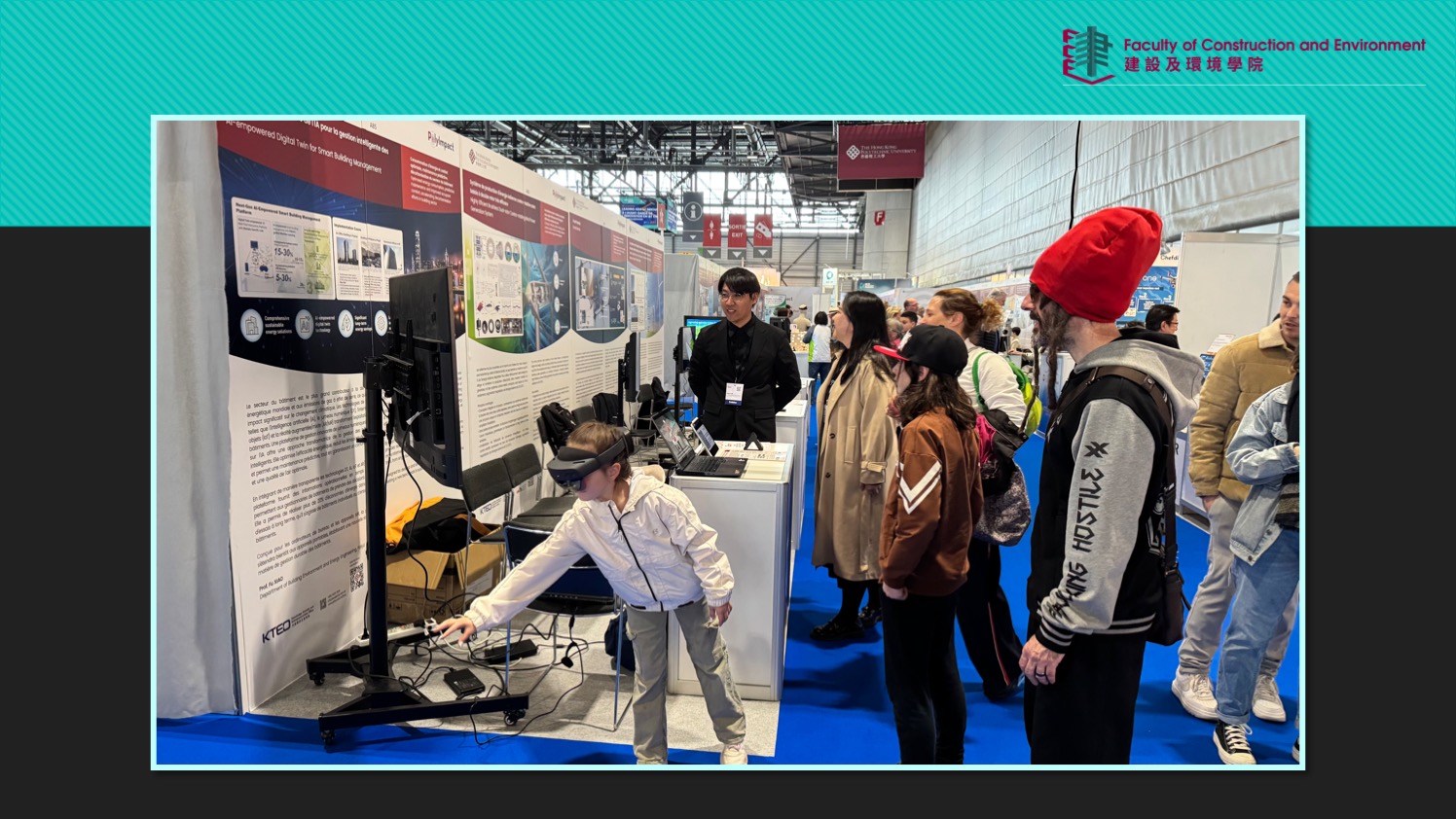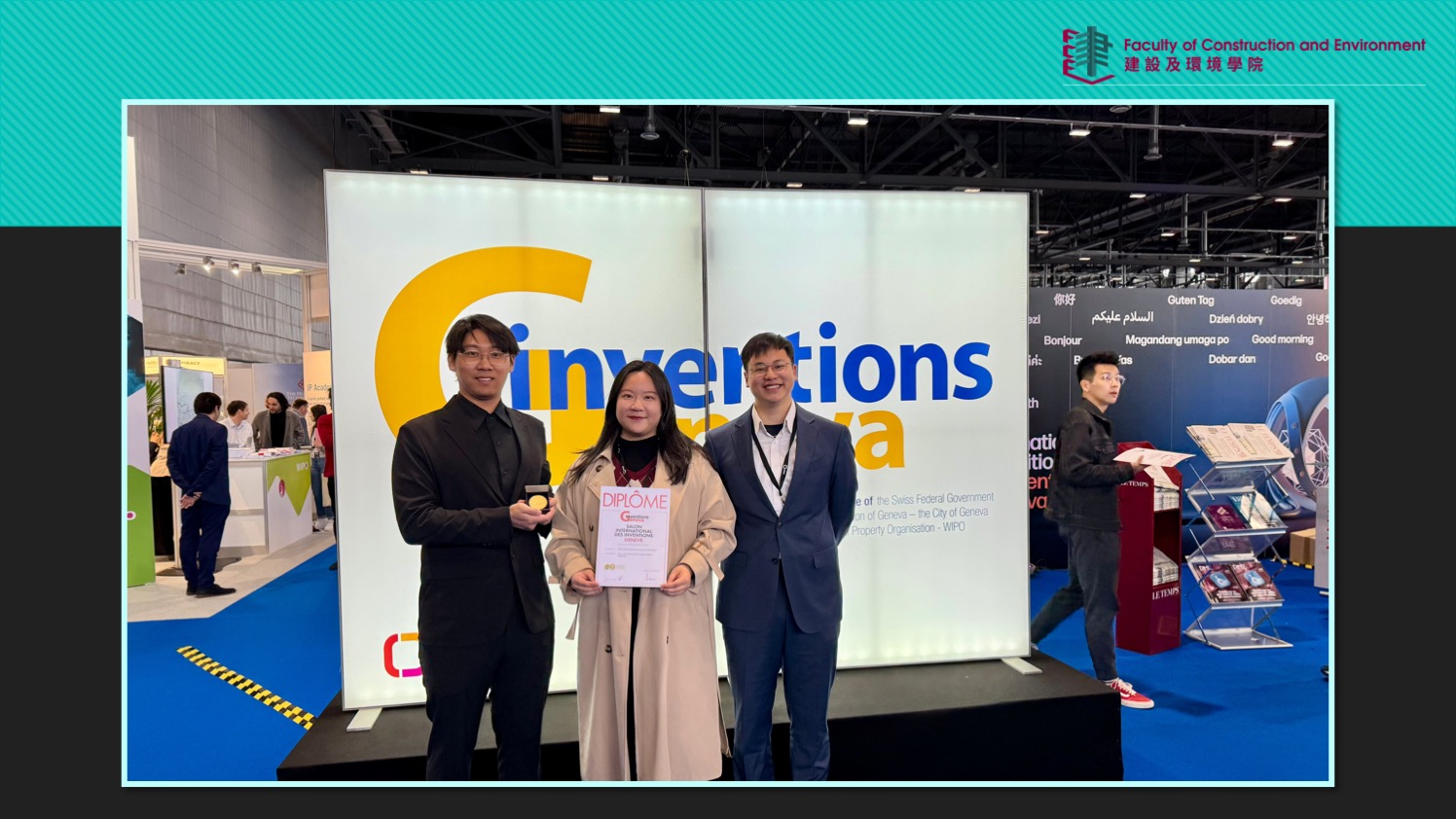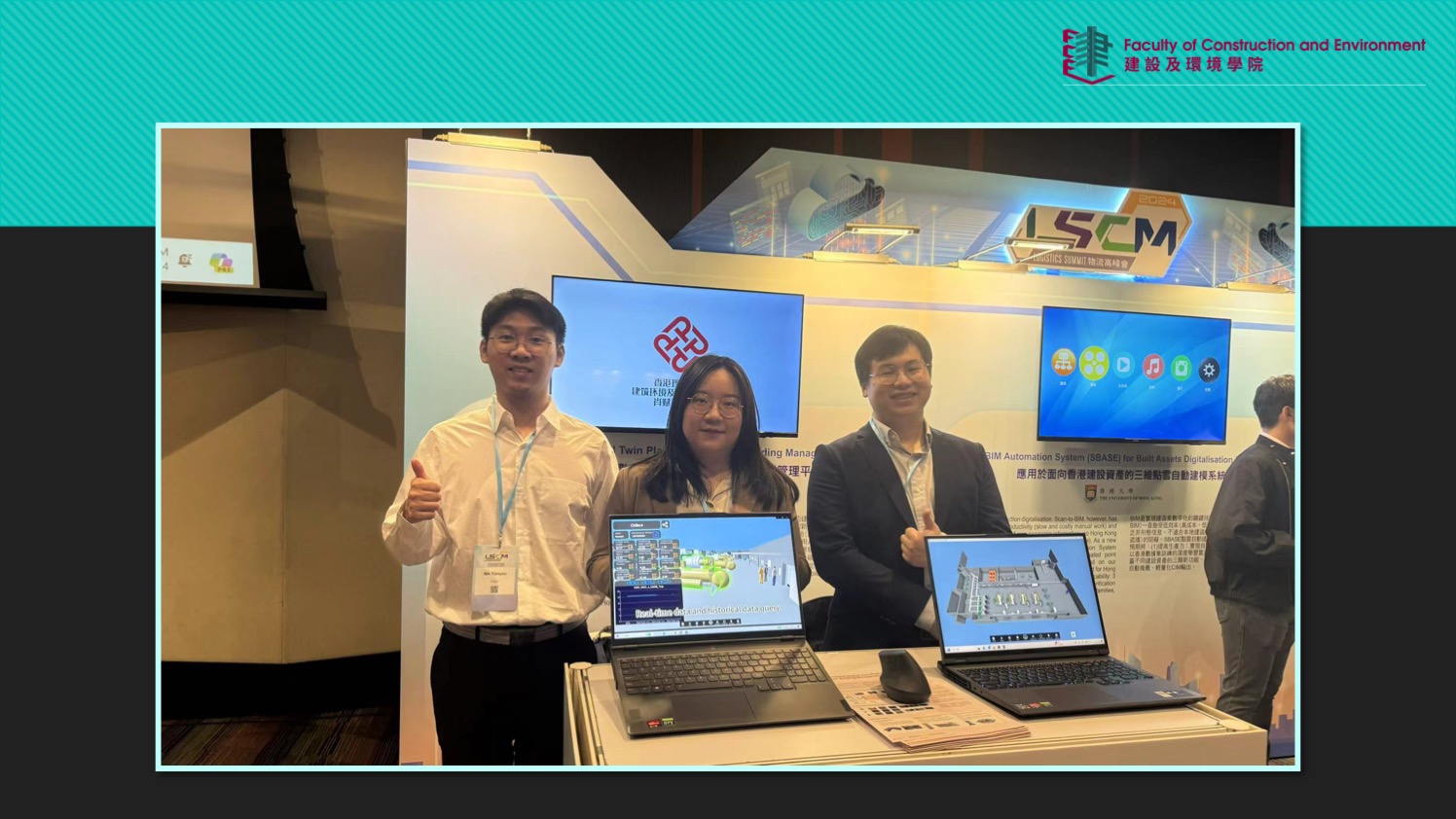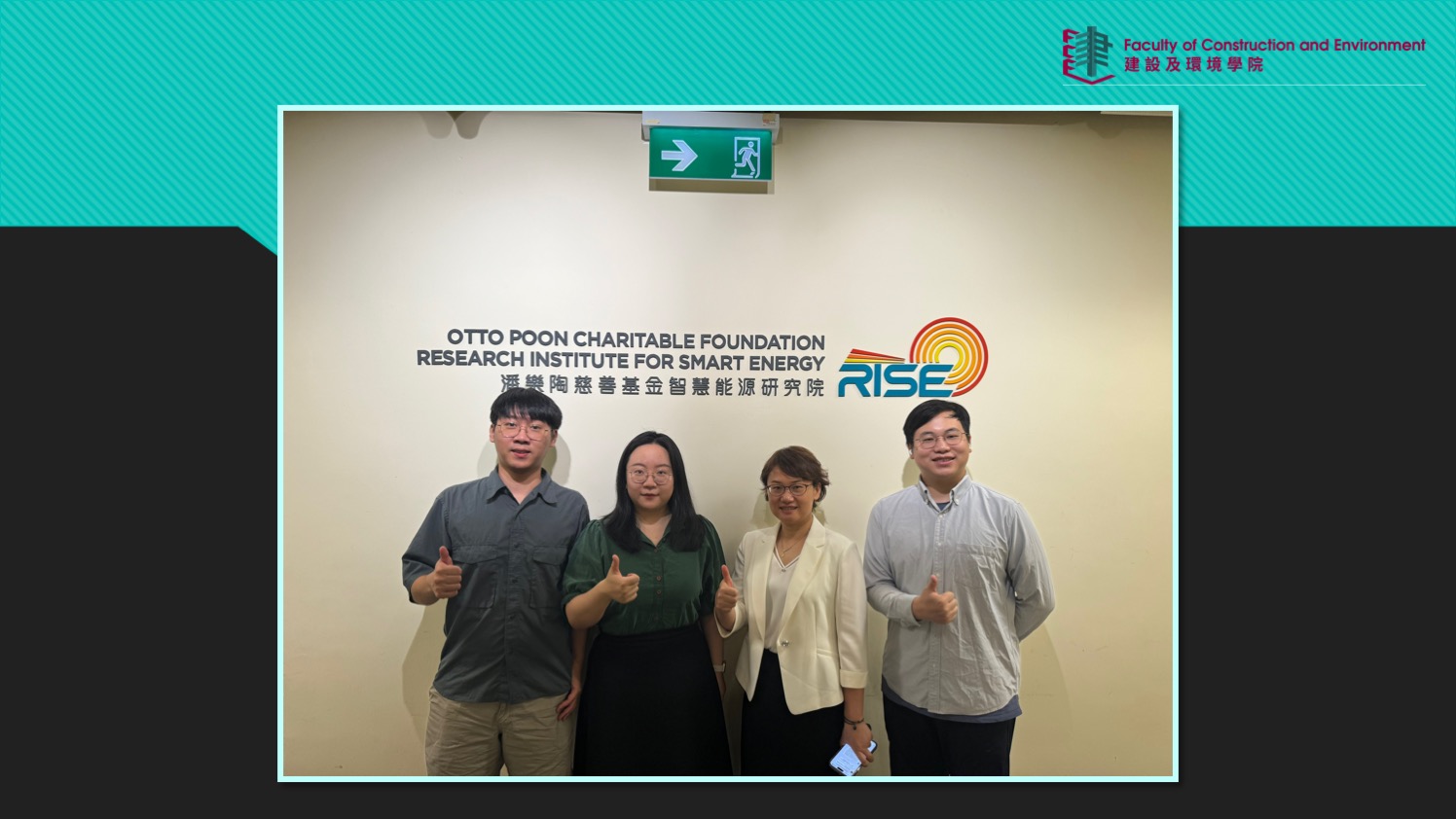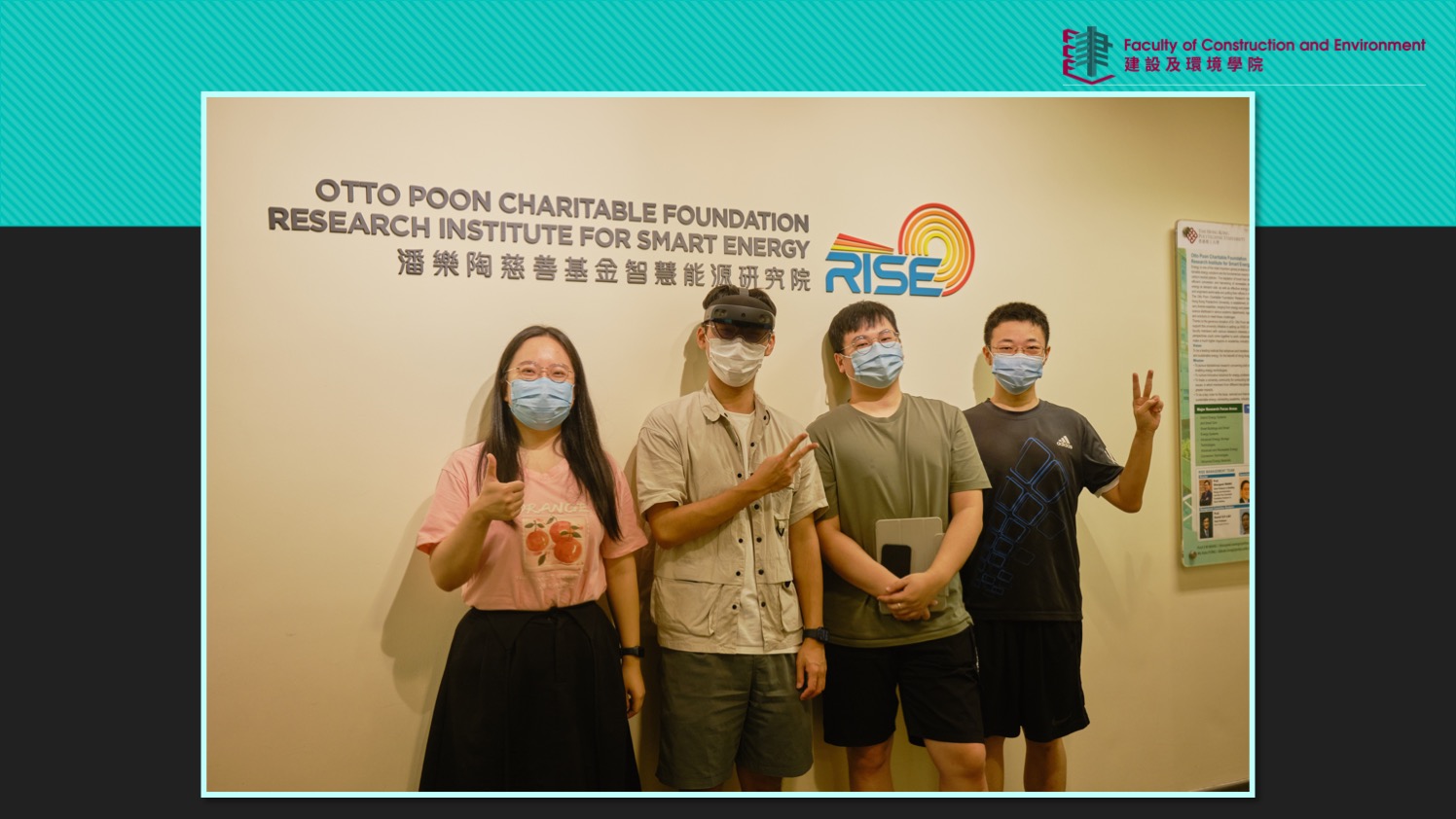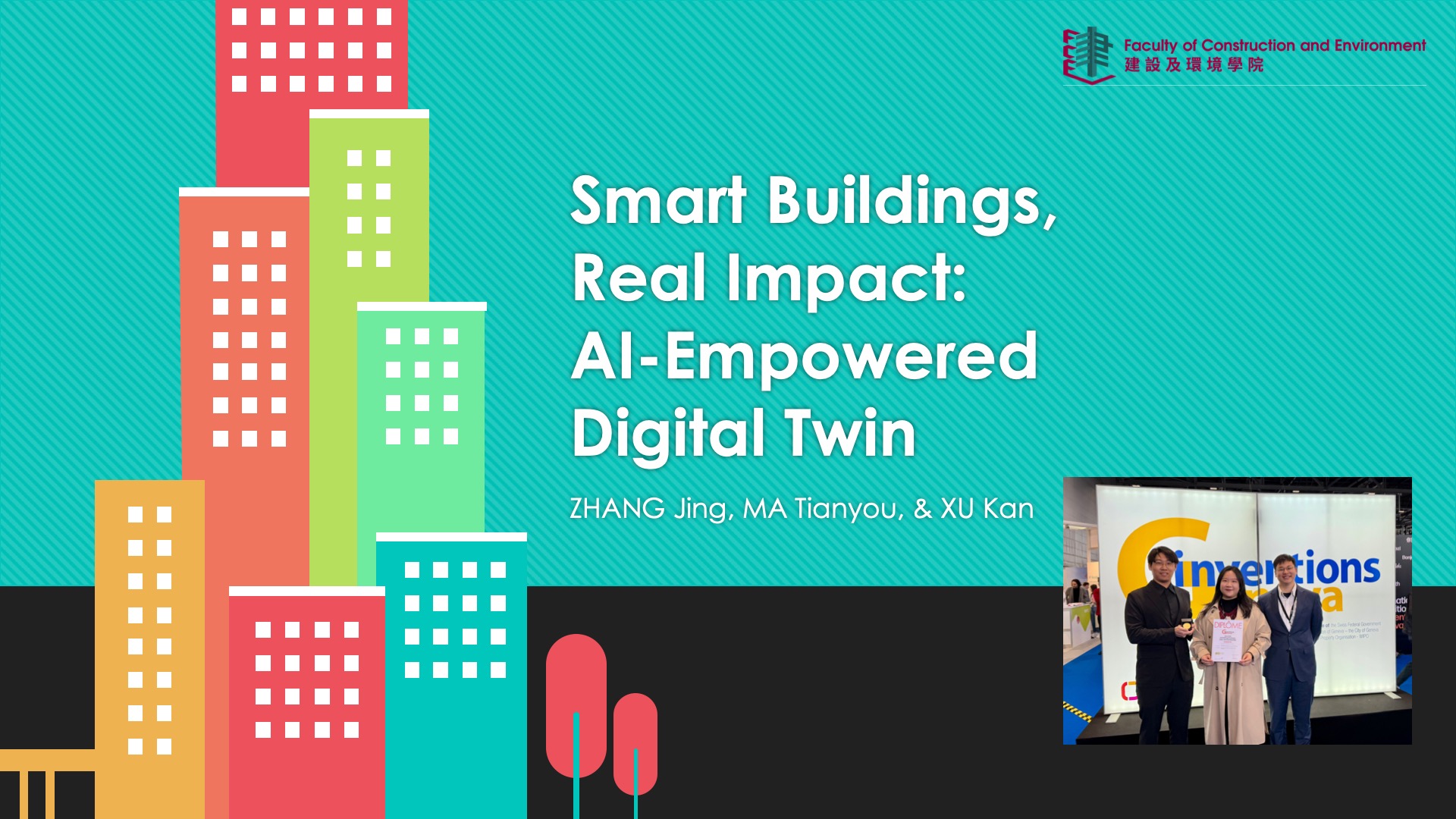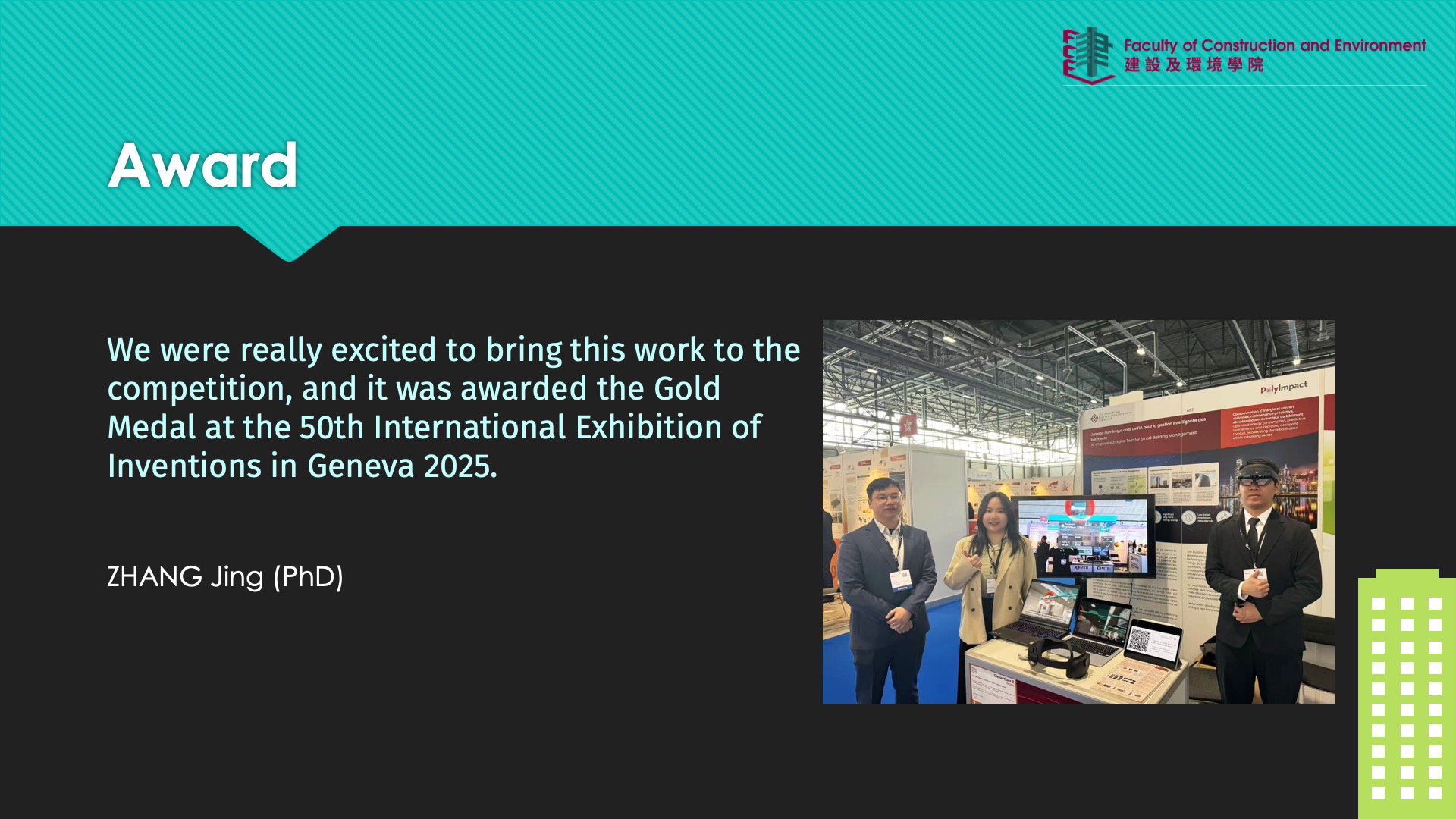


Ma Tianyou, Xu Kan, and Zhang Jing Amber spearheaded the AI‑Empowered Digital Twin for Smart Building Management, a three‑year journey that reimagined how buildings can save energy while keeping people comfortable. Tested across three sites, their system achieved 15–20% energy savings without replacing equipment—proving that innovation can work with what already exists.
Tianyou designed intuitive visualizations so operators could trust and engage with the system. Kan built standardized data formats and edge computing to break down barriers and ensure reliability. Amber optimized real‑time sensor integration, overcoming glitches to create a seamless experience. Together, they tackled challenges of stable data flow and trustworthy AI with persistence and collaboration.
With strong support from PolyU professors and departments, they transformed research into practice. Their work demonstrates how AI can make building management smarter, sustainable, and truly impactful—bridging technology with real‑world change.
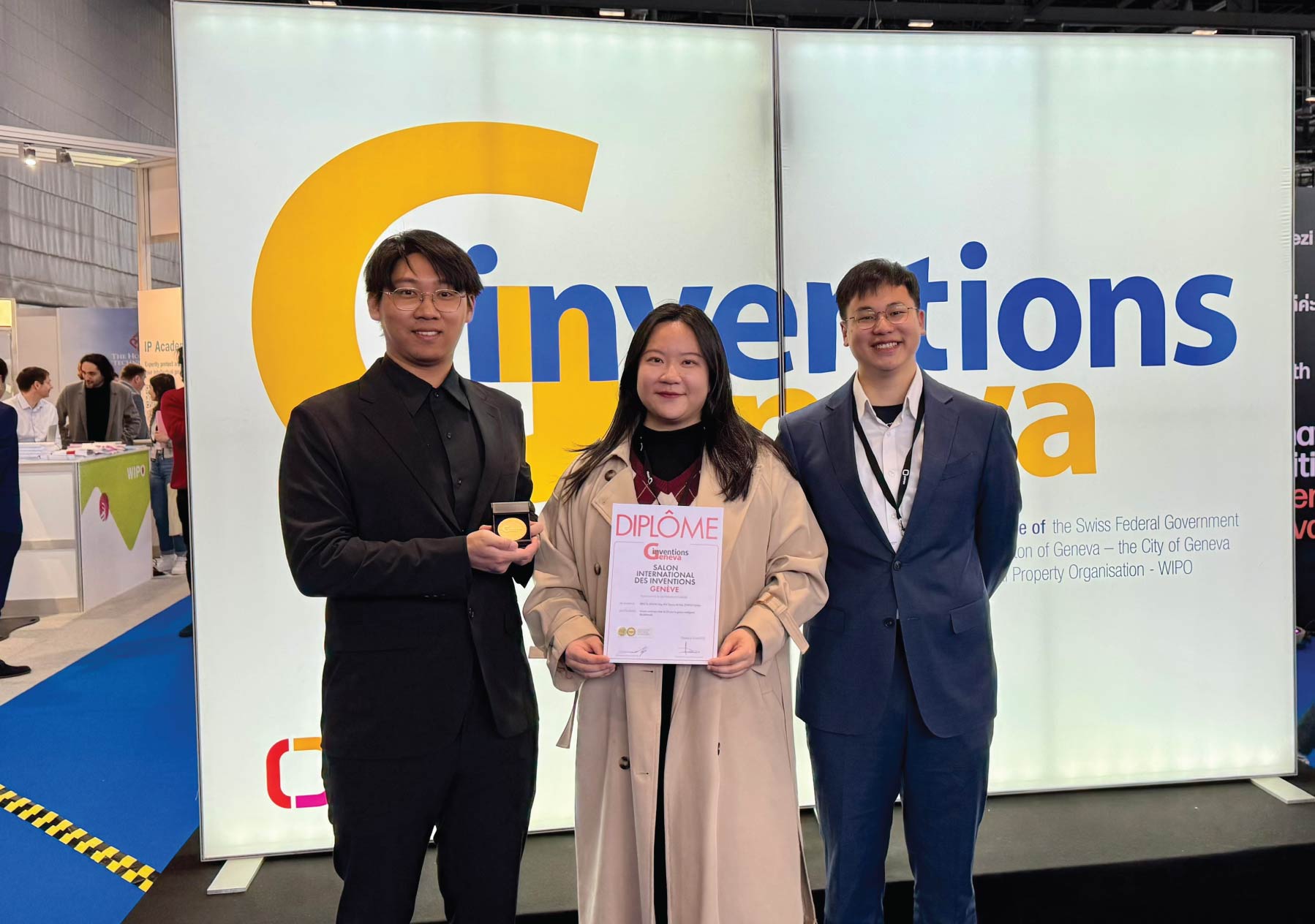
Mr. MA Tianyou
Ms. ZHANG Jing
Mr. XU Kan
Faculty of Construction and Environment
Department of Building Environment and Energy Engineering
In the modern built environment, a Digital Twin is a virtual, dynamic representation of a physical building asset. Unlike static 3D models (such as basic Building Information Modeling, or BIM), a digital twin is characterized by a bidirectional, real-time data exchange with the physical building via IoT sensor networks. During the operational phase of a building's lifecycle—which accounts for up to 80% of its total cost and carbon footprint—digital twins enable facilities managers to run predictive simulations, monitor spatial conditions, and dynamically optimize operations.
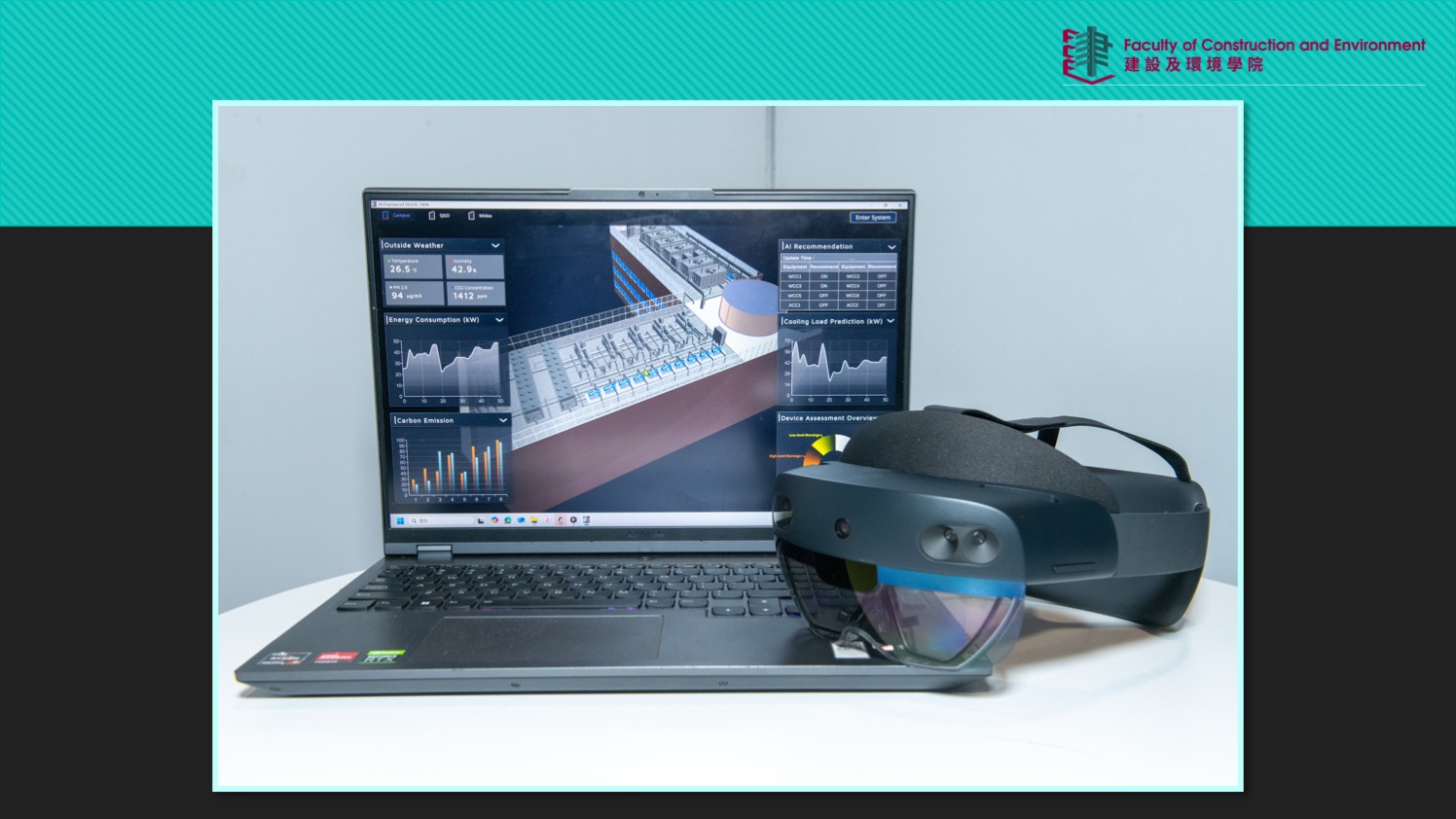
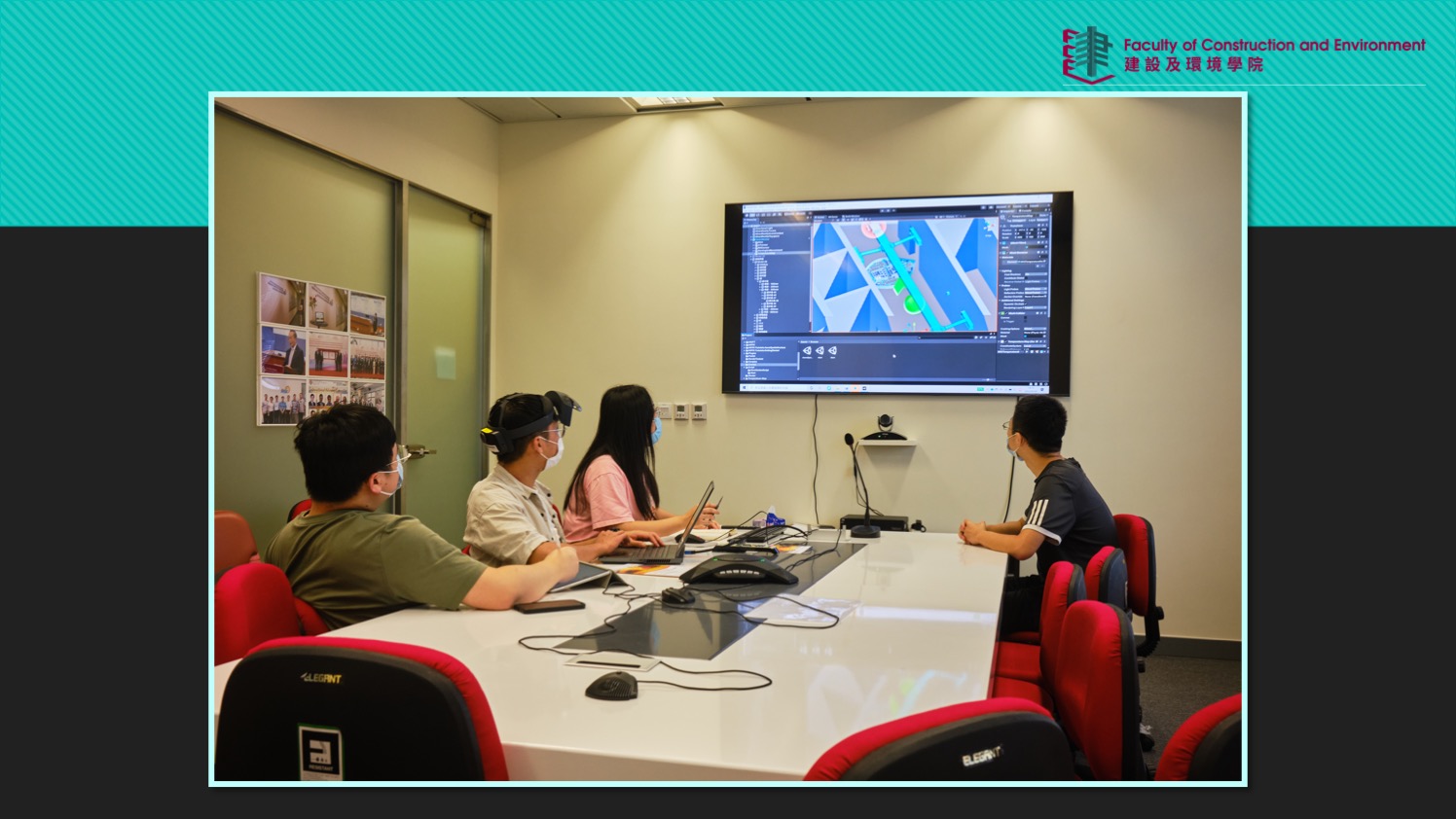
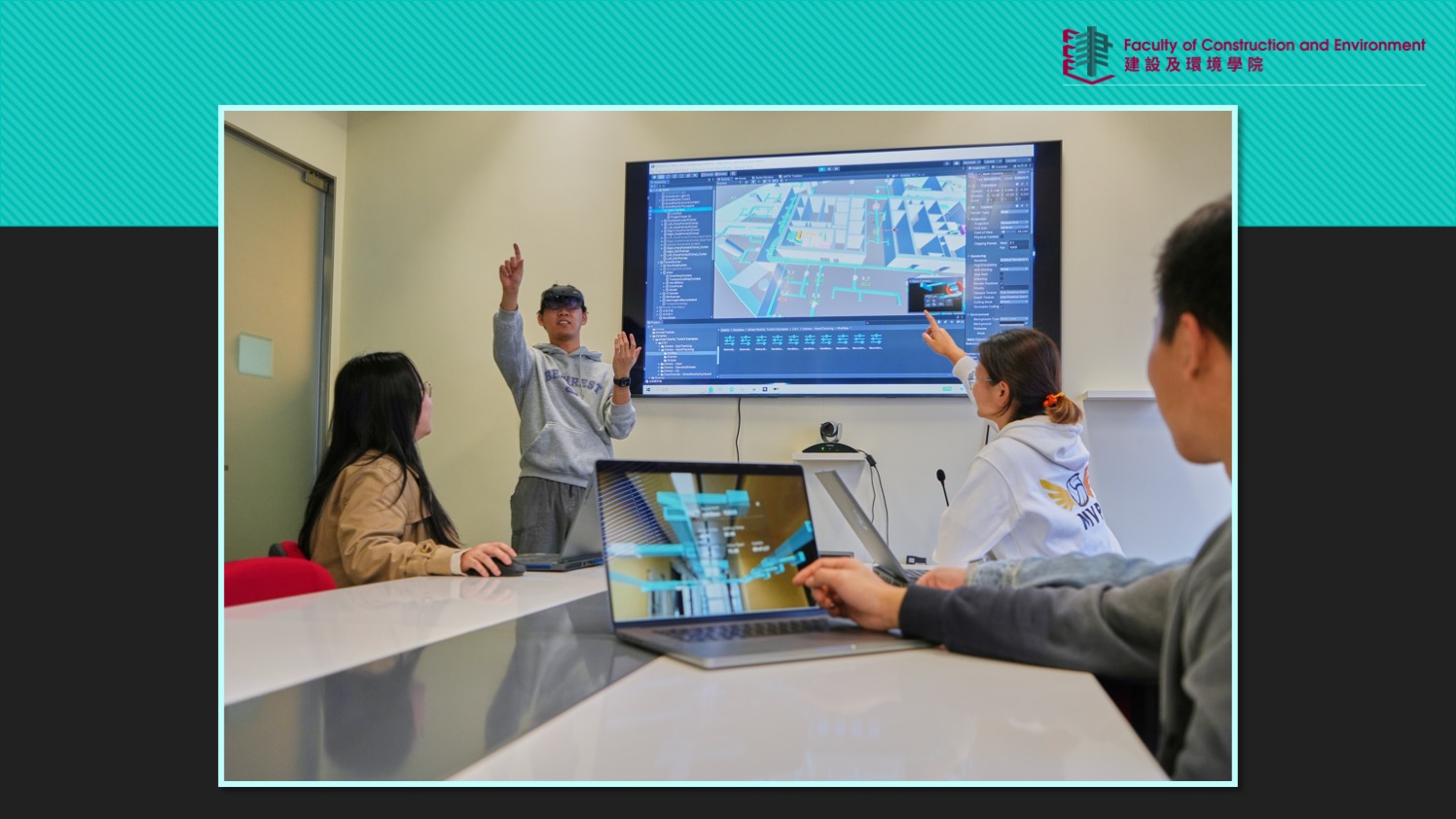
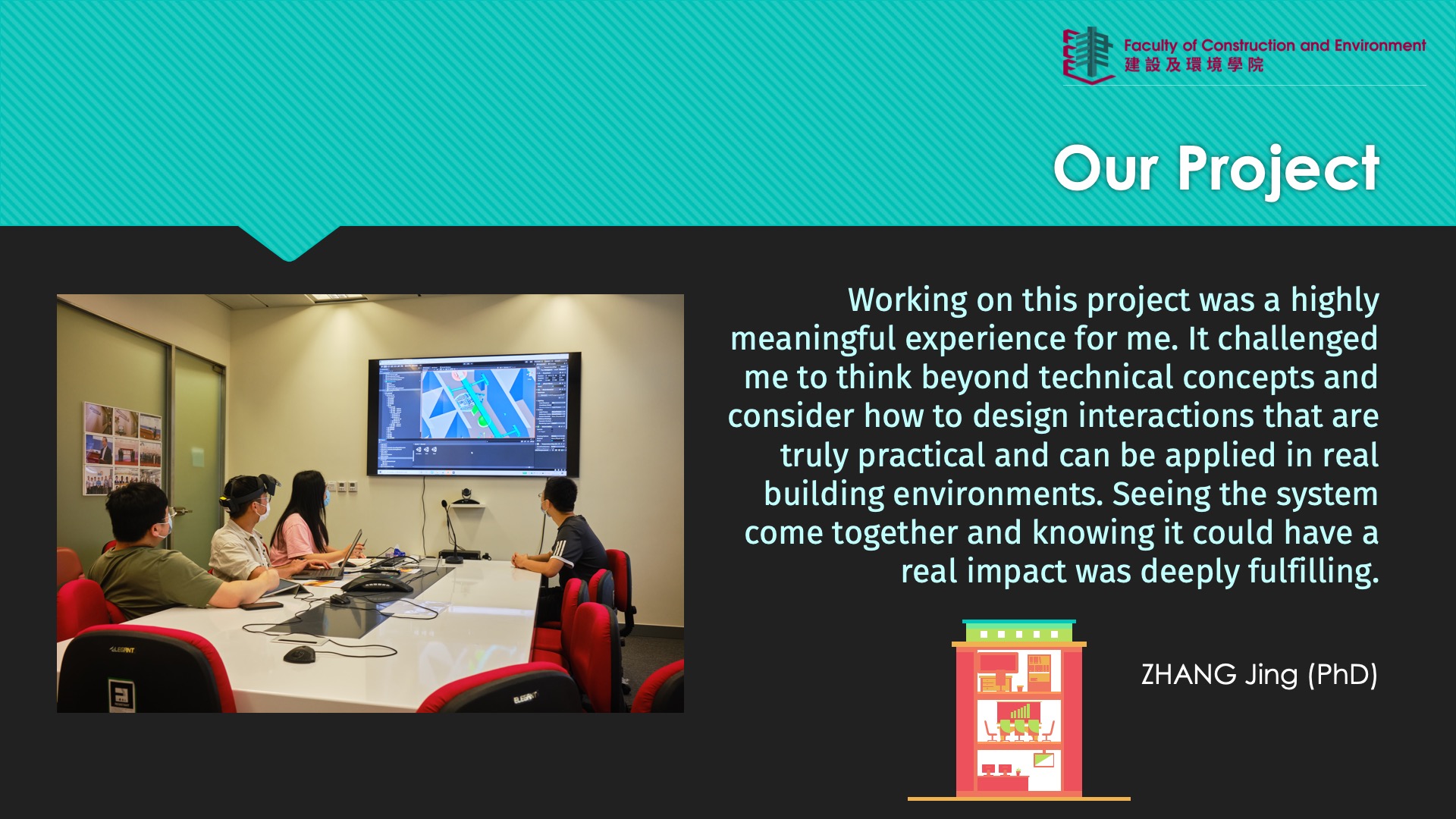
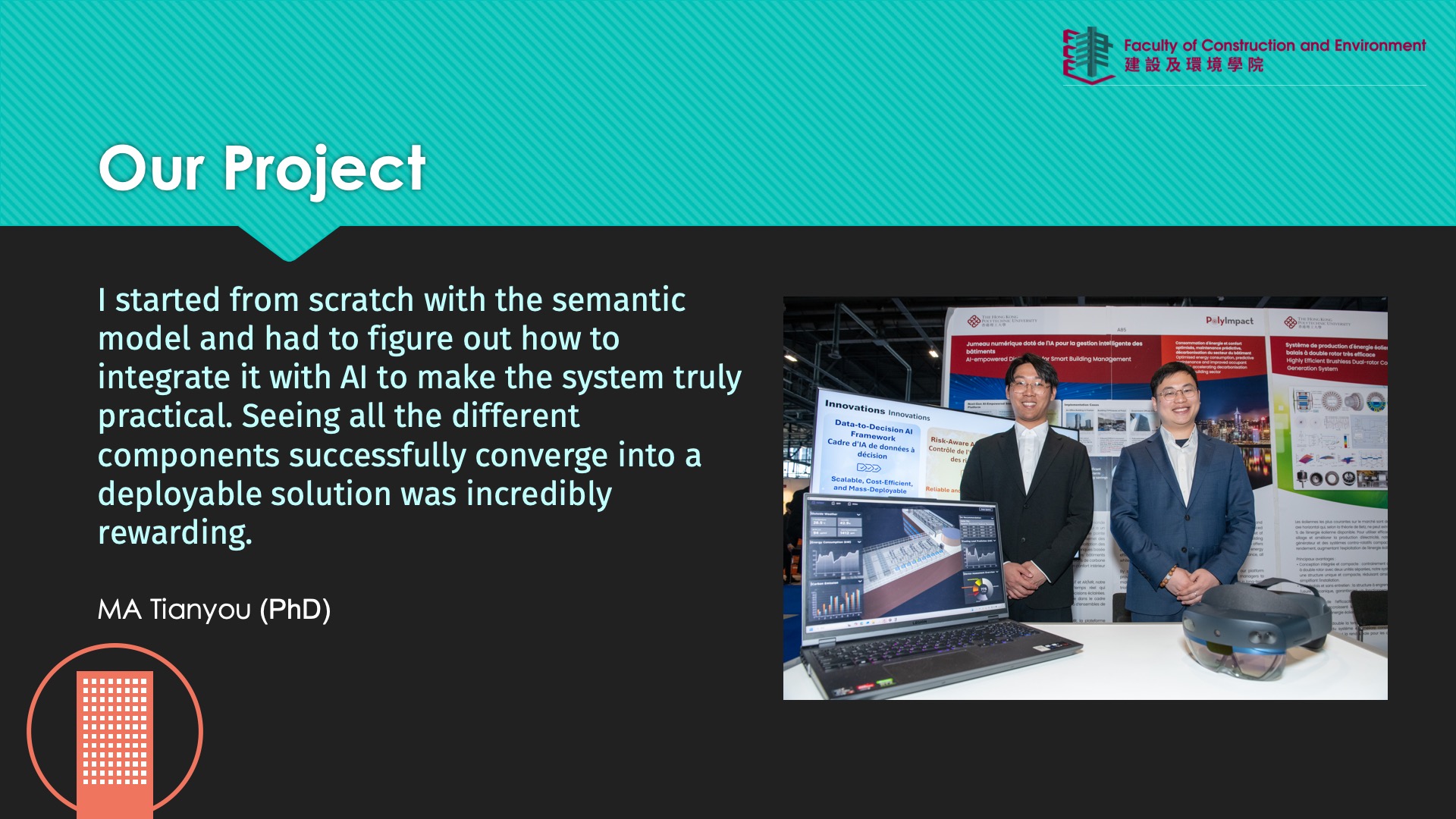
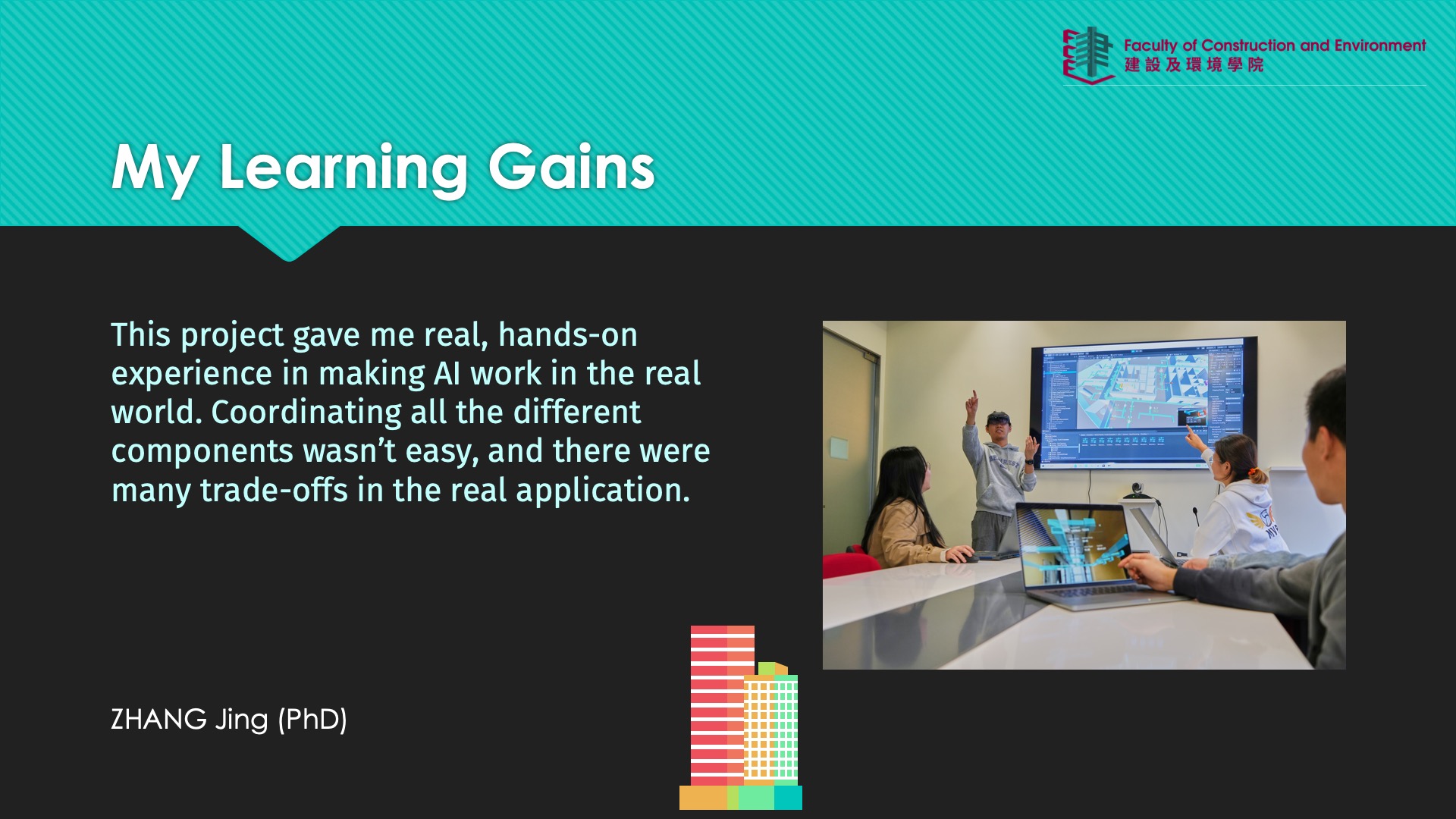
The team developed an "AI-Empowered Digital Twin" specifically to elevate smart building management. By integrating a dense network of live sensors with a real-time visualization layer (including mixed reality designed by Tianyou), they allowed building operators to visualize and interact with real-time building performance. This virtual twin bridged the gap between raw data and spatial awareness, making building maintenance and diagnostics practical for non-specialist operations staff.
Traditional efforts to improve building energy efficiency often rely on capital-intensive "hard" retrofits, such as replacing mechanical equipment, upgrading HVAC units, or installing high-performance building envelopes. In contrast, "soft" or digital retrofitting focuses on optimizing the existing Building Automation Systems (BAS). This involves integrating intelligent control layers over existing programmable logic controllers (PLCs) and communication networks (e.g., BACnet or Modbus) to achieve energy efficiency without replacing legacy hardware.
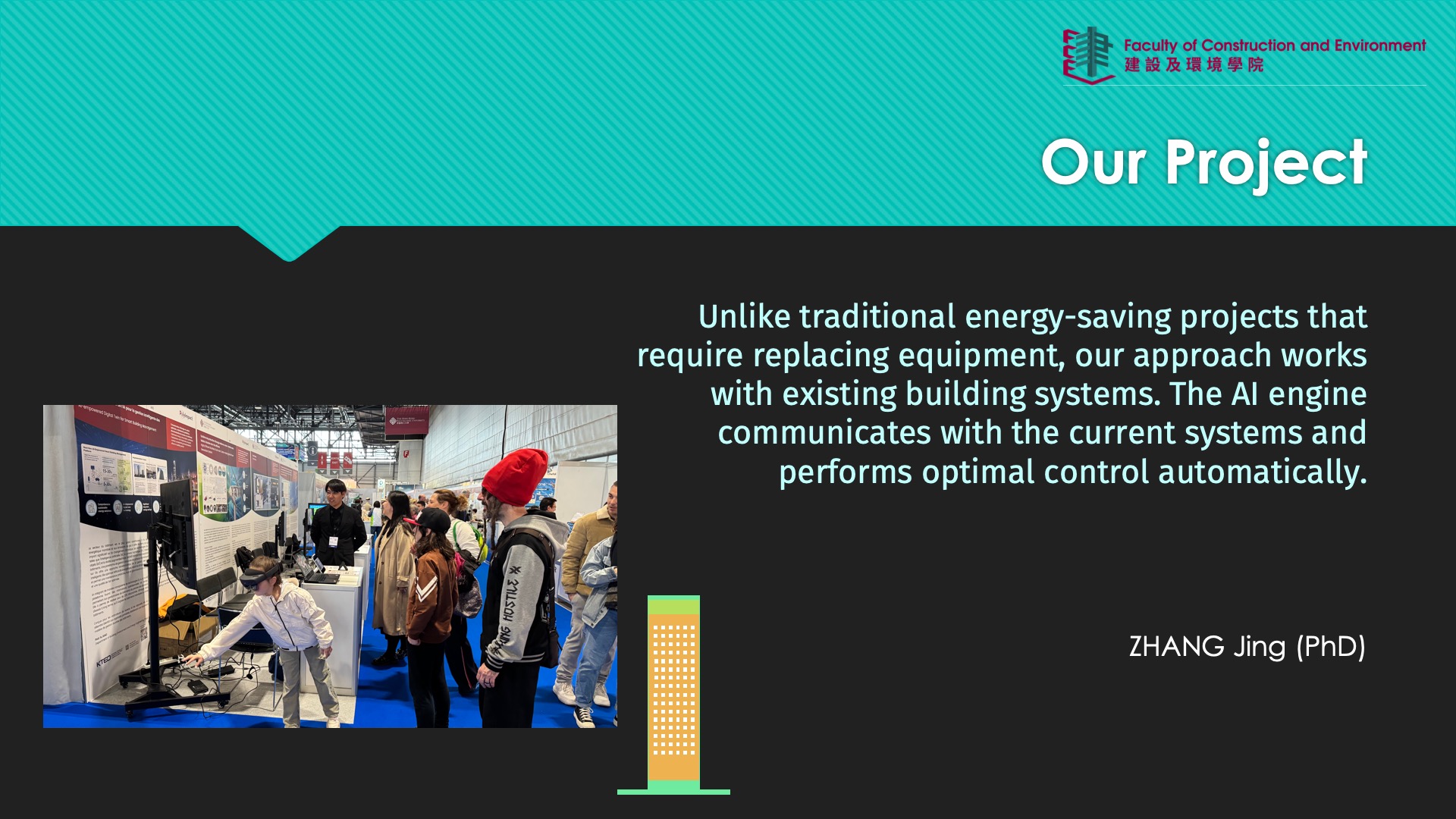
The students explicitly targeted this built-environment constraint. ZHANG Jing noted that "unlike traditional energy-saving projects that require replacing equipment, our approach works with the existing building systems." The AI engine they designed directly communicated with existing building hardware to perform "optimal control automatically." Tested in real-world conditions over several years, this intelligent control approach achieved an average of 15–20% energy savings across three pilot sites, demonstrating a highly scalable, low-cost path to building decarbonization.
Indoor Environmental Quality (IEQ) is a critical pillar of sustainable construction, with thermal comfort being a primary objective. Standardized under frameworks like ASHRAE Standard 55, thermal comfort is mathematically modeled using variables like air temperature, relative humidity, air velocity, and radiant heat. HVAC systems typically account for 40–50% of a commercial building's energy consumption. Built-environment optimization must treat energy reduction and occupant thermal comfort as a multi-objective constraint problem, ensuring energy is not saved at the expense of human health and productivity.
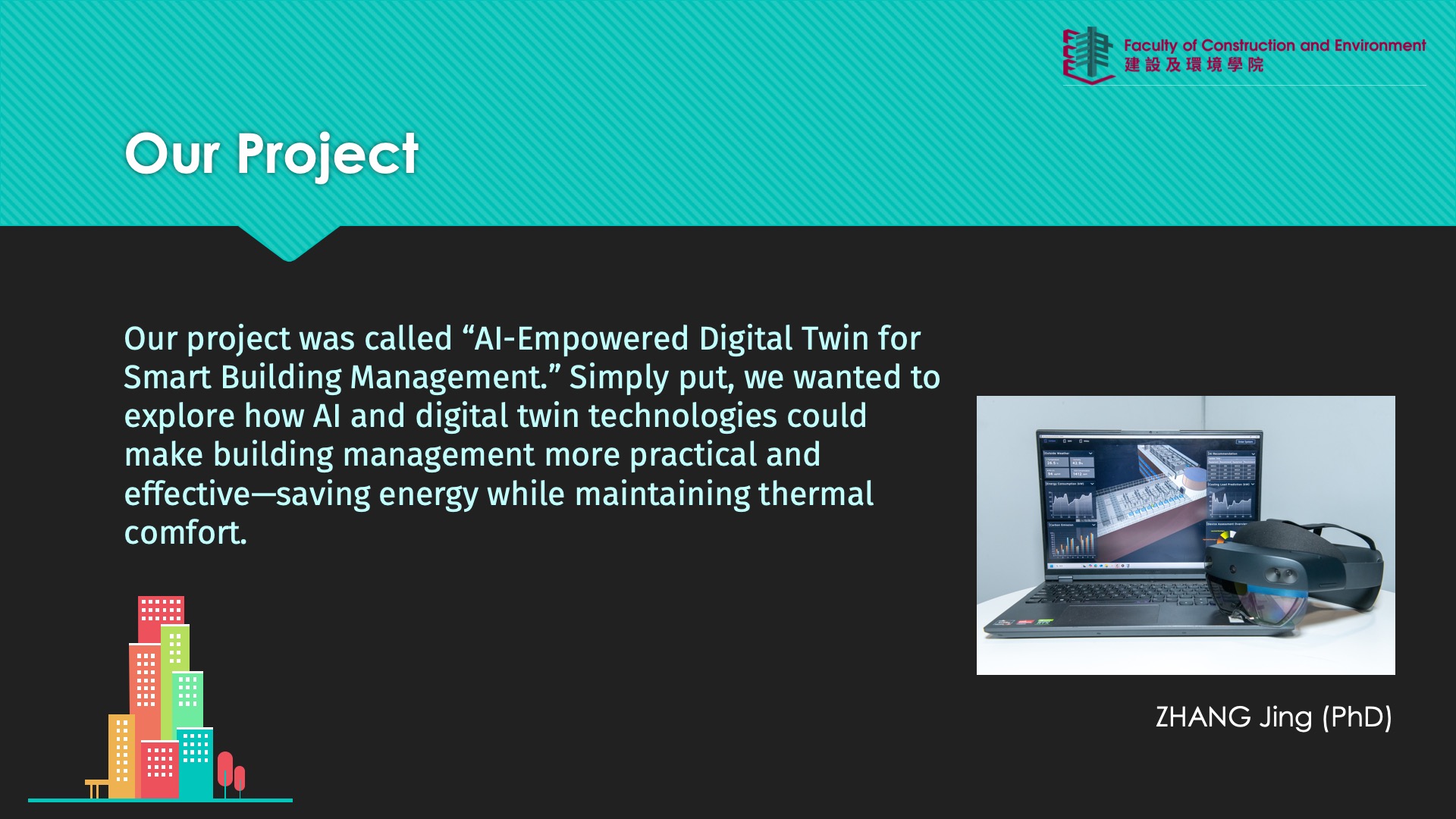
The project's core thermodynamic mandate was to "explore how AI and digital twin technologies could make building management more practical and effective—saving energy while maintaining thermal comfort." The AI engine was trained to dynamically modulate HVAC behavior, managing the delicate balance between thermal comfort boundaries and energy-conservation algorithms.
Traditional black-box AI models (like deep neural networks) trained purely on building sensor data often fail in real-world facilities because they lack physical context. They may output control commands that violate fundamental physical laws (e.g., the laws of thermodynamics or fluid dynamics), leading to unstable building operations or unsafe equipment wear. Physics-Guided Machine Learning (PGML) embeds physical principles—such as heat transfer coefficients, thermal mass equations, and energy conservation laws—directly into the loss function or architecture of the machine learning model.
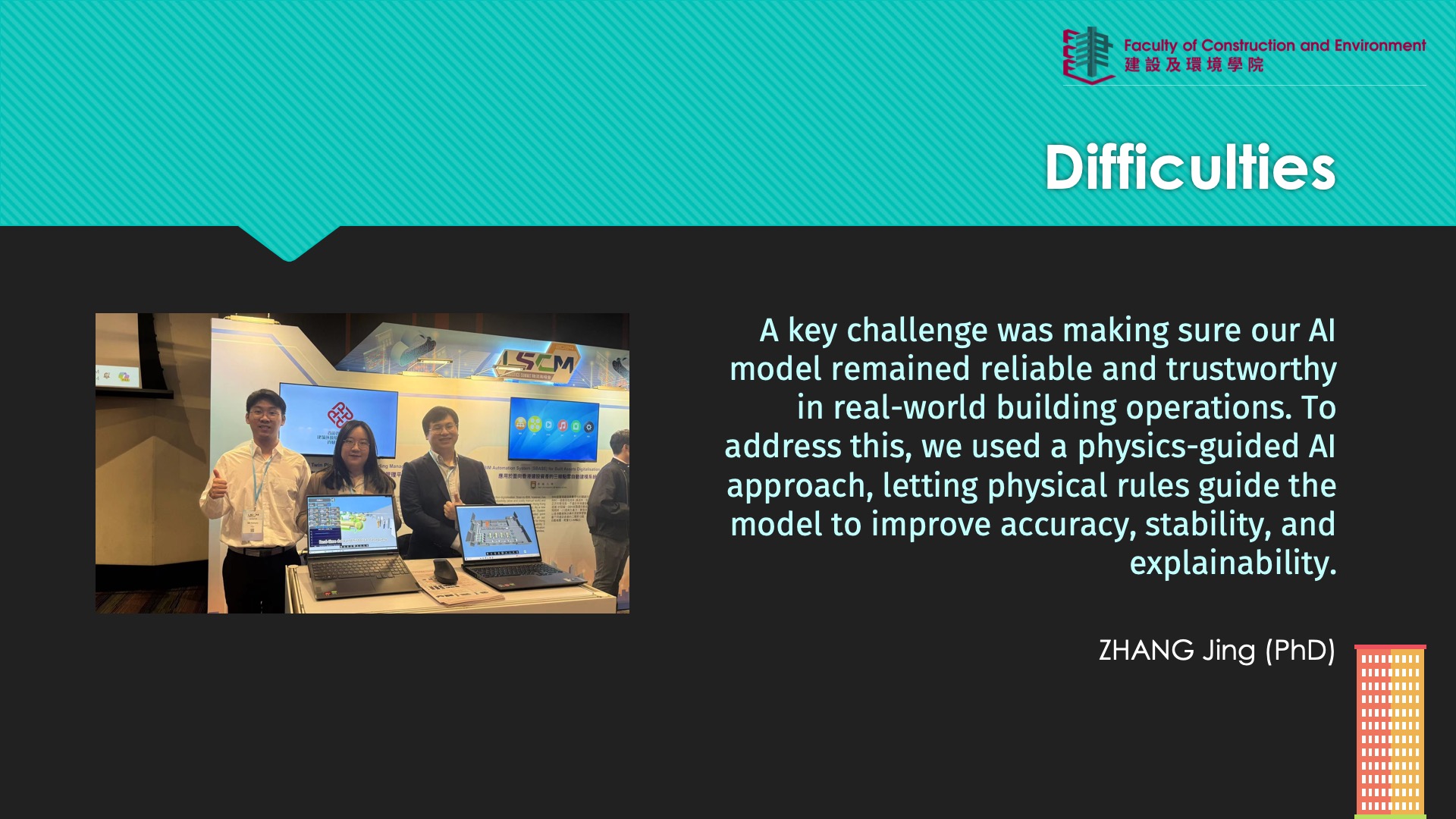
To ensure their system was safe and dependable for everyday occupancy, the team addressed model reliability by using a "physics-guided AI approach, letting physical rules guide the model." As ZHANG Jing explained, this hybridization of building physics and artificial intelligence significantly improved the model's accuracy, stability, and explainability. Over a year of continuous operational testing, this approach proved both energy-saving and stable enough to gain the trust of professional building engineers.
Smart buildings are historically plagued by fragmented data silos. Building subsystems (HVAC, lighting, vertical transport, and access control) are designed by different manufacturers and use proprietary, incompatible data structures. To enable AI-driven control, building informatics relies on semantic modeling (such as the Brick Schema, Project Haystack, or IFC/BIM ontologies). Semantic modeling standardizes metadata, defining not just what a sensor reads, but where it is located, what equipment it is connected to, and how it physically relates to the building's zones.
XU Kan addressed this critical bottleneck by "developing a standardized data format that could break down data barriers across different parts of the building." By starting from scratch to build a semantic model tailored for their AI engine, the team successfully unified heterogeneous data streams from a dense sensor network. This standardized semantic foundation allowed the digital twin to execute real-time, zero-packet-loss data transmission, enabling robust and synchronized AI control across different zones of the building.
The team designed their platform to be highly scalable and adaptive, specifically avoiding the need for expensive, specialized hardware overhauls in new environments.
Jing highlighted that unlike traditional energy-saving projects that require replacing equipment, their AI-driven approach is designed to "work with the existing building systems." The AI engine seamlessly integrates and communicates with whatever system is already in place.
To prove the adaptability of their system, they deployed and ran long-term, real-world tests at three different sites (including one provided by PolyU's CFSO department), demonstrating its versatility by achieving a consistent 15–20% energy saving across diverse, live building environments.
The project relied on highly synchronized, multidisciplinary teamwork where the students had to constantly align their individual technical components (data integration, visualization, and AI logic).
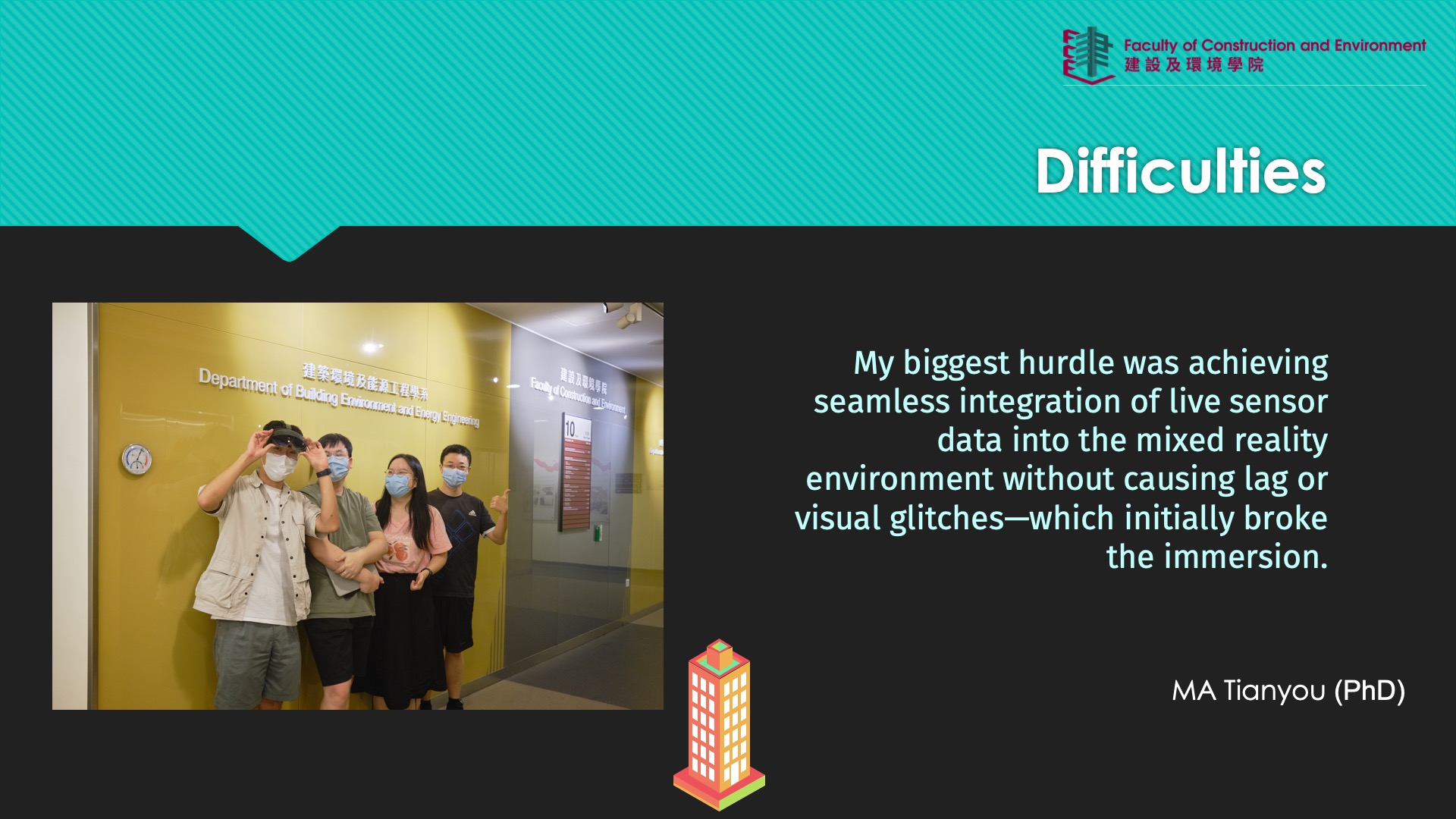
When integrating live sensor data into the mixed reality environment caused visual lag, Tianyou worked closely with Kan to align the data stream's structure with the 3D rendering engine.
Kan noted that maintaining a stable data flow required "constant communication with Jing to define data requirements and with Tianyou to ensure the data format was optimal for visualization."
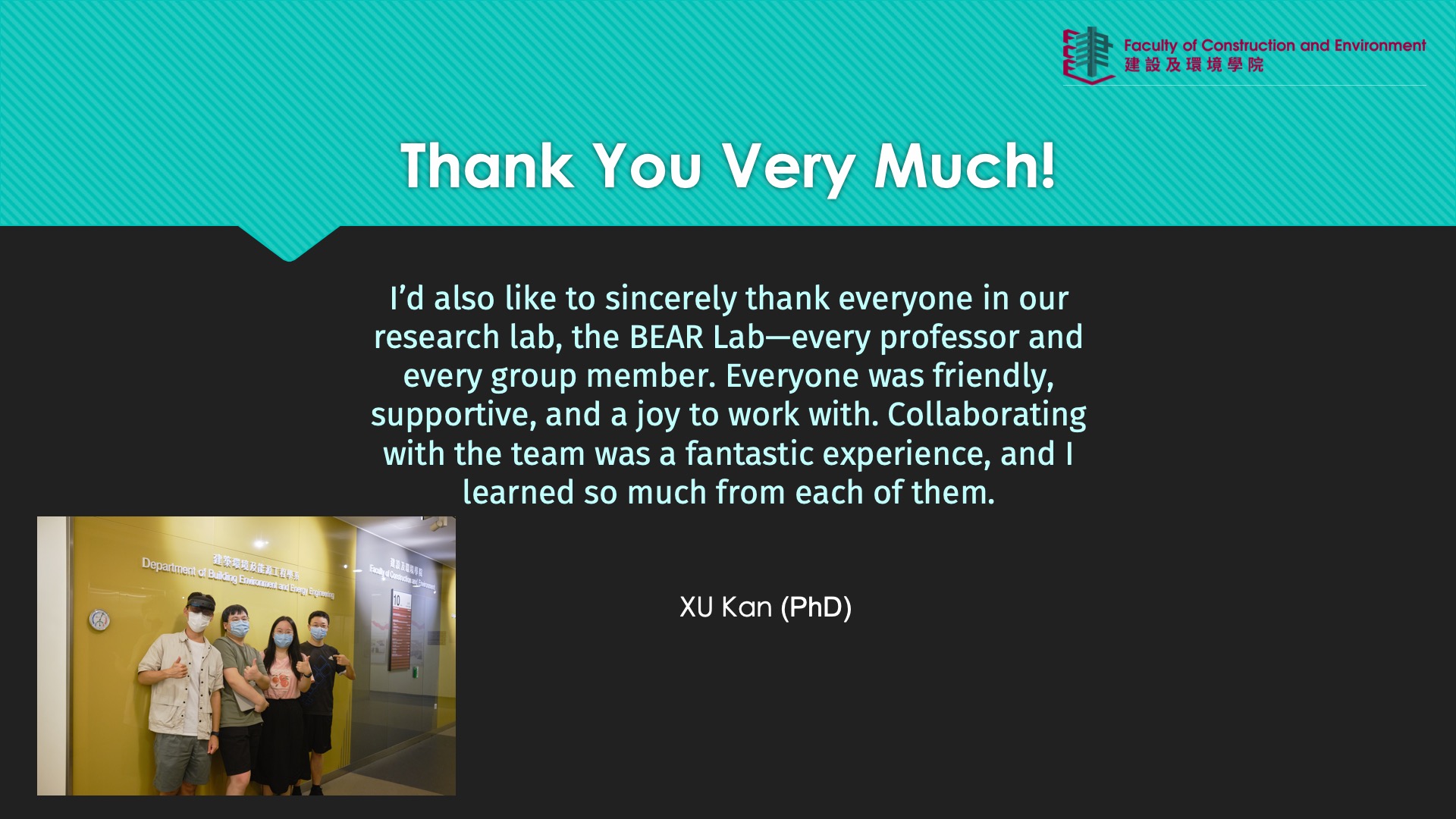
Kan highly appreciated the supportive environment of their BEAR Lab, noting that collaborating and sharing growth with professors and group members made the complex 3-year project a success.
The team moved away from idealistic academic assumptions, employing critical, systems-level problem solving to address unpredictable real-world challenges.
Jing addressed the critical problem of AI reliability in real-world operations. Instead of relying solely on standard data-driven models, she strategically combined them with physical rules ("physics-guided AI") to improve the model's accuracy, stability, and explainability.
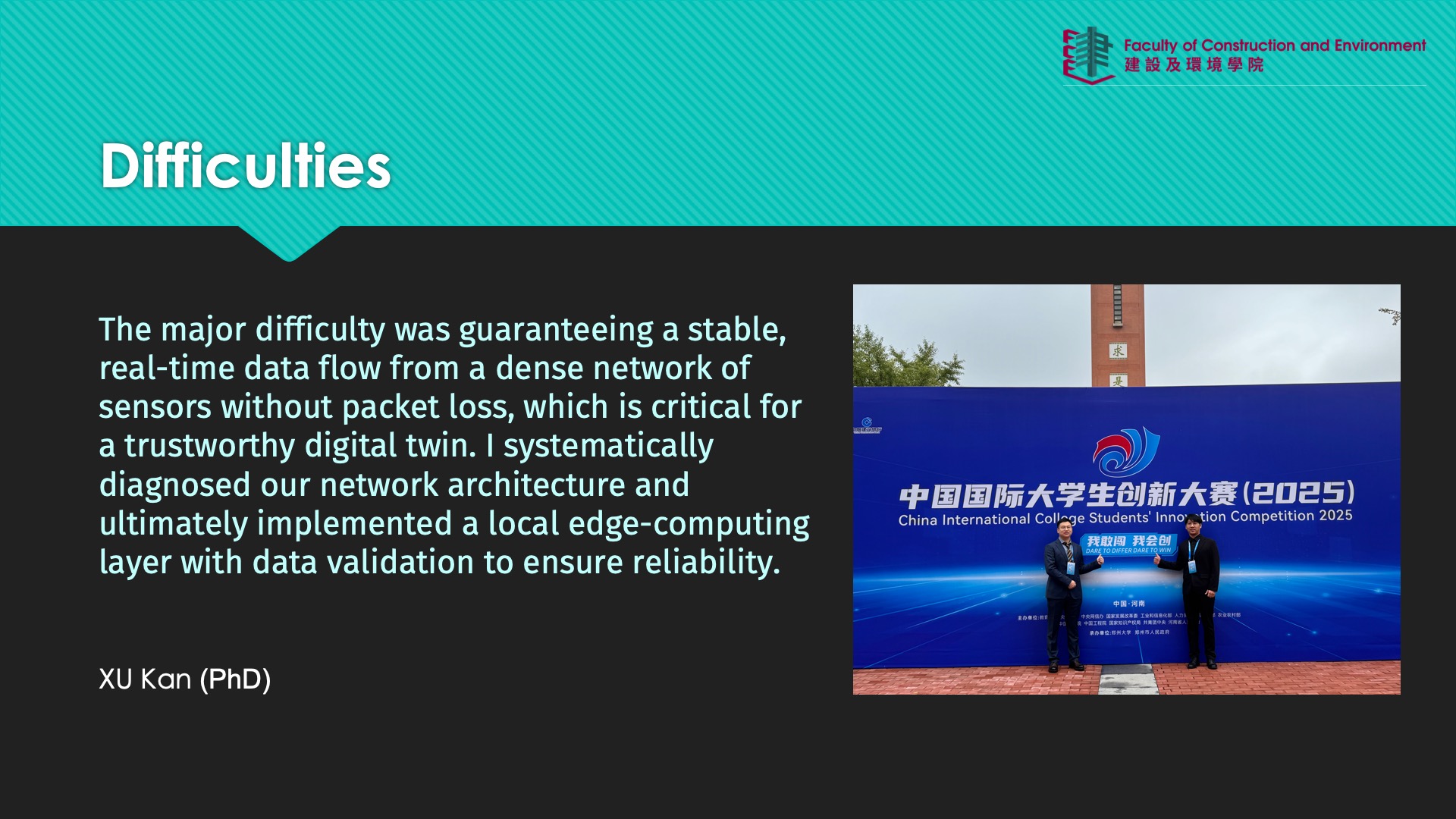
Kan systematically diagnosed their network architecture to prevent packet loss from a dense sensor network, implementing a local edge-computing layer with built-in data validation to guarantee a trustworthy digital twin. Meanwhile, Tianyou implemented predictive loading techniques to resolve rendering lag.
The students realized that technical excellence must be matched with clear communication, especially when dealing with non-technical stakeholders and diverse industry players.
Tianyou learned the critical skill of explaining the "why" behind complex AI and mixed-reality features to "people who may not be AI specialists, but the staff who actually operate and manage the buildings."
Kan sharpened his communication skills by working with people from different professional backgrounds, while Jing gained the ability to communicate effectively with stakeholders across different parts of the building sector to understand industry needs.
The students actively pushed the boundaries of their coursework, researching and mastering cutting-edge software frameworks and industrial protocols.
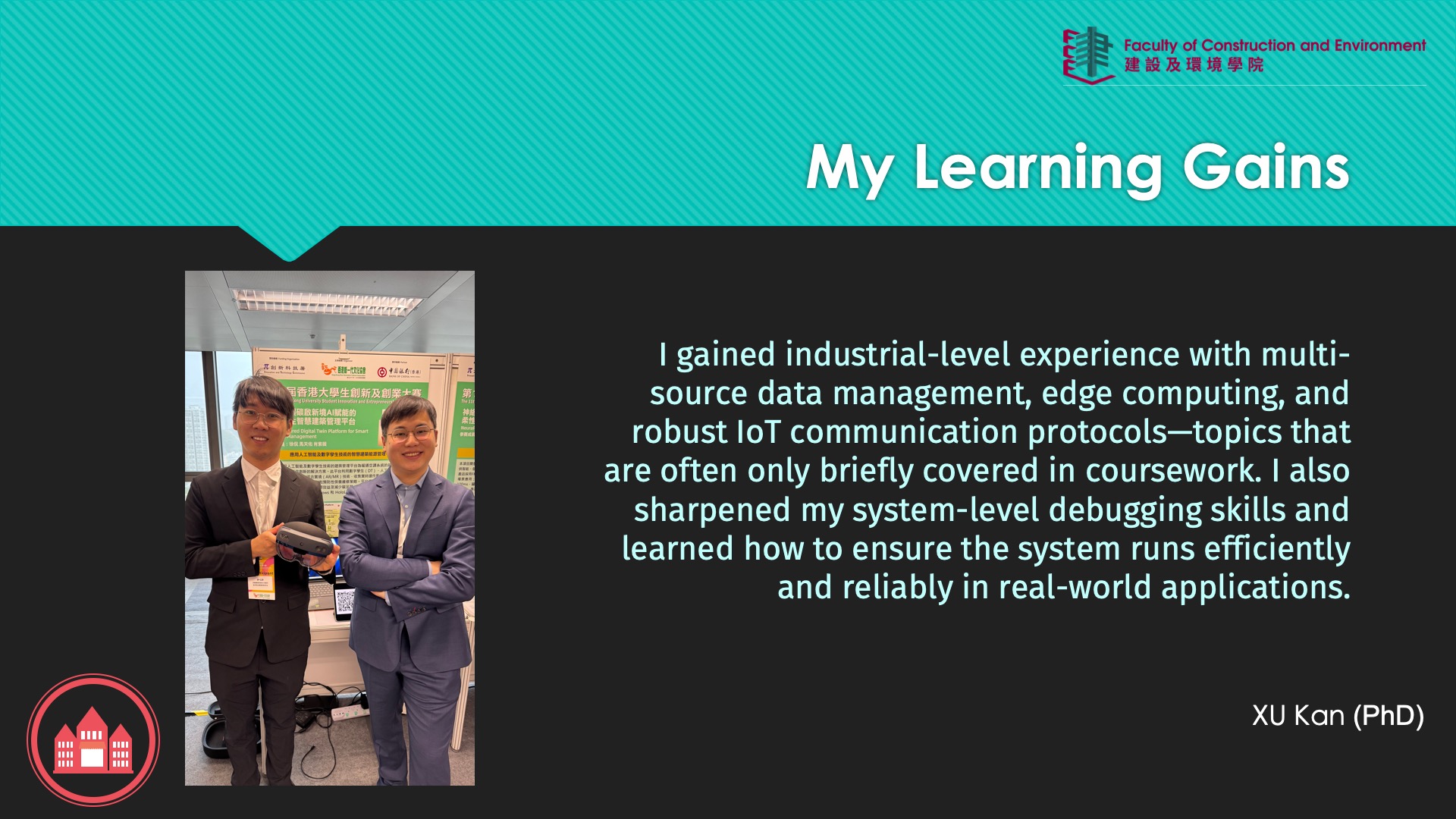
Kan took the initiative to learn semantic modeling completely "from scratch" and acquired industrial-level experience with edge computing, multi-source data management, and complex IoT communication protocols—topics that are usually only briefly touched upon in university classes.
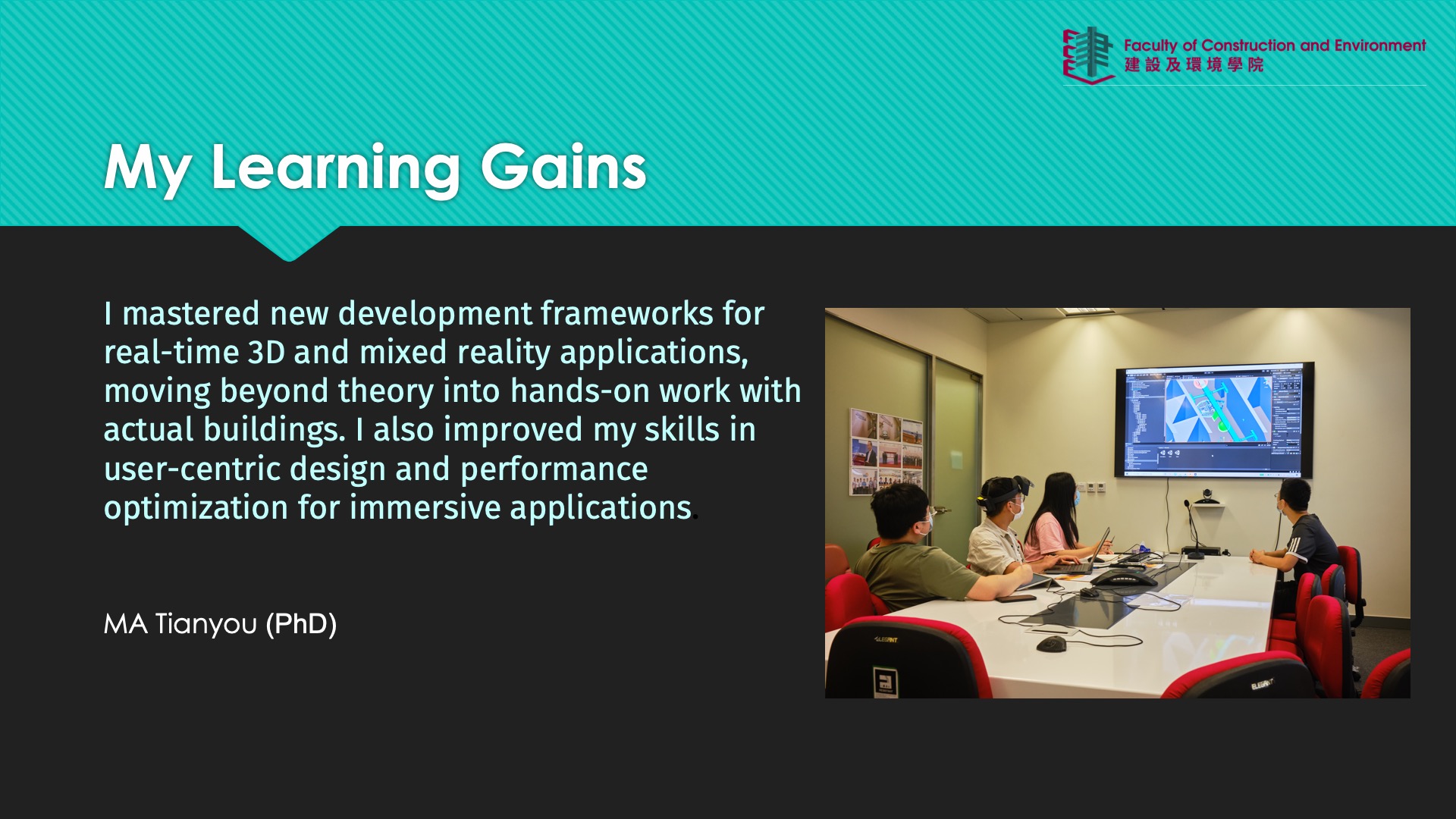
Tianyou researched and mastered entirely new development frameworks for real-time 3D and mixed reality applications, translating theoretical knowledge into hands-on building visualization systems.
The pursuit of knowledge is a lifelong journey! To further expand your knowledge and continue your personal and professional growth. Click and explore the following learning resources:
Physics-Guided Machine Learning
Resourcefulness and Adaptability to New Contexts
Project Management and Teamwork
Critical Thinking and Problem-solving