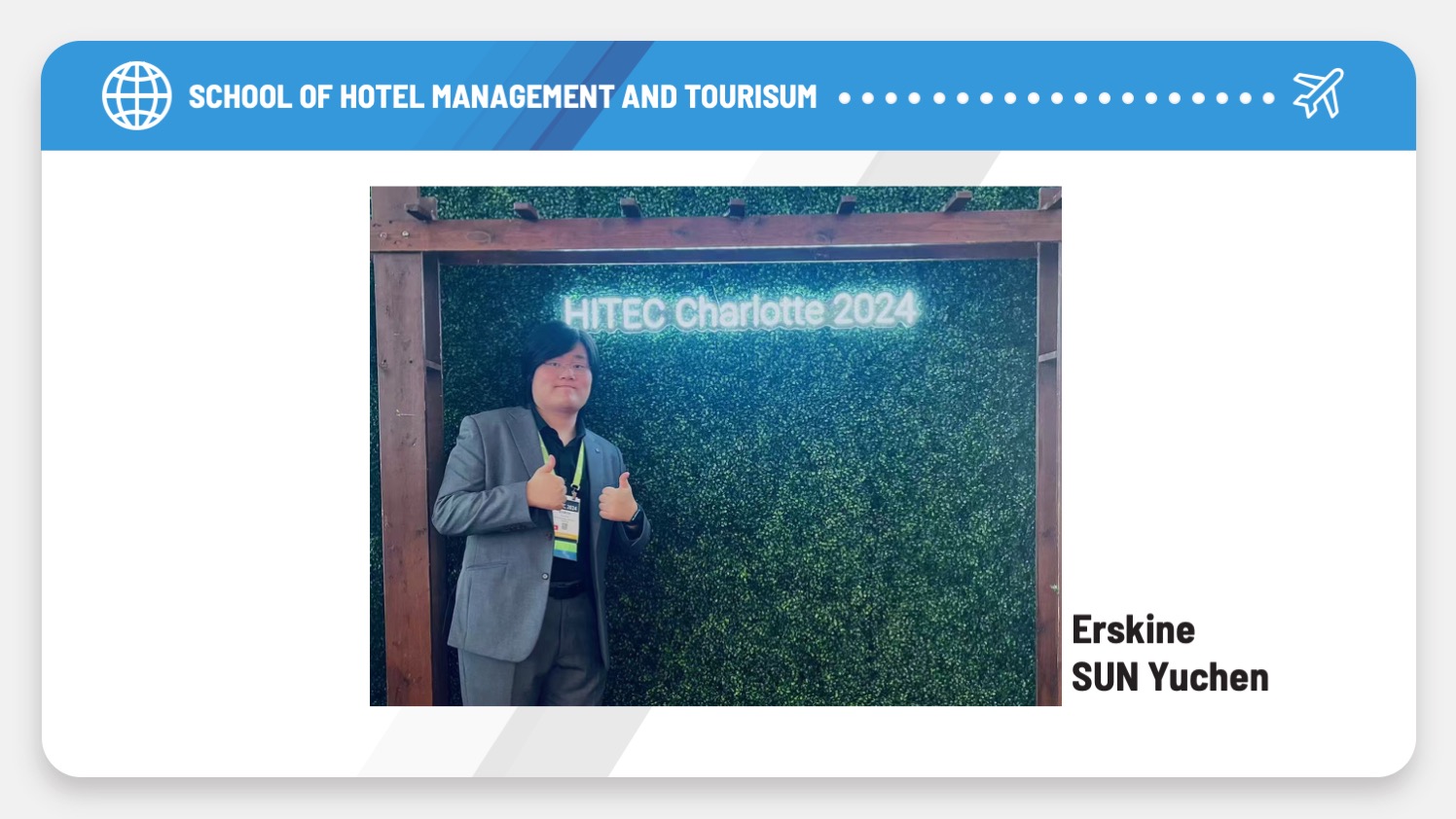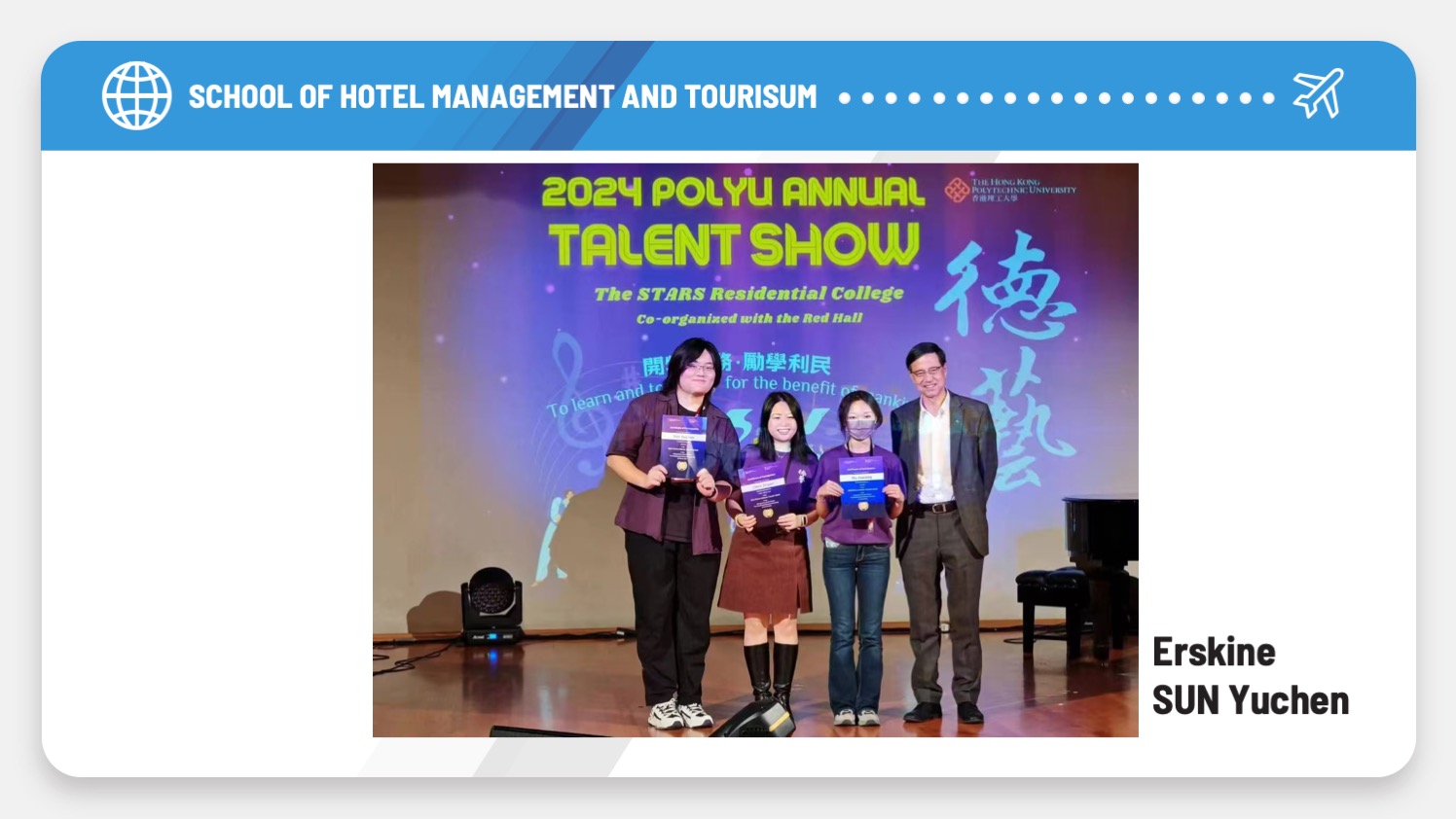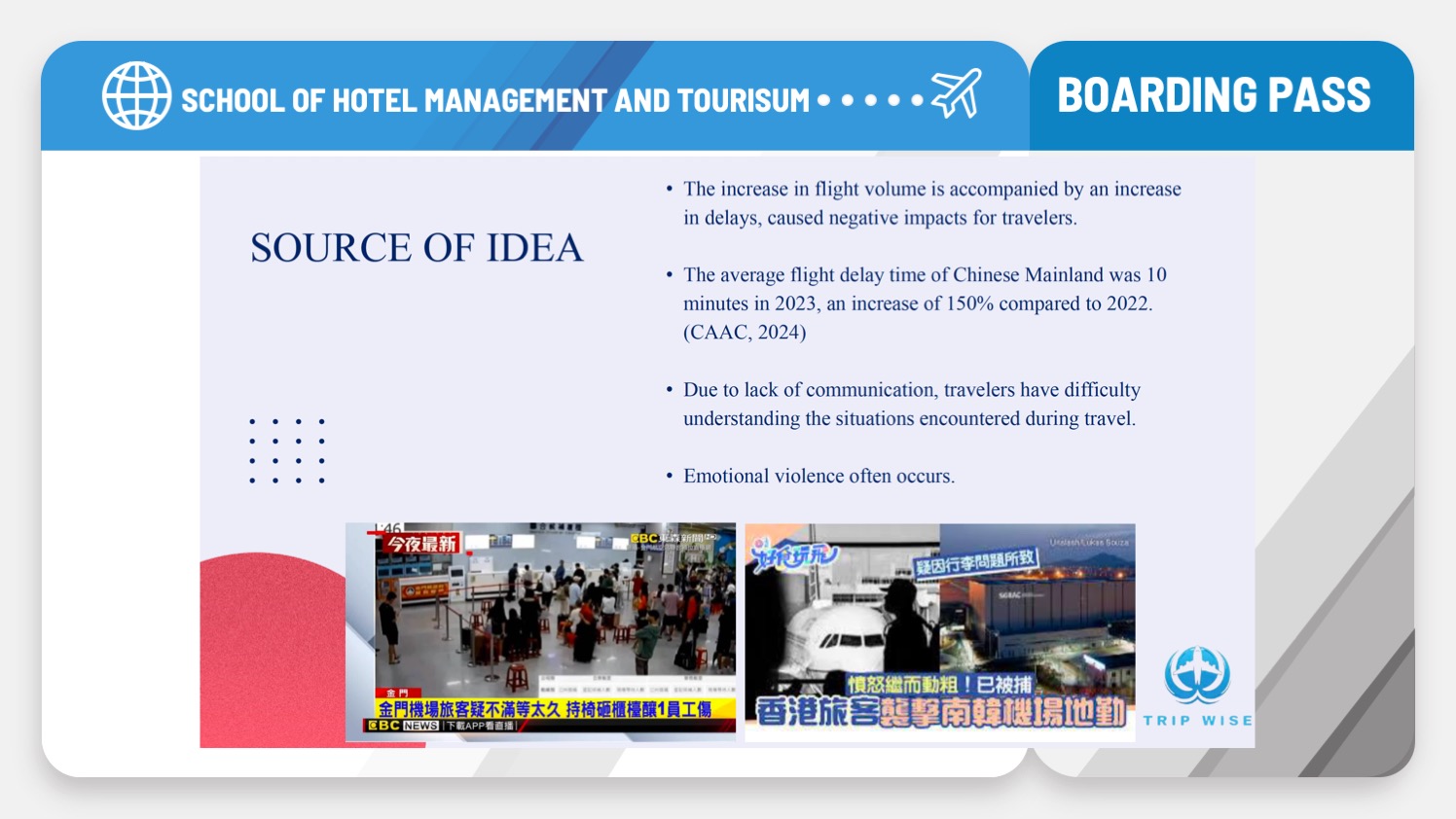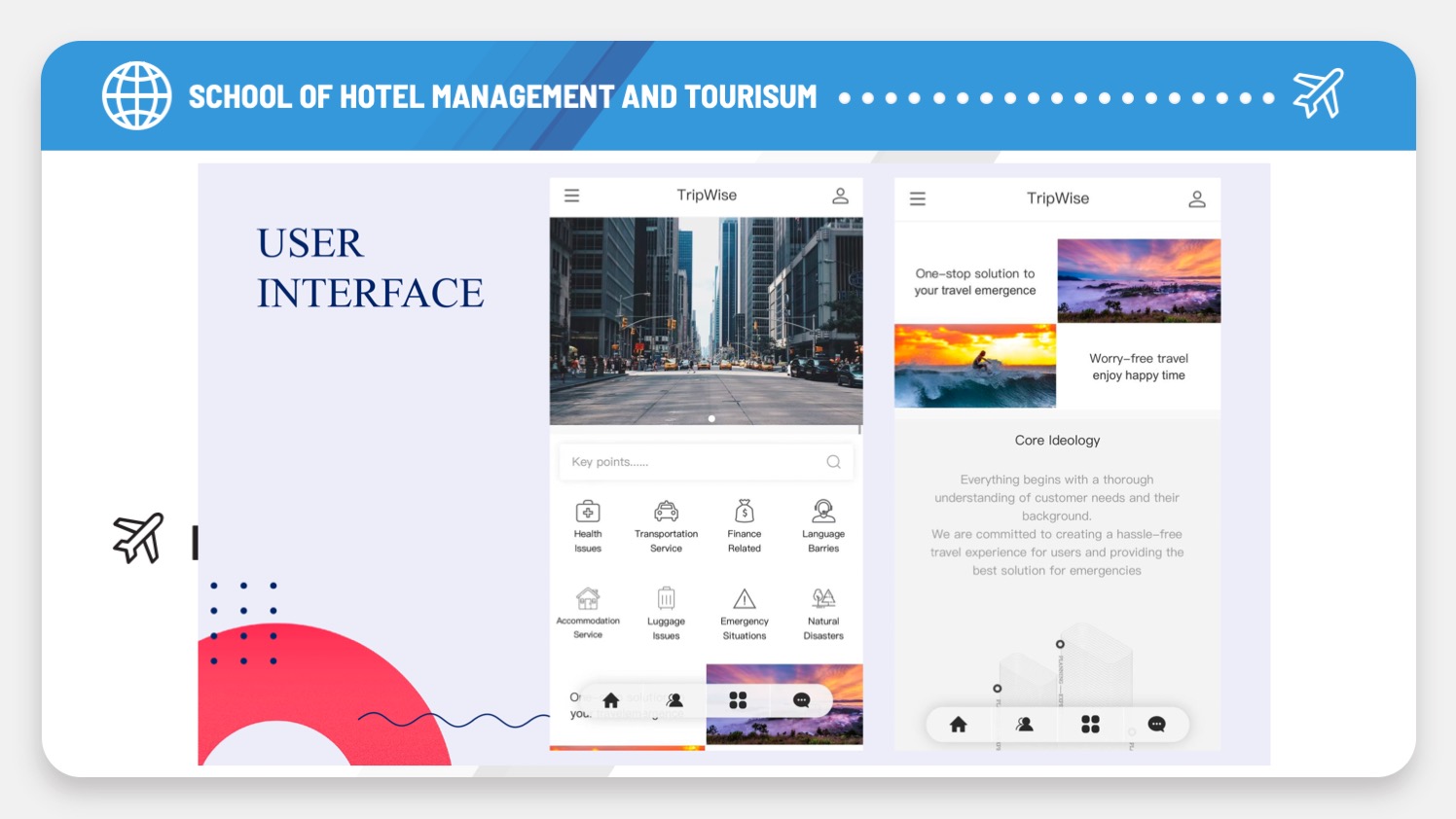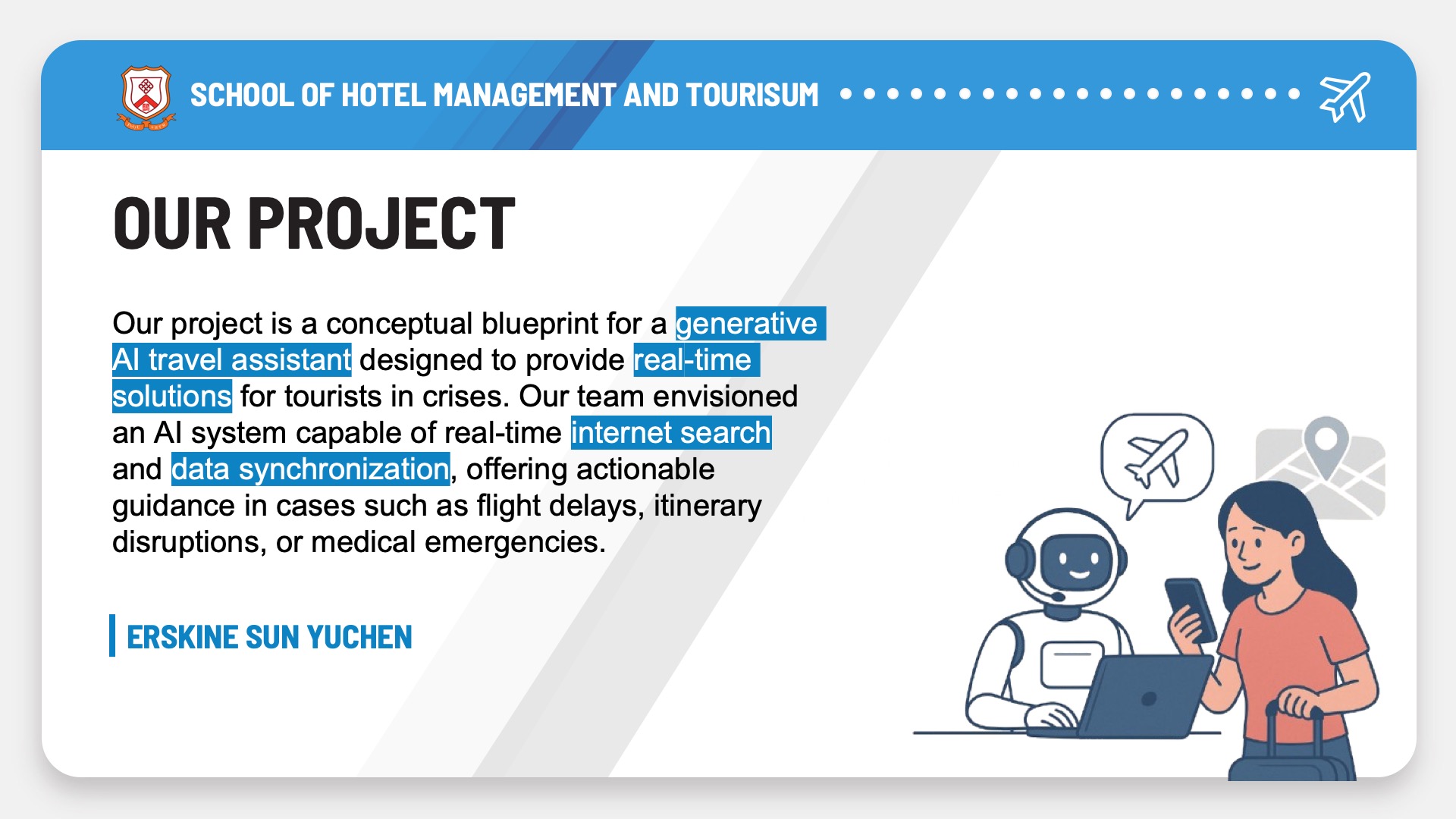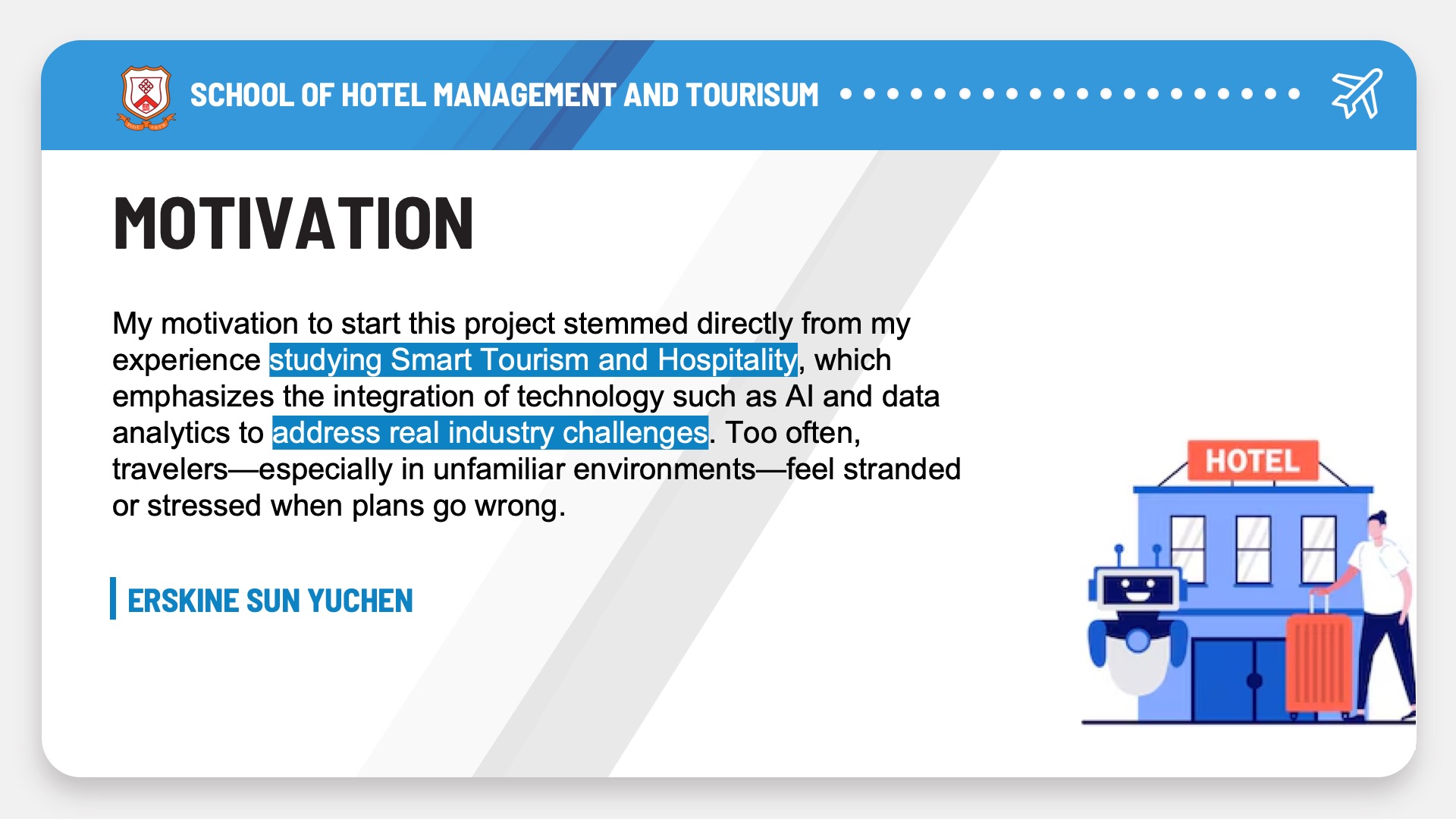



Erskine SUN, together with Lessing YIN, Hope WANG, and Selene YUAN, developed a generative AI travel assistant for the PolyU Ideation Funding Scheme. Their project aimed to help tourists facing unexpected crises by providing real-time, actionable advice through intelligent data integration. Inspired by his studies in Smart Tourism, Erskine recognized the lack of such solutions in current travel apps.
The team’s idea was validated by their selection for the funding scheme. Overcoming challenges in market analysis and practical research, they benefited from the support of mentors like Dr. Emily Chen. Erskine learned to efficiently filter information and collaborate effectively, skills that have positively impacted his academic and professional growth and inspired him to pursue further innovation in hospitality.
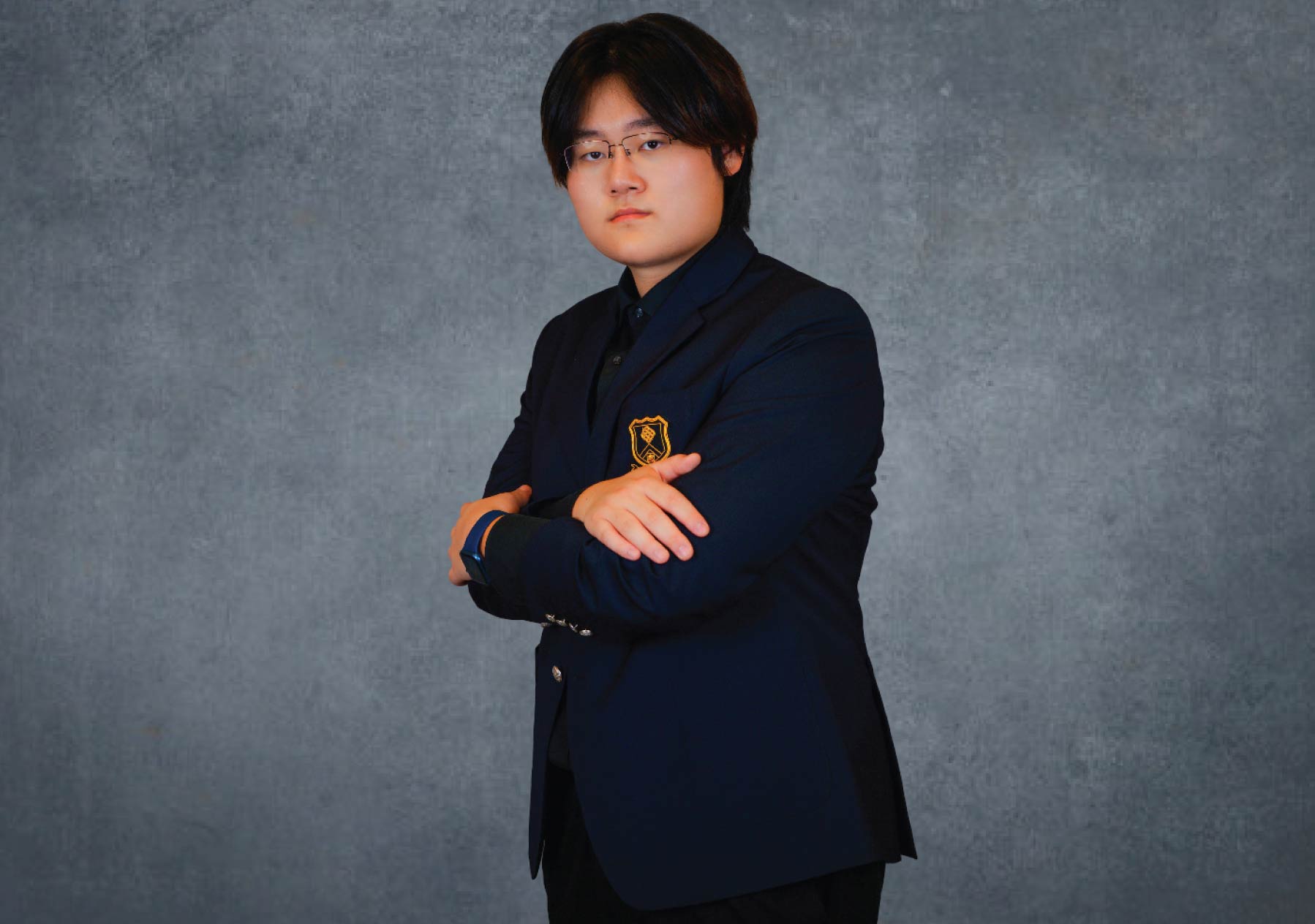
Mr. SUN Yuchen Erskine
School of Hotel and Tourism Management
The team’s project was rooted in the concept of Smart Tourism, which emphasizes the use of advanced technologies—such as AI, data analytics, and real-time internet search—to enhance the guest experience. Understanding how to integrate these technologies into hospitality operations is crucial for modern hotel management, as it improves convenience, safety, and overall satisfaction for travelers.
Their generative AI travel assistant was designed to provide real-time solutions during travel crises, such as flight delays, itinerary disruptions, or medical emergencies. Effective crisis management is a core hotel management skill, requiring the ability to anticipate guest needs, offer timely support, and maintain service quality under pressure.
The team identified a gap in the market for intelligent, integrated support systems for travelers in distress. Conducting market analysis to spot unmet needs and opportunities for innovation is essential in hotel management, enabling managers to develop services that differentiate their property and attract new guests.
Through research, case studies, and literature review, the team conducted a feasibility analysis to validate their concept. Hotel managers must be able to assess the practicality and potential impact of new services or technologies, ensuring that innovations are both implementable and beneficial for the business.
The project improved the team’s ability to gather, filter, and utilize relevant information from vast sources. In hotel management, effective information management supports better decision-making, whether it’s responding to guest feedback, analyzing market trends, or implementing new technologies.
The team learned to navigate and extract relevant information from a vast array of sources, including case studies, news articles, and literature. Developing the ability to filter and identify useful content is essential for lifelong learning, especially in today’s information-rich environment.
Working together, the team leveraged each member’s strengths and benefited from diverse perspectives. Collaborative problem-solving and learning from peers and mentors are vital lifelong learning skills that foster creativity, resilience, and effective project outcomes.
Faced with market uncertainties and limited practical examples, the team remained open to new ideas and adjusted their approach as needed. Adaptability enables lifelong learners to thrive in changing environments and respond constructively to challenges.
The team applied critical thinking to confirm market demands, analyze feasibility, and resolve project challenges. Lifelong learners use these skills to evaluate situations, make informed decisions, and develop innovative solutions.
Team members actively sought knowledge through self-exploration, research, and consultation with faculty. Taking initiative to learn beyond formal instruction and continuously seeking new knowledge are hallmarks of lifelong learning and personal growth.
The pursuit of knowledge is a lifelong journey! To further expand your knowledge and continue your personal and professional growth. Click and explore the following learning resources:
Research and Information Literacy