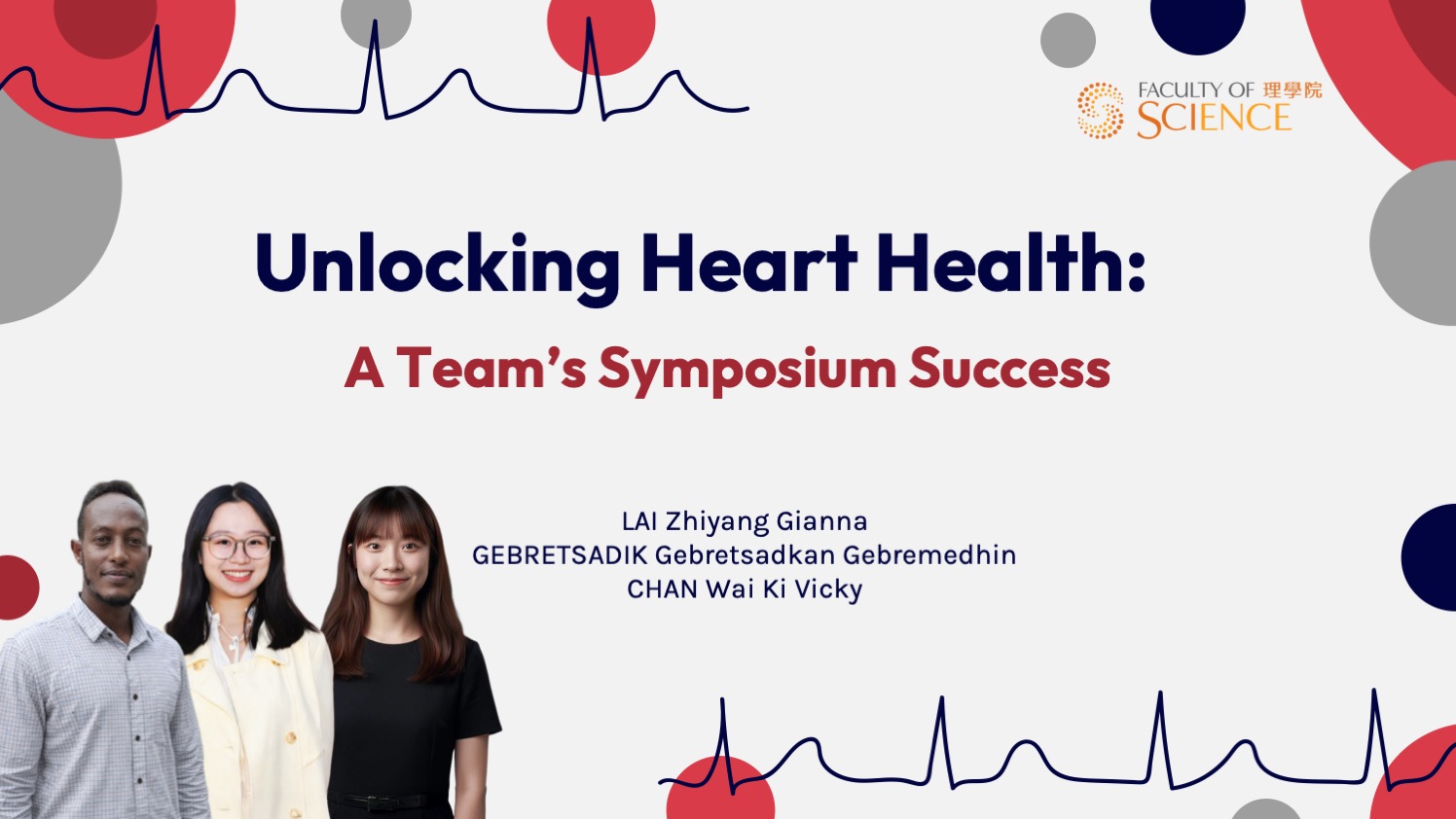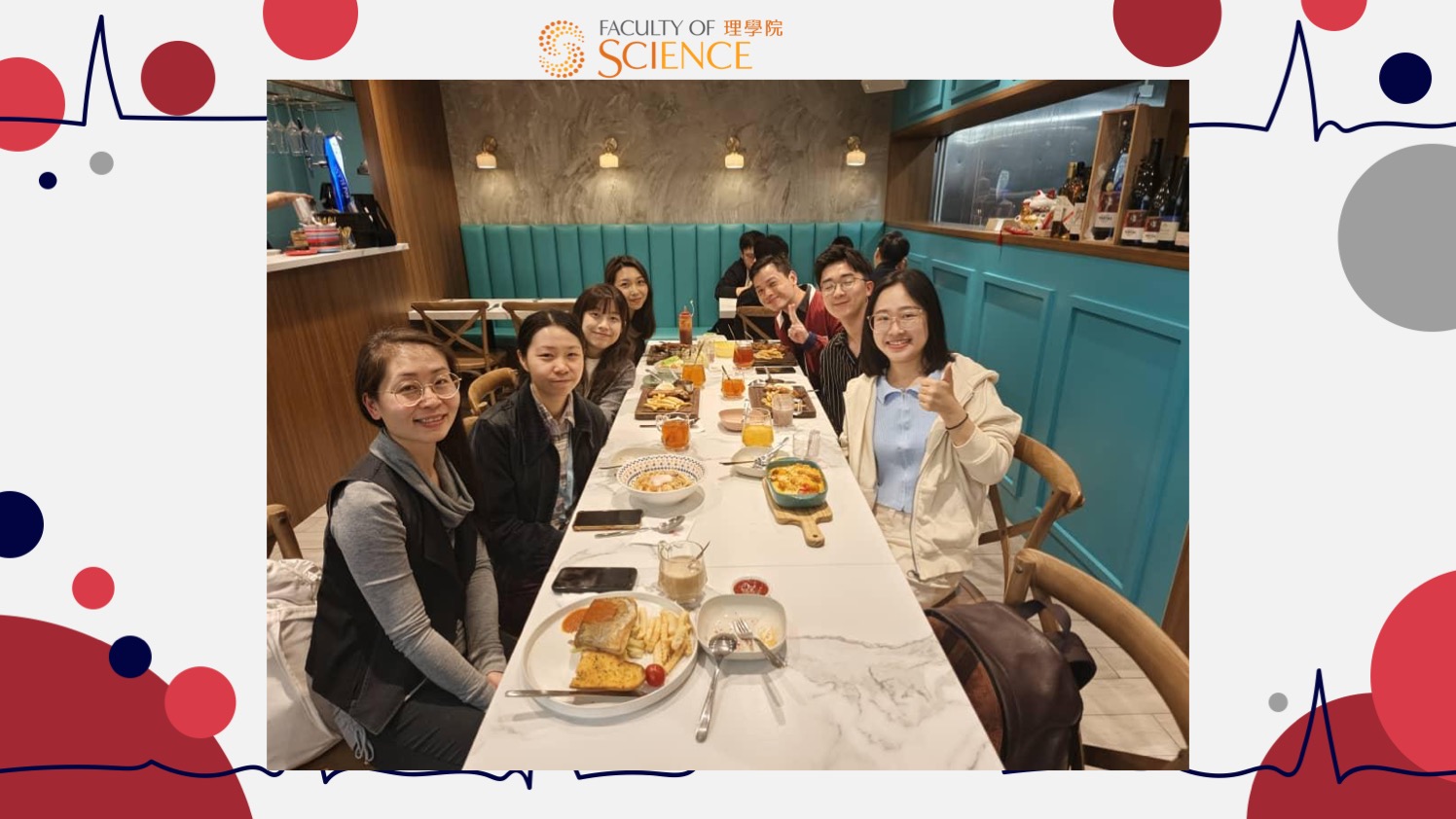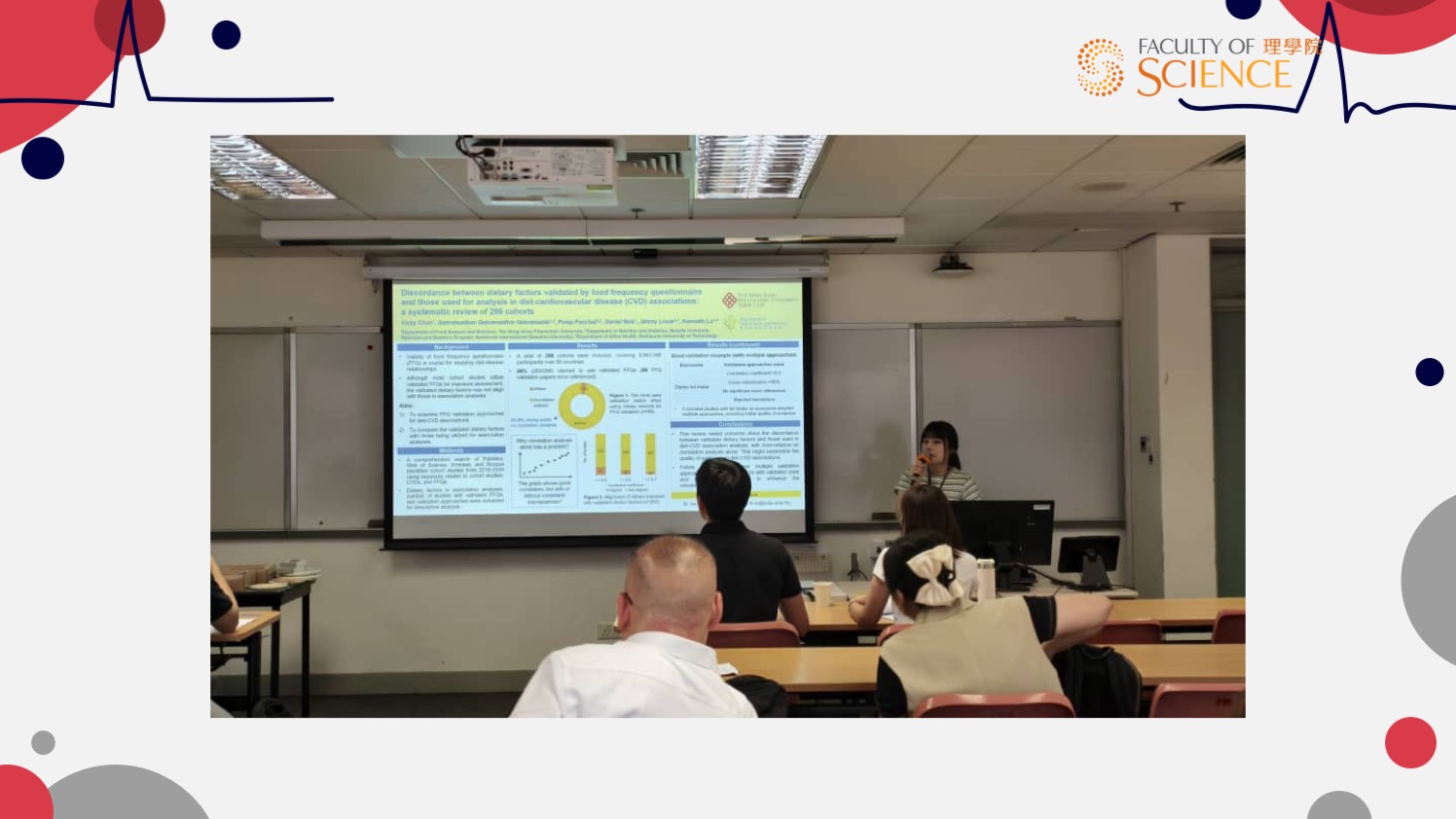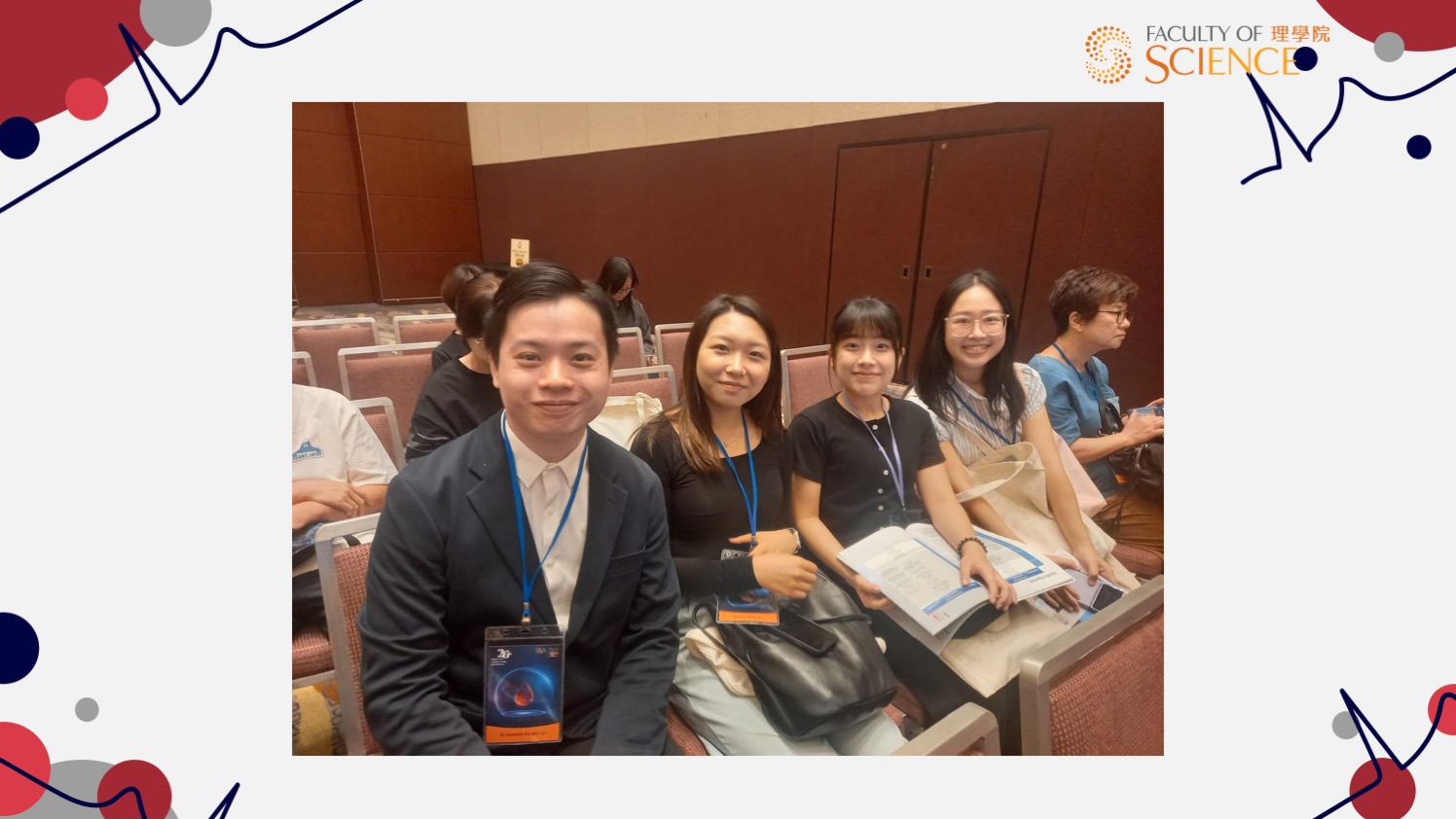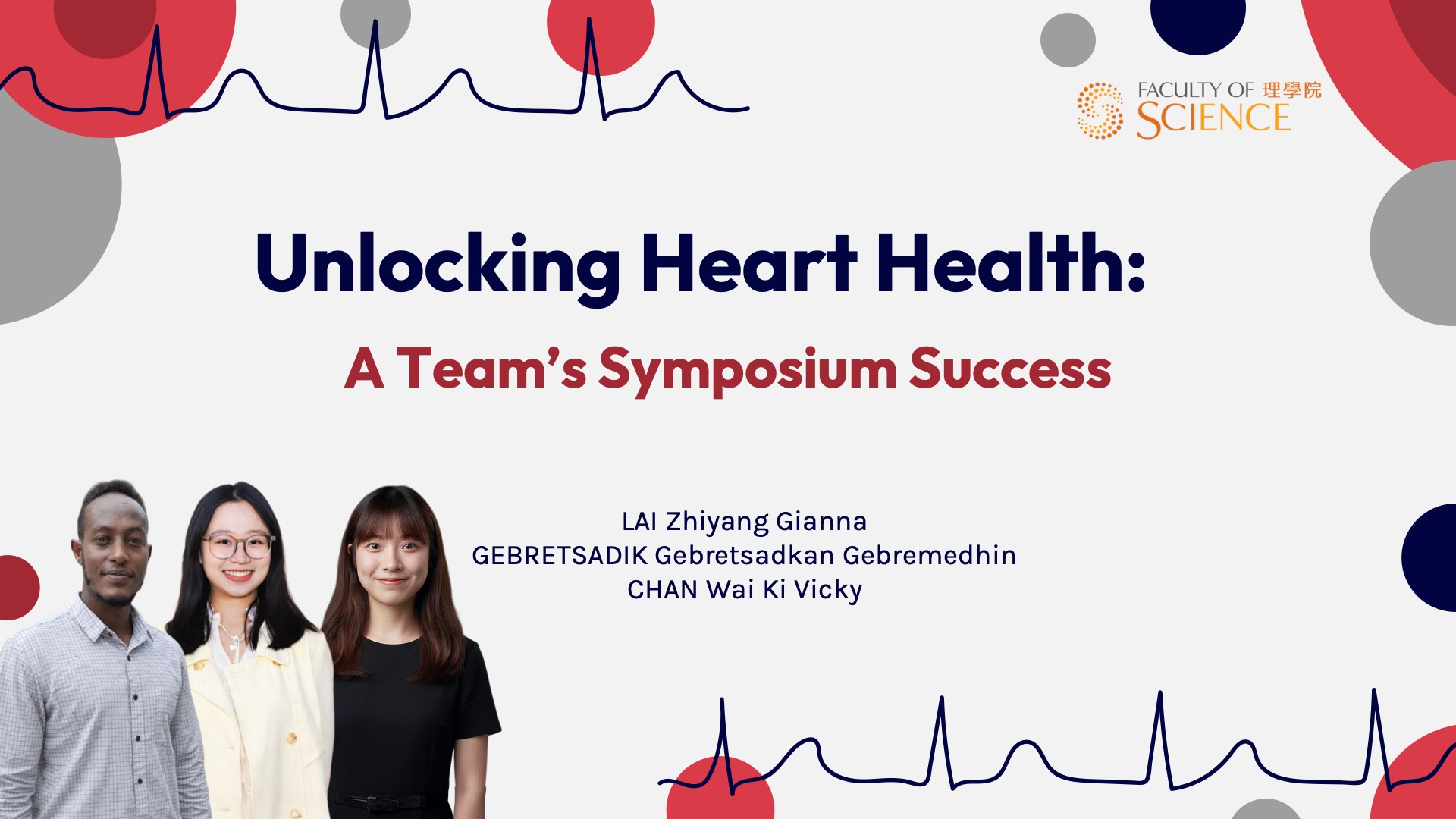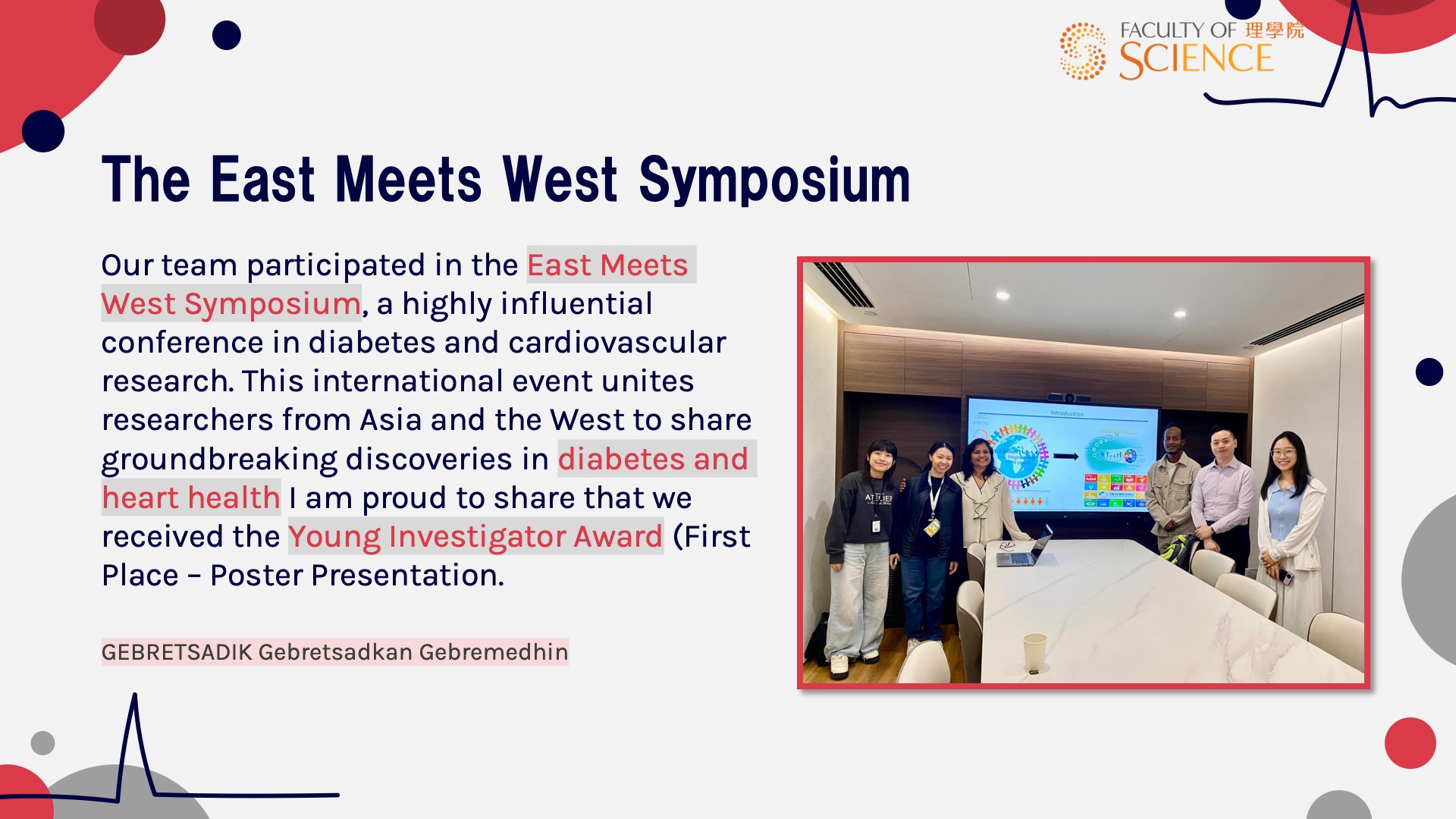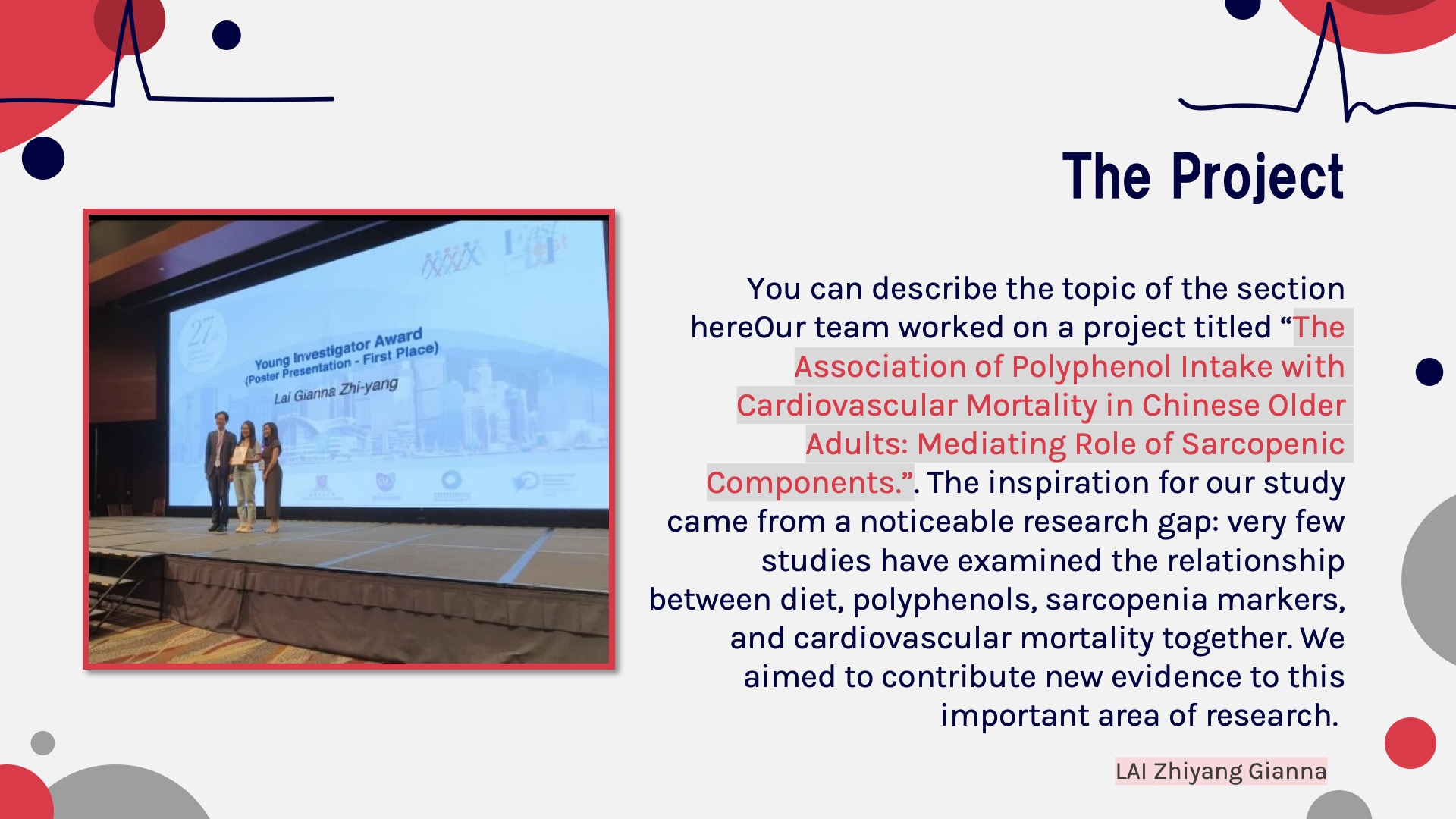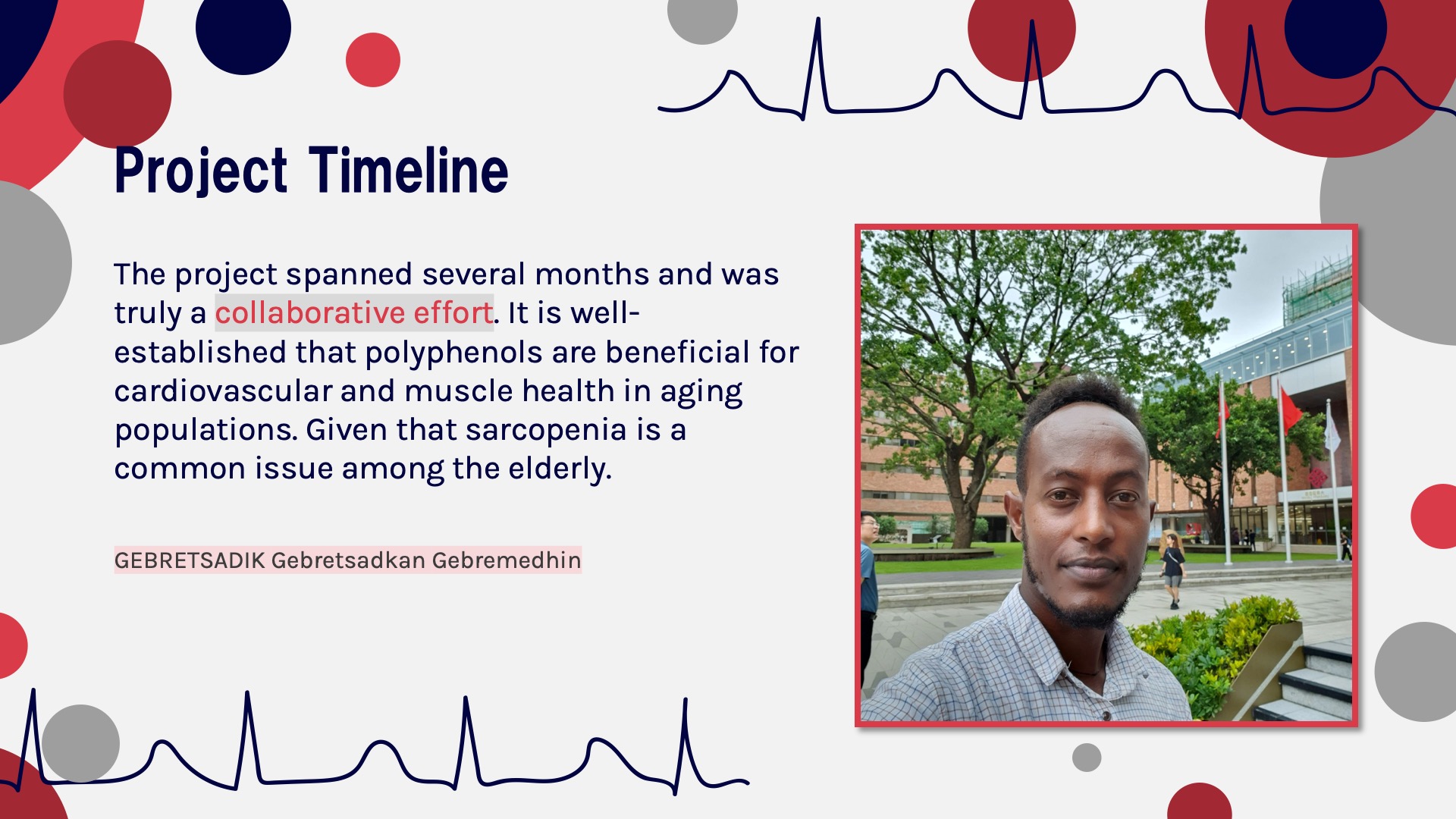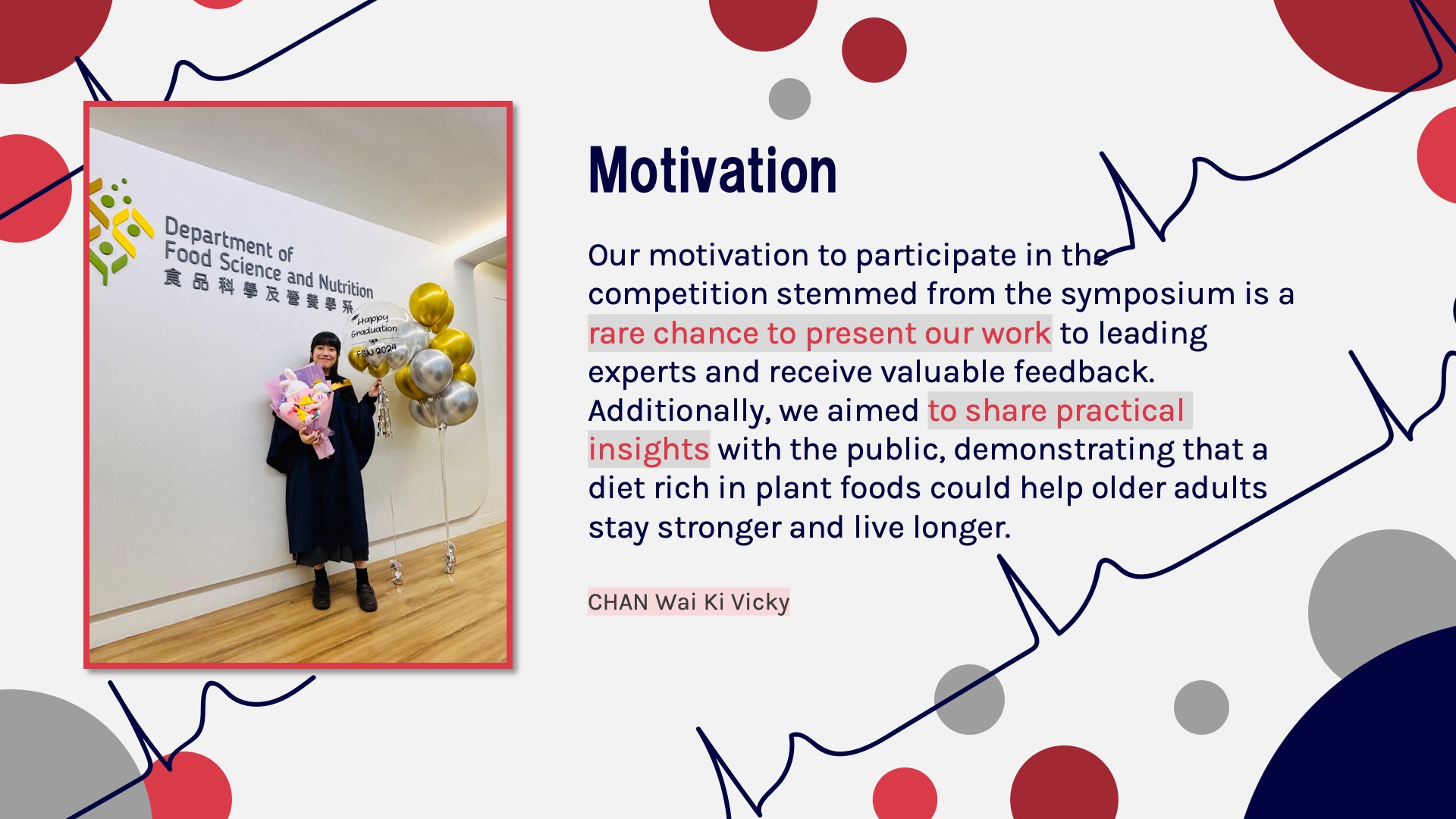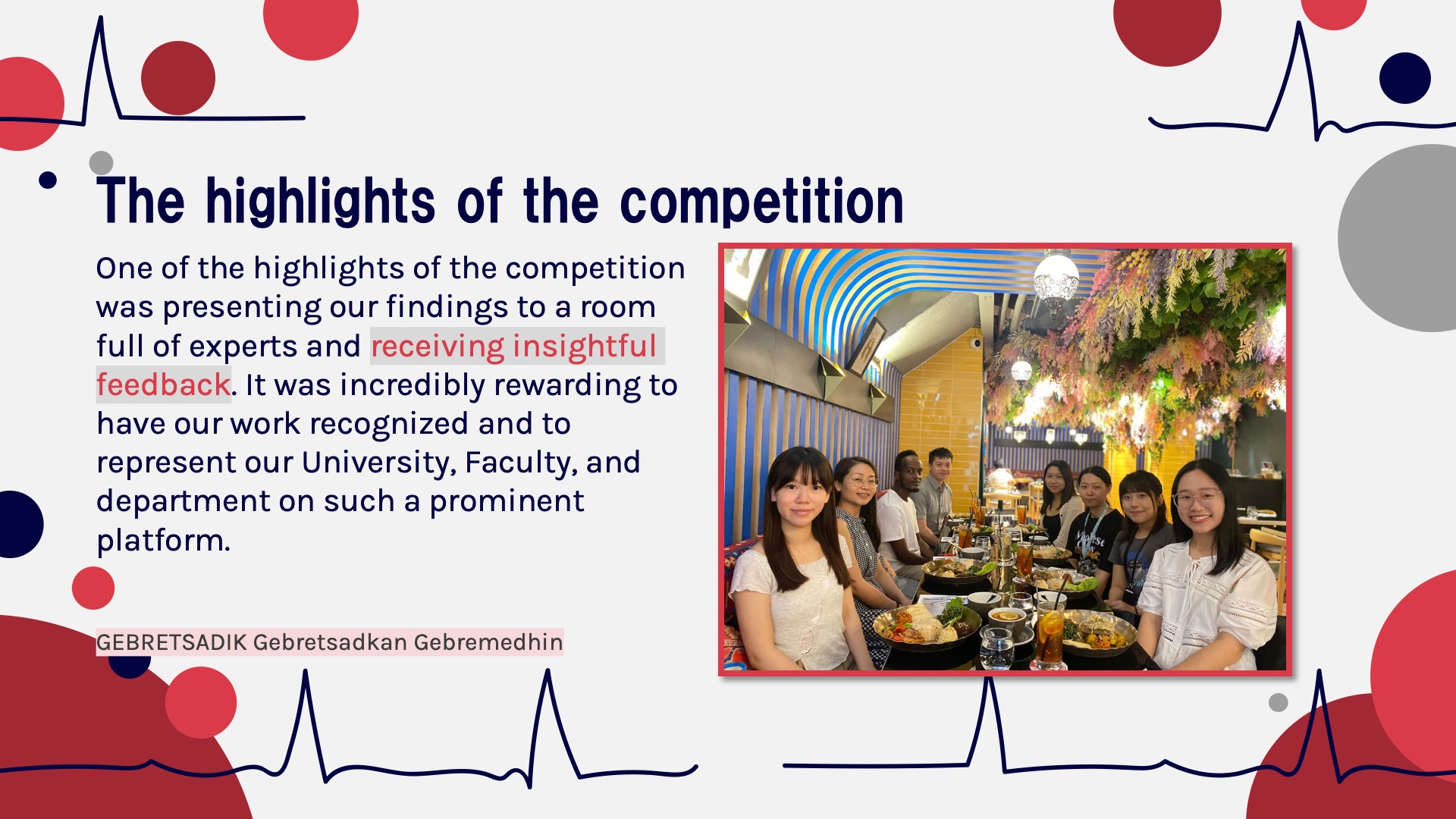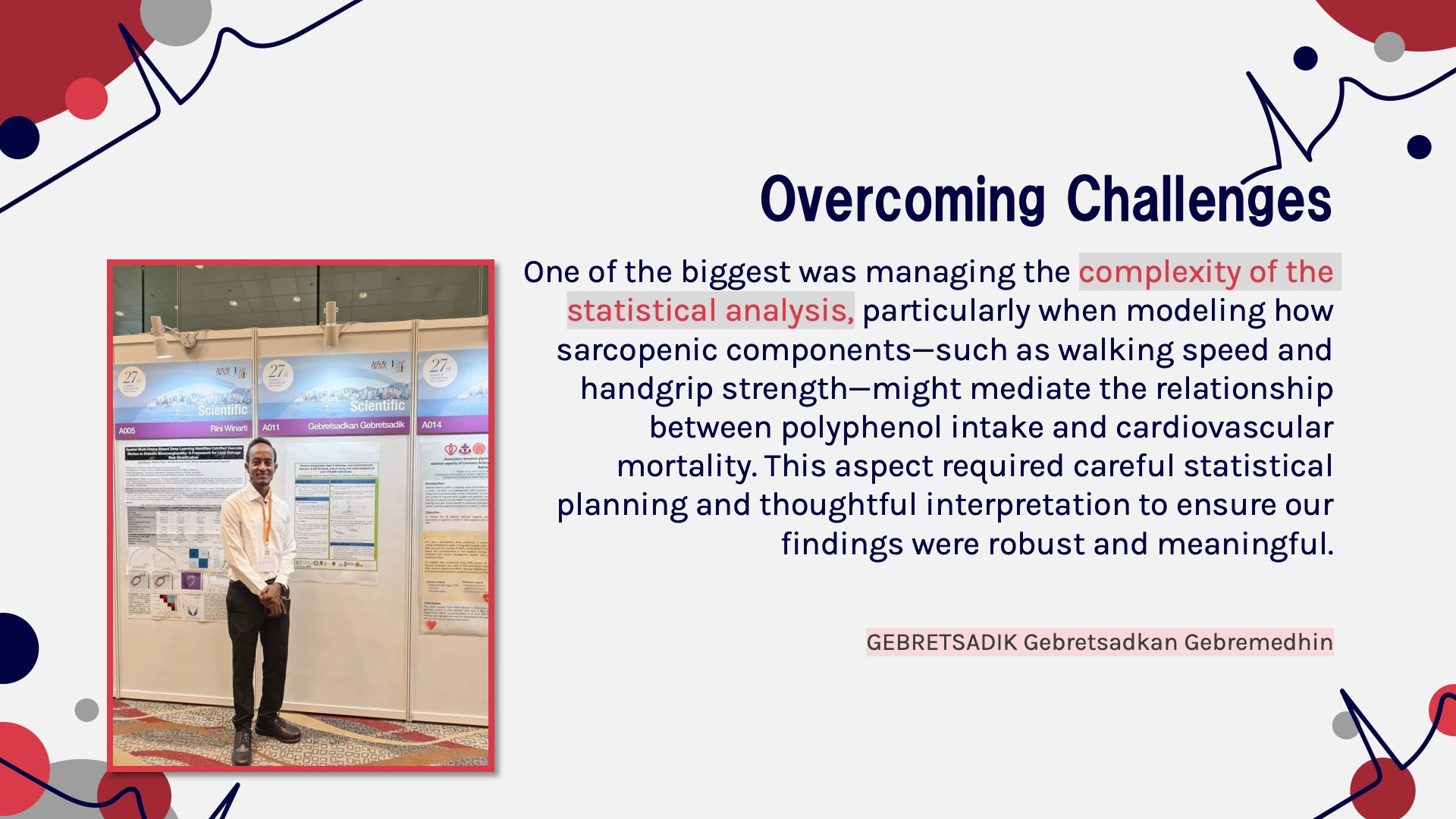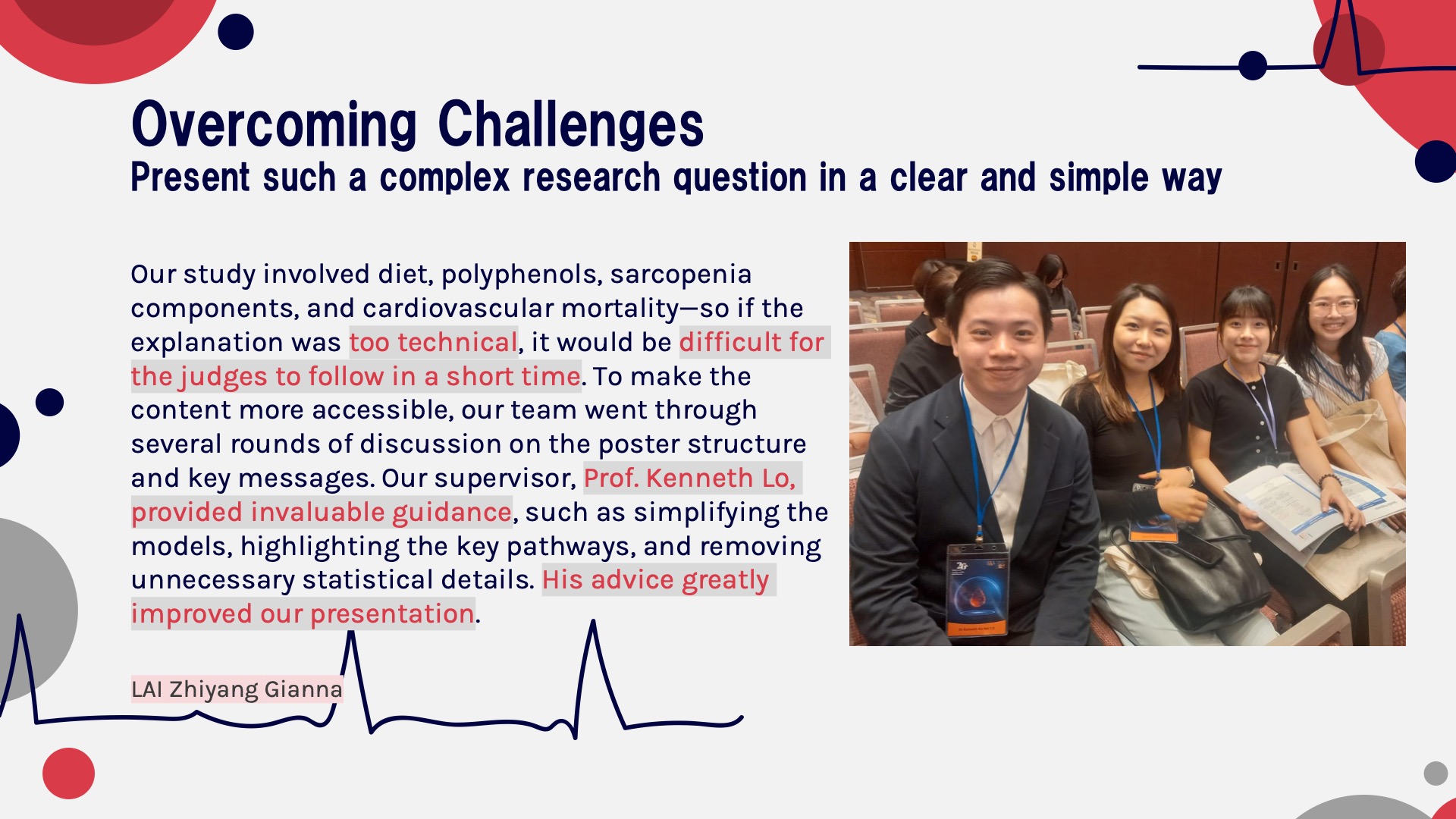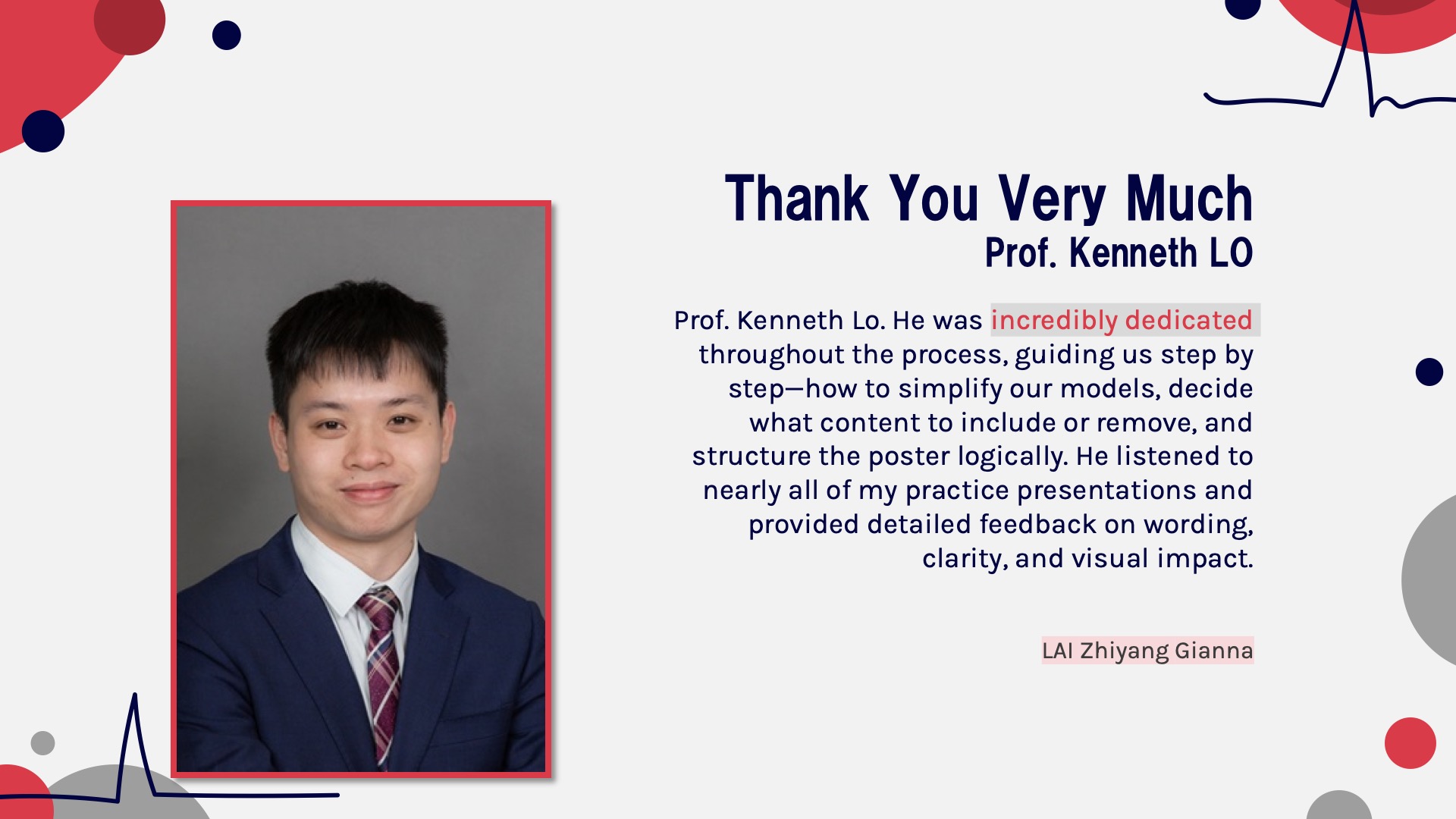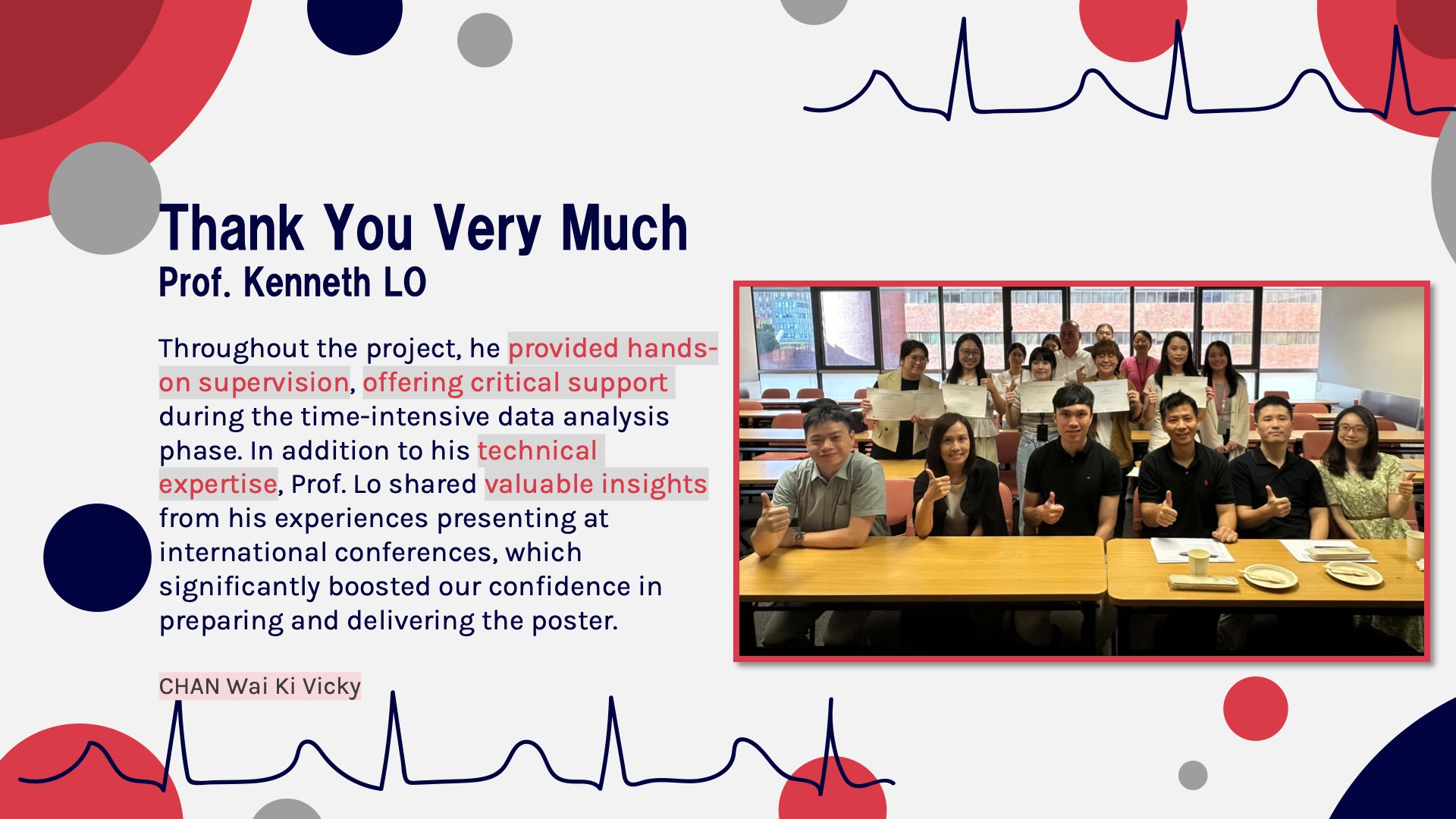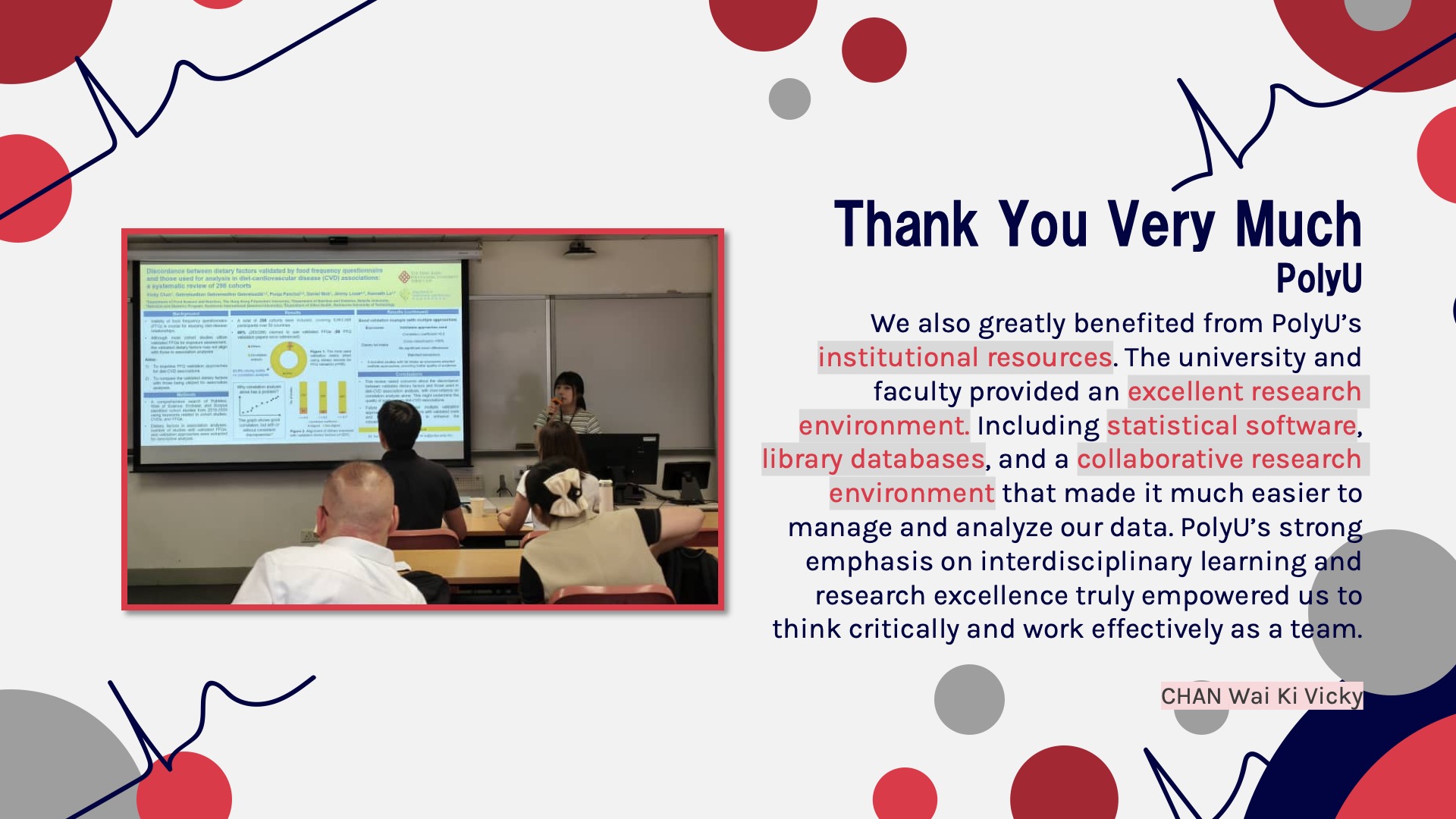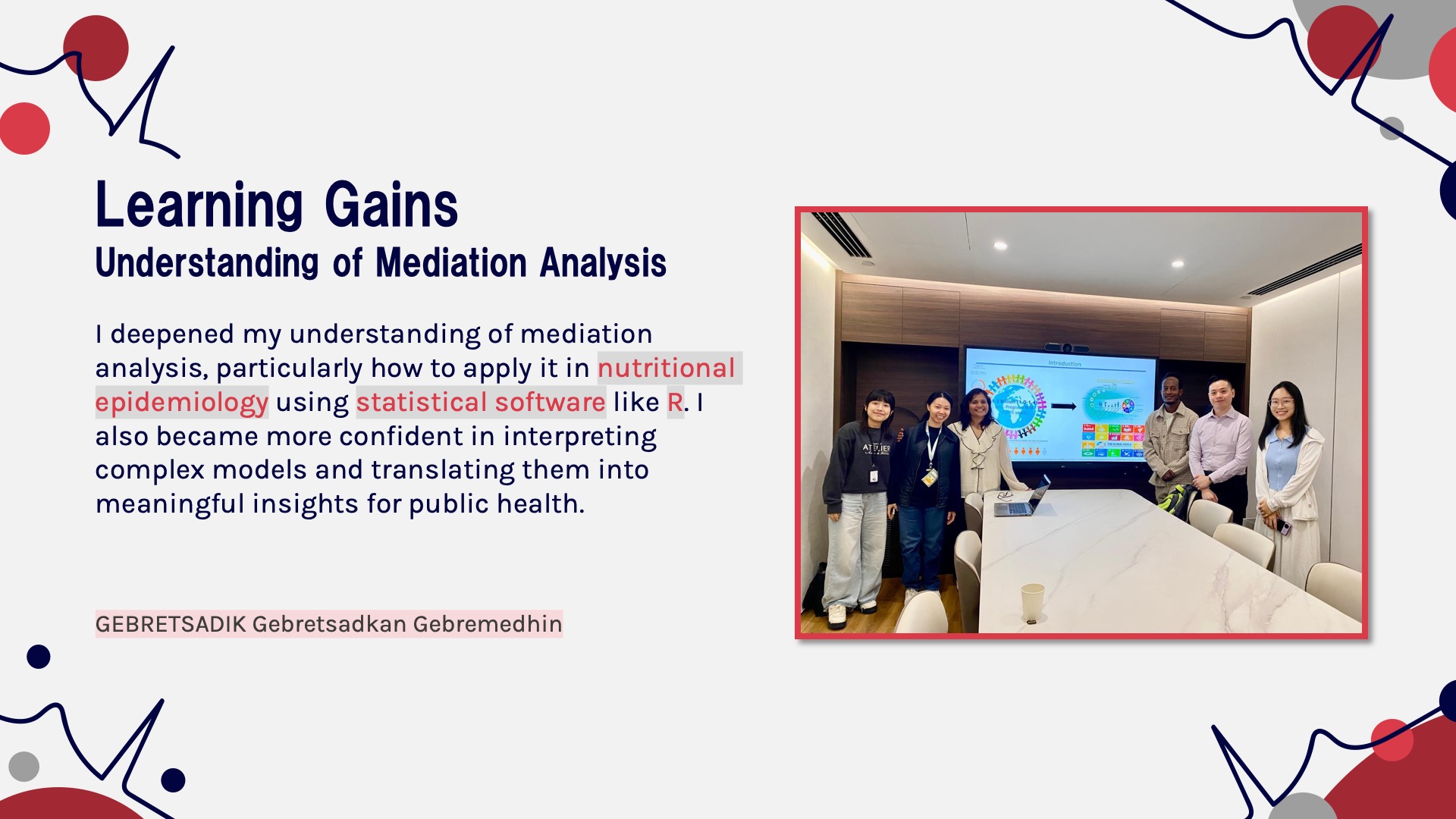


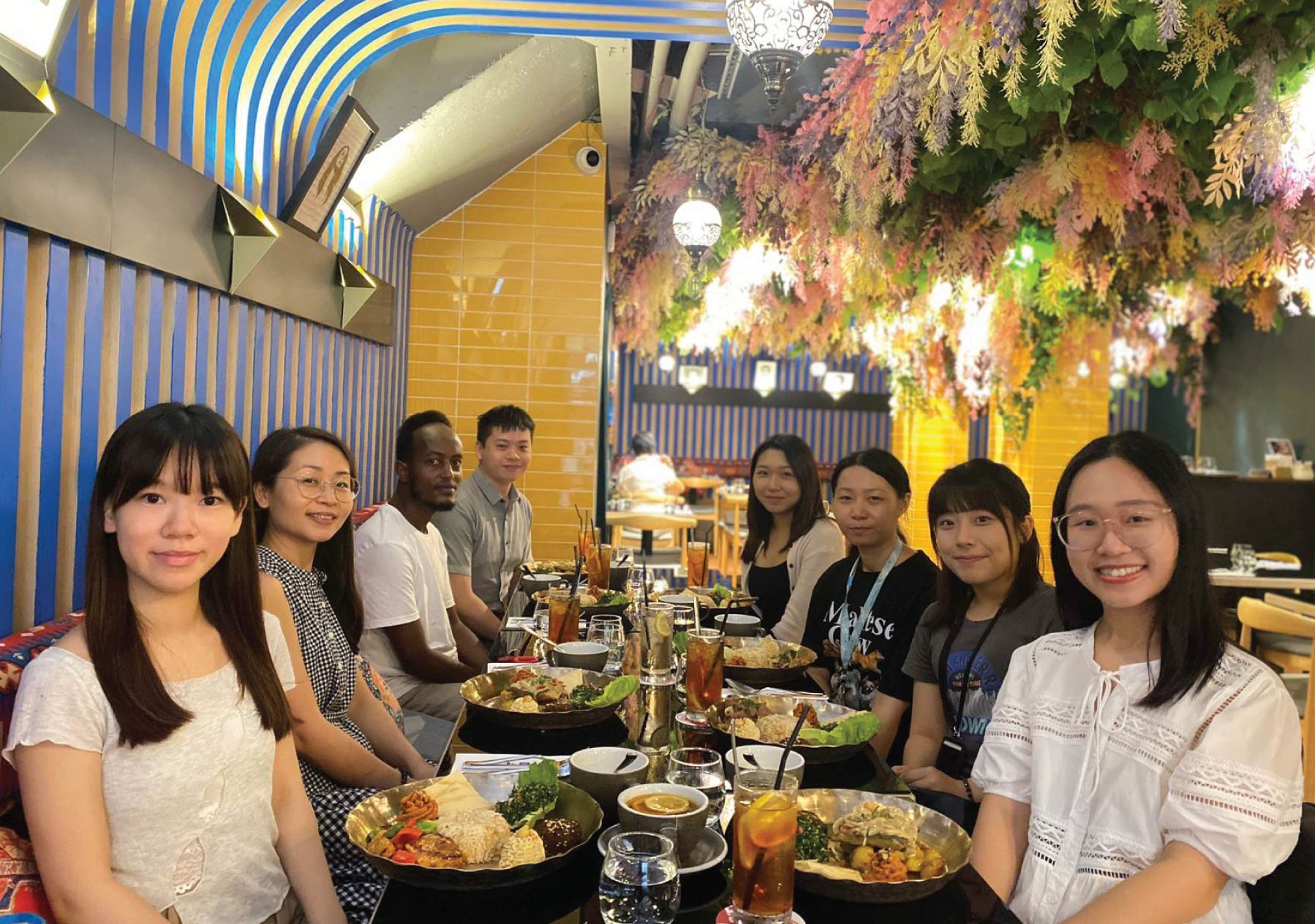
Vicky, Gianna, and Gebretsadkan collaborated on a research project examining the association between polyphenol intake and cardiovascular mortality in older Chinese adults, which they presented at the East Meets West Symposium. They faced challenges with complex data analysis and a tight timeline. Still, they overcame these through teamwork and support from Prof. Kenneth Lo. Gianna led the presentation, Gebretsadkan managed statistical analysis, and Vicky contributed to poster preparation.
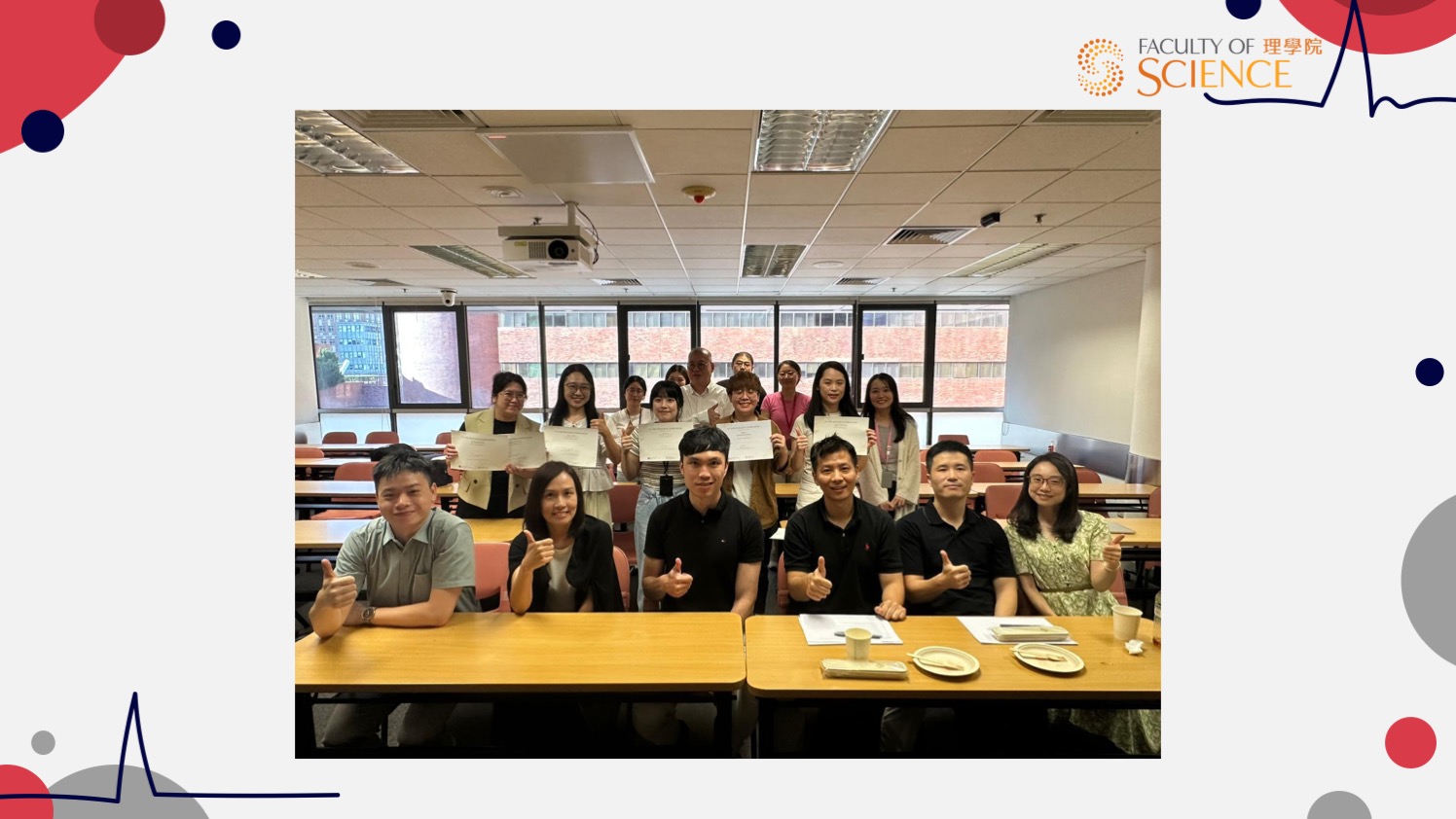
Their collaborative effort earned them the Young Investigator Award. Throughout the process, they developed technical skills in mediation analysis, improved their ability to communicate complex ideas clearly, and learned the importance of adaptability, teamwork, and effective presentation in advancing scientific research.
Ms. LAI Zhiyang Gianna
Mr. GEBRETSADIK Gebretsadkan Gebremedhin
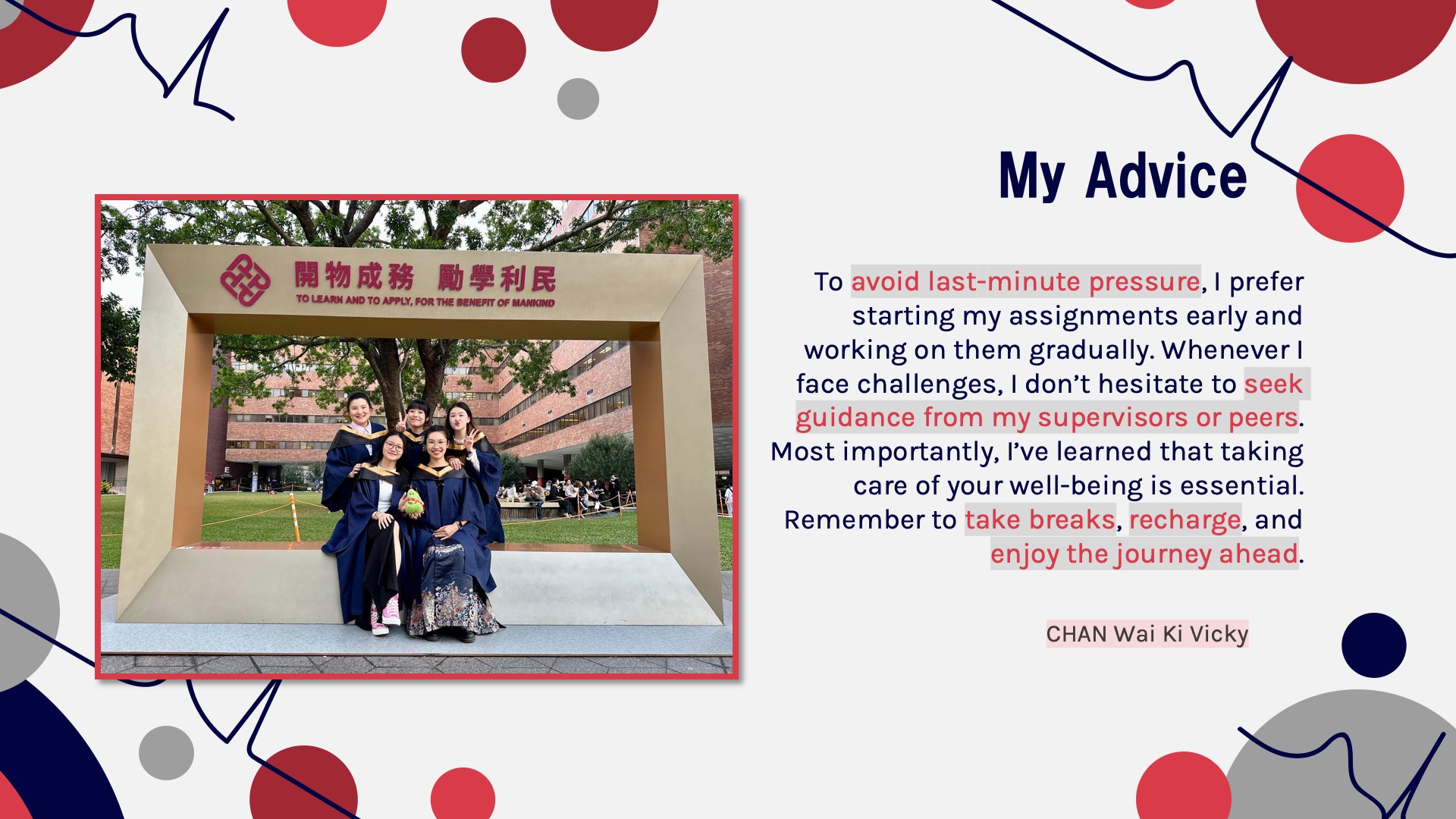
Ms. CHAN Wai Ki Vicky
Faculty of Science
Department of Food Science and Nutrition
The team’s project focused on the association between polyphenol intake and cardiovascular mortality in older adults. Nutritional epidemiology is the study of how diet and specific nutrients (like polyphenols) impact health outcomes in populations. The team demonstrated knowledge in designing studies that assess dietary intake, using nutrient databases to estimate polyphenol consumption, and interpreting the implications for public health.
Their research addressed cardiovascular mortality and its relationship with both diet and sarcopenia (age-related muscle loss). This required understanding the mechanisms of cardiovascular disease, risk factors, and how metabolic health is influenced by nutrition and physical function. The team also needed to be familiar with clinical markers and outcomes relevant to heart health in aging populations.
A key component of the study was the mediating role of sarcopenic components—such as walking speed and handgrip strength—in the relationship between diet and mortality. The team applied knowledge of how to assess sarcopenia, interpret physical function tests, and understand their relevance to both aging and disease risk.
The project involved complex statistical analysis, particularly mediation models to explore how sarcopenic components might mediate the effect of polyphenol intake on cardiovascular mortality. The team used statistical software (like R), conducted sensitivity analyses, and interpreted advanced statistical outputs—demonstrating strong domain knowledge in biostatistics and epidemiological modeling.
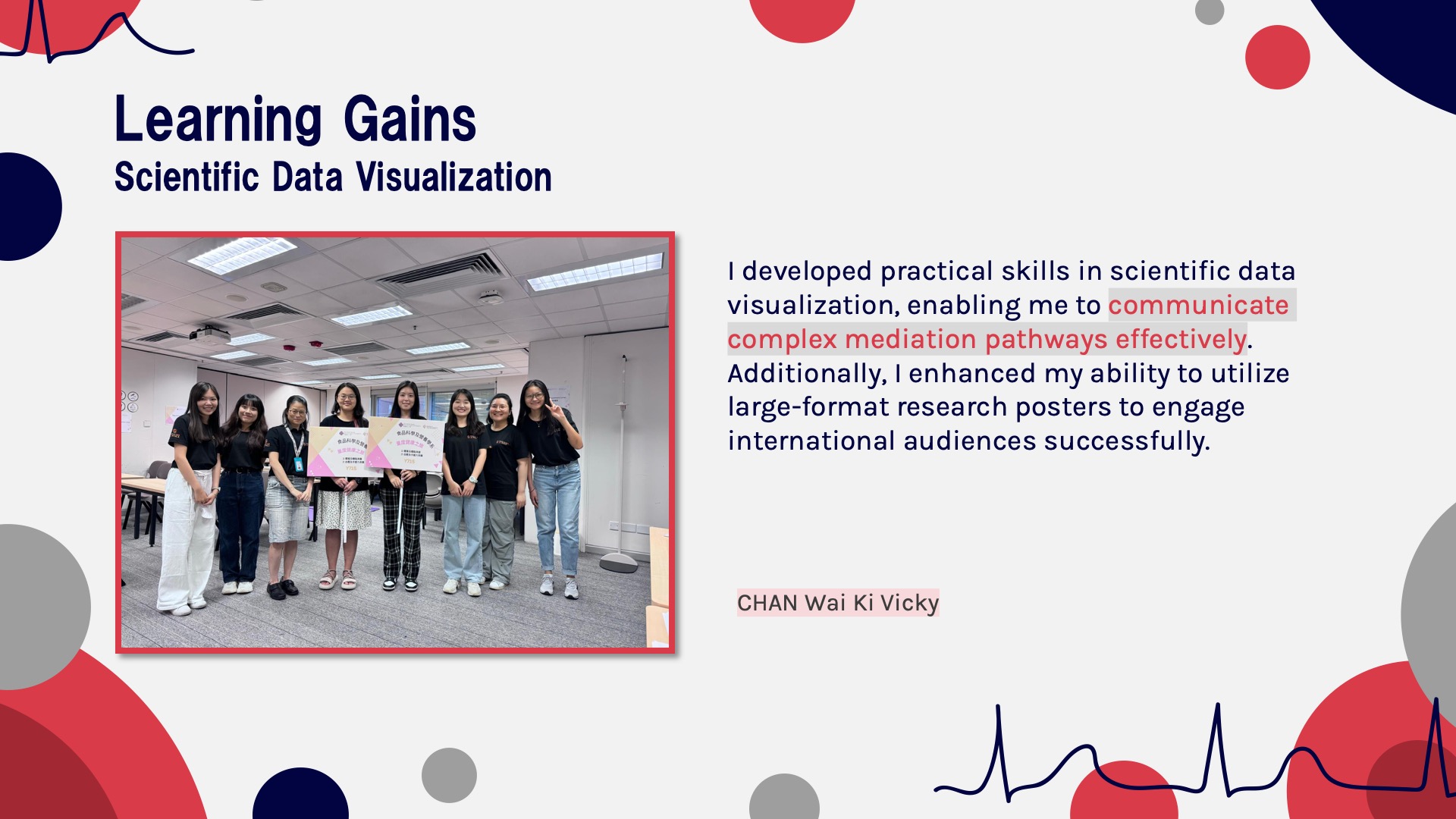
The team excelled at translating complex scientific findings into clear, accessible presentations for both expert and lay audiences. This included preparing research posters, using charts and flow diagrams to illustrate mediation pathways, and summarizing results succinctly. Effective scientific communication and data visualization are essential skills for disseminating research and influencing public health practice.
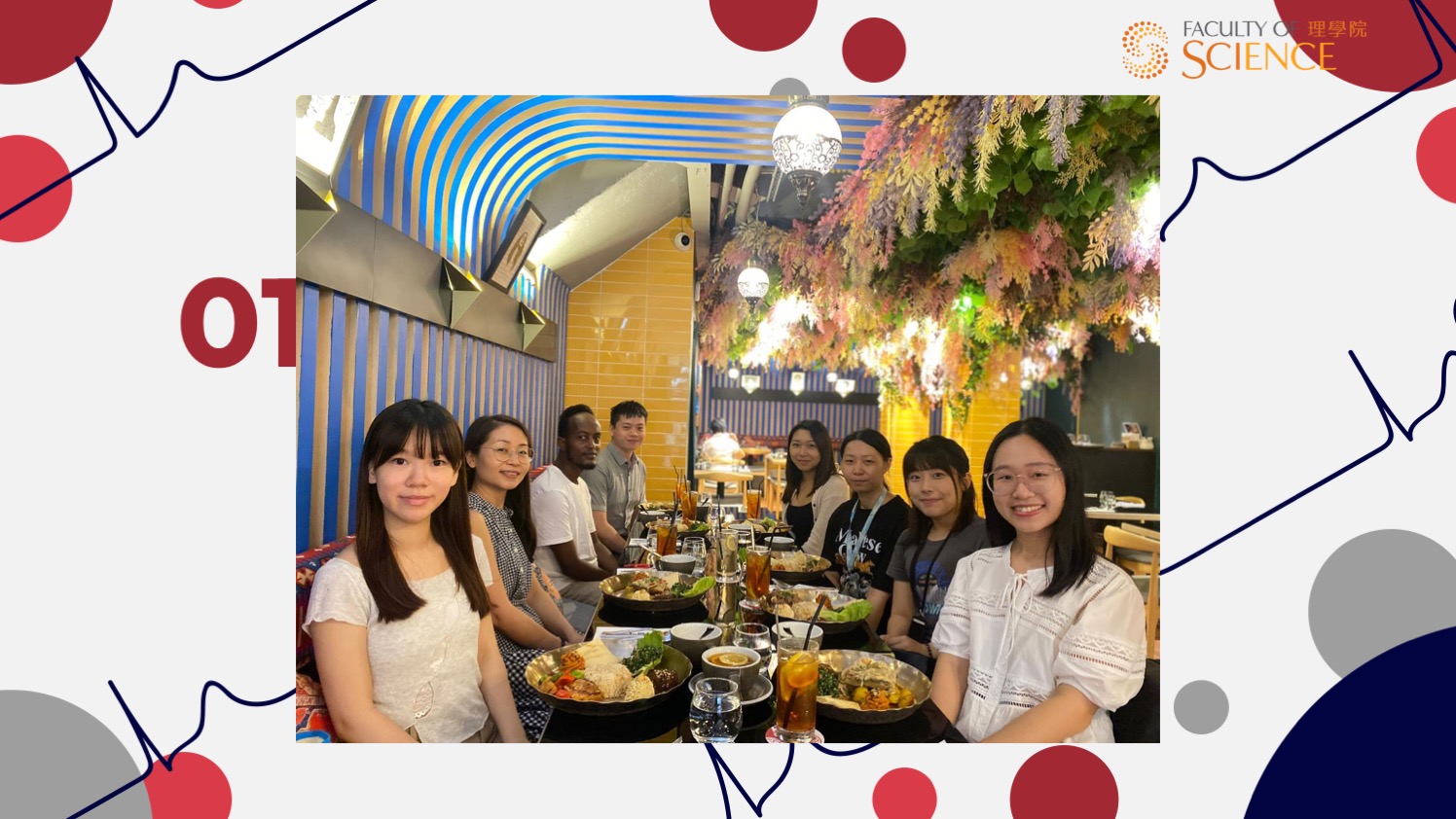
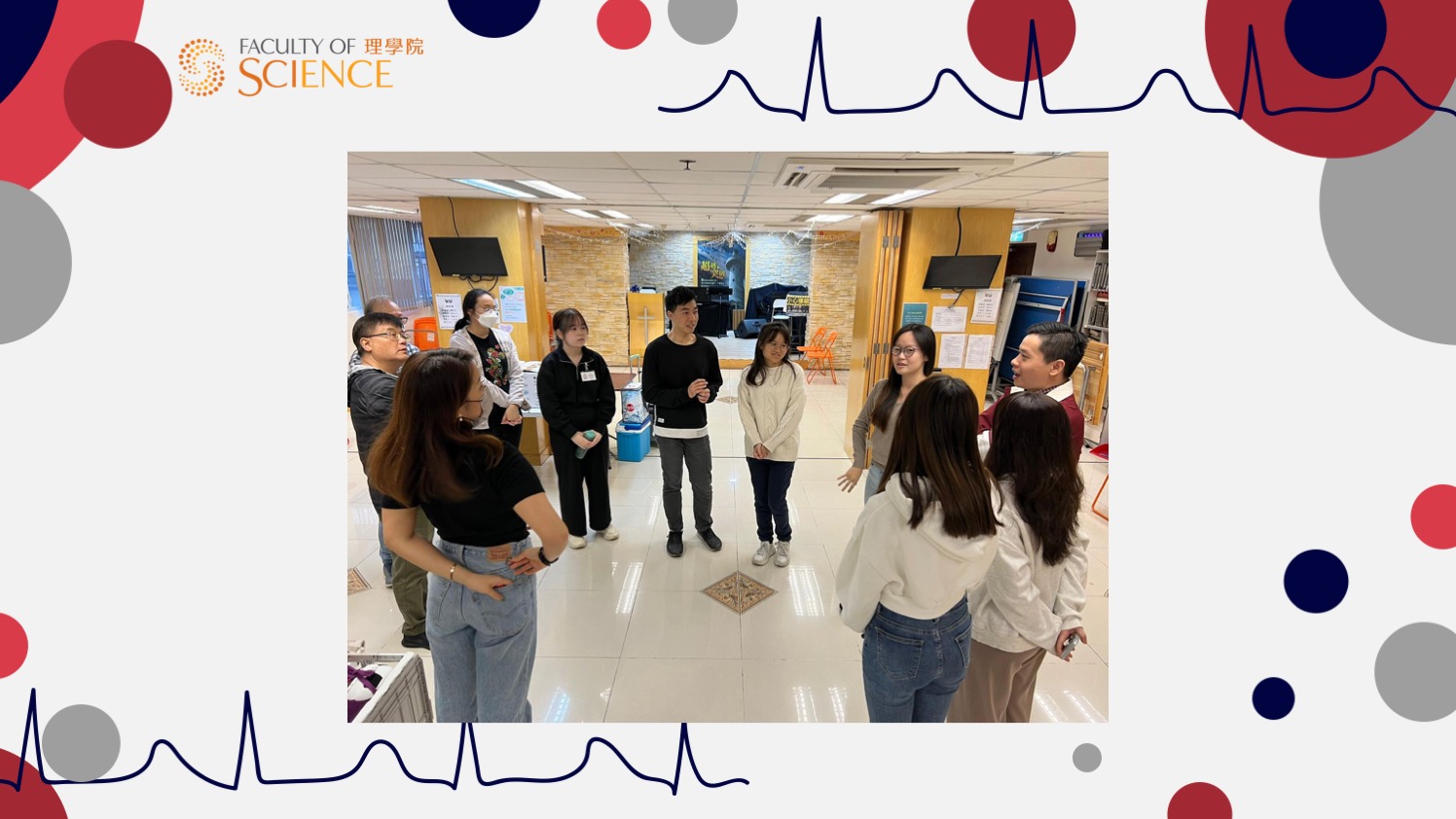
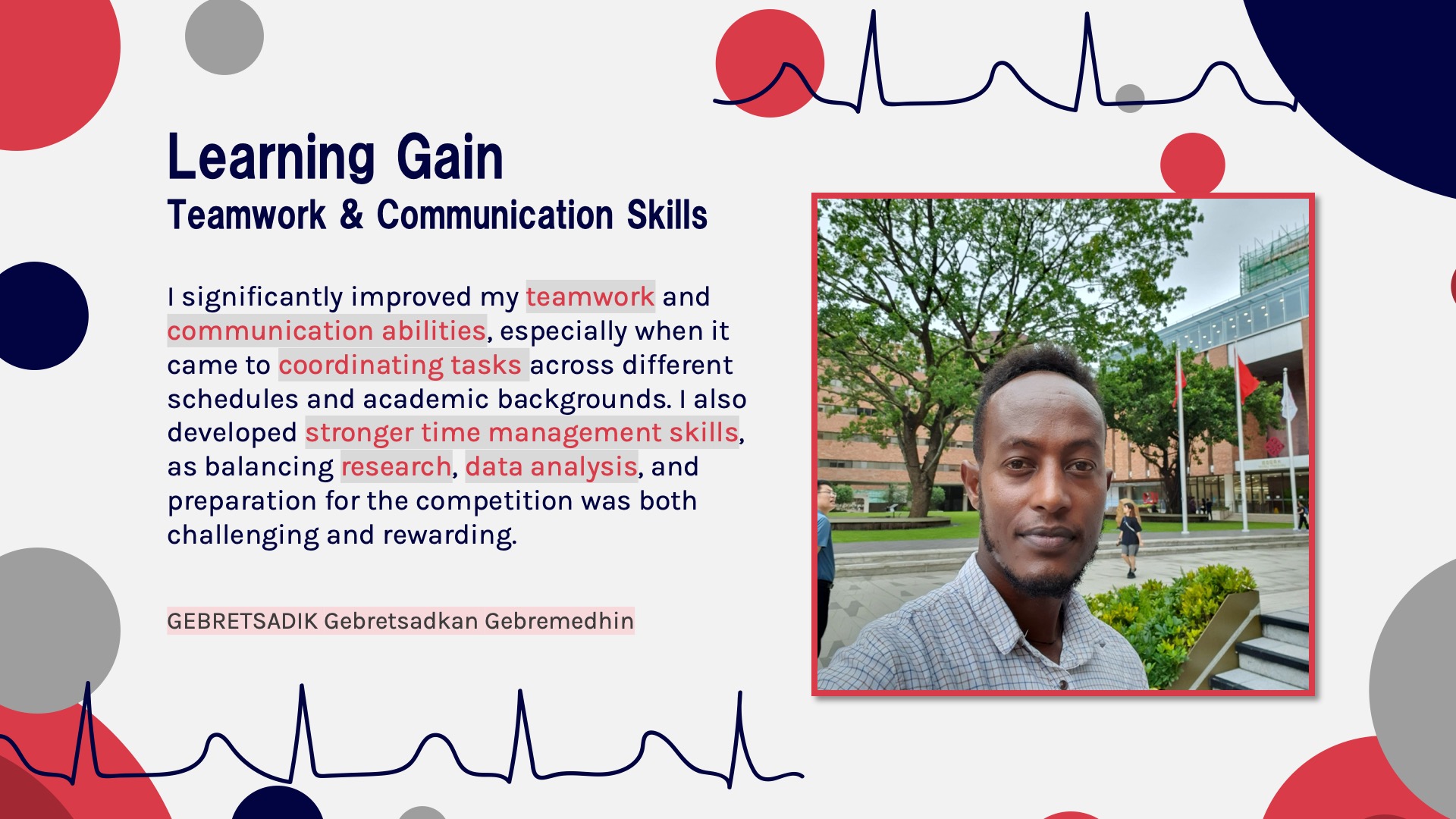
The team worked together over several months, dividing tasks according to each member’s strengths and maintaining regular meetings. They coordinated efforts across different schedules and academic backgrounds, demonstrating the importance of effective teamwork—a foundational lifelong learning skill for tackling complex projects and achieving shared goals.
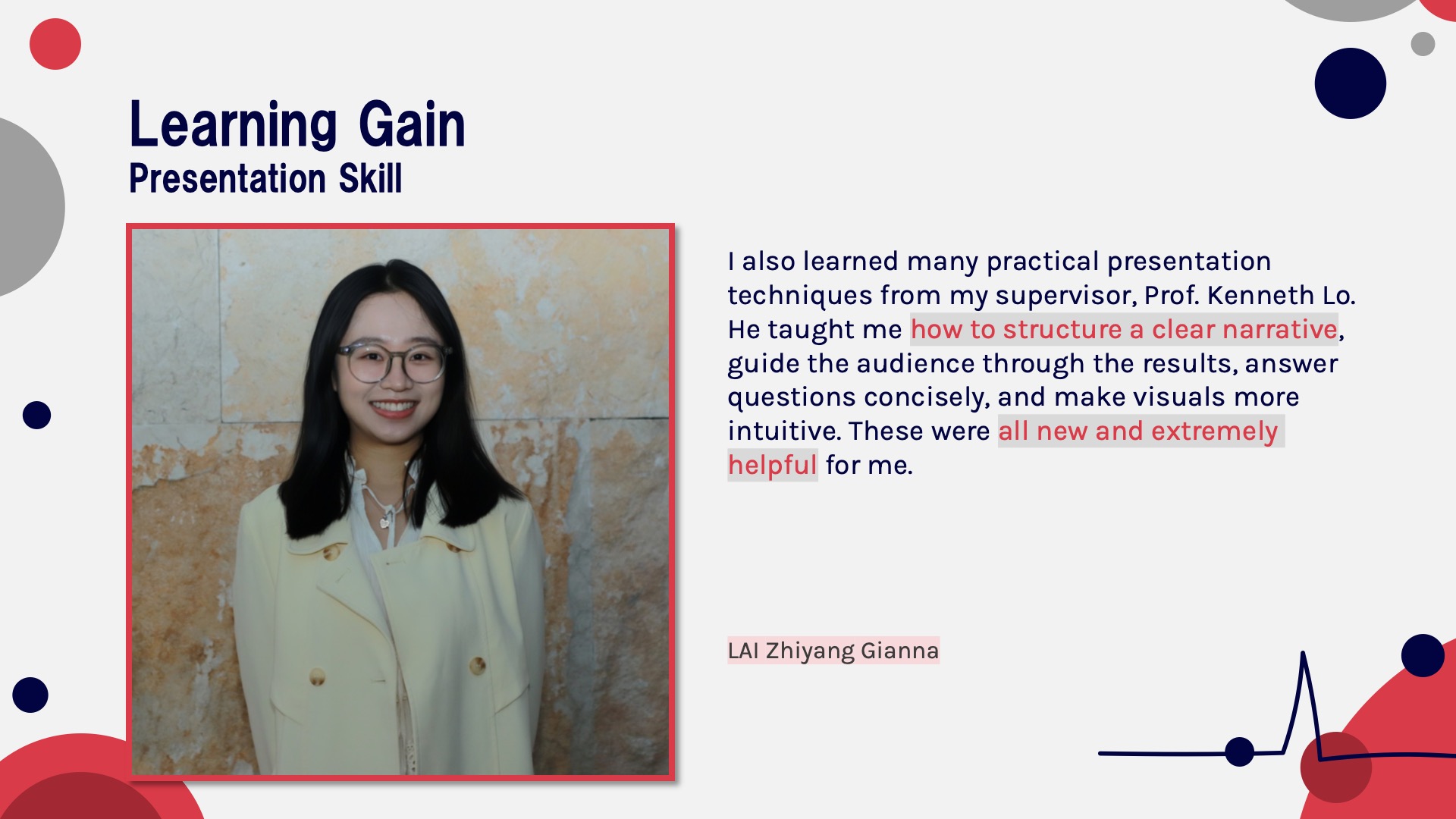
Presenting complex research in a clear, accessible way was a major challenge. The team learned to simplify technical content, highlight key messages, and use visual aids like charts and flow diagrams. This skill in scientific communication is essential for lifelong learning, enabling individuals to share knowledge, influence others, and make research impactful.
Managing complex statistical analyses, interpreting mediation models, and ensuring robust findings required careful planning and critical thinking. The team conducted sensitivity tests and refined their approach based on feedback, showing the ability to analyze problems, evaluate solutions, and adapt strategies—key aspects of lifelong learning.
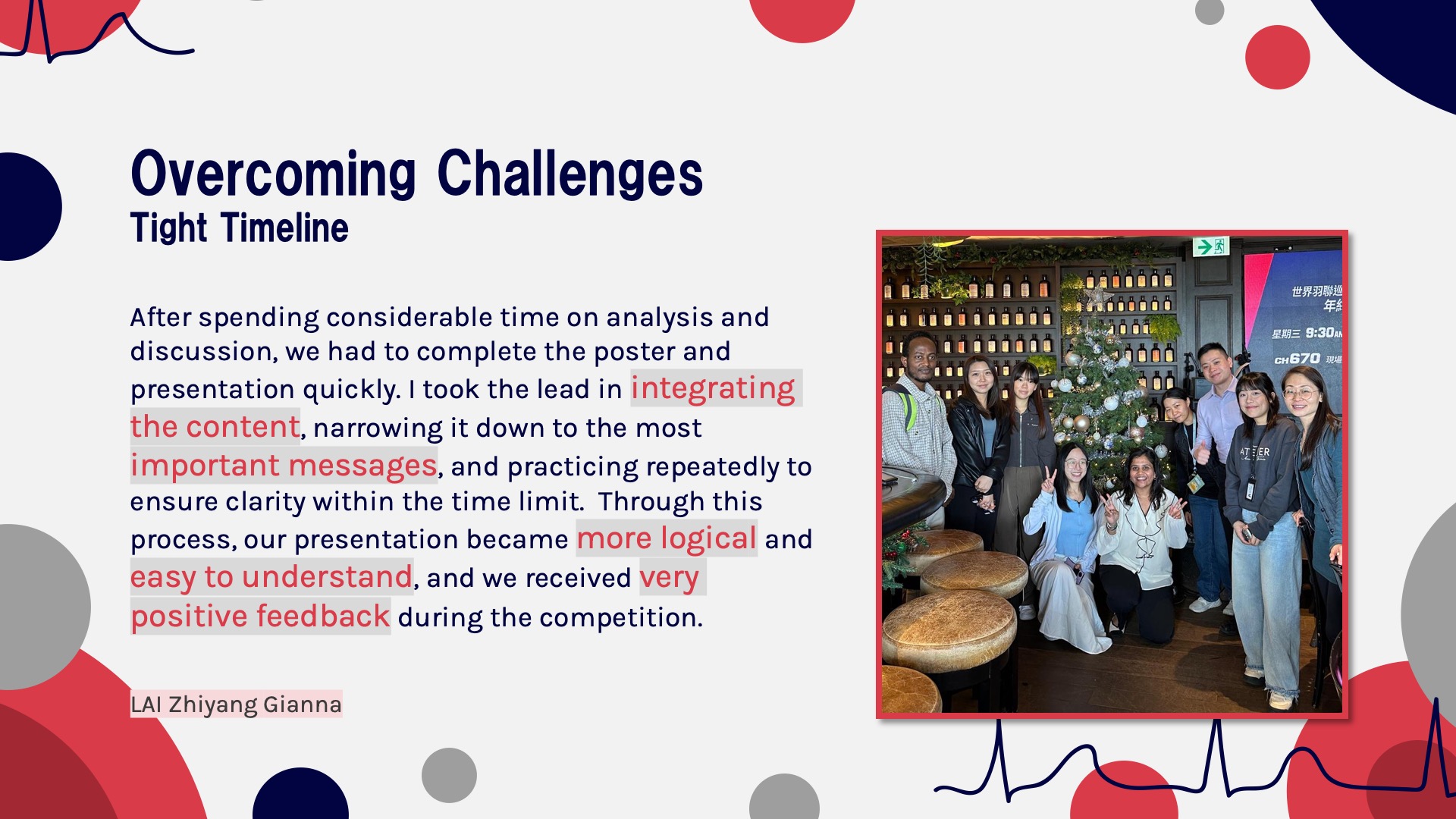
Balancing research, data analysis, and competition preparation under a tight timeline taught the team to organize results quickly, prioritize tasks, and collaborate efficiently. Strong time management skills are vital for lifelong learners to meet deadlines, juggle multiple responsibilities, and maintain productivity.
The team improved their work by incorporating feedback from their supervisor and peers, simplifying models, and refining presentations. Being adaptable and receptive to constructive criticism is crucial for lifelong learning, as it fosters continuous improvement and personal growth.
The pursuit of knowledge is a lifelong journey! To further expand your knowledge and continue your personal and professional growth. Click and explore the following learning resources:
Critical Thinking and Problem-solving